Connect with us

Featured

Iran Iraq War-The Long Fought Battle still Resounds

Published

on

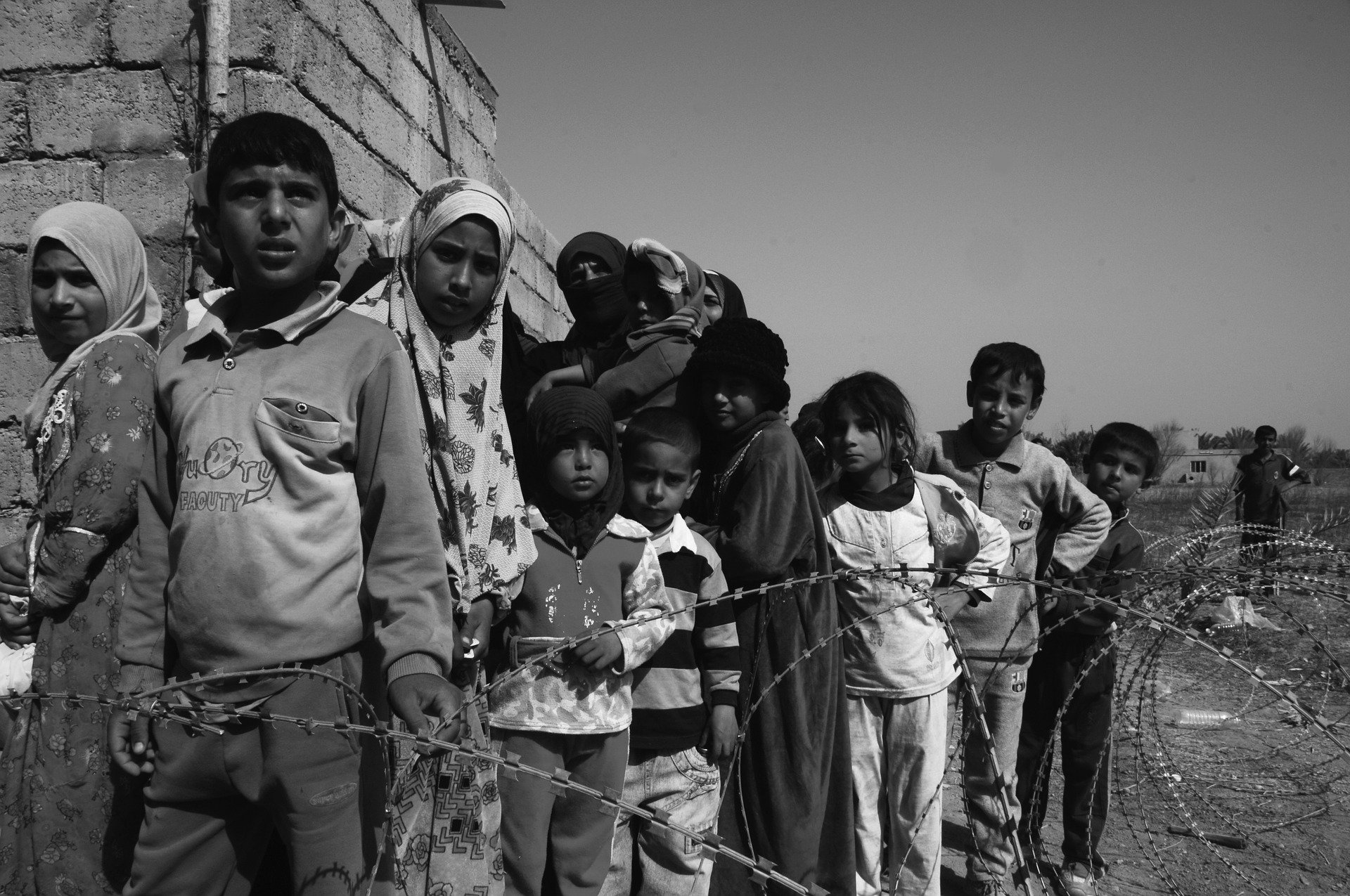
Thirty-five years ago, one of the longest battles of the past century broke out. Yet the echoes of today persist as a bloody eight-year conflict between Iran and Iraq. “The war is still going on on many fronts,” the Iraqi poet and writer Sinan Antoon reflects that he grew up in Baghdad.

“Our neighbour lost both legs in the battle,” remembers Antoon, currently an associate professor at the Gallatin School at New York University. “If Saddam Hussein gives up his fighting in 1990, my neighbour replied, ‘Why have I lost my legs?’ It is believed that one million lives have been destroyed. A whole generation was scarred on all sides of the rift.

The lessons gained have already been gained in an area now overwhelmed by fire-destroyed proxy wars between the international and international powers. Syria, Iraq, and Yemen have been all torn up by growing fault lines: Sunni Shia, Persians against the Arabs, and “Fresh Cold War” alliances established in Moscow-Washington. Iraq was under the oppressive control of Saddam Hussein, who was eventually overthrown, convicted, and assassinated in reaction to the 2003 U.S.-led invasion.

Nearby Iran was governed by Ayatollah Khomeini, who had just returned from exile to direct the 1979 Iranian Revolt that had forced out the Shah. His nation was battled by a clash with his arch-rival Saddam to strengthen his uprising against home foes.

Olden Battle

After months of growing cross-border tension, the conflict escalated in September 1980. Iraqi troops marched several hundred miles to Iranian territory and their warplanes entered Tehran Airport.

“While Sadam is legitimately liable for an illegal invasion, Khomeini provoked subversion and massive propaganda,” argues Professor Mansur Farhang, who was Iran’s ambassador to the United Nations until a year before the war and partnered with foreign brokers to avoid it in the first years of the war.

As the war continued, foreign allies helped both parties, and Iraq was a key source of economic and military aid from the United States. Iran’s military powers were also inspired by the astonishment of its front-flooded soldiers.

While it became regarded as the “olden battle” over the years, Iran and Iraq proceeded to pay an incredibly high amount. Output the world has woken up to the magnitude of the devastation as Saddam has launched violence against Iranian enemies through chemical bombs and backed through his Iraqi Kurds.

Iran was still seeking to find a way out when the American cruiser USS Vincennes murdered 290 passengers on Iran Air Flight 655 in July 1988. The US administration expressed ‘strong sorrow’ but intensified Iran’s concern that Washington would deliberately engage in this conflagration. Ayatollah Khomeini has described his preliminary decision to support the UN resolution to end hostilities as ‘drinking poison.’

Iran’s Influence over Iraq

Three decades later we use the description to define the harsh decision taken to welcome world powers, including the US, by their successor Ayatollah Khamenei this year to significantly shorten its nuclear program. But today Iran has firm influence over Iraq’s firm Shia leadership and several well-armed militias in the area. And Iraq has gone from war to war since 1988 and has now been grappling with the terrifying emergence of the “Islamic State,” a virulent rebellion against the Shia law.

Within an 8 year of the war, Ayatollah Khomeini tried to unite the Shia group in Iraq and could not organize them. Nevertheless, racial tensions persist for most of the violence that now cuts into Iraq’s very existence as a united state.

And neighboring Syria is a battleground between Iran-Russia-supported forces of President Assad and Arab-Western armed opposition factions. The most devastating thing of all, the rising misery of millions of citizens now forced from home is the massive influx of desperate asylum seekers to Europe.

Iraqi Ahmed al-Mushatat, who was embroiled in a dispute in the 1980s after his medical studies, is now a frequent chapter in the region: “We assumed it might never stop. Wars are officially done. But today’s tensions threaten to further perpetuate the tensions of the last century.

Consequences of war

The tale of “futile battle” springs to mind as you want to look critically and retrospectively at the Iran-Iraq war. Who lost? Who lost? Or, maybe you might wonder, who won the fight at the end of almost ten years? There were air and land fights along the 1,000-kilometer frontier, and neither Iraq nor Iran could claim a lasting success nor impose its will and policy on the August 20, 1988, ceasefire.

Much Iraqi youth were involved in the fighting and post-traumatic disorder was already struggling for those fortunate enough to be unscathed on the war front. The war also produced a century of widows and orphans in which Iraqi society in its entirety could not rebound from nor reintegrate the state because of the Gulf War of 1991 and subsequent sanctions.

Iraqis were tricked into this relentless War by the accumulation of high domestic debt and the crippling consequences on their oil economies. A Jingoistic approach, the Baathist propaganda machine branded the Iran-Iraq War as the “Eastern Arab World border defence from Iranian hegemony,” thus raising the dependence of Arab neighbours and Western states – like the US – who opposed the newly formed Islamic Republic of Iran.

This gap between Iraq’s strong demands for Gulf Cooperation Council Countries (GCC) incentives mirrored their absence of reaction and empathy, which further raised tensions and aggressive Saddam-led policies. Ordinary Iraqis felt that the GCC countries were pushing and using them to stop Iran’s drive at the time to spread its Islamic revolution. To make matters worse, there has never been financial assistance and settlement promised to Iraq by any of the GCC countries during the 1980-1988 war.

Economic and Social Collapse

Consequently, Iraqis consider the conclusion of the Iran-Iraq war as the starting point of the economic and social collapse of their nations. The oil boom of the 1970s and its parallel economic development finally only substituted in the 1990s for isolationism. For ordinary Iraqis, Matt, Hana, or “the grinder,” comes to mind as the first word in the description of the Iran-Iraq War. Saddam invaded Kuwait in August 1990, which later triggered the paralyzing multilateral sanctions against Iraq and, probably, the 2003 US invasion of the country.

Has the Iran-Iraq War hits its goals? Well, on which side it is studied. It depends. While the eight-year war hindered Tehran and Baghdad’s economic development, it created a zero-sum culture between the two countries and left the Middle East volatile and dysfunctional. It is not a minor occurrence to ignore and historians do not treat it as a typical community boundary battle. The implications of this mechanism are not well known and, to say the least, have led to the development of a generation of Iraqis and Iranians who overruled the diplomacy and soft power which are now evident in their use of military and covert operations.

Around the same time, the war led to a distinct polarization within the Arab World by claiming positions and choosing sides. Syria and Libya were side by side with Tehran, while Baghdad was side by side with Egypt, Jordan, and much of the GCC. By 1988 a new strategic map of allies and enemies had been created.

The Iran-Iraq war has prompted sectarianism to increase in the Middle East. It became an instrument and an excuse for intensified political sectarianism used by Baghdad and Tehran and their regional supporters. By the end of the war, its sectarian character and its propagation as such were a symbol of a growing topic in the Middle East.

The GCC states may have spoken in the words “Arab” and “Persian,” but they said the words “Sunni” and “Shia.” Saudi Arabia and other nearby Arab countries felt threatened with Shia membership by the Islamic Revolution of 1979. Saddam was then championed by Sunni Muslims in the wake of the current movement headed by Ayatollah. Iraqi Shias were the first victim of this newly developed sectarianism, as evidenced by the result of the Iraqi revolts in the south in 1991.

Thirty years later, amid the difficulties of the Gulf War in 1991, strict multilateral sanctions, and the US occupation in 2003, generations of Iraqis have yet to erase the wounds of the unsuccessful Iran-Iraq war. Its effects are still felt today in the Middle East.
Continue Reading
Click to comment

Leave a Reply

Your email address will not be published. Required fields are marked *

Featured

Hormuz Gets Diplomacy While Gaza and Lebanon Keep Bleeding

Published

on

Hormuz-Gets-Diplomacy-While-Gaza-and-Lebanon-Keep-Bleeding

The latest US-Iran talks show how quickly the world can move when a crisis threatens oil, shipping, and regional markets. After the Strait of Hormuz became a flashpoint, Washington moved into negotiations. Although the attacks by Israel and the United States on Iran were unprovoked, the resulting ceasefire is a reflection of the enfeebled power of the United States and Israel.

However, one thing is evident: when the global economy feels pressure, urgency arrives. But that urgency is not being shown to Gaza and Lebanon. This is the central problem with the current regional diplomacy. The Strait of Hormuz is being treated as a global emergency, while Israel’s continued genocide in Gaza and violence in Lebanon is treated as a difficult-to-manage side issue.

Why Hormuz Became the Priority

The Strait of Hormuz is one of the world’s most important energy routes. Around one-fifth of global oil and natural gas normally passes through this narrow waterway between Iran and Oman. When the US-Israel escalation with Iran raised the risk of disruption, the concern was immediate because any closure or attack near Hormuz could affect energy prices, insurance costs, shipping schedules, and the wider global economy.

Following a ceasefire announcement, the US indicated it would waive sanctions on Iran for 60 days after the first talks under a new peace framework. The talks, held in Switzerland and mediated by Qatar and Pakistan, were described as part of a roadmap toward a final deal within 60 days. Moreover, they included a communications mechanism to help ensure the safe passage of commercial ships through Hormuz.

This does not simply mean the crisis is over. Iran and the US still disagree over a lot of issues, like nuclear inspections and the details of the deal. Gulf states remain worried about Iranian power, Israeli escalation, and the possibility of another breakdown. But the speed of the diplomatic response tells its own story. Hormuz became urgent because Hormuz affects global trade.

The Problem Is Not Diplomacy but Selective Diplomacy

Keeping Hormuz open matters due to the fact that millions of people could feel the economic shock of a major disruption. The problem is not that diplomats are trying to calm the waterway. The problem is that the same level of pressure is not applied when Israel keeps killing innocent Palestinians and Lebanese civilians.

This is where US diplomacy becomes morally exposed. Washington can move quickly when shipping lanes, oil prices, and Gulf allies are at risk. Yet when Gaza’s children are killed after a ceasefire, or when Lebanese families remain displaced from destroyed villages, the language becomes cautious, delayed, and full of exceptions for Israel.

Lebanon Shows the Limits of the Deal

Lebanon is supposed to be one of the places where regional de-escalation becomes visible. Although the interim US-Iran agreement called for ending hostilities, including in Lebanon, it is not being realized completely. Israel, however, has declared that it will not withdraw from southern Lebanon unless its unrealistic conditions are met.

This is why the Lebanon file remains so fragile. Despite withdrawing from Lebanon and providing the innocent people a sigh of relief, Israel is pushing forward. Israel has established what it calls a buffer zone about 10 km inside Lebanon, forcing local civilians from their homes and carrying out raids and demolitions in villages.

When it comes to the human cost, more than 1.2 million people were displaced during the fighting, about a fifth of Lebanon’s population. Lebanon’s National Council for Scientific Research indicated that more than 90,000 housing units were damaged or destroyed between March 2 and June 12. Other credible reports also highlighted that tens of thousands remain displaced because their homes are gone or their towns remain under Israeli military occupation.

Gaza Remains the Deepest Failure

Since the October 2025 ceasefire, Israeli attacks have killed more than 1,027 Palestinians and injured 3,280 others. Gaza’s Health Ministry highlighted that the total number of Palestinians killed since October 2023 has exceeded 73,041, with 173,402 wounded. These numbers do not describe a genocide moving toward peace. They describe a population still being punished while the world discusses arrangements elsewhere.

Gaza should have been discussed in the recent peace talks, too, but the world is moving towards a moral crisis. The destruction of Gaza, the blockade on aid, the brutal killing of innocent children, and the forced displacement of families are the reasons anger across the Muslim world remains so deep.

Israel Keeps Undermining Regional Peace

Any honest discussion of regional de-escalation must confront Israel’s role. The US wants Iran to lower tensions, the Gulf states want shipping security, and mediators want the fighting to stop. Yet Israel continues to act with carte blanche in Gaza and Lebanon.

There is a wide contradiction between the world’s policies. Israel is not treated as a spoiler in the same way as others are. Its attacks are framed as security needs, while Palestinian and Lebanese suffering is framed as an unfortunate fallout. This double standard is one reason ceasefire efforts keep failing in practice.

If Israel can continue bombing Gaza, occupy parts of southern Lebanon, and delay withdrawal without serious consequences, then regional calm remains fragile. It may hold for oil markets, but it will not hold for the people living under attack.

Ultimately, peace cannot be built by protecting tankers while ignoring tents, hospitals, and destroyed villages. A regional deal that treats shipping as urgent but civilian blood as negotiable is not peace. It is selective stability, built for markets before innocent people.

Continue Reading

Featured

UN Report Exposes Israel’s Genocide Through Targeting of Gaza’s Children

Published

on

UN-Report-Exposes-Israels-Genocide-Through-the-Targeting-of-Gazas-Children

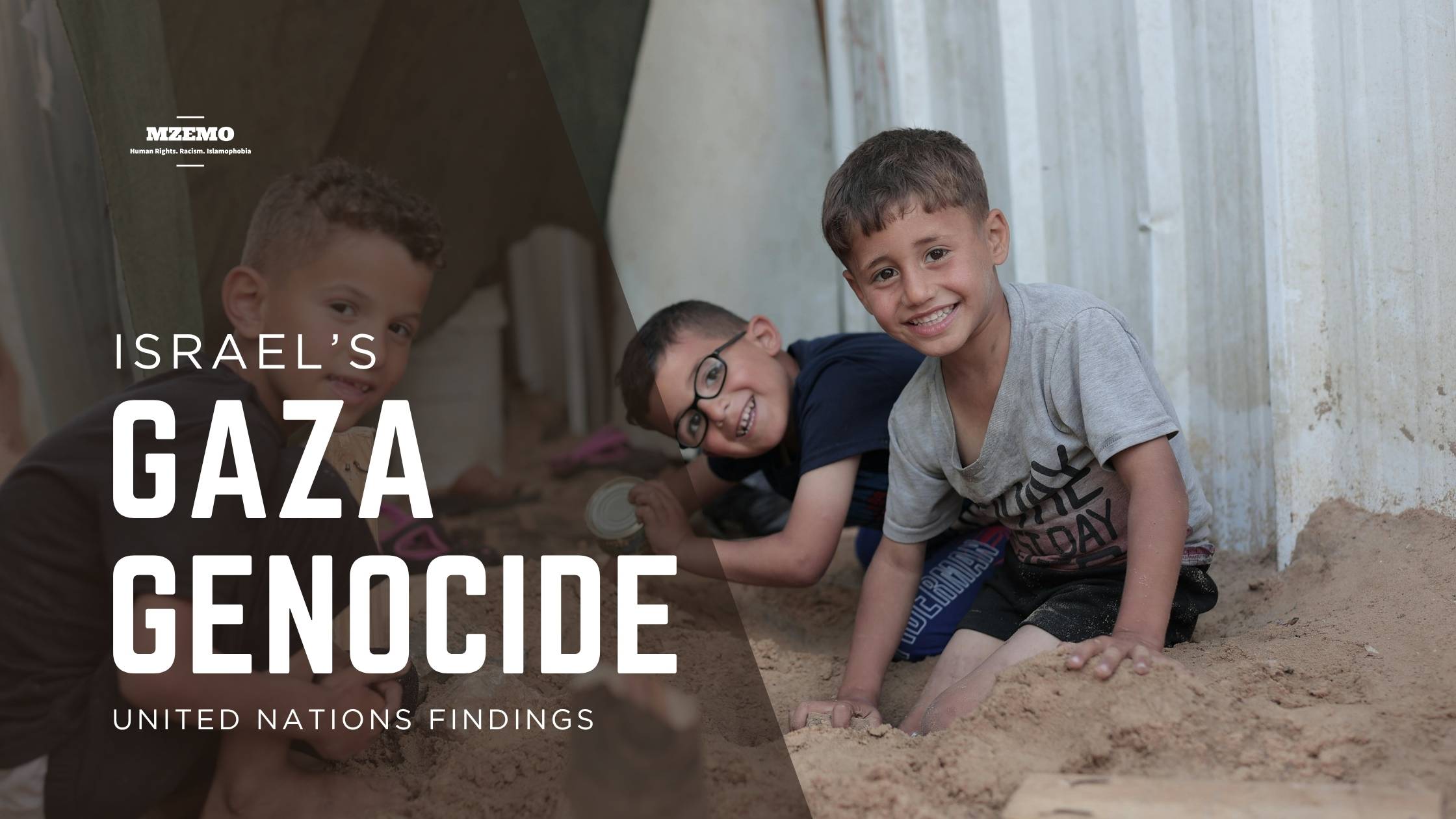
The latest UN inquiry on Gaza’s children has changed the way this genocide must be discussed. It is no longer enough to say that children have died in large numbers, as if their deaths were only a tragic side of military operations. The UN Independent International Commission of Inquiry evidently described that Israeli authorities and the ISF have deliberately targeted Palestinian children. These actions are not limited to crimes against humanity but are a deliberate genocide.

The reason why this new finding matters is that it places the innocent children of Gaza at the centre of genocide. Unfortunately, Gaza’s children have been brutally killed by airstrikes, drones, and direct sniper fire. They have been wounded in shelters, deprived of food and medicine, pushed into disease, and left with trauma that no child should carry. Moreover, the report also extends beyond Gaza. It documented serious violations against Palestinian children in the occupied West Bank, including detention, settler violence, and mistreatment.

The Scale of Child Deaths in Gaza

Between October 7, 2023, and October 7, 2025, for two years, at least 20,179 Palestinian children were killed in Gaza. These are the official figures cited in reporting on the UN inquiry. Shockingly, children made up more than 30 percent of those killed.

On the other hand, UNICEF has also estimated that more than 50,000 children have been brutally killed or wounded since Israel’s genocide in Gaza began. These numbers show how deeply the violence has entered Palestinian family life. Especially in Gaza, almost every school, street, tent camp, and hospital corridor carries the memory of a child who was killed, injured, orphaned, or displaced.

Additionally, the UN Commission also noted Israel’s use of high-payload munitions and wide-area weapons in densely populated areas. Gaza is already a trapped and crowded strip of land where families have repeatedly been forced from one area to another. Ultimately, when heavy weapons are used in such places, children are placed directly inside or rather being hidden from genocidal risk.

Why the Word “Targeting” Matters

The most serious part of the UN report is not only the death toll. In fact, it is the finding that “Palestinian children were deliberately targeted”. That word changes the meaning of the evidence.

In this context, the commission examined cases involving children killed by quadcopter drones and sniper fire, including incidents where medical evidence suggested precise shooting. The inquiry also criticised the way Israeli forces described some killed children as “suspects,” a label that can turn even childhood into a security accusation.

This is one of the most dangerous features of Israel’s assault on Gaza. When a Palestinian child can be treated as a threat, the normal rules of humanity are ultimately turned upside down. A child searching for food, standing near a shelter, moving with family, or living in a crowded neighbourhood becomes vulnerable not only to bombs, but to a military logic that sees Palestinian life itself as suspicious.

The Ceasefire Did Not Save Gaza’s Children

The October 2025 ceasefire was supposed to reduce the killing and open a path toward stability. Yet Palestinian children have continued to die.

Gaza’s Health Ministry says more than 1,027 people have been killed since the ceasefire, including 258 children. One recent case was 12-year-old Ahmed Mohsen al-Raqab, martyred by an Israeli drone strike in al-Mawasi, the southern Gaza area where displaced families had taken shelter after being forced from other parts of the enclave.

This is why the word “ceasefire” has become painful and unrealistic for Palestinians. A ceasefire that does not protect children in displacement camps cannot be treated as peace. It becomes another political arrangement that looks stronger in statements than it does on the ground.

The Attack on Birth, Health and Childhood

The UN inquiry also looked at the conditions that allow children to be born, treated, and kept alive in Gaza. It said attacks on maternity and neonatal services endangered newborn survival and harmed Palestinians’ reproductive future. It also pointed to rising miscarriages, birth defects, and widespread psychological harm, including trauma among children.

This part of the report is an eye-opener. Genocide is not only carried out through direct killing. It is also being carried out by destroying the systems that sustain life.

A newborn in Gaza needs a safe delivery room, electricity, medicine, clean water, warmth, and trained medical staff. While a wounded child needs surgery, antibiotics, and a place to recover. A sick child needs nutrition and vaccines. When hospitals are attacked, supplies are blocked, and families are displaced again and again, childhood becomes a struggle for basic survival.

The West Bank Is Part of the Pattern

The inquiry also documented violations against Palestinian children in the occupied West Bank, including East Jerusalem. It reported settler violence, arrests, detention, torture, sexual and gender-based violence, forced stripping, beatings, and food deprivation.

The methods are not identical to Gaza, but the impact is deeply interconnected. In Gaza, children are deliberately bombed, starved, and displaced. While in the West Bank, they are detained, intimidated, attacked by settlers, and pushed through a system that treats Palestinian childhood as a threat to be controlled.

Accountability Cannot Remain a Statement

The UN report should not become another document that governments mention briefly and then ignore. Its findings matter for the International Court of Justice, the International Criminal Court, and every state that continues to arm, fund, or politically shield Israel.

Accountability must mean protection for children, open aid routes, medical evacuation, protection for hospitals and schools, and consequences for those responsible for attacks on innocent civilians. It must also mean ending the habit of treating Palestinian deaths as unfortunate but acceptable.

In a nutshell, children still dying after a ceasefire is not a misunderstanding but a deliberate act of genocide to wipe out the future of Gaza.

Continue Reading

Featured

Where Is Gaza’s International Stabilization Force and What Happened to the Ceasefire

Published

on

Where-Is-Gazas-International-Stabilization-Force-and-What-Happened-to-the-Ceasefire

When Gaza’s ceasefire was announced, it was presented as more than a triumph. As a result, it was supposed to usher in a new phase of peace, prosperity, and stability. However, nothing like that happened. The Board of Peace and the International Stabilization Force remained unmaterialized ideas. Even months later, those promises look thin on the ground.

A Ceasefire That Still Leaves People Dead

What about a ceasefire that remains unable to stop brutality and killings? A ceasefire means safer movement, sufficient aid, and complete elimination of fear. Unfortunately, the people of Gaza haven’t seen that even after the announcement of a so-called “20-point plan” and the “ceasefire”.

Recently, Israeli strikes killed three Palestinians on June 11 while Egypt, Qatar, and Turkey were trying to advance the fragile truce. Days earlier, another Israeli airstrike on a large tent encampment in Gaza City killed at least seven innocent Palestinians, including two women, and injured 15 others, some of them children.

Moreover, more than 950 Palestinians have been killed since the ceasefire began. These numbers show why the word “ceasefire” sounds hollow to many families. A truce that cannot stop repeated deaths is not functioning as protection.

The Force That Has Not Protected Gaza

The International Stabilization Force was supposed to be a central part of Gaza’s next phase. The ceasefire plan, later tied to a UN mandate, imagined an international force that could support security, help stabilize the territory, assist transitional arrangements, and give the ceasefire practical weight.

Unfortunately, the force has not become a meaningful presence yet.

Numerous credible reports state that plans for the Gaza International Stabilization Force were in question because troop pledges had stalled. Countries expected to contribute had not made the commitments needed to turn a political idea into an operational force.

This delay matters a lot as Gaza now needs a mechanism that can protect displacement sites, secure aid routes, support safe movement, and help prevent violations. Without that, the stabilization force becomes another promise Palestinians hear about but do not feel.

Why Governments Are Hesitating

The hesitation is partly political and partly practical. Sending troops into Gaza would mean entering one of the most obliterated and contested places in the world. Foreign soldiers could be caught between Israel, armed factions, displaced civilians, and a population deeply suspicious of outside arrangements.

There are also unresolved questions about the mandate. Would the force protect civilians from all attacks, or mainly focus on disarmament? Would it monitor Israeli actions as well as Palestinian armed groups? Would Palestinians have a real voice in how it operates?

A force without legitimacy could fail quickly. But delay also has a huge cost. While governments hesitate, civilians live without a credible protection system against the genocidal acts of Israel.

Monitoring Without Enforcement

The United States was expected to close its Civil-Military Coordination Centre near Gaza as the broader Gaza plan stalled. The Centre was designed to monitor the ceasefire and help improve aid flows. This is because most people observed that it failed to deliver meaningful results.

That failure exposes the problem with symbolic mechanisms. A coordination Centre can collect information, but it cannot protect civilians unless it has authority, access, and consequences behind it. Monitoring may record violations only, but it cannot stop them adequately.

Aid Crossings Reveal the Truth

Humanitarian access is the clearest test of the ceasefire. If food, medicine, fuel, water, and shelter materials cannot enter Gaza reliably, then the truce is failing at the most basic level.

OCHA reported on June 5 that Israel had kept Zikim Crossing in northern Gaza closed for two weeks. Aid convoys were being rerouted to Kerem Shalom, as the last remaining cargo crossing. That rerouting created congestion and slowed the collection of critical supplies.

In genocide-affected Gaza, a delayed truck can mean empty kitchens, untreated wounds, missing medicine, and another night in unsafe shelter. UN Secretary-General António Guterres also urged Israel to reopen closed crossings so aid could move rapidly, safely and at scale.

How can a ceasefire that leaves aid trapped at crossings restore civilian life?

The Deadlock Behind the Crisis

Talks on Gaza’s next phase remain stuck on the issue of Hamas disarmament and complete Israeli military withdrawal. Palestinian factions had agreed to most points in the peace blueprint, but Israel is reluctant to keep its military in Palestine.

Israel is trying to hide their heinous plan of genocide advancement in the name of Hamas disarmament. While Hamas completely denies the allegations of Israel and links their efforts to a political process toward Palestinian statehood and an end to illegal occupation.

Gaza needs fewer promises and more enforceable guarantees from the international community now. Civilian shelters must be protected, aid crossings must remain open, medical evacuations must move quickly, and ceasefire violations must be reported quickly. Any stabilization force must have a clear civilian-protection mandate. Israeli withdrawal lines must be transparent, and reconstruction must be tied to Palestinian governance.

Above all, there must be consequences when civilians are killed after a ceasefire has supposedly begun.

Final Thought

Gaza’s crisis shows the danger of genocidal diplomacy without delivery. A ceasefire without enforcement is not peace. Monitoring without consequences cannot protect innocent civilians. Aid promises mean little when crossings remain highly restricted.

Palestinians were promised stability and peace. What they received is continued death, delayed protection, and a plan stronger on paper than in Gaza.

Continue Reading
Advertisement

Trending