Connect with us

Featured

Argentina wins the World Cup; are there any other winners?
Published

on

Argentina wins the World Cup

Obviously, the standard of winning in the world cup is winning the Cup, yet others have joined the honor of moral winning and entered history at its sharpest edge. First, among other winners, Qatar has achieved super outstanding success in hosting the World Cup, which befits its place. Second, many Arab teams won and scored well in some matches such as Tunisia and Saudi Arabia which succeeded in defeating the legend Messi. Third, some of the Arab teams have qualified for the World Cup finals for the first time such as Morocco. Thus, this has demolished the idea of the inability of Arab youth to achieve success in football and to consider the West as a criterion for success.

That idea of misfortune, which lived in our minds and traced the minds of Arab youth, brought them into the circle of disability, lack of initiative, improved performance, attempt, confrontation, and achievement, Unfortunately. Nevertheless, this is no more happening. Among all, Palestine, Qatar, Israel, Racism, and Islam are all topics that took great attention and importance during the tournaments. Mainly, talking about other winners is our focus here.

Qatar: What a pride!

The small but influential State of Qatar was able to realize the Arab dream of hosting the FIFA World Cup as well as organizing a unique version of the World Championship. This is not strange nor unlikely for a country like Qatar, which has accumulated long experience in organizing global events. Qatar organized several global events, including the Climate Conference (COP18) in 2012. The closest example is the mini “rehearsal” that preceded the World Cup, the 2021 FIFA Arab Cup.

Since the first day of the tournaments, the world has been dazzled and fascinated by Qatar’s legendary uplifting World Cup opening. Harmoniously, the opening, which was a wonderful art, blended local and Arab national cultures with Qatar’s customs and traditions. The football masses have praised Qatar’s generosity, hospitality, and creativity.

Other winners in the Mondial
The World Cup opening ceremony beautifully blends all cultures together


Qatar has beautifully reflected the Islamic culture theme in the event’s hosting laws that reflected the authentic Islamic culture. For example, opening the event included many arts with a musical background, and video scenes reflecting the link between the authenticity of the past and the rhythm of the present by modern technical means.

It managed to overcome the West’s offensive campaign regarding the workers’ crisis, the imposed Islamic rules, and refuting the thought of being an incompetent country. It was also able to overcome the political crisis with its Gulf surroundings and the stifling blockade it suffered. Seriously, Qatar has thoroughly considered every tiny detail of the event. Consequently, none can deny the fact that Qatar has made unparalleled success along with moral values rooted in its blood. The last day of tournaments was a day of pride and a day of success. The people of Qatar shared their joy on Qatar’s National Day in scenes expressing the fulfillment and joy of the achievements of these people for a moment, from the beginning of the World Cup to the final. Moreover, building infrastructures with paying attention to the principle of sustainability was yet another field of success.
Read more on this/ Qatar FIFA 2022, A Civilized Model Of Islam

Western Racism toward Arabs and Muslims

Arabs have long suffered systematic attacks for portraying them as a nation unable to achieve success and participate effectively in major global events. But, now came the time to demolish all these ignorant racist views. For example, Morocco’s best international achievement came at the 2022 World Cup. Morocco became the first African team to qualify for the semi-finals of the World Cup after the previous three African quarter-finalists were eliminated. Morocco was unbeaten in their last six World Cup matches (winning 3 and drawing 3), the longest-unbeaten African team in the history of the World Cup by counting their 2-2 draw against Spain in Morocco’s last encounter with the Russian World Cup. Most importantly, their greatest win is being crowned with the love of Arabs.

Moroccans/ Other winners in the Mondial

Qatar’s success in hosting the World Cup gives Arabs hope that they can catch up with civilizations at all levels. But it needs great time and effort. It also requires sincerity of intent, decision, will, deviation from dependence, and focus on the interests of our people. Another aspect includes no more considering the west as a criterion for judgments and laws. The masses not only accepted the imposed Islamic rules but also praised them and considered them a good choice. Despite all these fabulous achievements, some will never abandon the racist look for Arabs. For example, Qatar’s Emir, Sheikh Tamim bin Hamad al-Thani, draped Lionel Messi in an Arab bisht before lifting the World Cup as an act of courtesy and appreciation. BBC host Gary Lineker said, “it was a shame they had covered his shirt,” during what was “a magical moment.”

On the other hand, the moment when Sofiane Boufal along with his mother made a celebratory victory dance at the pitch went viral. This exact scene warmed our hearts, not just us as Muslims or Arabs but also the westerners too. They were amazed by the Islamic values present during the tournaments. They felt the unity, love, gratitude, and family values of the Muslims especially. In addition to the Islamic preaching made by Qatar’s efforts, many football fans converted to Islam. Yet, again, some will insist to believe and increase Islamophobia to deviate us from the track of success, of course.
Read more on this/ The World Cup in Qatar and Die-hard Western Racism

Sofiane Boufal along with his mother made a celebratory victory dance at the pitch.
Winners! Winners!

Love for Palestine, hatred for Israel

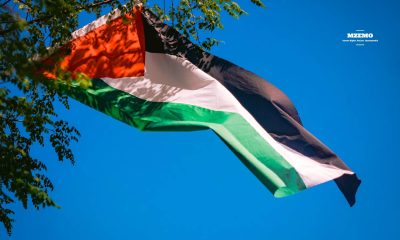
Others have joined the honor of moral winning like Palestine, for instance. At the World Cup, Palestine’s presence was evident, and the absence of Israeli media and flag as an intolerable guest. Some people did not know anything about the Palestinian cause while some believed the misleading story of Israel. However, thanks belong to the supporting campaign, with Qatar as a contributor, things have changed. For instance, non-Arab and Muslim audiences (for example, the Brazilian public) appeared to celebrate their win by singing to Palestine. 
Read more on this/ Palestine is Entrenched In the Heart of Qatar World Cup

Today, we are the one who is writing history from an Arabic land by our rules. It is worth mentioning that people must stop saying that it is all about anti-Semitism. This is either based on ignorance or claims of stupidity. Qatar, Palestine, and Muslims, in general, are all other winners too. The question remains in our minds. If the World Cup were in another Arab country, would it have succeeded in this way and left moral impacts on the world?
Continue Reading
Click to comment

Leave a Reply

Your email address will not be published. Required fields are marked *

Featured

From Gaza’s Genocide to Lebanon’s Bombing: The Assault on the Muslim World Expands

Published

on

From-Gazas-Genocide-to-Lebanons-Bombing-The-Assault-on-the-Muslim-World-Expands

What began with joint US-Israeli strikes on Iran on Feb 28, 2026, quickly spread across the region, linking Gaza, Iran, and Lebanon into a single, expanding, and unwanted conflict.

This is a series of the most volatile events of contemporary times. While a temporary ceasefire with Iran has opened the door for talks, the reality on the ground tells a different story. Gaza remains under genocidal devastation, while Lebanon is under heavy bombardment.

Resultantly, regional tensions are at their highest in years. However, this is not something happening in isolation but a large-scale genocide being unfolded across multiple fronts.

Gaza: The Genocide That Never Stopped

Even as attention shifted toward Iran, Gaza never saw even a bit of relief. More than 2 million Palestinians remain trapped, with the majority displaced internally. Entire neighborhoods have been flattened, and basic services, like water, electricity, and healthcare, have vanished.

Despite diplomatic developments elsewhere, Israeli strikes in Gaza have continued, reinforcing a central reality. The genocide in Gaza did not pause; rather, it became the foundation for a wider assault.

So, Gaza is not separate from the current regional crisis. It is where it began and where it continues.

The Iran Strikes That Changed the Region

On February 28, 2026, U.S. and Israeli forces carried out coordinated and unprovoked airstrikes targeting Iran. These strikes marked a significant shift from indirect confrontation to direct engagement. Even a primary school for girls was hit by the Israeli and US-led airstrikes in Iran, resulting in the deaths of hundreds of innocent lives.

In response to Israel’s act of aggressionand the United States’ Operation Epic Fury, Iran launched Operation True Promise IV. It also launched ballistic missiles and drones to retaliate.

After putting the entire region into flames, Israel declared a state of emergency, while regional airspace disruptions and security alerts spread across neighboring countries.

This heavy exchange transformed the conflict. What had been contained within Gaza now extended into a broader regional confrontation involving a major state actor.

Lebanon: The Expansion No One Could Ignore

If Gaza was the starting point and Iran the escalation, Lebanon became the clearest sign of expansion. So, even after a ceasefire announcement by the US, Israeli airstrikes across Lebanon resulted in:

  • Over 250 to 300 people killed within 24 to 48 hours
  • More than 1,000 injured
  • Dozens of strikes hit densely populated urban areas, including Beirut

These were among the deadliest attacks on Lebanon in decades. Crucially, these strikes continued despite the ceasefire framework announcement with Iran. Israeli leadership made it clear that they are not going to halt their heinous operations in Lebanon despite the long-awaited peace talks.

A Ceasefire That Did Not Bring Calm

The ceasefire announcement between the United States and Iran was presented as a step toward de-escalation. It opened the door for talks in Islamabad, raising hopes of stabilizing the situation.

However, events on the ground contradicted those expectations. Some of these events include:

  • Lebanon continued to face severe and unprovoked bombardment
  • Gaza remained under genocidal attacks
  • Regional military readiness stayed elevated

This created a fragile and uncertain environment in which diplomacy and escalation coexisted. A temporary ceasefire on paper did not translate into peace across the region.

The Strait of Hormuz: A Global Risk Point

Beyond the immediate Middle Eastern battle zones, the conflict has placed critical global infrastructure at risk.

The Strait of Hormuz, through which nearly 20% of the world’s oil supply passes, has become a central pressure point. Iran has signaled its ability to restrict or disrupt traffic through the strait if escalation continues.

This is to pressurize the US and Israel to think about what they are doing at least twice. So, even the possibility of disruption has:

  • Increased volatility in global oil markets
  • Triggered economic concerns far beyond the Middle East

This underscores a key reality that the conflict is not confined to borders, but its consequences are global.

A Connected Battlefield and The Muslim World

What is happening across Gaza, Iran, and Lebanon is not coincidental but a reflection of a wider ideology. This ideology has roots in Islamophobia, too, but the primary driver here is Israel, supported by the United States.

Each front reflects a different dimension of the same conflict:

  • Gaza: Genocide, humanitarian devastation, and mass displacement
  • Iran: Unprovoked and Imposed War
  • Lebanon: Expansion of active military operations by Israel

Although some countries are trying to help de-escalate the situation, such as Turkiye, Qatar, Pakistan, and Egypt, most have complex responses.

Especially the US military bases in Gulf countries such as Saudi Arabia, Oman, Bahrain, and Qatar are being attacked by Iran as a counter-strike.

Rather than observing these events in isolation, using a broader lens makes everything clear.

The future scenario could be a temporary stabilization as Iran brought their 10 points, while the U.S. brought 15 points for the ceasefire to be agreed.

While the efforts to make peace are underway, Israel is still involved in one of the deadliest assaults on Lebanon. The Muslim World should unite at this difficult time, not only for regional stability but also for global peace and prosperity.

Continue Reading

Featured

How Gaza Is Losing the People It Needs to Survive

Published

on

How-Gaza-Is-Losing-the-People-It-Needs-to-Survive

Gaza’s genocide is often described and portrayed through images of collapsed buildings and rising death tolls. But a deeper loss is silently unfolding amidst the genocide – one that cannot be rebuilt with cement or aid.

Gaza is losing its people – not only through death, but also through forced displacement, unemployment, blocked movement, and the collapse of education, as well as professional life.

Recent figures show how severe this shift has become. Gaza’s unemployment rate has surged to around 80%. Moreover, the overall economy of the Strip has shrunk by nearly 87%, reducing total output to just $362 million. When it comes to the GDP per capita, it has fallen to about $161, wiping out over two decades of development.

Even the people in Gaza are surviving from day to day just to live. At the same time, nearly 70% of Gaza’s population is under the age of 30. So, it is evident that the crisis is not abstract, but all of this is happening to the generation that should be carrying Gaza forward.

From Graduates to Survival

Before the genocide, young Palestinians invested heavily in education. Degrees in engineering, medicine, and business were seen as the only path out of hardship.

However, today, that pathway has completely collapsed. In this context, the story of Mahmoud Shamiya is documented as an example, a university graduate who now spends his days collecting firewood and fetching water in a displacement camp. His words capture the shift clearly: young people have become “aimless, jobless, and hopeless.

So, this is not a temporary setback, but an act of structural genocide. When an economy collapses and movement is extremely restricted, education loses its purpose. Degrees no longer lead to jobs, skills cannot be used, and ambition is replaced by survival.

Education Has Been Torn Apart

The damage to Gaza’s education system is systemic. According to recent credible assessments:

  • Around 658,000 to 660,000 students have lost access to regular education
  • Between 87% and 97% of school buildings have been completely obliterated
  • Immediate damage to the education sector is estimated at $870 million, rising to $3.8 billion over five years

So, in this extremely volatile situation, education has become impossible. Even emergency education funding has faded out. Out of nearly $198 million required, only about 3.3% is estimated to be secured.

This is a complete deliberate collapse of the education sector of Palestinians by Israel.  Students are not simply missing classes — they are losing entire academic years, and in fact, losing most precious years of their lives.

Rafah Is Controlling Who Gets a Future

Yet, for many young Palestinians, the only remaining path forward lies outside Gaza. This is only possible through scholarships, medical placements, or training opportunities abroad.

But that path runs through Rafah, and it is not open. There are hundreds of cases of capable students waiting for the only border to get reopened. For instance, there is a case of Mona Al-Mashharawi. She is a student who secured admission in a university in Algeria, but due to Israel’s restrictions and Rafah closure, she has been trapped for three years. She was meant to leave in November 2023.

There is a complete timeline of the Rafah border:

  • Rafah crossing was seized by Israel in May 2024
  • It reopened only partially in 2026, allowing a limited number of people on foot, just for health emergency cases
  • Movement remains extremely restricted, unpredictable, and insufficient for normal life

Who will be responsible for these innocent dreams and the futures of thousands of young people? Who can bring their most precious years back? It’s part of a broader genocide strategy of Israel to eliminate all the footprints of the Palestinian generations.

The Private Sector Has Been Crushed

Before the genocide, Gaza’s private sector accounted for around 52% of employment. It provided livelihoods through small businesses, services, and local industries.

However, today, that system has completely collapsed. Estimates indicate some harsh realities:

  • Up to 90% of economic sectors have been wiped out
  • Total economic losses are approaching $70 billion

The Loss of Skilled Professionals

The most critical loss is not visible in rubble, but it is the loss of people who make recovery possible.

It is evident that doctors cannot work without hospitals. Engineers cannot build without infrastructure, and teachers cannot teach without schools.

Reports now confirm the displacement of skilled workers during the genocide, adding another layer to the crisis. Those who left took with them education, experience, and institutional knowledge.

Those who remain often cannot function in their professions, and as a result, there is a vacuum.

Even if somehow rebuilding begins tomorrow, the people needed to lead that process are either gone, displaced, or unable to work psychologically or physically.

A Generation Forced Into Survival Mode

Gaza’s youth should have been its greatest strength, but now, they are the most affected group of the heinous genocide.

With absolutely no jobs, no stable education, restricted movement, and destroyed infrastructure, young people are no longer planning futures. They are managing survival day after day.

The long-term effects are clear:

  • Delayed or lost careers
  • Reduced economic recovery
  • Severe psychological trauma
  • Weakened social systems

When an entire generation is pushed into survival mode, the damage does not end with the genocide.

As of now, more than 80% to 90% of Gaza’s population depends entirely on humanitarian aid. The aid is itself extremely restricted, and resultantly making survival extremely challenging.

Even the water supply has been reduced to just around 10% of the overall daily requirement in Gaza.

After all this, one fact is certain: the capacity and the future of Gaza are being eroded in an unprecedented way by Israel and its allies. Unless the world realizes the quest for survival in Gaza, nothing is going to change!

Continue Reading

Featured

How Gaza’s Reproductive Life Was Systematically Destroyed

Published

on

How-Gazas-Reproductive-Life-Was-Systematically-Destroyed

A traditional frontline in modern warfare is typically a trench or a high military hotspot, but in Gaza, the concept of the frontline has moved towards unimaginable realities. The devastation in Gaza has been widely measured in destroyed homes, shattered hospitals, and tens of thousands of lives lost.

However, there is another dimension in the Gaza genocide that is being unfolded quietly. It is a strike at the very foundation of a people’s future. Israel is systematically moving the frontline of this genocide towards delivery rooms and neonatal wards.

All across Gaza, the conditions required for pregnancy, childbirth, and infant survival have been systematically dismantled. From the complete destruction of fertility clinics to the collapse of maternity care, the impact is no longer limited to the present. It ultimately extends directly into the future.

The Fertility Clinic That Lost Thousands of Embryos

One of the most striking examples of this collapse came with the destruction of Gaza’s largest fertility center. The Al Basma IVF Centre, a facility that offered hope to families struggling with infertility, was badly hit during the genocide. According to credible reports, around 4,000 embryos stored at the clinic were destroyed.

Each embryo represented a future — a family waiting, a life planned, a possibility that no longer exists. The loss of the clinic meant more than the destruction of a building. It erased years of medical effort and removed one of the few pathways to parenthood for many couples in Gaza.

Israel deliberately targeted the maternal health infrastructure of Gaza, making it an unprecedented act in world history. The brutality and hate during the genocide are already evident, as hundreds of thousands of people were martyred.

Births Falling at an Unprecedented Rate

The impact of genocide on reproduction is now visible in Gaza’s birth statistics. Data shows that births in Gaza dropped by 41% in the first half of 2025 compared with 2022.

However, normal demographic shifts do not explain such a sharp decline. It reflects a reality where:

  • Families are displaced repeatedly
  • Healthcare services are severely limited
  • Food shortages and stress affect pregnancy
  • Safety itself is uncertain

When births fall at this scale, it signals more than disruption. It indicates that the conditions necessary for sustaining life are no longer intact.

Pregnancy Under Conditions of Survival

For thousands of women in Gaza, pregnancy has become a daily struggle for survival. Estimates indicate that more than 150,000 pregnant and breastfeeding women have been living under conditions of displacement, food insecurity, and limited medical care. Moreover, many of them lack access to basic prenatal services.

Reports from human rights organisations describe:

  • Malnutrition during pregnancy
  • Lack of clean water
  • Extremely limited access to doctors and medicine

These effects are not secondary but primary as they directly influence maternal health, fetal development, and survival outcomes.

Investigations by Human Rights Watch documented numerous scenes where multiple newborns were forced to share a single incubator. There is an entire strategy of sterilization rooted in colonial history.

Colonizers used forced sterilization as a strategy against the innocent wombs. The Genocide Convention of 1948 explicitly defines measures to stop the birthrate as an act of genocide.

Childbirth Amidst the Genocide

The collapse of Gaza’s healthcare system has transformed childbirth itself. Al-Shifa Hospital and others that once handled routine deliveries are now operating under extreme pressure, or have been damaged or destroyed. Supplies are scarce, electricity is unreliable, and medical staff are overwhelmed.

This is a stark indicator of how far conditions have deteriorated. Childbirth, which requires stability, hygiene, and skilled care, is now taking place in environments where none of those can be found at all.

A Systematic Genocide of a Generation

Numerous international humanitarian organizations, such as Amnesty International, stated that women in Gaza are being denied the basic conditions necessary for life, including reproductive health services.

The continuity of an entire generation of Palestinians is at stake due to these heinous genocidal acts. Reproductive health is not only a medical issue, but it is deeply tied to population stability, family structure, and long-term social continuity.

The destruction of reproductive systems, whether through infrastructure, access, or conditions, has lasting consequences. The intentions of Israel and its allies, including the United States, are absolutely visible. They want to wipe out the word “Palestine” from the face of the earth through every single effort.

Despite the scale of this devastation, the horror remains largely underreported by the Western Media. This silence is actually like taking part in the genocide.

In a nutshell, the ability to sustain life has been severely compromised. Israel has ultimately turned the womb into a battlefield. Specifically in Gaza, the consequences of genocide are no longer confined to the present. They largely extend into the possibility of life itself!

Continue Reading
Advertisement

Trending