Connect with us

Featured

Racism – An integral part of India

Published

on

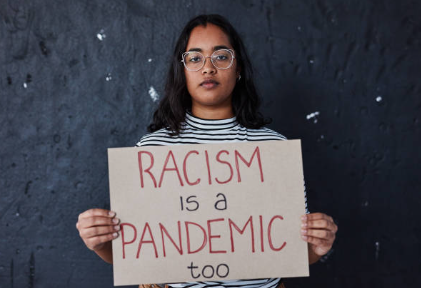
Racism is a pandemic

One Fine Morning…

Racism in India
Racism in India – no less than a pandemic


After making some morning tea for myself, I reached out for the newspaper on my table. I didn’t expect to see something about Racism that day. And I came across this article that made me want to question the kind of ‘evolution’ that India is going through. It was interesting, indeed. A fine lady got away with writing a book that ‘educates Indians’ about the ‘Merits of Dowry’. And one of the points in that section caught my attention. It read – ‘Ugly looking girls can only marry off with attractive dowry with well or ugly looking guys’.

Perception of dark-skinned people and Racism


I was very curious. I asked my maid, “Amala, who is an ugly-looking girl or an ugly-looking boy?”
She said, “Simple, didi. Someone who is dark-complexioned.” When I explained what the article meant, Amala actually agreed with them. She said ugly girls only get married when they pay a hefty dowry. And usually, they only end up getting dark-skinned guys. “Well, that is what you call ill-fated” She sighed and continued with her work.


And Amala herself is a dark-complexioned lady with two kids.


Most Indians strongly believe that people with dark skin tones are unlucky or ugly. And it is undesirable to have dark skin. I see my friends worry a lot about sun-tan because it will make them ‘dark’. When you see dark skin as taboo, it causes increasing hate crimes against people with varied skin complexion. Our society likes to tag the fair-skinned lot as lucky, powerful, beautiful, or the only ones who have the ‘ability’ to achieve something. When a nurse delivers a baby out of the mother’s womb, she’d announce, “Congratulations! You have a fair young boy here!”


Really?


That is why skin brands and companies gain millions of profit every day! Their advertisements earn them crores. The celebrities starring in these ads sleep on studded diamond beds. They feed on the insecurities of people and pry on the doubts in our heads. You can use creams, scrubs, and whatnot to change your complexion! But when will Indians start to realize that the complexion needs no change? That is who you are and that is who you should be!

Also Read: Combating Racism – Lived Experiences


The skin color, hair type, features – all these external factors help us identify one human from the other. Otherwise, how would you know someone from their AADHAR card if everyone ‘looked’ the same?
Unfortunately, people have started to take human features as factors to label one section superior to the other. That is how Racism arose as a dangerous social evil. And its roots go way back in time.


The roots of Racism go back in time…

When we refer to the Indian Mythology, the example of Lord Krishna arises. In the Hindu scriptures, Lord Krishna was often defined as a glorious young man with dark skin. Devotees compared him to pleasant nights and peacocks. Gracious, elegant, and the man who guided the Pandavas through a war of justice! No one questioned his ‘good looks’. But things changed after that. The caste system pushed the dark-skinned people to the bottom of the power web as the ‘Shudras’. They were also called the ‘dark-people’, the ‘untouchables’, and servants. And who decided the hierarchy? The fair-skinned, of course!
And then came the Mughals and the Portuguese. They never discriminated against people based on skin color. Yet, their presence did make Indians feel insecure. And the hell broke loose when the British entered the country.

Also Read: Racism: Diverse faces of discrimination in India


I would thank them for introducing Cricket to Indians but won’t hesitate twice to smack them left and right for planting the thoughts of Racism. The pale-skinned invaders have only considered the opinions of the fair-skinned Indians.


This course of thinking has left its mark on the minds of Indians. People fight against each other, refuse to establish relationships, and alienate their country people based on skin color! It is very evident in the way people treat dark-skinned people as ‘ugly’. I don’t get to see many ‘dark-skinned’ actors in India’s mainstream cinema.


Why?


Because, we the people, consider them to be ugly. And the big-heads making money here will only offer what the audience would pay for.

Racism is still not gone


It will be a big misconception if we think that discrimination can only happen to dark-skinned citizens. Indians do not spare their ‘Fair-skinned’ brothers and sisters too. It is evident when you hear the infamous, insulting term ‘Chinki’ for the North–Easterns. The government has established laws to punish those who pass derogatory comments or hurt the North-Easterns. But how will the age-old notion get erased from the minds of people after a few laws are suddenly introduced?

Also Read: The Roaring Giant of Racism!


The change has to start in the houses. The education should stop preaching the difference between skin tones, and ethnicities. It is alarming how different textbooks are openly claiming that being ‘ugly’ is synonymous with being ‘dark’.


And when anyone says she is ‘dark’ because she is unlucky, I feel like screaming the word ‘Melanotropin!’ at them. It is pure ‘Science!’

Time for Contemplation


If people are assuming that Racism is no more a part of our country, the citizens are in here for a good shock! The nation has people of different diversity and when you have them all pooled under one roof, Racism should not serve as a volatile factor to start wars. There is enough hatred because of other social evils, and Racist thoughts shouldn’t add fuel to the fire. That is only possible when mindsets change, and people develop self-confidence.

Also Read: Rooting out Racism in Children Books: Six Dr. Seuss books cease publication


People across the country have to kill the hesitation and accept that ‘dark is pretty, dark is splendid, and dark is OKAY!’. They have to break the age-old beliefs that serve no purpose in the contemporary world. When you use racial slurs, indulge in hate crime, or make another person feel less worthy, that is an insult to themselves. That will make a person more ‘unlucky’ than being ‘dark’ because they are foregoing the opportunity to ‘co-live’. Hopefully, Most of the Indians, if not all, will see this tiny logic and embrace life as it comes – Dark, Light, or Shaded.

Continue Reading
Click to comment

Leave a Reply

Your email address will not be published. Required fields are marked *

Featured

From Gaza’s Genocide to Lebanon’s Bombing: The Assault on the Muslim World Expands

Published

on

From-Gazas-Genocide-to-Lebanons-Bombing-The-Assault-on-the-Muslim-World-Expands

What began with joint US-Israeli strikes on Iran on Feb 28, 2026, quickly spread across the region, linking Gaza, Iran, and Lebanon into a single, expanding, and unwanted conflict.

This is a series of the most volatile events of contemporary times. While a temporary ceasefire with Iran has opened the door for talks, the reality on the ground tells a different story. Gaza remains under genocidal devastation, while Lebanon is under heavy bombardment.

Resultantly, regional tensions are at their highest in years. However, this is not something happening in isolation but a large-scale genocide being unfolded across multiple fronts.

Gaza: The Genocide That Never Stopped

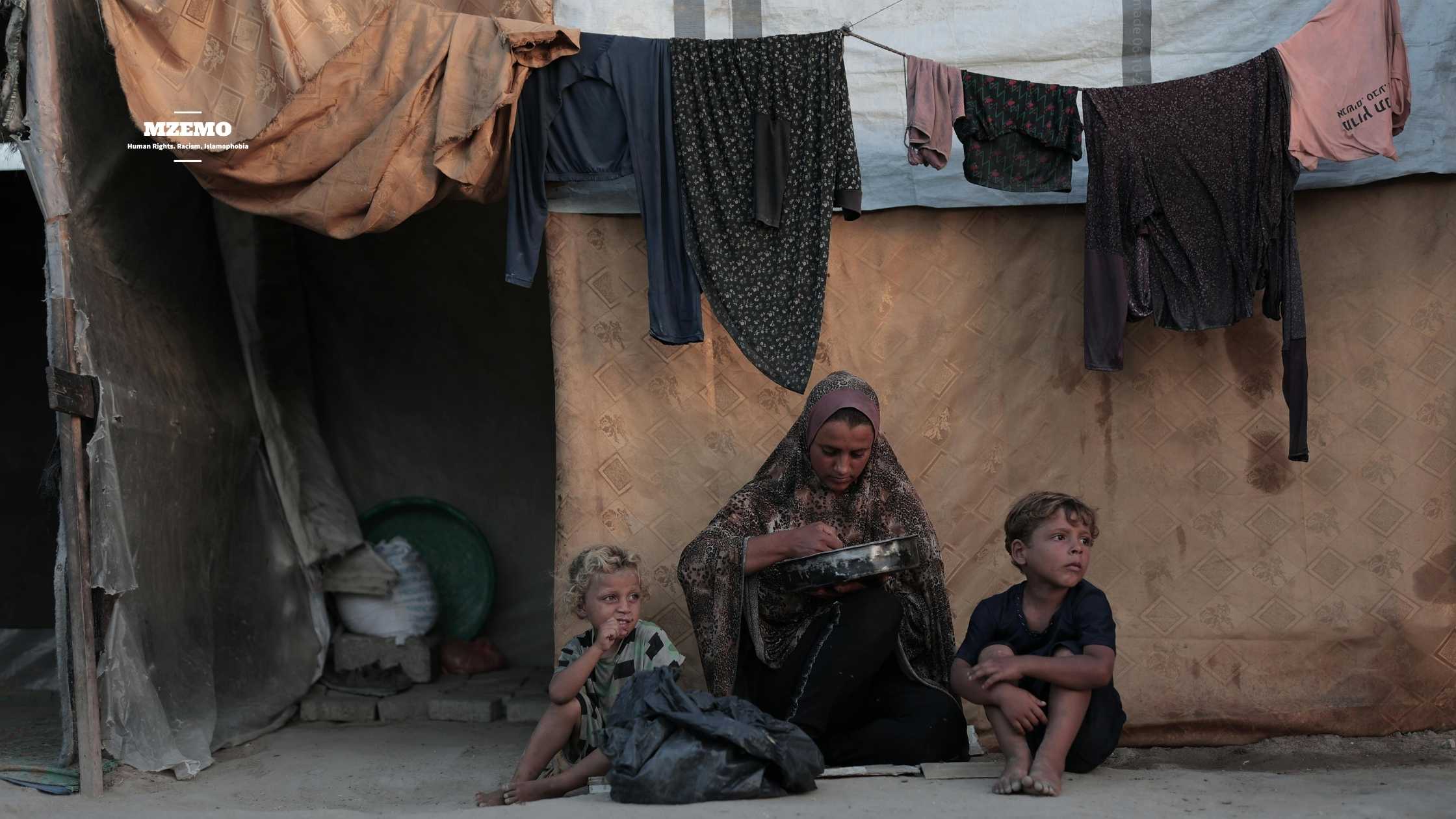
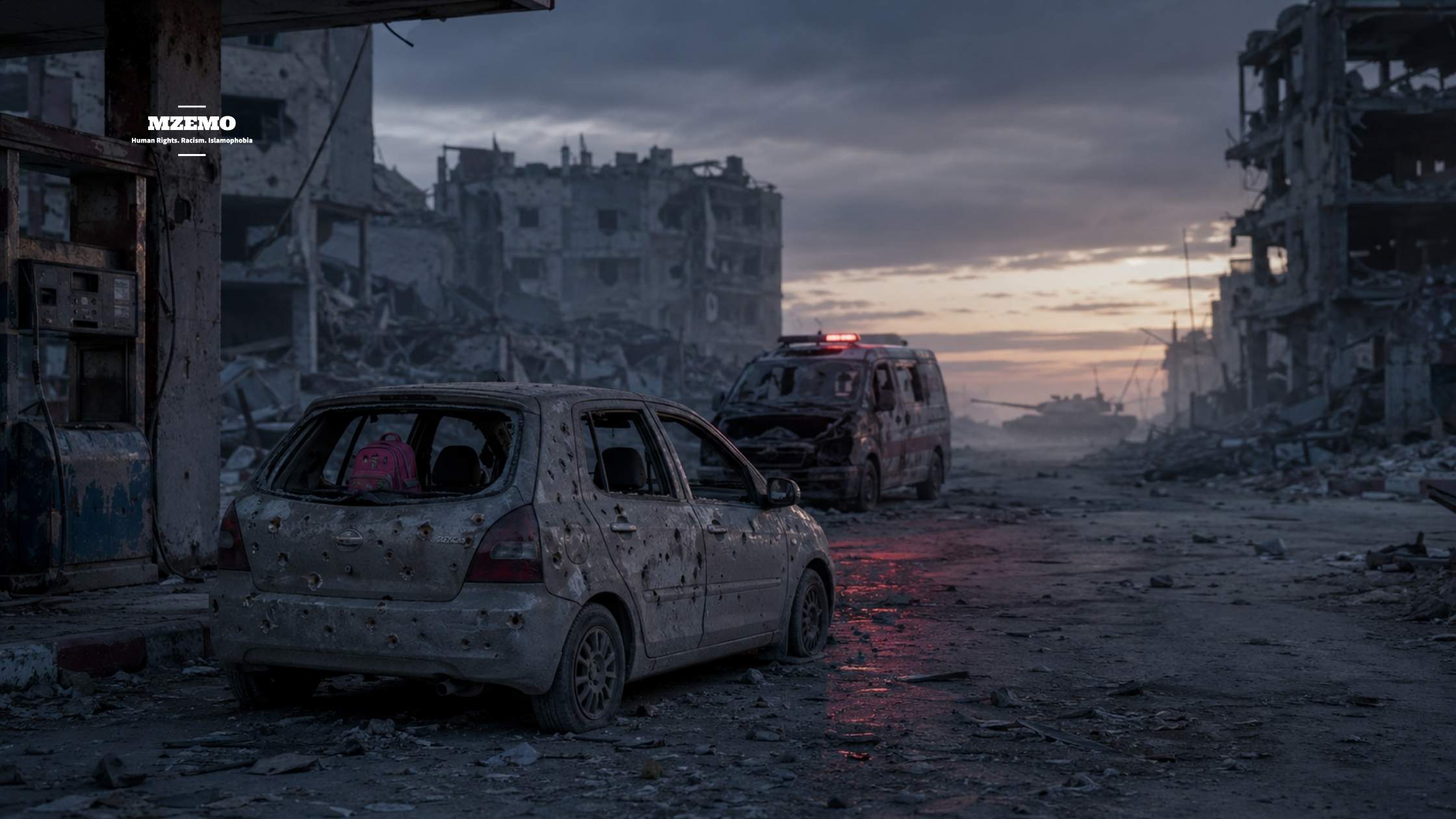
Even as attention shifted toward Iran, Gaza never saw even a bit of relief. More than 2 million Palestinians remain trapped, with the majority displaced internally. Entire neighborhoods have been flattened, and basic services, like water, electricity, and healthcare, have vanished.

Despite diplomatic developments elsewhere, Israeli strikes in Gaza have continued, reinforcing a central reality. The genocide in Gaza did not pause; rather, it became the foundation for a wider assault.

So, Gaza is not separate from the current regional crisis. It is where it began and where it continues.

The Iran Strikes That Changed the Region

On February 28, 2026, U.S. and Israeli forces carried out coordinated and unprovoked airstrikes targeting Iran. These strikes marked a significant shift from indirect confrontation to direct engagement. Even a primary school for girls was hit by the Israeli and US-led airstrikes in Iran, resulting in the deaths of hundreds of innocent lives.

In response to Israel’s act of aggressionand the United States’ Operation Epic Fury, Iran launched Operation True Promise IV. It also launched ballistic missiles and drones to retaliate.

After putting the entire region into flames, Israel declared a state of emergency, while regional airspace disruptions and security alerts spread across neighboring countries.

This heavy exchange transformed the conflict. What had been contained within Gaza now extended into a broader regional confrontation involving a major state actor.

Lebanon: The Expansion No One Could Ignore

If Gaza was the starting point and Iran the escalation, Lebanon became the clearest sign of expansion. So, even after a ceasefire announcement by the US, Israeli airstrikes across Lebanon resulted in:

  • Over 250 to 300 people killed within 24 to 48 hours
  • More than 1,000 injured
  • Dozens of strikes hit densely populated urban areas, including Beirut

These were among the deadliest attacks on Lebanon in decades. Crucially, these strikes continued despite the ceasefire framework announcement with Iran. Israeli leadership made it clear that they are not going to halt their heinous operations in Lebanon despite the long-awaited peace talks.

A Ceasefire That Did Not Bring Calm

The ceasefire announcement between the United States and Iran was presented as a step toward de-escalation. It opened the door for talks in Islamabad, raising hopes of stabilizing the situation.

However, events on the ground contradicted those expectations. Some of these events include:

  • Lebanon continued to face severe and unprovoked bombardment
  • Gaza remained under genocidal attacks
  • Regional military readiness stayed elevated

This created a fragile and uncertain environment in which diplomacy and escalation coexisted. A temporary ceasefire on paper did not translate into peace across the region.

The Strait of Hormuz: A Global Risk Point

Beyond the immediate Middle Eastern battle zones, the conflict has placed critical global infrastructure at risk.

The Strait of Hormuz, through which nearly 20% of the world’s oil supply passes, has become a central pressure point. Iran has signaled its ability to restrict or disrupt traffic through the strait if escalation continues.

This is to pressurize the US and Israel to think about what they are doing at least twice. So, even the possibility of disruption has:

  • Increased volatility in global oil markets
  • Triggered economic concerns far beyond the Middle East

This underscores a key reality that the conflict is not confined to borders, but its consequences are global.

A Connected Battlefield and The Muslim World

What is happening across Gaza, Iran, and Lebanon is not coincidental but a reflection of a wider ideology. This ideology has roots in Islamophobia, too, but the primary driver here is Israel, supported by the United States.

Each front reflects a different dimension of the same conflict:

  • Gaza: Genocide, humanitarian devastation, and mass displacement
  • Iran: Unprovoked and Imposed War
  • Lebanon: Expansion of active military operations by Israel

Although some countries are trying to help de-escalate the situation, such as Turkiye, Qatar, Pakistan, and Egypt, most have complex responses.

Especially the US military bases in Gulf countries such as Saudi Arabia, Oman, Bahrain, and Qatar are being attacked by Iran as a counter-strike.

Rather than observing these events in isolation, using a broader lens makes everything clear.

The future scenario could be a temporary stabilization as Iran brought their 10 points, while the U.S. brought 15 points for the ceasefire to be agreed.

While the efforts to make peace are underway, Israel is still involved in one of the deadliest assaults on Lebanon. The Muslim World should unite at this difficult time, not only for regional stability but also for global peace and prosperity.

Continue Reading

Featured

How Gaza Is Losing the People It Needs to Survive

Published

on

How-Gaza-Is-Losing-the-People-It-Needs-to-Survive

Gaza’s genocide is often described and portrayed through images of collapsed buildings and rising death tolls. But a deeper loss is silently unfolding amidst the genocide – one that cannot be rebuilt with cement or aid.

Gaza is losing its people – not only through death, but also through forced displacement, unemployment, blocked movement, and the collapse of education, as well as professional life.

Recent figures show how severe this shift has become. Gaza’s unemployment rate has surged to around 80%. Moreover, the overall economy of the Strip has shrunk by nearly 87%, reducing total output to just $362 million. When it comes to the GDP per capita, it has fallen to about $161, wiping out over two decades of development.

Even the people in Gaza are surviving from day to day just to live. At the same time, nearly 70% of Gaza’s population is under the age of 30. So, it is evident that the crisis is not abstract, but all of this is happening to the generation that should be carrying Gaza forward.

From Graduates to Survival

Before the genocide, young Palestinians invested heavily in education. Degrees in engineering, medicine, and business were seen as the only path out of hardship.

However, today, that pathway has completely collapsed. In this context, the story of Mahmoud Shamiya is documented as an example, a university graduate who now spends his days collecting firewood and fetching water in a displacement camp. His words capture the shift clearly: young people have become “aimless, jobless, and hopeless.

So, this is not a temporary setback, but an act of structural genocide. When an economy collapses and movement is extremely restricted, education loses its purpose. Degrees no longer lead to jobs, skills cannot be used, and ambition is replaced by survival.

Education Has Been Torn Apart

The damage to Gaza’s education system is systemic. According to recent credible assessments:

  • Around 658,000 to 660,000 students have lost access to regular education
  • Between 87% and 97% of school buildings have been completely obliterated
  • Immediate damage to the education sector is estimated at $870 million, rising to $3.8 billion over five years

So, in this extremely volatile situation, education has become impossible. Even emergency education funding has faded out. Out of nearly $198 million required, only about 3.3% is estimated to be secured.

This is a complete deliberate collapse of the education sector of Palestinians by Israel.  Students are not simply missing classes — they are losing entire academic years, and in fact, losing most precious years of their lives.

Rafah Is Controlling Who Gets a Future

Yet, for many young Palestinians, the only remaining path forward lies outside Gaza. This is only possible through scholarships, medical placements, or training opportunities abroad.

But that path runs through Rafah, and it is not open. There are hundreds of cases of capable students waiting for the only border to get reopened. For instance, there is a case of Mona Al-Mashharawi. She is a student who secured admission in a university in Algeria, but due to Israel’s restrictions and Rafah closure, she has been trapped for three years. She was meant to leave in November 2023.

There is a complete timeline of the Rafah border:

  • Rafah crossing was seized by Israel in May 2024
  • It reopened only partially in 2026, allowing a limited number of people on foot, just for health emergency cases
  • Movement remains extremely restricted, unpredictable, and insufficient for normal life

Who will be responsible for these innocent dreams and the futures of thousands of young people? Who can bring their most precious years back? It’s part of a broader genocide strategy of Israel to eliminate all the footprints of the Palestinian generations.

The Private Sector Has Been Crushed

Before the genocide, Gaza’s private sector accounted for around 52% of employment. It provided livelihoods through small businesses, services, and local industries.

However, today, that system has completely collapsed. Estimates indicate some harsh realities:

  • Up to 90% of economic sectors have been wiped out
  • Total economic losses are approaching $70 billion

The Loss of Skilled Professionals

The most critical loss is not visible in rubble, but it is the loss of people who make recovery possible.

It is evident that doctors cannot work without hospitals. Engineers cannot build without infrastructure, and teachers cannot teach without schools.

Reports now confirm the displacement of skilled workers during the genocide, adding another layer to the crisis. Those who left took with them education, experience, and institutional knowledge.

Those who remain often cannot function in their professions, and as a result, there is a vacuum.

Even if somehow rebuilding begins tomorrow, the people needed to lead that process are either gone, displaced, or unable to work psychologically or physically.

A Generation Forced Into Survival Mode

Gaza’s youth should have been its greatest strength, but now, they are the most affected group of the heinous genocide.

With absolutely no jobs, no stable education, restricted movement, and destroyed infrastructure, young people are no longer planning futures. They are managing survival day after day.

The long-term effects are clear:

  • Delayed or lost careers
  • Reduced economic recovery
  • Severe psychological trauma
  • Weakened social systems

When an entire generation is pushed into survival mode, the damage does not end with the genocide.

As of now, more than 80% to 90% of Gaza’s population depends entirely on humanitarian aid. The aid is itself extremely restricted, and resultantly making survival extremely challenging.

Even the water supply has been reduced to just around 10% of the overall daily requirement in Gaza.

After all this, one fact is certain: the capacity and the future of Gaza are being eroded in an unprecedented way by Israel and its allies. Unless the world realizes the quest for survival in Gaza, nothing is going to change!

Continue Reading

Featured

How Gaza’s Reproductive Life Was Systematically Destroyed

Published

on

How-Gazas-Reproductive-Life-Was-Systematically-Destroyed

A traditional frontline in modern warfare is typically a trench or a high military hotspot, but in Gaza, the concept of the frontline has moved towards unimaginable realities. The devastation in Gaza has been widely measured in destroyed homes, shattered hospitals, and tens of thousands of lives lost.

However, there is another dimension in the Gaza genocide that is being unfolded quietly. It is a strike at the very foundation of a people’s future. Israel is systematically moving the frontline of this genocide towards delivery rooms and neonatal wards.

All across Gaza, the conditions required for pregnancy, childbirth, and infant survival have been systematically dismantled. From the complete destruction of fertility clinics to the collapse of maternity care, the impact is no longer limited to the present. It ultimately extends directly into the future.

The Fertility Clinic That Lost Thousands of Embryos

One of the most striking examples of this collapse came with the destruction of Gaza’s largest fertility center. The Al Basma IVF Centre, a facility that offered hope to families struggling with infertility, was badly hit during the genocide. According to credible reports, around 4,000 embryos stored at the clinic were destroyed.

Each embryo represented a future — a family waiting, a life planned, a possibility that no longer exists. The loss of the clinic meant more than the destruction of a building. It erased years of medical effort and removed one of the few pathways to parenthood for many couples in Gaza.

Israel deliberately targeted the maternal health infrastructure of Gaza, making it an unprecedented act in world history. The brutality and hate during the genocide are already evident, as hundreds of thousands of people were martyred.

Births Falling at an Unprecedented Rate

The impact of genocide on reproduction is now visible in Gaza’s birth statistics. Data shows that births in Gaza dropped by 41% in the first half of 2025 compared with 2022.

However, normal demographic shifts do not explain such a sharp decline. It reflects a reality where:

  • Families are displaced repeatedly
  • Healthcare services are severely limited
  • Food shortages and stress affect pregnancy
  • Safety itself is uncertain

When births fall at this scale, it signals more than disruption. It indicates that the conditions necessary for sustaining life are no longer intact.

Pregnancy Under Conditions of Survival

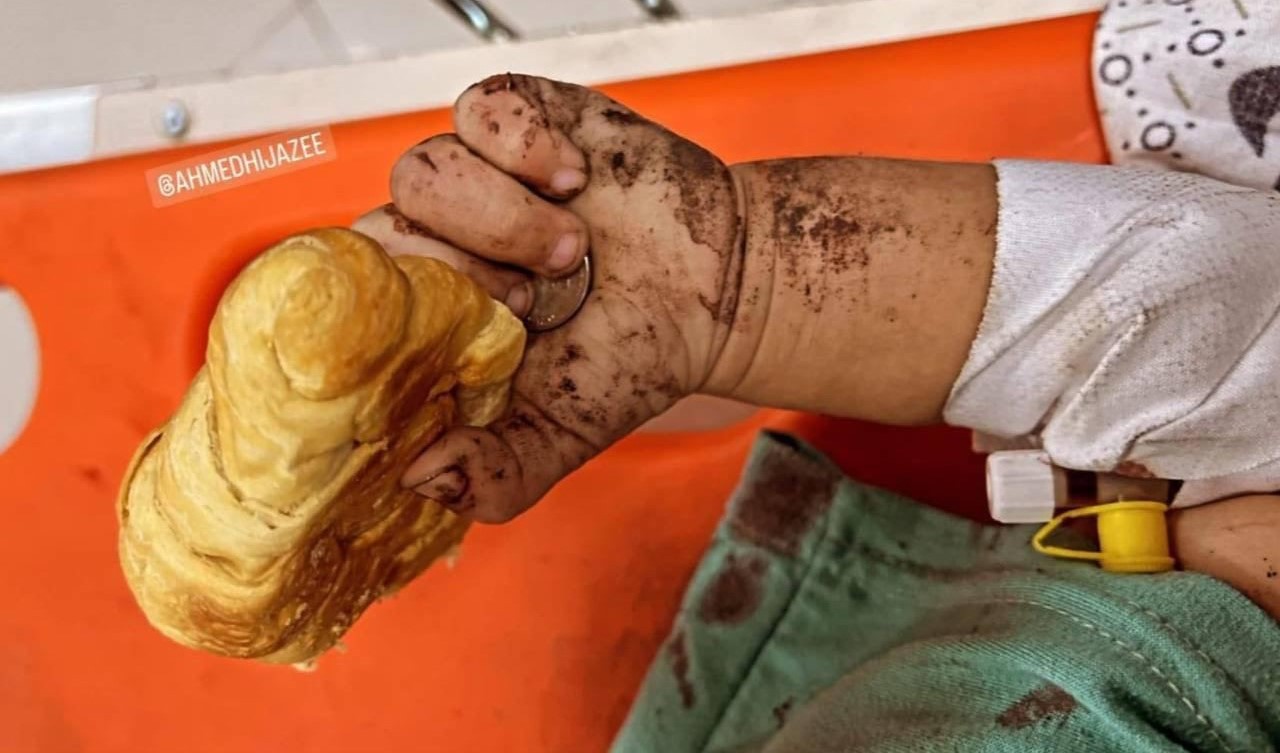
For thousands of women in Gaza, pregnancy has become a daily struggle for survival. Estimates indicate that more than 150,000 pregnant and breastfeeding women have been living under conditions of displacement, food insecurity, and limited medical care. Moreover, many of them lack access to basic prenatal services.

Reports from human rights organisations describe:

  • Malnutrition during pregnancy
  • Lack of clean water
  • Extremely limited access to doctors and medicine

These effects are not secondary but primary as they directly influence maternal health, fetal development, and survival outcomes.

Investigations by Human Rights Watch documented numerous scenes where multiple newborns were forced to share a single incubator. There is an entire strategy of sterilization rooted in colonial history.

Colonizers used forced sterilization as a strategy against the innocent wombs. The Genocide Convention of 1948 explicitly defines measures to stop the birthrate as an act of genocide.

Childbirth Amidst the Genocide

The collapse of Gaza’s healthcare system has transformed childbirth itself. Al-Shifa Hospital and others that once handled routine deliveries are now operating under extreme pressure, or have been damaged or destroyed. Supplies are scarce, electricity is unreliable, and medical staff are overwhelmed.

This is a stark indicator of how far conditions have deteriorated. Childbirth, which requires stability, hygiene, and skilled care, is now taking place in environments where none of those can be found at all.

A Systematic Genocide of a Generation

Numerous international humanitarian organizations, such as Amnesty International, stated that women in Gaza are being denied the basic conditions necessary for life, including reproductive health services.

The continuity of an entire generation of Palestinians is at stake due to these heinous genocidal acts. Reproductive health is not only a medical issue, but it is deeply tied to population stability, family structure, and long-term social continuity.

The destruction of reproductive systems, whether through infrastructure, access, or conditions, has lasting consequences. The intentions of Israel and its allies, including the United States, are absolutely visible. They want to wipe out the word “Palestine” from the face of the earth through every single effort.

Despite the scale of this devastation, the horror remains largely underreported by the Western Media. This silence is actually like taking part in the genocide.

In a nutshell, the ability to sustain life has been severely compromised. Israel has ultimately turned the womb into a battlefield. Specifically in Gaza, the consequences of genocide are no longer confined to the present. They largely extend into the possibility of life itself!

Continue Reading
Advertisement

Trending