Featured
Racism – An integral part of India

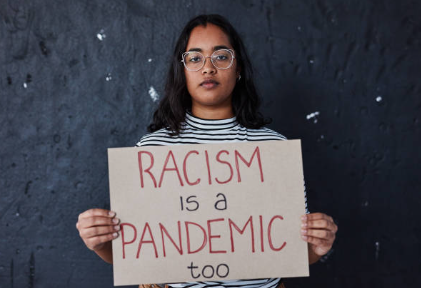
One Fine Morning…

After making some morning tea for myself, I reached out for the newspaper on my table. I didn’t expect to see something about Racism that day. And I came across this article that made me want to question the kind of ‘evolution’ that India is going through. It was interesting, indeed. A fine lady got away with writing a book that ‘educates Indians’ about the ‘Merits of Dowry’. And one of the points in that section caught my attention. It read – ‘Ugly looking girls can only marry off with attractive dowry with well or ugly looking guys’.
Perception of dark-skinned people and Racism
I was very curious. I asked my maid, “Amala, who is an ugly-looking girl or an ugly-looking boy?”
She said, “Simple, didi. Someone who is dark-complexioned.” When I explained what the article meant, Amala actually agreed with them. She said ugly girls only get married when they pay a hefty dowry. And usually, they only end up getting dark-skinned guys. “Well, that is what you call ill-fated” She sighed and continued with her work.
And Amala herself is a dark-complexioned lady with two kids.
Most Indians strongly believe that people with dark skin tones are unlucky or ugly. And it is undesirable to have dark skin. I see my friends worry a lot about sun-tan because it will make them ‘dark’. When you see dark skin as taboo, it causes increasing hate crimes against people with varied skin complexion. Our society likes to tag the fair-skinned lot as lucky, powerful, beautiful, or the only ones who have the ‘ability’ to achieve something. When a nurse delivers a baby out of the mother’s womb, she’d announce, “Congratulations! You have a fair young boy here!”
Really?
That is why skin brands and companies gain millions of profit every day! Their advertisements earn them crores. The celebrities starring in these ads sleep on studded diamond beds. They feed on the insecurities of people and pry on the doubts in our heads. You can use creams, scrubs, and whatnot to change your complexion! But when will Indians start to realize that the complexion needs no change? That is who you are and that is who you should be!
Also Read: Combating Racism – Lived Experiences
The skin color, hair type, features – all these external factors help us identify one human from the other. Otherwise, how would you know someone from their AADHAR card if everyone ‘looked’ the same?
Unfortunately, people have started to take human features as factors to label one section superior to the other. That is how Racism arose as a dangerous social evil. And its roots go way back in time.
The roots of Racism go back in time…
When we refer to the Indian Mythology, the example of Lord Krishna arises. In the Hindu scriptures, Lord Krishna was often defined as a glorious young man with dark skin. Devotees compared him to pleasant nights and peacocks. Gracious, elegant, and the man who guided the Pandavas through a war of justice! No one questioned his ‘good looks’. But things changed after that. The caste system pushed the dark-skinned people to the bottom of the power web as the ‘Shudras’. They were also called the ‘dark-people’, the ‘untouchables’, and servants. And who decided the hierarchy? The fair-skinned, of course!
And then came the Mughals and the Portuguese. They never discriminated against people based on skin color. Yet, their presence did make Indians feel insecure. And the hell broke loose when the British entered the country.
Also Read: Racism: Diverse faces of discrimination in India
I would thank them for introducing Cricket to Indians but won’t hesitate twice to smack them left and right for planting the thoughts of Racism. The pale-skinned invaders have only considered the opinions of the fair-skinned Indians.
This course of thinking has left its mark on the minds of Indians. People fight against each other, refuse to establish relationships, and alienate their country people based on skin color! It is very evident in the way people treat dark-skinned people as ‘ugly’. I don’t get to see many ‘dark-skinned’ actors in India’s mainstream cinema.
Why?
Because, we the people, consider them to be ugly. And the big-heads making money here will only offer what the audience would pay for.
Racism is still not gone
It will be a big misconception if we think that discrimination can only happen to dark-skinned citizens. Indians do not spare their ‘Fair-skinned’ brothers and sisters too. It is evident when you hear the infamous, insulting term ‘Chinki’ for the North–Easterns. The government has established laws to punish those who pass derogatory comments or hurt the North-Easterns. But how will the age-old notion get erased from the minds of people after a few laws are suddenly introduced?
Also Read: The Roaring Giant of Racism!
The change has to start in the houses. The education should stop preaching the difference between skin tones, and ethnicities. It is alarming how different textbooks are openly claiming that being ‘ugly’ is synonymous with being ‘dark’.
And when anyone says she is ‘dark’ because she is unlucky, I feel like screaming the word ‘Melanotropin!’ at them. It is pure ‘Science!’
Time for Contemplation
If people are assuming that Racism is no more a part of our country, the citizens are in here for a good shock! The nation has people of different diversity and when you have them all pooled under one roof, Racism should not serve as a volatile factor to start wars. There is enough hatred because of other social evils, and Racist thoughts shouldn’t add fuel to the fire. That is only possible when mindsets change, and people develop self-confidence.
Also Read: Rooting out Racism in Children Books: Six Dr. Seuss books cease publication
People across the country have to kill the hesitation and accept that ‘dark is pretty, dark is splendid, and dark is OKAY!’. They have to break the age-old beliefs that serve no purpose in the contemporary world. When you use racial slurs, indulge in hate crime, or make another person feel less worthy, that is an insult to themselves. That will make a person more ‘unlucky’ than being ‘dark’ because they are foregoing the opportunity to ‘co-live’. Hopefully, Most of the Indians, if not all, will see this tiny logic and embrace life as it comes – Dark, Light, or Shaded.
Featured
Gaza on the Brink Again: How the Rafah Border Closure Is Pushing 2 Million People Toward Extreme Hunger


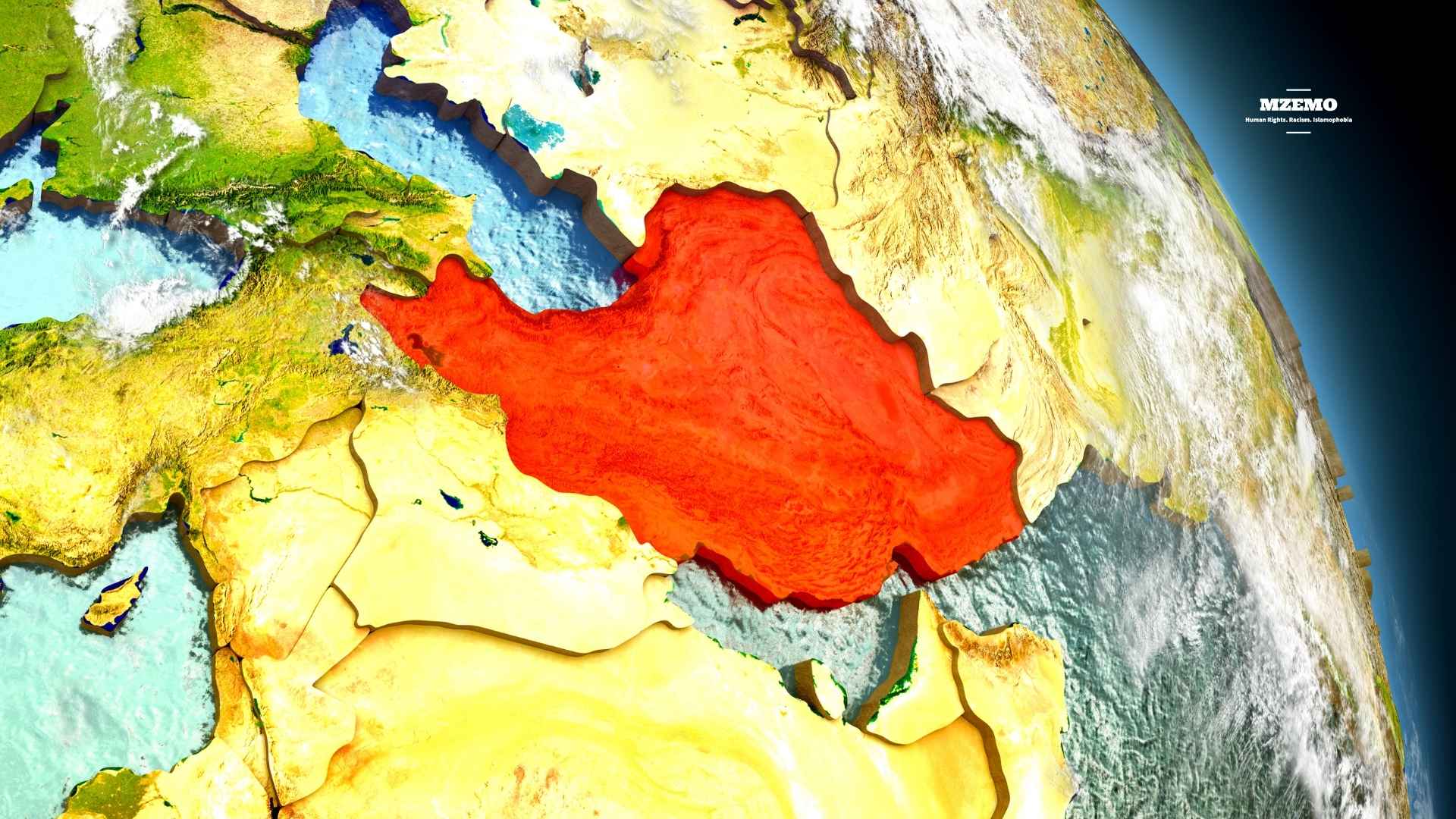
Across the globe, there are two dominating crisis headlines today: Israel’s blatant genocide in Gaza and the ongoing war between Israel-US and Iran. This war is undoubtedly imposed by Israel and the United States, labeling it necessary for peace.
Western governments and media houses frame their policies around the language of “security” and “stability”. There is a pattern of double standards that undermines international law, credibility, and humanity.
On one side stands Gaza, where more than 2.2 million Palestinians are being killed by Israel. It has produced one of the worst humanitarian catastrophes of the 21st Century. On the other hand, stands Iran, a country that is signatory to the Nuclear Non-Proliferation Treaty (NPT) yet faces sanctions, threats, and even attacks on its civilians.
Why are some countries given carte blanche and strategic exceptions while others face relentless punishment?
Gaza: A Genocide in Plain Sight
Since the beginning of Israel’s large-scale assault on Gaza, the humanitarian impact has been staggering. According to Palestinian health authorities and international humanitarian organizations, more than 80,000 Palestinians have been killed, with a large proportion of the victims being women and children.
Entire neighborhoods across Gaza have been reduced to rubble. The United Nations reports that the vast majority of Gaza’s population has been displaced, many of them forced to move multiple times as Israeli military operations expanded across the territory.
This is the purest form of genocide in modern human history. The scale of destruction, starvation, and forced displacement goes far beyond conventional warfare. However, not all media groups are showing the real picture. Western media is showing its unquestioned support for Israel even during the most heinous crimes against humanity.
Western Silence and Political Protection
The United States remains Israel’s closest international ally. According to data from the U.S. Congressional Research Service, Washington provides Israel with approximately $3.8 billion in annual military assistance under long term defense agreements.
Beyond military aid, Western governments have repeatedly shielded Israel from international accountability. In diplomatic arenas such as the United Nations Security Council, attempts to impose sanctions or demand ceasefires have often been blocked or diluted.
This pattern represents a profound contradiction: while Western leaders frequently emphasize human rights and international law, their response to the devastation in Gaza appears far more restrained than in other global conflicts.

Israel’s Nuclear Arsenal: The Middle East’s Open Secret
Another major source of controversy lies in the nuclear dimension of Middle Eastern politics.
Israel is widely believed by international experts to possess between 80 and 200 nuclear warheads, developed through its long-standing nuclear program centered around the Dimona facility in the Negev desert.
Yet Israel maintains a policy known as “nuclear ambiguity” — neither confirming nor denying the existence of its nuclear arsenal.
More importantly, Israel is not a signatory to the Nuclear Non-Proliferation Treaty (NPT), the global framework designed to prevent the spread of nuclear weapons.
Just because it operates outside the NPT system, Israel’s nuclear facilities are not subject to full international inspections by the International Atomic Energy Agency (IAEA).
Despite this reality, Western governments rarely criticize Israel’s nuclear capabilities or call for sanctions related to its weapons program.
Iran and the Nuclear Non-Proliferation Treaty
On the other hand, Iran’s nuclear program exists in a very different legal context.
Unlike Israel, Iran signed and ratified the Nuclear Non-Proliferation Treaty in 1970, which means it is legally permitted to pursue nuclear technology for peaceful purposes such as energy production and scientific research.
Under the NPT framework, Iran’s nuclear facilities are supposed to operate under international monitoring by the International Atomic Energy Agency (IAEA).
Nevertheless, Iran has faced decades of economic sanctions and intense political pressure from Western governments, which argue that its uranium enrichment activities could eventually lead to nuclear weapons development. However, Iranian officials insist that their nuclear program is intended solely for civilian purposes.
Attacks on Iran and the Broader Muslim World
Recent tensions have further escalated the crisis. Israel and the United States have carried out strikes targeting Iranian nuclear facilities, including sites associated with uranium enrichment. The assassination of Iran’s Supreme Leader Ayatollah Ali Khamenei, along with other high-ranking officials show how brutal these strikes are.
Just like in Gaza, Iran’s civilians are also being attacked. One such example is the recent bombing of a girls’ school in Iran in which more than a hundred innocent children and teachers were killed. Such attacks raise serious concerns among international security experts.
Moreover, striking nuclear infrastructure carries enormous risks, including the possibility of radioactive contamination and the potential collapse of global nuclear non-proliferation efforts. Some analysts argue that military attacks on nuclear facilities could actually push targeted states to accelerate weapons development rather than abandon it.
Ultimately, these strikes represent another example of selective enforcement of international norms.
From Gaza to Tehran: A Crisis of Global Credibility
The combined effect of these policies has produced a growing crisis of credibility for the international system.
International law is being applied selectively, enforced strictly against adversaries, while ignored when allies are involved.
From the ruins of Gaza to the nuclear facilities of Iran, the politics of power continue to shape the Middle East in profound ways.
For millions of people across the region, the question is not merely about military strategy or diplomatic rivalry. It is about whether international law truly applies equally to all nations — or whether global justice remains dependent on political alliances.
Until those questions are addressed, the perception of double standards will continue to fuel anger, instability, and distrust across the Middle East and beyond.
Crimes Against Humanity
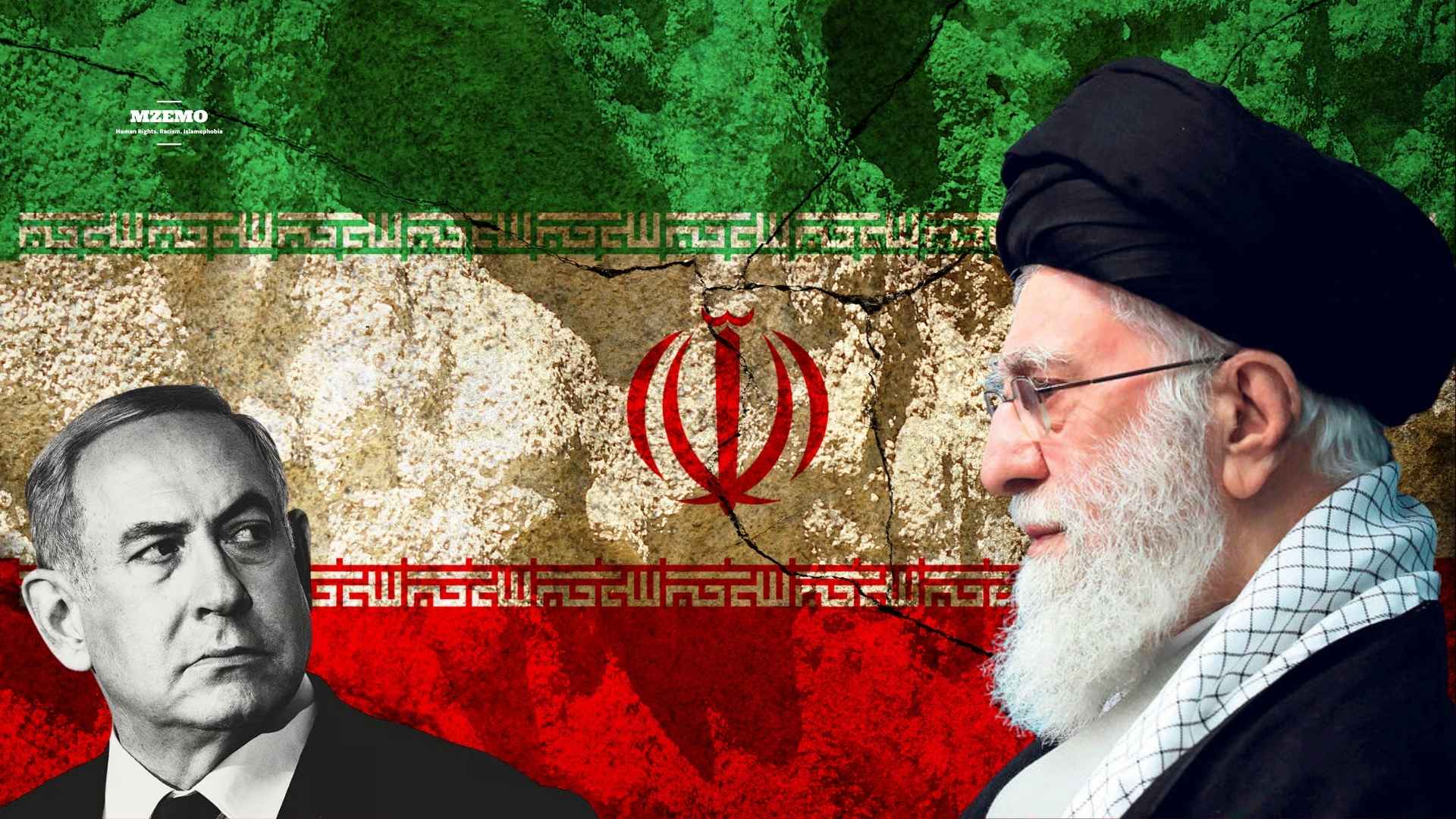
Shockwaves Across the Gulf: How the US–Israel Strike on Iran Could Redraw the Region
-
 Featured2 years ago
World passively watching as Israel perpetrates open-ended massacre in Gaza
-
Featured3 years ago
Argentina wins the World Cup; are there any other winners?
-
Featured2 years ago
Israel is Hiding Crucial Demographic Facts About Palestinians
-
Featured5 years ago
History of the Ottoman Empire
-
Featured3 years ago
Christian militia infiltrate Lebanon
-
Featured5 years ago
“Do Not Waste Water Even If You Were at a Running Stream” Prophet Muhammad
-
Featured2 years ago
Muhammed: The Greatest Man to walk on Earth
-
Featured4 years ago
World Leaders Remain Silent Over Human Rights Violations in the UAE