Connect with us

Featured

Impact of Technology on Human Rights

Published

on

AI technology and human rights

We are living in an era of disruptive technologies, witnessing incidents of human rights violations with the use of technologies. History always changes itself with the introduction of revolutionary technology. Introduction of technologies like Artificial Intelligence, Machine Learning, Big Data Analysis and IoT are such technologies that are changing the way societies are behaving, people’s relationships are evolving, businesses are conducting and the overall future is being shaped.

AI has been considered a tool-free from biases in the human decision-making process. But many incidents show that the issue of racism and systematic discrimination are rooted in AI tools and technologies through its algorithms. Indeed, AI poses a greater threat to human rights violations of vulnerable sections of society by facilitating discrimination and hence manifesting a new wave of oppression and torture based on technology.
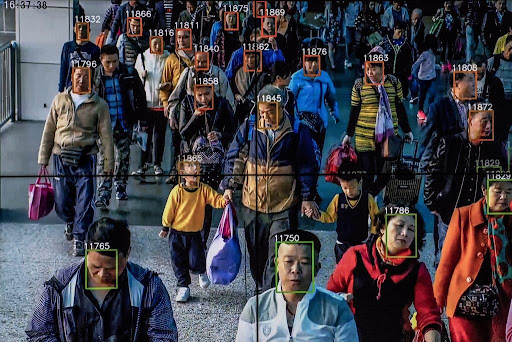
AI recognizing people
Source: Gilles Sabrie for The New York Times
A facial recognition software that is in use at Megvii, an artificial intelligence company located in Beijing.

Racial Discrimination by AI Tools and Algorithms

It has been witnessed how AI-based face recognition systems repeatedly failed to provide equal treatment to Black people and even present them with a derogatory view. 

Google Photos, an AI-Based advanced face recognition system 2015 categorised the photos of two Black persons as gorillas.

Researchers also revealed in their studies that algorithms that find out which patients need additional medical care underestimate the medical needs of Black patients enhancing the racial discrimination in the medical needs of Black people. This problem was highlighted in an AI-based medical decision-making solution provided by a leading healthcare services company, Optum.

This racial bias has been identified in many other leading companies’ software and medical tools as well.

The algorithm was not intentionally racist but particularly excluded race when considering the medical needs. It considers only costs as criteria to determine the needs for future medical care. White people spend more on medical care presented that they would need more care in future as well. In this way, it is excluding the Black people for future medical care who already suffer from a lack of spending on necessary medical needs.

Now, the increased use of AI-based solutions could perpetuate digital bias in society and hamper the rights of equal treatment and the right to protection.

Many countries like Hong Kong, India, China and Denmark are adopting the AI-based face recognition system as a tool in predictive policing. But research points out that such tools are unevaluated for their inherited biases and further enhance the pre-existing discriminatory law enforcement practices in the policing system. It has been found that such face recognition algorithms have repeatedly put Black people at a higher risk of being perceived as a high-risk offenders.

Related Article: Techno-Racism: Technology Automating Racial Discrimination

Perceived Threats from Technology for Human Rights Violations

Data Privacy and Surveillance

It has a  long history of collecting private data and information of citizens by the governments in the name of national security, economic stability and other social benefits. Now with the advent and intrusion of more advanced technologies, even private companies are collecting a huge chunk of personal, private and financial data of people in the name of serving them in their best interest. Sometimes even people remain unaware about their data being kept by the companies and bought and sold with other parties without their consent. This form of data theft and sharing is hampering the right to privacy. People should have complete control of their data and information. The government needs to be equally focused on issues of data control, privacy, surveillance, digital rights and protection along with the step-up of digital infrastructure.

Source of Unemployment

Universal Declaration of Human Rights under its Article 23, International Labour Organisation through Article 1(2) and International Covenant on Economic, Social and Cultural Rights declares collectively for the protection against unemployment and the right to work. 

But rapid automation, AI and IoT based technological tools and business solutions are fast disrupting the industrial way of doing business. The future of work is seen as more automation based. Many researchers are already cautioning about the huge job loss in the future market due to AI-based automation.

Businesses are also willing to adopt advanced technologies to replace their human workforce for the achievement of more precision, fewer defects and errors, higher productivity, lesser cost and higher profits. One Chinese company, Changying Precision Technology, 2017 successfully replaced around 90% of its human workforce with machines and achieved great success by enhancing productivity by 250%. Likewise, Adidas is moving towards companies which are only robot-based.

This will force the people to engage in low labour wages and face less work opportunities. It will affect mostly the already vulnerable low and middle-skilled groups who depend on low wage jobs and manual work. But eventually, AI might disrupt every field and pose a threat to job security for all skilled and less-skilled workers.

It seems that technology may further divide the world into extremely poor and extremely rich sections of society. Thus it is highly required by the national and international governments to force a balance between technology and human relations so that human societies, work relations and their rights remain safe. Technology should be an enabler for humankind rather than a cause for its doom.

Restriction on People’s Movements and Choices

It is the basic right of people to freely move. But many countries are using AI-based surveillance systems to check on the illegal activities and movement of the people. But such systems are placed in areas without people’s knowledge with underlying biases toward Black people, refugees and migrants. In the name of community policing and predictive policing, such surveillance are only creating mistrust between the police and the community members.

In addition, countries like the USA are employing cameras to take pictures of people inside the vehicles while entering and leaving the country.

Key Takeaways

Technology should not aim to reduce humans to just a string of 1’s and 0’s in the database and dictate the control of machines over them without considering the ethical, emotional, and psychological dilemmas and needs. 

Machines can not replace the human wit, intelligence, emotions and decision-making ability that needs humane rationale. 

It is important to consider and use technologies as an enabling hand to humans rather than degrade their position in society by amplifying pre-existing biases of race, status, nationalism, gender or religion.
Continue Reading
Click to comment

Leave a Reply

Your email address will not be published. Required fields are marked *

Featured

Sudan’s War and the Fracturing of the Muslim World: A Crisis Beyond the Headlines

Published

on

Sudans-War-and-the-Fracturing-of-the-Muslim-World_-A-Crisis-Beyond-the-Headlines

The situation in Sudan is now more than just another news story. The conflict, which broke out in April 2023, is now in its fourth year and has left tens of thousands dead, more than 14 million people displaced (nearly a quarter of the population), and pushed the country to the brink of famine. But beyond Sudan’s borders, the war is barely making headlines.

What started as an internal power struggle between two generals has descended into a bloody impasse, rending communities, decimating hospitals, and weaponizing food. Behind the conflict, there’s a bigger story: how this overlooked war is revealing the ugly divisions in the Muslim world. Rather than solidarity, we witness vested interests, selective muteness, and an idealised concept of Muslim unity replaced by geopolitics.

Sudan War 2026: What’s Happening?

The Sudanese war is a battle between two armies:

  • General Abdel Fattah al-Burhan’s Sudanese Armed Forces (SAF)
  • General Mohamed Hamdan Dagalo’s Rapid Support Forces (RSF), also known as “Hemedti.”

The RSF controls most of Darfur and Kordofan, and has solidified its control in most of Khartoum and its surroundings. Contrarily, the SAF controls the north and some of the east, and recently began counterattacks in Omdurman. Both sides are far from victory and the peace table. Humanitarian assistance is being looted and stolen. Furthermore, rape is being reported at a “catastrophic” rate.

  • There are more than 4.4 million refugees in neighbouring nations like Chad, South Sudan, and Egypt.
  • Over 21 million people are in need of humanitarian aid because of famine or malnutrition in areas such as El Fasher and Kadugli.
  • Hospitals and humanitarian assistance are also heavily affected by the conflict with the World Health Organization (WHO) reporting over 200 hospital attacks during the war.

What Caused the Civil War in Sudan?

There are three primary causes behind this unfortunate crisis as follows:

Competition and Conflict among Factions

The military forces in Sudan removed President Omar al-Bashir from power and established a transitional government council made up of two opposing armies, as mentioned earlier. The leaders of these two forces colluded to delay power to a civilian government in 2021, staging a coup.

Political Instability after Regime Change

A short-lived democracy ensued after the revolution of 2019. There were no leaders, parties were torn, and the international community was silent. When Bashir was pushed aside, institutions were filled with armed groups with guns and money.

Economic and Regional Inequalities

Sudan has a long history of disparities. There have been instances of discrimination and attacks on regions, such as Darfur. The poor areas suffered from inflation and a resource war, which ultimately divided Sudan.

Sudan has many resources, such as gold in Darfur and a beautiful Nile Valley. RSF had support in Darfur, whereas SAF in the north and east, as previously highlighted.

Who’s Financing the Conflict?

The other question is who finances the war in Sudan. This is a mixture of domestic and international sources.
Funding sources include:

  • Natural resource funding: The RSF owns many of the gold mines that give it enough resources to fight.
  • Regional Powers: Some states are secretly helping SAF against the massive forces of RSF.

In short, the RSF is suspiciously linked with the United Arab Emirates, which is allegedly involved in arms and gold smuggling in Darfur. However, the UAE denies military aid, but is being sued by Sudan in the International Court of Justice. The RSF has mining profits and a government of the occupied territory.
On the other hand, SAF has Egypt, the Nile, and the border. The legitimate government has the backing of Saudi Arabia and others.

Sudan and the Muslim World in Crisis

The Muslim world has been facing a multi-faceted crisis for the past two years that has similar patterns. There has been international intervention on a scale, wars for resources, failed or failing states, and the international community is divided to tackle the crises. Rather than consensus, there is disunity and division.

The nature of these crises is different, but the common thread is that there is no unity among Muslim-majority countries and organisations.

  • Israel is currently involved in genocidal activities like bombing and starving Gaza. The agreement between Lebanon and Israel was supposed to be kept, yet Lebanon remains vulnerable to attacks and is displaced from reconstruction.
  • Iran is recovering from the war with Israel and the US. It is suffering economically from sanctions, attacks, and trade issues.
  • Yemen and Syria continue to suffer from war, while Pakistan and Bangladesh have experienced political upheaval.

However, the Organisation of Islamic Cooperation has been unable to respond significantly to any of these events.

The Way Forward

Peace involves putting an end to combat and the cessation of fighting between opponents and allowing them to embrace reconciliation. The international community must adopt a new approach to the problem that would involve fewer arms and increased humanitarian aid.

Gaza and Sudan represent a case of uneven consensus among the Muslims. It is therefore the need of the hour to tackle all the challenges with the strong and practical notion of the Muslim Brotherhood.

Continue Reading

Featured

Israel Continues Engineering Starvation Policy in Gaza Despite Ceasefire

Published

on

Israel-Continues-Engineering-Starvation-Policy-in-Gaza-Despite-Ceasefire

It was supposed to be a ceasefire, but Gaza is still suffering. Since the ceasefire began at the end of 2025, UN agencies, independent observers, and even aid workers working to bring food to those in need have noted that aid is being blocked, and distribution points for food items are being deliberately targeted. Additionally, fuel and other essential items are being prevented from entering the state.

One-third of the population goes without food for days at a time, while more than 500,000 people are experiencing extreme famine conditions, and the remaining ones are facing emergency hunger conditions.

What is Engineering Starvation in Gaza?

Starving innocent civilians of food, water, and basic necessities for survival is a War Crime under international humanitarian law. An International Famine Review Committee report has reported that Gaza has been experiencing Famine (Phase 5) since August 2025.

Israel controls the flow of goods into Gaza. It also controls the basic infrastructure required for food systems to operate. Vehicles are restricted from entering certain points. The amount of humanitarian aid entering Gaza today is far less than the level needed to address basic humanitarian needs.

For instance, at least 500-600 trucks per day are required for their humanitarian needs. The lack of fuel is affecting the baking, cold storage, and water industries. They are unable to find suppliers that can meet their needs to keep their businesses running.

Moreover, farmland, greenhouses, and access to fishing have been destroyed or left inaccessible. Gaza’s internal food distribution network has been severely damaged.

Children Bear the Worst of It

Unfortunately, one in five children screened by UNICEF in August 2025 was acutely malnourished, and that number continues to rise.

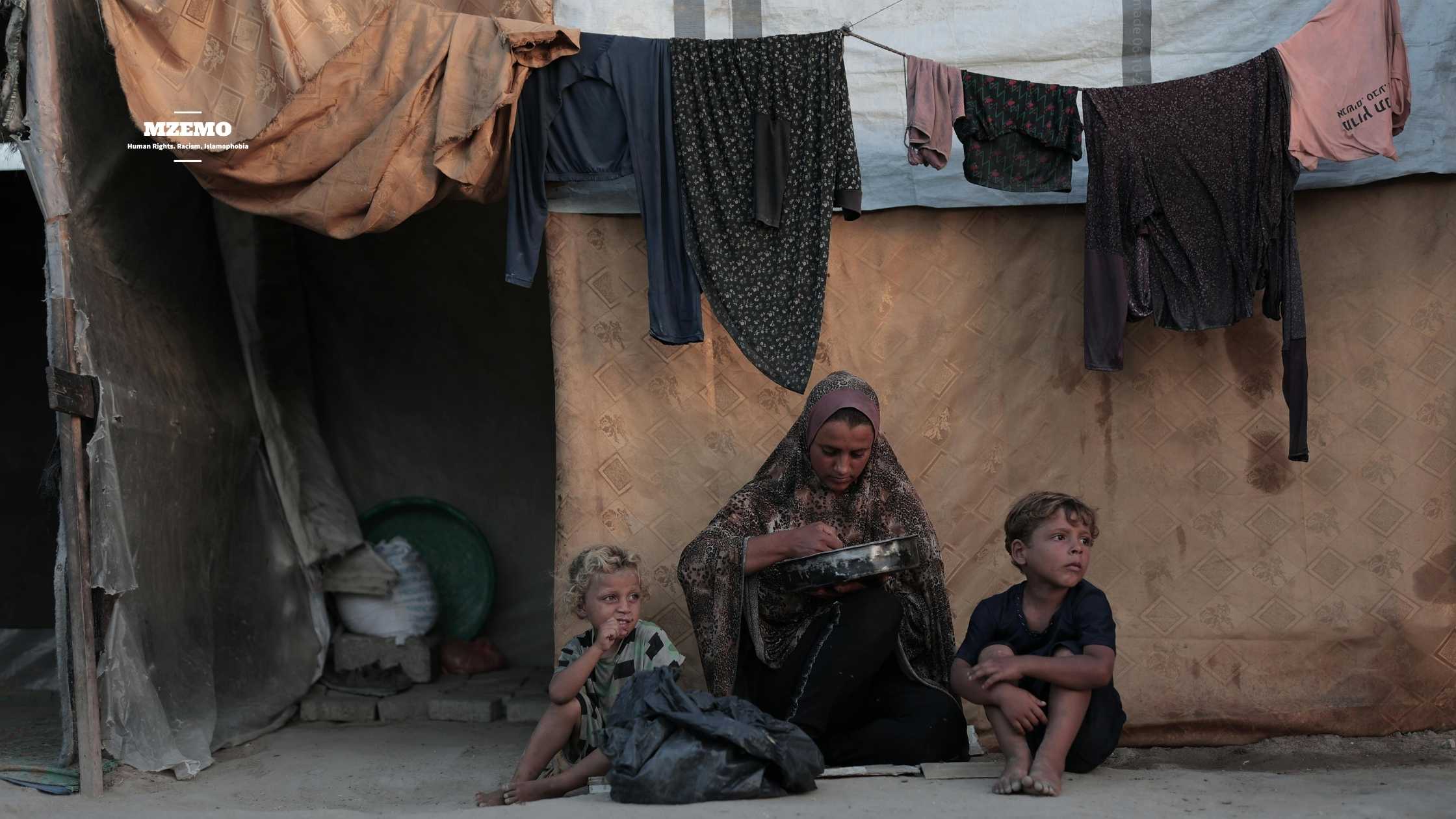
Children fail to gain weight because their mothers are malnourished too and therefore unable to breastfeed them adequately. They live in a food-deprived environment where tea and bread are the only food available. A single biscuit has to be split into three pieces to survive the hunger crisis in Gaza.

A Fabricated Ceasefire

Apparently, the bombing slowed down, but the policy of starvation did not. There are restrictions on crossings, fuel, and other essentials, and the amount of aid into the Gaza Strip.

Deliberate starvation is being used as a weapon of war

The Reasons Behind These Atrocities

Israel is blatantly going against the norms of International Law, and it is not alone. The United States is also supporting it in doing these heinous atrocities. There are multiple checks to ensure this engineering starvation as follows:

Ultra-Restricted Crossings

The only crossing that is left is Rafah, which is also not completely operational. It is only being used for medical emergencies.

Deliberate Fuel Shortages

Fuel powers the whole food system, and when it remains unavailable:

  • Bakeries stop
  • Transport halts
  • Food rots before it reaches the market.

Damaged Infrastructure Due to the Genocide

Warehouses, roads, and storage facilities are either completely or partially damaged. Agricultural land has also been destroyed and is inaccessible. Moreover, fishing space is limited as well.

Complete Market Collapse

When supply falls, prices definitely go up. The food becomes unaffordable for the innocent Palestinians and their children.

The Human Cost

In many parts of Gaza, three meals are replaced with one meal, and even some families haven’t had food for days.

Children are malnourished, while parents make trade-offs every day:

  • Going without food so children can eat
  • Splitting a small piece amongst many
  • Waiting for hours for bread or aid

Health services are also under pressure, as malnutrition weakens the immune system. Disease spreads more easily, and people with chronic illnesses struggle to survive. Even after the ceasefire, 1.6 million people are still severely hungry.

Under the Scope of International Humanitarian Law

It is illegal under international law to even starve an enemy. The reports of UN experts and human-rights organisations have pointed out that blocking food and aid breaches the line.

The deliberations go on at the political and legal levels. The end effect is the same: civilians starve.

As per the data analysis:

  • Over 500,000 people are facing famine.
  • 640,000 have been in catastrophic hunger
  • A third have gone for days without food.
  • Rates of child malnutrition have grown rapidly, doubling in months.

This will Go Beyond Gaza

Engineering Starvation will lead to a large hunger crisis in the state, and people will be dying due to famine. If we do not stop the starvation in Gaza, starvation will be used as a weapon in all other battles, and civilians will be viewed as “legitimate targets” caused by famine in the future.

While the ceasefire in Gaza may have apparently come to an end, hunger has certainly not, as the means to get food to the genocidal zone remain difficult. Israel and the United States, which advocate democracy and human rights, should realize the fact that even the life of a single child is important, and their policies will soon turn out to be unsuccessful.

Continue Reading

Featured

From Gaza’s Genocide to Lebanon’s Bombing: The Assault on the Muslim World Expands

Published

on

From-Gazas-Genocide-to-Lebanons-Bombing-The-Assault-on-the-Muslim-World-Expands

What began with joint US-Israeli strikes on Iran on Feb 28, 2026, quickly spread across the region, linking Gaza, Iran, and Lebanon into a single, expanding, and unwanted conflict.

This is a series of the most volatile events of contemporary times. While a temporary ceasefire with Iran has opened the door for talks, the reality on the ground tells a different story. Gaza remains under genocidal devastation, while Lebanon is under heavy bombardment.

Resultantly, regional tensions are at their highest in years. However, this is not something happening in isolation but a large-scale genocide being unfolded across multiple fronts.

Gaza: The Genocide That Never Stopped

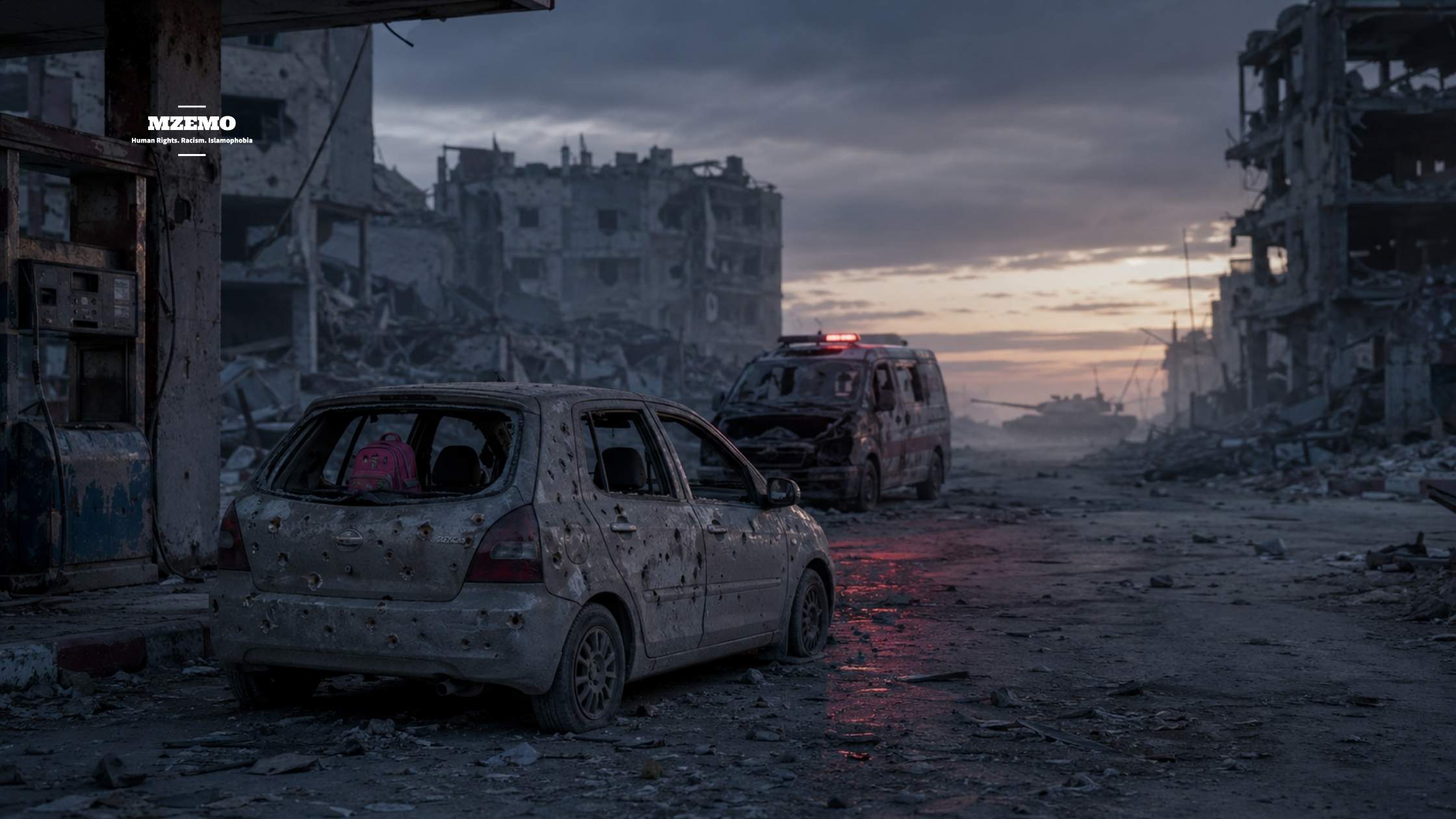
Even as attention shifted toward Iran, Gaza never saw even a bit of relief. More than 2 million Palestinians remain trapped, with the majority displaced internally. Entire neighborhoods have been flattened, and basic services, like water, electricity, and healthcare, have vanished.

Despite diplomatic developments elsewhere, Israeli strikes in Gaza have continued, reinforcing a central reality. The genocide in Gaza did not pause; rather, it became the foundation for a wider assault.

So, Gaza is not separate from the current regional crisis. It is where it began and where it continues.

The Iran Strikes That Changed the Region

On February 28, 2026, U.S. and Israeli forces carried out coordinated and unprovoked airstrikes targeting Iran. These strikes marked a significant shift from indirect confrontation to direct engagement. Even a primary school for girls was hit by the Israeli and US-led airstrikes in Iran, resulting in the deaths of hundreds of innocent lives.

In response to Israel’s act of aggressionand the United States’ Operation Epic Fury, Iran launched Operation True Promise IV. It also launched ballistic missiles and drones to retaliate.

After putting the entire region into flames, Israel declared a state of emergency, while regional airspace disruptions and security alerts spread across neighboring countries.

This heavy exchange transformed the conflict. What had been contained within Gaza now extended into a broader regional confrontation involving a major state actor.

Lebanon: The Expansion No One Could Ignore

If Gaza was the starting point and Iran the escalation, Lebanon became the clearest sign of expansion. So, even after a ceasefire announcement by the US, Israeli airstrikes across Lebanon resulted in:

  • Over 250 to 300 people killed within 24 to 48 hours
  • More than 1,000 injured
  • Dozens of strikes hit densely populated urban areas, including Beirut

These were among the deadliest attacks on Lebanon in decades. Crucially, these strikes continued despite the ceasefire framework announcement with Iran. Israeli leadership made it clear that they are not going to halt their heinous operations in Lebanon despite the long-awaited peace talks.

A Ceasefire That Did Not Bring Calm

The ceasefire announcement between the United States and Iran was presented as a step toward de-escalation. It opened the door for talks in Islamabad, raising hopes of stabilizing the situation.

However, events on the ground contradicted those expectations. Some of these events include:

  • Lebanon continued to face severe and unprovoked bombardment
  • Gaza remained under genocidal attacks
  • Regional military readiness stayed elevated

This created a fragile and uncertain environment in which diplomacy and escalation coexisted. A temporary ceasefire on paper did not translate into peace across the region.

The Strait of Hormuz: A Global Risk Point

Beyond the immediate Middle Eastern battle zones, the conflict has placed critical global infrastructure at risk.

The Strait of Hormuz, through which nearly 20% of the world’s oil supply passes, has become a central pressure point. Iran has signaled its ability to restrict or disrupt traffic through the strait if escalation continues.

This is to pressurize the US and Israel to think about what they are doing at least twice. So, even the possibility of disruption has:

  • Increased volatility in global oil markets
  • Triggered economic concerns far beyond the Middle East

This underscores a key reality that the conflict is not confined to borders, but its consequences are global.

A Connected Battlefield and The Muslim World

What is happening across Gaza, Iran, and Lebanon is not coincidental but a reflection of a wider ideology. This ideology has roots in Islamophobia, too, but the primary driver here is Israel, supported by the United States.

Each front reflects a different dimension of the same conflict:

  • Gaza: Genocide, humanitarian devastation, and mass displacement
  • Iran: Unprovoked and Imposed War
  • Lebanon: Expansion of active military operations by Israel

Although some countries are trying to help de-escalate the situation, such as Turkiye, Qatar, Pakistan, and Egypt, most have complex responses.

Especially the US military bases in Gulf countries such as Saudi Arabia, Oman, Bahrain, and Qatar are being attacked by Iran as a counter-strike.

Rather than observing these events in isolation, using a broader lens makes everything clear.

The future scenario could be a temporary stabilization as Iran brought their 10 points, while the U.S. brought 15 points for the ceasefire to be agreed.

While the efforts to make peace are underway, Israel is still involved in one of the deadliest assaults on Lebanon. The Muslim World should unite at this difficult time, not only for regional stability but also for global peace and prosperity.

Continue Reading
Advertisement

Trending