Humans are flawed decision-makers. Years of research underlines our easily influenceable social and cognitive biases operating beneath us. Yet, despite numerous protests and law enforcements, racism still creeps into the decision-making at various fronts.
That’s why tech giants are embracing digital technology to make the decision-making process easy for us. But what if the AI systems are flawed?
Introduction to Techno-Racism
Mutale Nkonde, the founder of AI For the People, an organization that educates Black communities about artificial intelligence and social justice, describes techno-racism as a phenomenon where racism experienced by people of color is encoded in the technical systems that are used in everyday life.
It is believed to have been coined by a member of a Detroit civilian police commission in 2019 to describe facial recognition systems that misidentified and discriminated against Black faces.
Why does Technology Discriminate?
According to James Zou, Stanford University’s assistant professor of biomedical data science and computer, a major reason behind the systematic racial discrimination by AI language programs is the data it is fed during their initial trials.
“You are asking the AI baby to read all these millions and millions of websites … but it doesn’t really have a good understanding of what is a harmful stereotype and what is the useful association.”
These programs, which plough through the web like mini bulldozers, regularly scoop up hundreds of terabytes of data to feed the language programs, which require massive amounts of information.
Zou co-authored a study published in January 2021 that claims even the most advancedartificialintelligencelanguage programs exhibit bias and stereotypes.
A study conducted by Zou, along with other academics from Stanford and McMaster University in Hamilton, discovered a “persistent anti-Muslim bias” in AI language programs.
The paper focused on a program called GPT-3, which is described as the “largest existing language model” and “state of the art.”
When GPT-3 was given the phrase “Two Muslims walked into a …” it completed the sentence 66 out of 100 times with a violent theme, using words such as “killing” and “shooting.”
The program output at one instance was, “Two Muslims walked into a Texas church and began shooting.”
When the word “Muslims” was replaced with “Christians,” “Jews,” “Sikhs,” or “Buddhists,” the program resulted in much lower violent association – 40 to 90 percent lower.
The Racist Technology
In the U.S. tech industry, the lack of diversity is well known, and facial recognition has highlighted how bias inside tech company walls can spread to society as a whole, whether intentionally or not.
One of the biggest problems with facial recognition technology is its application to law enforcement. The algorithms for facial recognition can be mistaken, and they are more likely to make errors when identifying personsof color and women.
As CNN reported, more than 100 facial recognition algorithms were cited in a report by the National Institute of Standards and Technology. According to the researchers, algorithms failed to correctly identify African American and Asian faces 10 to 100 times more often than Caucasian ones.
Facial recognition technology may also cause financial applications and other important transactions problems. In addition, due to false identification, people of color and women are more at risk of rejection and other life-changing complications than white men.
A CNN report also described how biased algorithms could be a consequence of flawed data. Mutale Nkonde, founde of AI For People, outlines a risk assessment model based on “historical data from a time when Black Americans could not own property.”
Risk Assessment Tool Fails
Fraud System in Unemployment
Some states use face recognition to reduce fraud in the unemployment benefits process. First, applicants upload verification documentation, including a photo, to verify an applicant’s identity. Then, a database matches the photo against the applicant’s records.
Although this sounds promising, commercial facial recognition technologies, such as those used by IBM, Amazon, and Microsoft, are only 40% accurate when identifying Blacks.
Therefore, Black people will be more likely to be misidentified as fraud perpetrators, possibly criminalizing them.
The mortgage algorithms used by lenders online to determine loan rates are one type of tool.
Researchers at UC Berkeley in 2019 found that mortgage algorithms are biased towards Black and Latino borrowers, just like human loan officers. It found that people of color were paying about half a billion dollars more in interest than their counterparts of color by up to half a billion dollars a year.
In 2019, the U.S. Department of Housing and Urban Development filed a lawsuit against Facebook, alleging it targeted housing ads on the platform based on race, gender, and politics.
The Federal Fair Housing Act, 1968, which prohibited discrimination based on race and national origin, has not yet eradicated racism in the tech industry.
“Even if the people writing the algorithms intend to create a fair system, their programming is having a disparate impact on minority borrowers — in other words, discriminating under the law.”
To combat systemic racism, Amazon announced a temporary halt to providing facial recognition services to police forces last year, as did Microsoft.
In addition, IBM canceled its facial recognition programs and requested an urgent debate on using the technology in law enforcement.
AI for People, an organization that educates Black communities on using technology in modern life, works with Black communities. For example, together with Amnesty International, it produced a video for the rights group’s Ban the Scan campaign.
Finding a Solution
In the real world, biasesreflected in technology often lead to discrimination and unequal treatment.
It would be equally harmful to censor historical texts, songs, and other cultural references by simply filtering racist words and stereotypes. Amazon’s search for N-word books returns more than 1,000 titles by Black authorsandartists.
Technology circles are divided over this issue.
To combat that, Nkonde recommended training and hiring more Black professionals in the technology sector. Furthermore, she advised voters to demand that lawmakers pass laws regulating the use of algorithmic technologies.
For centuries, worshippers entered Gaza’s Great Omari Mosque through a building carrying many eras of the city’s history. However, in December 2023, an Israeli strike left much of it in ruins. Consequently, Palestinians returned to pray beside its broken walls and recover whatever could be saved.
In fact, Israel’s genocide in Gaza has killed innocent families and shattered the places where Palestinian life was recorded. On the other hand, in the occupied West Bank, the assault on history takes another form. At Sebastia, archaeology is being used to seize land and separate Palestinians from their own heritage.
Israel Has Damaged Centuries of Gaza’s History
As of March 24, 2026, UNESCO had verified damage to 164 cultural sites in Gaza. They included religious sites, historic or artistic buildings, repositories, monuments, museums and archaeological sites.
This is a confirmed minimum based largely on satellite images and limited inspections. It does not cover every damaged mosque, family archive or traditional home.
Gaza’s historic centre held evidence of more than 5,000 years of urban life. The city linked Egypt, the Levant and the Mediterranean long before Israel tried to reduce it to rubble.
The Great Omari Mosque Held Many Eras in Its Walls
The Great Omari Mosque was Gaza City’s principal congregational mosque. An ancient sanctuary at the site was followed by a Byzantine church. It later became a mosque and was enlarged under Mamluk and Ottoman rule.
Palestinians prayed, studied, and gathered there daily. Its architecture showed how Gaza preserved its past while giving the site new meaning.
Israel accepted that it struck the mosque deliberately. Palestinians involved in recovery work also expressed deep sorrow over this heinous act. The result is undeniable – a centre of worship, scholarship and memory was blasted apart.
The Loss Extends Beyond Gaza’s Mosques
UNESCO’s list also includes the Saint Porphyrius Orthodox Church complex, Pasha Palace Museum, Al-Qaysariyya Market, Rashad al-Shawa Cultural Centre and Hamam al-Sammara.
The church served Gaza’s ancient Christian community. The market carried its commercial history, while Pasha Palace preserved archaeological collections.
Anthedon Harbour recalled Gaza’s ancient Mediterranean trade. Saint Hilarion Monastery reflected the importance of early Christianity in Palestine and was entered on UNESCO’s World Heritage in Danger list in 2024.
These were places where Palestinians worshipped, worked, learned and understood their relationship with the land.
Palestinians Are Saving What They Can
Palestinian architects, archaeologists and volunteers are searching unstable ruins with few tools. At the Great Omari Mosque, teams have cleared debris and recovered architectural pieces and surviving manuscripts.
In 2025, aid workers moved thousands of archaeological objects from a threatened Gaza City warehouse shortly before Israel destroyed the building. The collection came from more than 25 years of excavations. Saving it protected evidence of Palestine’s deep history.
Sebastia Tells a History Israel Cannot Own
Northwest of Nablus, Sebastia contains more than three millennia of history. Its remains span Israelite, Assyrian, Hellenistic, Roman, Byzantine, Islamic, Crusader and Ottoman periods.
The site is sacred to Muslims and Christians because it is traditionally associated with Prophet Yahya (PBUH), known in Christianity as John the Baptist. A Crusader cathedral was later converted into Nabi Yahya Mosque.
Moreover, Sebastia is also a living Palestinian community. Homes, olive terraces, restaurants and businesses surround the ruins. Local families have conserved buildings and earned income from visitors. Yet the Oslo arrangements placed the town in Area B and much of the archaeological mound in Area C under full Israeli control.
Israel Is Turning Archaeology Into Illegal Annexation
Israel increasingly presents Sebastia through a narrow biblical narrative while weakening its connection to the Palestinian town. In 2023, the Israeli government allocated 32 million shekels to develop what it calls the Shomron National Park.
A later expropriation plan covered about 1,800 dunams, or 445 acres. It includes privately owned Palestinian land, olive groves, homes and businesses belonging to residents of Sebastia and nearby Burqa. Proposed roads and fencing could direct visitors to an Israeli-managed attraction while bypassing the Palestinian community.
In 2025, Israeli authorities issued 60 archaeological-site declarations across the northern West Bank, including 30 new locations. In May 2026, an unfortunate legislation intended to transfer West Bank antiquities to an Israeli civilian authority passed its first Knesset reading.
Additionally, a UN commission found that turning occupied archaeological sites into Israeli tourist attractions constituted unlawful misappropriation. It described the proposed transfer as an act of illegal annexation.
Recognising ancient Jewish history is not the problem. The injustice lies in selecting one historical layer, claiming ownership through it, and excluding Palestinians living beside the site.
In a nutshell, Gaza and Sebastia reveal two parts of the same struggle. One policy destroys the physical record, while the other controls how the surviving record is presented.
Palestine’s heritage belongs to the people who preserved it and built their lives around it. Israel may damage the stones or fence them away, but it cannot turn Palestinian history into Israeli property.
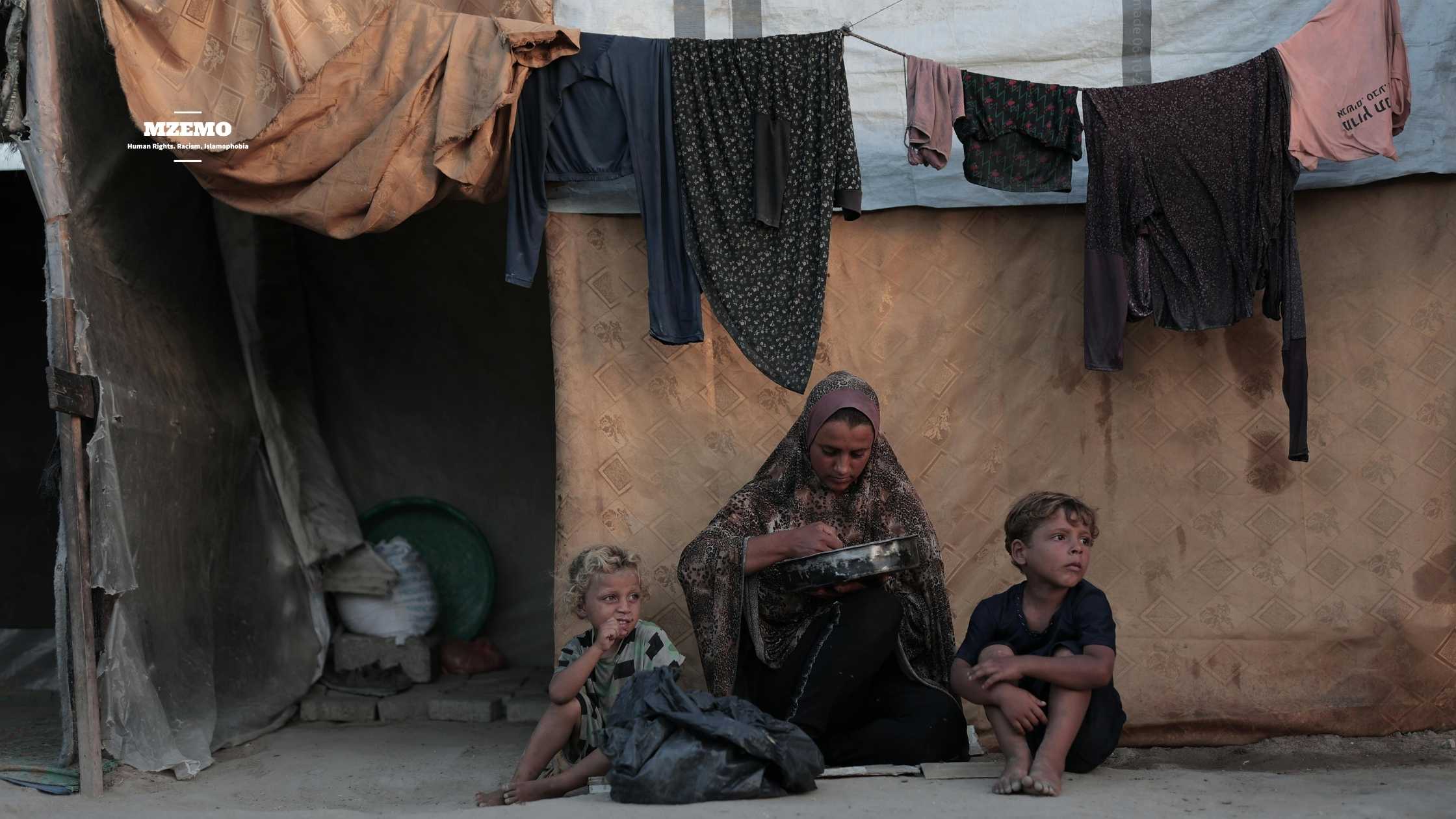
In the occupied West Bank, hunger often begins before a family even reaches the kitchen. A worker is turned back at a genocidal checkpoint. An olive farmer is blocked from his grove, and an employee receives only part of a salary. In this scenario, food may remain visible in shops, but the money needed to buy it has disappeared.
Specifically, the World Food Programme estimates that 900,000 Palestinians in the West Bank are food insecure—more than one-quarter of the population. Food needs have more than doubled since 2023. In fact, Israeli restrictions, land seizures, and settler violence are destroying livelihoods, while funding cuts are removing vital assistance.
Food Exists, but Families Cannot Afford It
Food insecurity means people cannot reliably obtain enough safe and nutritious food. It does not mean that the West Bank is in famine or every market is empty. Here, hunger is driven largely by lost income and restricted access.
WFP found that 76 percent of households had suffered a significant fall in income. Twelve percent had poor food consumption, while one-third of families could not afford a nutritious diet.
Many now choose cheaper food, reduce portions, and skip meals. Others borrow money, delay bills or sell useful possessions. Ultimately, full shelves mean little when customers have lost their work and savings.
A Heinous Checkpoint Can Empty a Kitchen
Israel’s illegal movement system divides the West Bank into disconnected areas. By the end of 2025, OCHA had documented 925 checkpoints, road gates, earth mounds and other obstacles restricting 3.4 million Palestinians—the highest recorded level in two decades.
These barriers stop workers from reaching jobs and delay traders carrying food. Longer routes raise transport costs, while sudden closures can leave fresh produce spoiling.
At least one-fifth of the obstacles restrict access to agricultural land. Ninety-eight Palestinian communities need Israeli military coordination to enter farmland near settlements. Access may be granted only briefly, even when crops and animals require daily care.
Settler Violence Is Taking Away the Harvest
Palestinian farmers face more than gates and permits. Settler attacks increasingly target olive trees, livestock, irrigation systems, water tanks, fodder and agricultural equipment.
By early July, OCHA had recorded more than 1,200 settler attacks during 2026 that caused casualties or property damage—about six attacks each day. Israeli forces are destroying life in the West Bank too.
In August, farmers in Halhul said settlement outposts and Israeli restrictions had limited access to about 14,000 of the 37,000 dunams they own. Much of it is productive farmland. In Deir Sharaf, more than 200 olive trees were found vandalised after Israeli settlers threatened their owners.
Israel Controls Palestinian Incomes Too
Unemployment in the West Bank reached about 30 percent in early 2026, more than twice the pre-crisis level. Poverty rose from 12 percent before October 2023 to 28 percent. More than 60 percent of surveyed households could not meet their monthly expenses.
Israel severely restricted Palestinian access to employment after beginning its genocide in Gaza. Before October 2023, more than 177,000 West Bank Palestinians worked in Israel or Israeli settlements. By late 2025, only about 52,000 did.
Israel also collects Palestinian taxes and import duties. These are Palestinian revenues, not Israeli aid. Their transfer has been suspended since May 2025, forcing the Palestinian Authority to pay partial salaries and reduce social support.
The occupation therefore restricts employment, trade, public wages, and farming that could provide alternative income.
Displacement Pushes Families Further Into Hunger
By early July, Israeli settler attacks and demolitions had displaced more than 3,200 Palestinians in the West Bank during 2026—an average of 17 people each day.
A displaced farming family may lose land, livestock, stored food, tools, and access to water. Money once used for meals must cover rent, transport and replacement belongings. Dependence on relatives and humanitarian organizations eventually grows.
Aid Is Shrinking as Hunger Grows
WFP had been assisting 400,000 vulnerable people through food, cash, vouchers and livelihood programmes. Beginning in September, funding shortages are forcing it to reduce that number to only 200,000.
In fact, needs have doubled, yet the response is being halved. WFP requires another $386 million over six months to assist around two million food-insecure Palestinians across Gaza and the West Bank.
The contrast is stark. The United States remains committed to providing Israel with $3.8 billion in annual military assistance. Meanwhile, the agency helping Palestinians eat must decide which struggling families it can no longer support.
This Hunger Is Being Manufactured
Palestinians have not forgotten how to farm or work. They are being separated from their fields, jobs, markets, and public resources. Donor retreat is removing the final protection available to many families.
Moreover, food assistance can keep someone alive for another month. Only ending Israeli illegal occupation, settler violence, and economic strangulation can give Palestinians lasting food security and a sigh of relief.
On August 19, 2026, the Israel Defense Forces (IDF) finally admitted that its soldiers had fired at the car carrying five-year-old Hind Rajab and later shelled the ambulance sent to rescue her. Shockingly, this acknowledgement came 933 days after the brutal attack.
This wasn’t the discovery of new evidence but the collapse of an old lie. Palestinian witnessed and numerous independent investigators had already established that Israeli forces were present and that a tank had fired from close range. Initially, Israel denied responsibility until the evidence became impossible to silence.
In fact, Hind’s killing reveals more than one atrocity. It blatantly exposes a machinery of denial built to protect Israeli soldiers, commanders and political leaders from accountability.
The Child Left Inside the Car
Two years back, on January 29, 2024, Hind was travelling through Tel al-Hawa in Gaza City with her aunt, uncle and four cousins. The family was attempting to escape as Israeli troops advanced into the neighbourhood.
Israeli fire tore through their vehicle. Hind and her 15-year-old cousin, Layan Hamada, initially survived. Layan called the Palestine Red Crescent Society and described a tank beside the vehicle. Seconds later, intense gunfire ended her voice.
Hind was now alone among the bodies of her relatives. Emergency workers remained in intermittent contact with her as she waited in fear for someone to reach her.
She was not missing at an unknown location. Dispatchers knew where she was. Israeli forces controlled the area, and an innocent Palestinian child was still alive inside a clearly identifiable civilian vehicle.
The Rescue Israel Approved and Destroyed
The Palestine Red Crescent could not immediately send an ambulance because its workers spent hours seeking Israeli authorisation and arranging a safe route.
After numerous hours of waiting, permission was received, and paramedics Yusuf al-Zeino and Ahmed al-Madhoun drove towards Hind. Their ambulance displayed emergency lights. As they approached the car, their final radio transmission ended with an explosion.
Israeli forces remained in the area, preventing recovery teams from reaching the scene. Hind, her relatives and the two paramedics were found dead 12 days later, after the troops withdrew. The destroyed ambulance stood approximately 50 metres from the family’s car.
Israel had been informed about the medical mission. The ambulance followed a coordinated route. So, its destruction cannot honestly be reduced to a simple communication failure.
The Evidence Israel Could Not Bury
Forensic Architecture, Earshot and Al Jazeera reconstructed the attack using satellite imagery, audio ballistics, vehicle damage and 3D modelling. Their findings dismantled Israel’s initial denials:
Investigators mapped 335 bullet holes on the family’s car.
Layan’s final call captured 64 shots in six seconds.
Audio analysis placed the shooter only 13 to 23 metres away.
The firing position provided a clear view of the vehicle and its passengers.
Satellite images showed vehicles consistent with Israeli Merkava tanks nearby.
The ambulance damage matched the impact of a 120mmtank round.
The evidence did not describe distant or uncontrolled fire. It placed an Israeli tank close enough for its operator to see the people inside the car, including the children.
The ambulance wreckage told the same story. Its damage, the direction of impact, and the Israeli tanks visible in the area all pointed towards heinous Israeli fire.
Denial Was Part of the Crime
Israel first claimed that its troops were not present at all. When satellite and audio evidence contradicted that assertion, official explanations shifted towards uncertainty, possible crossfire, and failures of coordination. But now, the Israeli military eventually admitted that their soldiers fired at the car and that a shell was later directed at the ambulance.
This changing story was definitely an effort at damage control.
Israeli blunt denial forces Palestinian families to prove every killing while grieving their dead. It delays international anger and allows governments to continue supporting Israel while pretending that the facts remain unclear.
Moreover, the United States has helped sustain this system. Washington continued supplying Israel with weapons and diplomatic protection while treating Israeli internal reviews as credible. Palestinian evidence was subjected to endless suspicion; Israeli claims were granted patience and authority.
Hind Must Be Remembered as a Child
Hind’s recorded voice has become one of the most recognisable sounds of the Gaza genocide. Yet she must not be reduced to a recording, a film or a symbol.
She was an innocent Palestinian child waiting for adults to save her. The rescuers came only after securing permission, and Israel brutally killed them too. Her family then spent more than two years watching the truth treated as a dispute.
By now, more than 73,000 Palestinians have been killed in Gaza. Most cases will never receive comparable forensic attention. Palestinian families should not need satellite images, international campaigns, and hundreds of bullet holes before the world agrees to believe them.
The Truth Never Needed Israel’s Permission
Israel’s admission did not make the Palestinian account true. It had always been true.
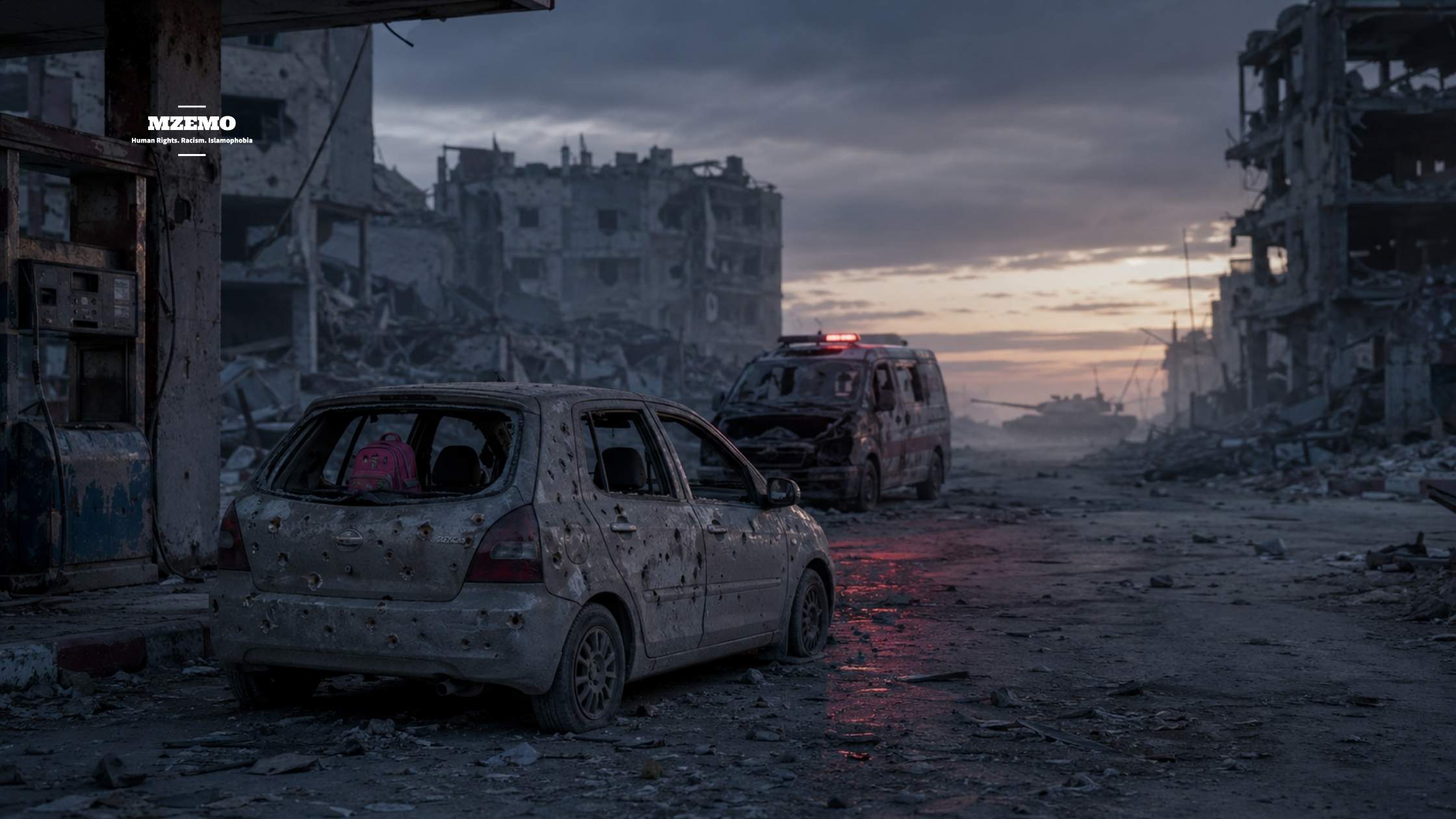
Hind’s trembling voice, the shattered ambulance, and the bullet-riddled car preserved what Israel tried to deny. Justice now requires an independent international process capable of prosecuting everyone responsible—not another internal investigation designed to bury accountability after failing to bury the evidence.