Connect with us

Featured

Is the Middle East Entering a New Cold War?

Published

on

Is-the-Middle-East-Entering-a-New-Cold-War

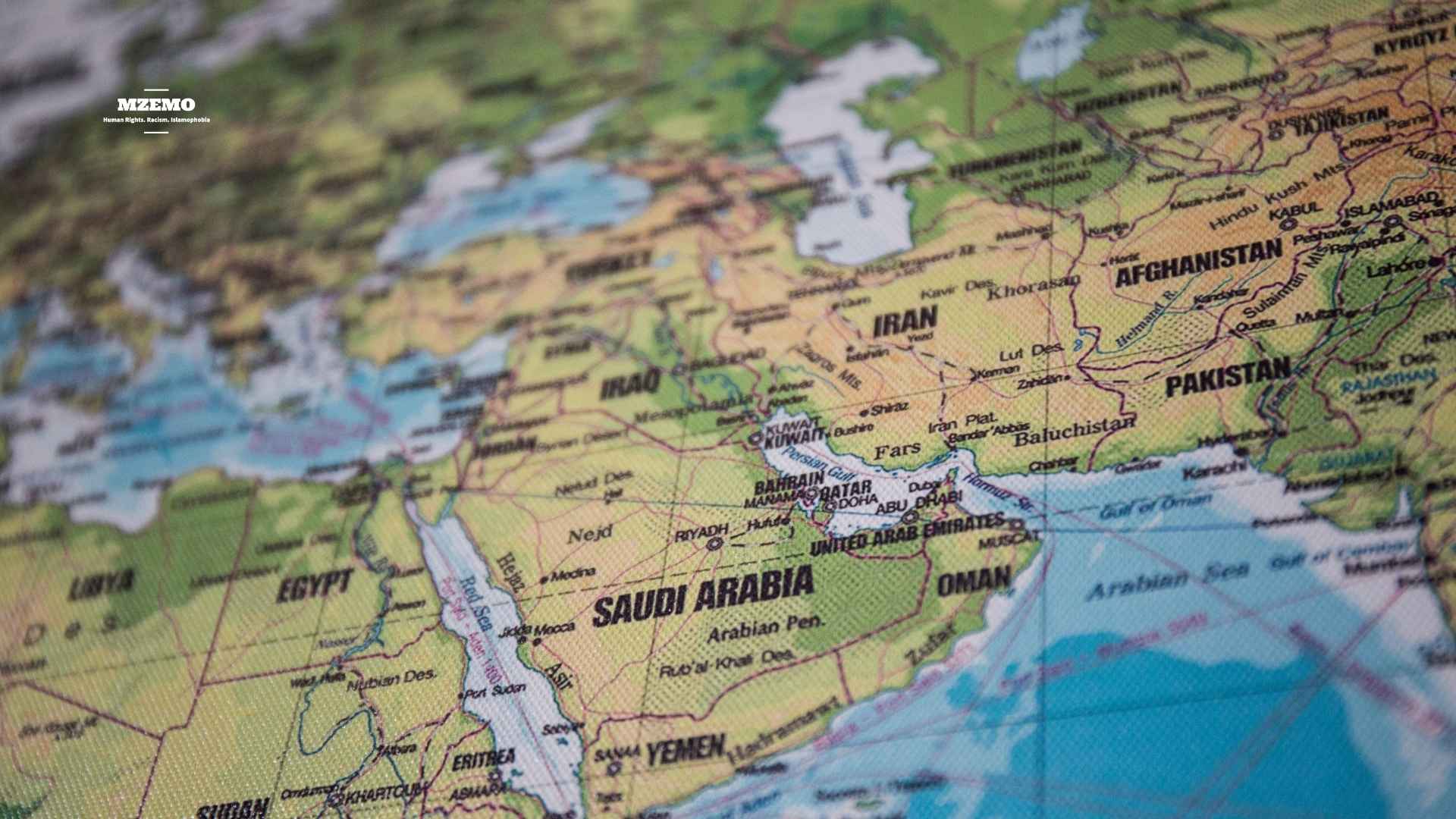
The Middle East remained an area of contention for years, but this time it is not witnessing a conventional regional war.

Across the region, rival power centers are consolidating influence through proxies, economic choke points, strategic alignments, and military expansion. Although direct confrontation between major actors remains constrained, indirect confrontation is intensifying. This pattern ultimately resembles a Cold War structure – persistent rivalry, managed escalation, bloc formation, and weaponized economics.

The real question is not how long these tensions will exist, but whether the region has entered a sustained era of bloc-based strategic competition.

What Makes a “Cold War” Cold?

A cold war is not defined by the absence of violence. It is defined by the avoidance of full-scale direct war between principal actors, while conflict unfolds through:

  • Proxy forces
  • Intelligence operations
  • Cyber disruption
  • Economic sanctions
  • Strategic deterrence
  • Military posturing without direct invasion

In today’s Middle East, these elements are increasingly and undoubtedly visible.

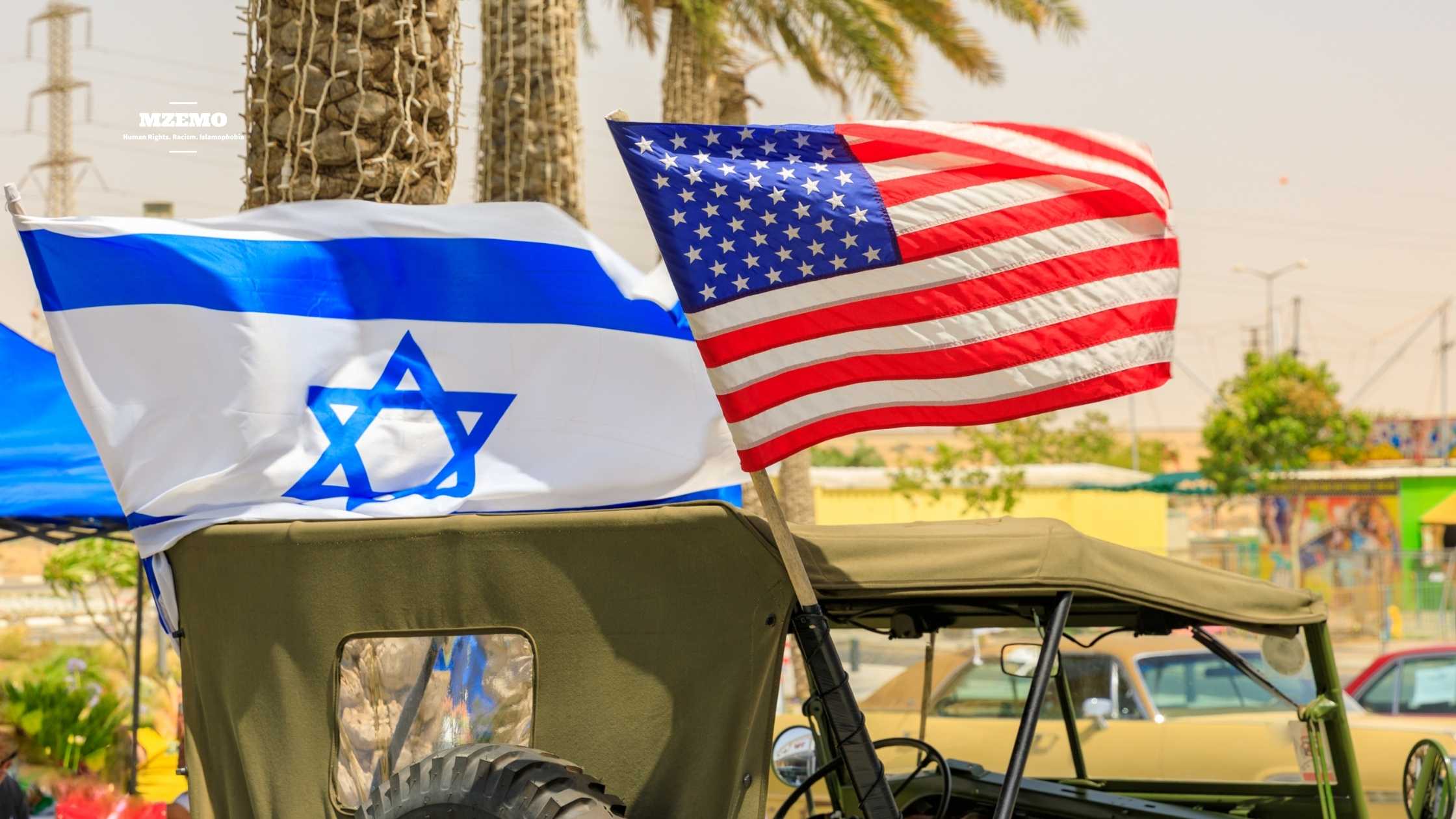
Israel and Iran remain locked in a shadow confrontation. The United States provides strategic backing to Israel and maintains a security footprint across the Gulf. On the other hand, Iran extends influence through aligned networks across Lebanon, Iraq, Syria, and Yemen. Regional states navigate between these poles, balancing security, trade, and political legitimacy.

This is not a symmetrical Cold War like the U.S.–Soviet rivalry. It is regional, layered, and fluid, but its architecture is becoming clearer.

The Emerging Blocs

The Security-Centric Axis

At its core stands Israel, underwritten by American military and diplomatic support. This axis prioritizes deterrence, regional normalization arrangements with Israel, and containment of Iranian influence. Advanced missile defense systems, intelligence cooperation, and expanding arms acquisitions reinforce this bloc.

The United States remains central, not merely as an ally, but as a force multiplier. Naval deployments in strategic waterways, security guarantees to Gulf monarchies, and continued weapons transfers anchor this architecture.

The Resistance-Oriented Axis

Contrarily, there is Iran and its aligned regional states. Tehran’s strategy relies less on direct confrontation and more on distributed deterrence. It projects influence through allied groups, while leveraging geography to pressure adversaries indirectly.

Lebanon’s southern front, networks in Iraq, Syrian territory, and maritime corridors near Yemen have become arenas of calibrated tension. These fronts do not represent total war, but a controlled pressure.

The Proxy Map: Where Rivalry Is Played Out

The Middle East’s “Cold War” is not fought in capitals, but in borderlands and chokepoints.

  • Gaza and southern Lebanon remain flashpoints linking Palestinian resistance and regional escalation dynamics.
  • Syria functions as a fragmented arena where external powers maintain influence zones.
  • Iraq remains politically sovereign yet strategically contested.
  • Yemen and the Red Sea corridor have evolved into leverage points affecting global trade flows.

Each theater operates as part of a broader deterrence equation.

Economic Chokepoints: The Oil and Shipping Dimension

Unlike past ideological rivalries, this emerging cold war is deeply tied to energy and trade arteries.

The Strait of Hormuz carries roughly one-fifth of global petroleum liquids consumption. A significant portion of the global liquefied natural gas trade also passes through this narrow corridor. Even rhetorical threats to its stability influence global markets.

Further west, disruptions in the Red Sea shipping corridor have demonstrated how regional tension can ripple into global supply chains. When vessels reroute around Africa to avoid instability, shipping times increase, insurance costs rise, and inflationary pressure spreads.

These waterways function as strategic leverage tools. No side seeks outright closure, but each understands its value as a pressure point.

Military Spending: Preparing for Prolonged Rivalry

As cold wars are sustained by arms races, the Middle East is no exception.

Recent data shows that regional military expenditure has surged, reaching approximately $243 billion in 2024, reflecting one of the sharpest annual increases globally. Israel’s defense spending alone reportedly rose dramatically during the recent conflict period. Gulf states continue to invest heavily in missile systems, air defenses, and naval capabilities.

Rising defense budgets indicate preparation for prolonged instability rather than short-term crisis management. Ultimately, this is the logic of deterrence in action.

The Gaza Catalyst

The genocide in Gaza has not only devastated Palestinian infrastructure but has reshaped regional alignment dynamics.

Public opinion across the Muslim world has hardened. Governments balancing normalization arrangements now face domestic pressure. Moreover, regional actors calculate costs not only in security terms but through the angle of legitimacy.

Yet direct interstate war remains avoided, escalation remains managed, not eliminated.

The Role of External Powers

It is a fact that the Middle East’s strategic competition does not occur in isolation.

The United States maintains a military presence across Gulf bases and maritime routes. Russia remains active in Syria. China, while less militarily visible, has deepened economic engagement and diplomatic mediation efforts in the Gulf.

Regional powers increasingly adopt multi-alignment strategies. Saudi Arabia and the UAE maintain security ties with Washington while expanding economic cooperation with Beijing. Turkiye navigates NATO membership alongside regional autonomy, while Qatar balances mediation roles with security partnerships.

Thus, this multipolar balancing adds complexity to the emerging rivalry.

Possible Scenarios Ahead

For now, three trajectories appear plausible as follows:

1. Managed Confrontation

Periodic flare-ups across proxy arenas, but no direct war between primary state actors.

2. Chokepoint Crisis

A major disruption in Hormuz or the Red Sea that forces international intervention and tests escalation thresholds.

3. Escalation Spiral

A miscalculation in Lebanon, Syria, or Iraq triggering broader regional confrontation.

However, each path depends on deterrence discipline and political restraint.

The Strategic Reality

The Middle East may not replicate the 20th-century Cold War in form. But it is increasingly governed by similar logic with blocs forming around security umbrellas, rivals avoiding direct confrontation while competing through intermediaries, and economic arteries serving as strategic pressure points.

For Palestinians in Gaza and civilians across the region, this structure carries profound consequences. Proxy rivalry tends to prolong instability. Arms races consume budgets that might otherwise fund development, and chokepoint politics expose entire populations to global market shocks.

Cold wars are not quiet, but loud in peripheral arenas.

The Middle East today is not in open regional war. Yet it is unmistakably entering an era defined by sustained strategic competition—an environment where conflict is managed, alliances harden, and stability becomes conditional.

The rivalry may remain cold, but its dire consequences will not!

Continue Reading
Click to comment

Leave a Reply

Your email address will not be published. Required fields are marked *

Crimes Against Humanity

Ramadan Under Rubble: Gaza’s Holy Month in a Landscape of Destruction

Published

on

Ramadan-Under-Rubble-Gazas-Holy-Month-in-a-City-Still-in-Ruins

In a series of three consecutive Ramadan arrivals in Gaza, this one hits different for the people, as many of them have lost almost half of their families.

There are no lantern-lit balconies in neighborhoods, nor crowded markets layered in the scent of spices and frying bread. In fact, in most of the Gaza Strip, entire residential blocks remain flattened. Where homes once stood, families are now forced to gather inside UN-run school buildings, sleeping behind makeshift curtains that attempt to create privacy in classrooms built for thirty children, not thirty displaced relatives.

Ultimately, this Ramadan is not taking place in a city recovering from genocide, but it is unfolding in a territory still broken from inside and out.

A Holy Month in a Shattered Urban System

Although the numbers are staggering, they are not abstract. Satellite assessments and international damage reports estimate that over 320,000 housing units across Gaza have been damaged or destroyed. In a territory barely 365 square kilometers in size, that scale of destruction has erased entire neighborhoods.

Moreover, a joint international assessment has placed Gaza’s reconstruction needs at more than $53 billion, with approximately $20 billion required in the first three years alone just to restore essential infrastructure and housing.

Meanwhile, UN humanitarian situation updates continue to reference Gaza health authorities’ figures reporting over 70,000 deaths since October 2023, alongside mass injury and displacement.

This is the environment in which this Ramadan has begun.

A month meant for spiritual reflection now intersects with broken sewage networks, damaged desalination plants, fractured electricity grids, and hospitals functioning far below pre-war capacity.

Fasting in a Water Crisis

Fasting in Ramadan requires abstaining from water and food from dawn to dusk. However, in Gaza, the people fast for even longer, without any certainty of getting something to drink at Iftar.

Clean water remains limited in many areas. Residents rely on trucked deliveries or small-scale desalination output. Long queues form daily at water distribution points. During Ramadan, those queues stretch into fasting hours, turning a religious act of discipline into a period of patience.

Furthermore, Wudu, which is a ritual washing before prayer, becomes difficult when each liter of water is rationed.

Sanitation networks, heavily damaged during the genocide, remain only partially restored. In crowded displacement shelters, maintaining hygiene during a month of fasting is not simply about devotion, but about survival in confined conditions[OBH1] .

Iftar Without Homes

Before the genocide, Ramadan evenings in Gaza were intimate and loud at the same time. Families used to gather, extended relatives moved between homes, and kitchens were operated at full capacity.

This year, many families broke their fast under fluorescent classroom lights or in tent encampments erected beside damaged buildings. Meals are often prepared in communal kitchens operated by humanitarian agencies and local volunteers.

The humanitarian system reports the entry of hundreds of thousands of aid pallets into Gaza during ceasefire windows and negotiated access periods. Yet the presence of aid shipments does not automatically translate into the actual presence of aid and normal consumption patterns.

Damaged roads limit transport, while import restrictions on certain materials, often categorized under security frameworks, slow reconstruction. Employment opportunities remain scarce in large parts of the Strip.

In practical terms, Ramadan in Gaza has shifted from household-based consumption to aid-dependent distribution.

Charity replaces commerce, and communal pots have replaced private kitchens.

Mosques Without Minarets

Many mosques across Gaza sustained damage, and most of them have completely obliterated. However, some are partially operational. Where structures are unsafe, congregational prayers move into open spaces or shelter corridors.

The special Ramadan prayer – Taraweeh – although continued, is offered under emergency lighting, and sometimes outdoors.

Ramadan is traditionally a month of collective rhythm. However, in Gaza, that rhythm competes with displacement patterns that separate families across districts and temporary shelters.

Internal displacement reporting from humanitarian agencies shows that the vast majority of Gaza’s population has experienced at least one displacement cycle since the genocide began.

So, Ramadan, which usually strengthens communal bonds, now unfolds across fragmented social networks.

Children and the Weight of This Ramadan

For children, Ramadan often carries excitement due to special meals, extended nights, and anticipation of Eid.

But this year in Gaza, childhood is shaped by trauma exposure, interrupted schooling, and crowded shelter life.

Education facilities across the Strip sustained heavy damage. In this context, many school buildings continue to function as displacement shelters. Learning remains inconsistent, while psychological support services partially operate under immense strain relative to need.

This Ramadan does not offer a distraction from hardship. It intensifies it because children understand that the environment around them has changed in ways that feel permanent.

Faith in a Managed Reality

Despite all this, fasting continues. The Holy Qur’an is recited in shelters. Charity circulates among families who have little to give, and neighbors share what they receive.

However, resilience should not be romanticized. Spiritual endurance does not remove the need for sovereignty over rebuilding.

Ramadan this year reveals something deeper than devotion. It reveals a population practicing its faith inside a humanitarian crisis rather than a functioning civic structure.

It reveals that survival and worship are unfolding simultaneously, in a landscape where reconstruction plans are debated far beyond Gaza’s borders.

Ramadan in Gaza is not silent. It is disciplined, restrained, and carried out under the weight of destruction that remains visible in every damaged skyline. In a nutshell, the holy month has arrived, but the people are forced to live in abysmal conditions for life.

Continue Reading

Featured

Rafah First: Why the New Gaza Stabilization Plan Starts at the Border

Published

on

Rafah-First-Why-the-New-Gaza-Stabilization-Plan-Starts-at-the-Border

The role of the International Stabilization Force (ISF) remains doubtful due to its ambiguous mandate and powers. Some people analyze that it can be another force trying to destroy the remains of humanity in Gaza, while others hope it might ensure peacekeeping.

The official language seems to be reassuring order, security, reconstruction, and stabilization. But the real question is what sort of stabilization it is aspiring to and under whose authority?

The new architecture surrounding Gaza’s future represents the most significant external governance blueprint proposed for a territory in years. Although it is presented as a bridge toward recovery, it raises deeper questions about sovereignty, legitimacy, and control.

The Scale of What Is Being Proposed

The stabilization plan reportedly envisions:

  • Up to 20,000 international troops
  • A program to train 12,000 Palestinian police personnel
  • Initial deployment concentrated in Rafah
  • Gradual geographic expansion sector by sector

In this backdrop, several countries have signaled troop participation or readiness to contribute security personnel, including Indonesia, Morocco, Kazakhstan, Kosovo, and Albania. Moreover, Egypt and Jordan have been referenced in relation to police training coordination.

This is not a small symbolic observer mission, but a substantial security presence for a territory roughly the size of Detroit.

The numbers alone indicate that this would be one of the most significant foreign security deployments in Gaza’s history.

Why Rafah Matters

The decision to begin in Rafah is not accidental. Rafah is Gaza’s southern gateway, and it controls access to Egypt. It influences humanitarian throughput and is central to trade corridors as well as the movement of goods.

Whoever holds operational control in Rafah influences:

  • Reconstruction material flow
  • Fuel imports
  • Humanitarian distribution
  • Commercial reopening

In a territory where reconstruction costs are estimated to exceed $53 billion, control over entry points effectively shapes the speed and nature of rebuilding.

Stabilization beginning at the border is not merely about security but also about economic leverage and how life inside Gaza will be affected.

The Dilemma of the Board of Peace

Parallel to the security force is the formation of a reconstruction governance framework commonly referred to as the “Board of Peace.” The first session was recently convened in the United States.

Its purpose is described as coordinating funding, supervising reconstruction priorities, and structuring administrative transition. On paper, that appears pragmatic, but Gaza requires massive capital and coordinated rebuilding.

When we analyze the past, reconstruction in Gaza has historically been linked to security and compliance conditions. Access to cement, steel, heavy machinery, and dual-use materials has long been subject to restrictions justified under security doctrines by Israel.

If reconstruction funding is tied to demilitarization benchmarks or governance restructuring conditions designed externally, rebuilding becomes conditional rather than sovereign.

This is where the debate shifts from security to political architecture. The people of Palestine want to breathe with safety and security more than ever.

Stabilization vs Sovereignty

Security forces can reduce immediate chaos, deter armed escalation, and protect aid convoys. But security deployment without full Palestinian political authority risks creating a managed environment rather than an empowered one.

The central legitimacy questions are unavoidable:

  • Who defines the mandate of the force?
  • Under which legal framework will troops operate?
  • Who investigates misconduct?
  • Who authorizes the use of force?
  • What is the timeline for withdrawal?
  • What political authority represents Palestinians in this framework?

Without clear answers, stabilization may freeze the genocide for some time rather than resolving it.

A Humanitarian System Becoming a Governance System

Since the conflict escalated, Gaza has increasingly functioned under humanitarian management. UN agencies, NGOs, and emergency distribution networks have sustained basic survival.

That humanitarian framework was never designed to become a long-term governance model.

Yet the introduction of a large multinational security presence, combined with externally supervised reconstruction, risks formalizing a system where Palestinians live under structured oversight rather than self-directed recovery.

The Muslim World’s Dilemma

For Muslim-majority countries signaling participation, the decision is complex.

On one hand:

  • Contributing to stabilization can be framed as supporting Palestinian civilians.
  • Participation offers diplomatic influence within reconstruction planning.

On the other hand:

  • Domestic public opinion in many of these countries remains deeply sympathetic to Palestinian self-determination.
  • Being perceived as enforcing externally designed frameworks could damage credibility.

The legitimacy of the stabilization force will depend not only on troop numbers, but on whether Palestinians see it as protection or control.

Reconstruction Cannot Be Security-Only

Rebuilding Gaza is not simply about concrete and policing.

It requires:

  • Housing reconstruction at massive scale
  • Restoration of power grids
  • Rebuilding of water desalination systems
  • Revitalization of private-sector employment
  • Educational and health system recovery

All of which depend on stable access, political clarity, and local agency.

If reconstruction is conditioned primarily through security compliance metrics rather than civic empowerment, economic dependency could deepen.

The difference between peacekeeping and management lies in who sets the long-term political trajectory.

In a Nutshell

Stabilization can reduce violence for some time but it cannot eradicate the root cause of the issue. Until Israel is completely stopped from genocidal activities in Gaza, the peaceful solution for Palestine is not possible.

If Gaza’s reconstruction and security future are designed primarily in conference rooms outside the territory, even well-funded plans risk reinforcing dependency.

The distinction will define whether the International Stabilization Force becomes a bridge toward sovereignty or an architecture of prolonged oversight.

So, the coming months will determine which path Gaza is placed upon!

Continue Reading

Featured

Rebuilding Gaza: Who Will Pay, Who Will Control and Who Will Benefit?

Published

on

Rebuilding-Gaza-Who-Will-Pay-Who-Will-Control-and-Who-Will-Benefit

The widespread rhetoric about rebuilding Gaza is being presented as a humanitarian necessity, but in reality, it is a political battleground.

The Satellite-based damage assessments indicate that more than 320,000 housing units have been damaged or destroyed. It indicates that entire neighborhoods lie flattened. Moreover, large sections of Gaza’s water networks, sewage systems, hospitals, schools, electricity infrastructure, and road corridors have been rendered inoperable.

Ultimately, this is not a matter of repairing buildings but of reconstructing an entire urban ecosystem. International estimates place the cost of Gaza’s recovery and reconstruction at more than $53 billion. Within this, roughly $20 billion is required in the first three years alone to stabilize essential services and basic infrastructure.

Additionally, some long-term projections push the figure closer to $70 billion when factoring in debris removal, economic revival, and structural reinforcement. However, money alone does not rebuild Gaza.

The Scale of Destruction: A Structural Collapse

The destruction in Gaza is not limited to visible rubble. Beneath collapsed buildings lies a deeper collapse. In this context, power grids, desalination plants, treatment facilities, telecommunications, and medical systems are completely obliterated.

According to the UN estimates, there are around 61 million to 68 million tons of rubble. Clearing debris itself presents a massive logistical challenge. Rubble removal requires heavy machinery, fuel, and unrestricted movement. It also involves the risk of unexploded ordnance embedded within residential ruins. Even this initial phase of recovery is dependent on import permissions and material access.

So, reconstruction cannot begin meaningfully if the supply chain is throttled.

The Price Tag: What $53 Billion Actually Means

The headline figure of $53 billion conceals the complexity of rebuilding:

  • Housing reconstruction for hundreds of thousands of displaced families
  • Water and sanitation restoration, including pipelines, pumping stations, and desalination facilities
  • Electricity infrastructure repair, including transmission lines and fuel systems
  • Healthcare and education system rebuilding
  • Economic restart mechanisms, including support for small businesses and market reactivation

Without economic revival, reconstruction risks becoming cosmetic. A rebuilt apartment block without jobs, mobility, or functioning trade corridors is not recovery, but containment.

The Central Question: Who Controls the Gate?

Rebuilding Gaza hinges on one decisive factor – control over crossings, imports, and materials.

Israel retains effective control over Gaza’s airspace, maritime access, and land crossings. This control determines what enters the territory, in what quantity, and under what classification. Many materials essential for rebuilding, like cement, steel, electrical components, generators, and heavy equipment, can fall under “dual-use” restrictions, meaning they may be delayed, limited, or blocked entirely.

In past reconstruction cycles, limitations on cement imports alone dramatically slowed housing projects. A single bottleneck can stall thousands of housing units.

The result is a reconstruction process that is conditional, monitored, and dependent. Pledges of billions become symbolic if trucks cannot cross consistently and materials cannot flow freely.

The Board of Peace and Conditional Reconstruction

The recently announced “Board of Peace” and discussions surrounding Phase Two of post-war governance have introduced a new political architecture around reconstruction.

This framework reportedly includes:

  • A multi-billion-dollar reconstruction fund
  • Proposals for an international stabilization presence
  • Governance restructuring discussions
  • Demilitarization conditions tied to reconstruction access

But here lies the core controversy. If rebuilding is conditioned on political restructuring designed externally, reconstruction shifts from humanitarian necessity to strategic leverage. The linking of reconstruction funds to security and governance conditions effectively transforms infrastructure into bargaining currency.

For Palestinians in Gaza, this creates a troubling equation – recovery becomes contingent not simply on peace, but on compliance with externally framed political terms.

Who Will Pay?

Although the financing landscape is controversial and ambiguous, it is being reflected and layered as follows.

1. Gulf States

GCC countries possess the financial capacity to contribute substantially. Historically, they have played a role in Gaza reconstruction. Although they are ready to contribute, they want reassurance for Gaza’s peaceful future.

2. Western Governments

Western funding typically includes strict monitoring mechanisms and governance conditions. Aid is often routed through vetted channels to ensure oversight, which in practice can slow implementation.

3. Multilateral Institutions

Institutions such as development banks require transparency, security assurances, and administrative clarity before releasing large-scale funds. They do not operate in political vacuums because access and governance legitimacy are their prerequisites.

4. Private Sector and NGOs

While essential for humanitarian relief, NGOs cannot finance or execute state-scale rebuilding without stable import regimes and secure operational conditions.

Pledges may reach billions, but actual disbursement depends on political agreement.

Who Benefits from Reconstruction?

What Gaza needs this time is peace and respite from genocide. And reconstruction is not only about homes, but about the rehabilitation of the entire socio-economic spectrum.

Large regional construction firms may secure contracts. International contractors may enter under donor supervision. Local businesses may either be empowered or sidelined, depending on procurement structures.

If reconstruction flows primarily through externally approved channels, a new class of intermediaries can emerge. It will include permit holders, subcontractors, and import brokers. Restrictions often inflate prices and create scarcity premiums, distorting the local market.

There is also a major risk of “reconstruction dependency”. When rebuilding cycles follow destruction cycles without structural political resolution, the economy shifts from productive growth to aid management.

This pattern has repeated earlier in history, too, with destruction, donor conferences, partial rebuild, and renewed destruction. Without sovereignty and stability, reconstruction remains temporary.

The Human Dimension: Recovery Without Stability

More than infrastructure is at stake. Displacement remains widespread, while families who lost everything face prolonged uncertainty. Health systems remain strained, with limited access to specialized treatment and medical evacuations.

Rebuilding a hospital is one challenge, and ensuring consistent medicine supply chains is another.

Rebuilding housing is necessary, while guaranteeing that families will not face renewed displacement is equally critical.

Without legitimate guarantees against repeated devastation, reconstruction feels fragile.

Reconstruction as Leverage

The uncomfortable reality is that control over materials, crossings, and security architecture allows reconstruction to be shaped by external actors.

When the entry of basic materials depends on political alignment, rebuilding becomes permission-based. It ceases to be a right and becomes a managed process.

For Palestinians, the fear is not merely slow reconstruction. It is reconstruction that stabilizes dependency rather than restoring autonomy.

If border controls remain restrictive, trade corridors remain limited, and internal governance is externally dictated, Gaza risks being rebuilt structurally while remaining politically constrained.

The Larger Question

Rebuilding Gaza is not only about money, but about power. Who controls entry points determines pace, who sets political conditions determines structure, and who administers funds determines beneficiaries.

The international community can mobilize resources, regional powers can pledge funds, and the institutions can design oversight mechanisms.

But unless Palestinians possess meaningful control over their own reconstruction process, the rebuild risks becoming another chapter in a long cycle of externally managed survival. In a nutshell, buildings can be reconstructed with capital, but dignity and sovereignty require something more!

Continue Reading
Advertisement

Trending