Connect with us

Featured

Is the Middle East Entering a New Cold War?

Published

on

Is-the-Middle-East-Entering-a-New-Cold-War

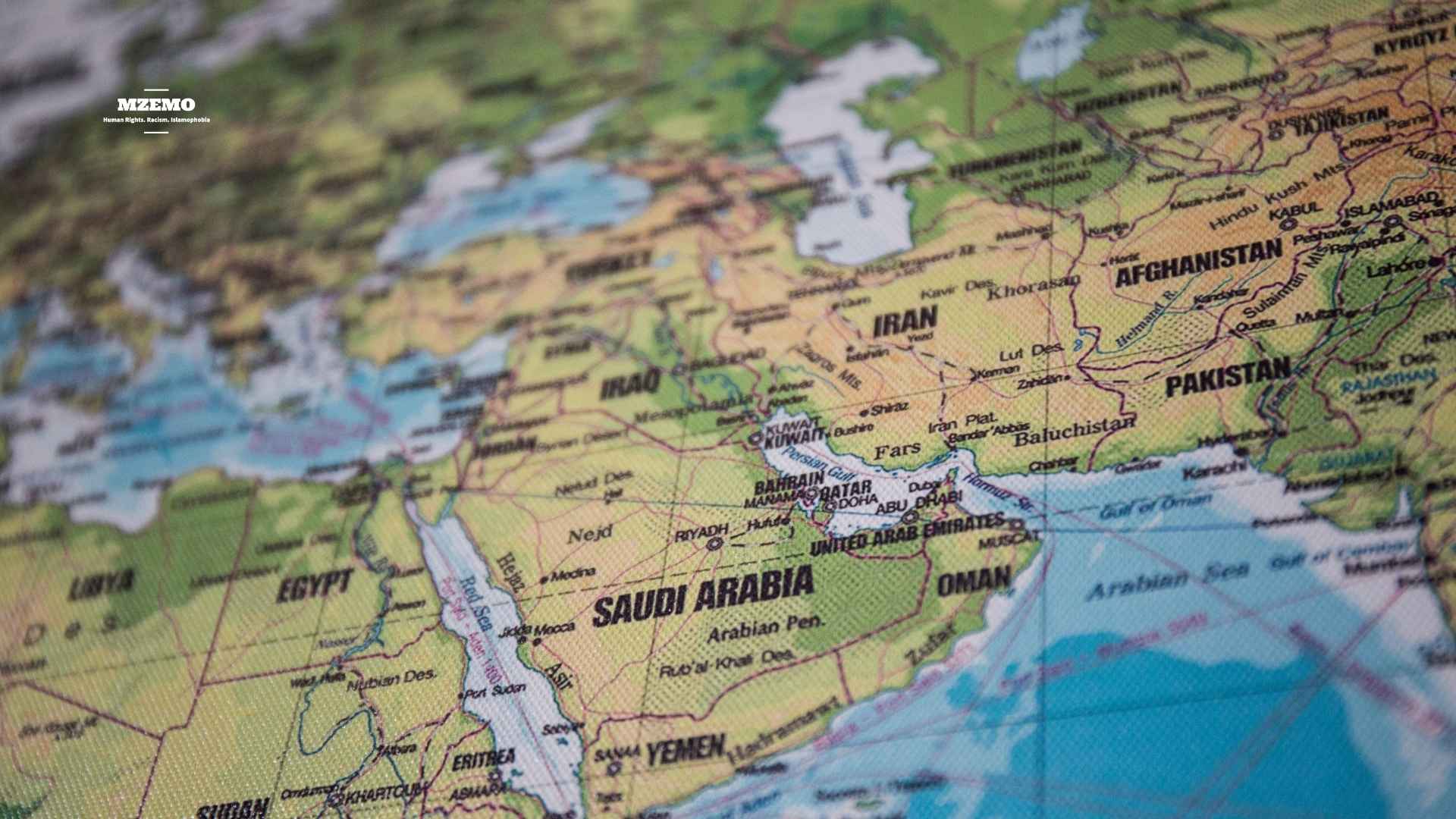
The Middle East remained an area of contention for years, but this time it is not witnessing a conventional regional war.

Across the region, rival power centers are consolidating influence through proxies, economic choke points, strategic alignments, and military expansion. Although direct confrontation between major actors remains constrained, indirect confrontation is intensifying. This pattern ultimately resembles a Cold War structure – persistent rivalry, managed escalation, bloc formation, and weaponized economics.

The real question is not how long these tensions will exist, but whether the region has entered a sustained era of bloc-based strategic competition.

What Makes a “Cold War” Cold?

A cold war is not defined by the absence of violence. It is defined by the avoidance of full-scale direct war between principal actors, while conflict unfolds through:

  • Proxy forces
  • Intelligence operations
  • Cyber disruption
  • Economic sanctions
  • Strategic deterrence
  • Military posturing without direct invasion

In today’s Middle East, these elements are increasingly and undoubtedly visible.

Israel and Iran remain locked in a shadow confrontation. The United States provides strategic backing to Israel and maintains a security footprint across the Gulf. On the other hand, Iran extends influence through aligned networks across Lebanon, Iraq, Syria, and Yemen. Regional states navigate between these poles, balancing security, trade, and political legitimacy.

This is not a symmetrical Cold War like the U.S.–Soviet rivalry. It is regional, layered, and fluid, but its architecture is becoming clearer.

The Emerging Blocs

The Security-Centric Axis

At its core stands Israel, underwritten by American military and diplomatic support. This axis prioritizes deterrence, regional normalization arrangements with Israel, and containment of Iranian influence. Advanced missile defense systems, intelligence cooperation, and expanding arms acquisitions reinforce this bloc.

The United States remains central, not merely as an ally, but as a force multiplier. Naval deployments in strategic waterways, security guarantees to Gulf monarchies, and continued weapons transfers anchor this architecture.

The Resistance-Oriented Axis

Contrarily, there is Iran and its aligned regional states. Tehran’s strategy relies less on direct confrontation and more on distributed deterrence. It projects influence through allied groups, while leveraging geography to pressure adversaries indirectly.

Lebanon’s southern front, networks in Iraq, Syrian territory, and maritime corridors near Yemen have become arenas of calibrated tension. These fronts do not represent total war, but a controlled pressure.

The Proxy Map: Where Rivalry Is Played Out

The Middle East’s “Cold War” is not fought in capitals, but in borderlands and chokepoints.

  • Gaza and southern Lebanon remain flashpoints linking Palestinian resistance and regional escalation dynamics.
  • Syria functions as a fragmented arena where external powers maintain influence zones.
  • Iraq remains politically sovereign yet strategically contested.
  • Yemen and the Red Sea corridor have evolved into leverage points affecting global trade flows.

Each theater operates as part of a broader deterrence equation.

Economic Chokepoints: The Oil and Shipping Dimension

Unlike past ideological rivalries, this emerging cold war is deeply tied to energy and trade arteries.

The Strait of Hormuz carries roughly one-fifth of global petroleum liquids consumption. A significant portion of the global liquefied natural gas trade also passes through this narrow corridor. Even rhetorical threats to its stability influence global markets.

Further west, disruptions in the Red Sea shipping corridor have demonstrated how regional tension can ripple into global supply chains. When vessels reroute around Africa to avoid instability, shipping times increase, insurance costs rise, and inflationary pressure spreads.

These waterways function as strategic leverage tools. No side seeks outright closure, but each understands its value as a pressure point.

Military Spending: Preparing for Prolonged Rivalry

As cold wars are sustained by arms races, the Middle East is no exception.

Recent data shows that regional military expenditure has surged, reaching approximately $243 billion in 2024, reflecting one of the sharpest annual increases globally. Israel’s defense spending alone reportedly rose dramatically during the recent conflict period. Gulf states continue to invest heavily in missile systems, air defenses, and naval capabilities.

Rising defense budgets indicate preparation for prolonged instability rather than short-term crisis management. Ultimately, this is the logic of deterrence in action.

The Gaza Catalyst

The genocide in Gaza has not only devastated Palestinian infrastructure but has reshaped regional alignment dynamics.

Public opinion across the Muslim world has hardened. Governments balancing normalization arrangements now face domestic pressure. Moreover, regional actors calculate costs not only in security terms but through the angle of legitimacy.

Yet direct interstate war remains avoided, escalation remains managed, not eliminated.

The Role of External Powers

It is a fact that the Middle East’s strategic competition does not occur in isolation.

The United States maintains a military presence across Gulf bases and maritime routes. Russia remains active in Syria. China, while less militarily visible, has deepened economic engagement and diplomatic mediation efforts in the Gulf.

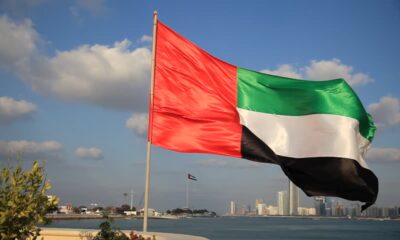
Regional powers increasingly adopt multi-alignment strategies. Saudi Arabia and the UAE maintain security ties with Washington while expanding economic cooperation with Beijing. Turkiye navigates NATO membership alongside regional autonomy, while Qatar balances mediation roles with security partnerships.

Thus, this multipolar balancing adds complexity to the emerging rivalry.

Possible Scenarios Ahead

For now, three trajectories appear plausible as follows:

1. Managed Confrontation

Periodic flare-ups across proxy arenas, but no direct war between primary state actors.

2. Chokepoint Crisis

A major disruption in Hormuz or the Red Sea that forces international intervention and tests escalation thresholds.

3. Escalation Spiral

A miscalculation in Lebanon, Syria, or Iraq triggering broader regional confrontation.

However, each path depends on deterrence discipline and political restraint.

The Strategic Reality

The Middle East may not replicate the 20th-century Cold War in form. But it is increasingly governed by similar logic with blocs forming around security umbrellas, rivals avoiding direct confrontation while competing through intermediaries, and economic arteries serving as strategic pressure points.

For Palestinians in Gaza and civilians across the region, this structure carries profound consequences. Proxy rivalry tends to prolong instability. Arms races consume budgets that might otherwise fund development, and chokepoint politics expose entire populations to global market shocks.

Cold wars are not quiet, but loud in peripheral arenas.

The Middle East today is not in open regional war. Yet it is unmistakably entering an era defined by sustained strategic competition—an environment where conflict is managed, alliances harden, and stability becomes conditional.

The rivalry may remain cold, but its dire consequences will not!

Continue Reading
Click to comment

Leave a Reply

Your email address will not be published. Required fields are marked *

Featured

Rebuilding Gaza: Who Will Pay, Who Will Control and Who Will Benefit?

Published

on

Rebuilding-Gaza-Who-Will-Pay-Who-Will-Control-and-Who-Will-Benefit

The widespread rhetoric about rebuilding Gaza is being presented as a humanitarian necessity, but in reality, it is a political battleground.

The Satellite-based damage assessments indicate that more than 320,000 housing units have been damaged or destroyed. It indicates that entire neighborhoods lie flattened. Moreover, large sections of Gaza’s water networks, sewage systems, hospitals, schools, electricity infrastructure, and road corridors have been rendered inoperable.

Ultimately, this is not a matter of repairing buildings but of reconstructing an entire urban ecosystem. International estimates place the cost of Gaza’s recovery and reconstruction at more than $53 billion. Within this, roughly $20 billion is required in the first three years alone to stabilize essential services and basic infrastructure.

Additionally, some long-term projections push the figure closer to $70 billion when factoring in debris removal, economic revival, and structural reinforcement. However, money alone does not rebuild Gaza.

The Scale of Destruction: A Structural Collapse

The destruction in Gaza is not limited to visible rubble. Beneath collapsed buildings lies a deeper collapse. In this context, power grids, desalination plants, treatment facilities, telecommunications, and medical systems are completely obliterated.

According to the UN estimates, there are around 61 million to 68 million tons of rubble. Clearing debris itself presents a massive logistical challenge. Rubble removal requires heavy machinery, fuel, and unrestricted movement. It also involves the risk of unexploded ordnance embedded within residential ruins. Even this initial phase of recovery is dependent on import permissions and material access.

So, reconstruction cannot begin meaningfully if the supply chain is throttled.

The Price Tag: What $53 Billion Actually Means

The headline figure of $53 billion conceals the complexity of rebuilding:

  • Housing reconstruction for hundreds of thousands of displaced families
  • Water and sanitation restoration, including pipelines, pumping stations, and desalination facilities
  • Electricity infrastructure repair, including transmission lines and fuel systems
  • Healthcare and education system rebuilding
  • Economic restart mechanisms, including support for small businesses and market reactivation

Without economic revival, reconstruction risks becoming cosmetic. A rebuilt apartment block without jobs, mobility, or functioning trade corridors is not recovery, but containment.

The Central Question: Who Controls the Gate?

Rebuilding Gaza hinges on one decisive factor – control over crossings, imports, and materials.

Israel retains effective control over Gaza’s airspace, maritime access, and land crossings. This control determines what enters the territory, in what quantity, and under what classification. Many materials essential for rebuilding, like cement, steel, electrical components, generators, and heavy equipment, can fall under “dual-use” restrictions, meaning they may be delayed, limited, or blocked entirely.

In past reconstruction cycles, limitations on cement imports alone dramatically slowed housing projects. A single bottleneck can stall thousands of housing units.

The result is a reconstruction process that is conditional, monitored, and dependent. Pledges of billions become symbolic if trucks cannot cross consistently and materials cannot flow freely.

The Board of Peace and Conditional Reconstruction

The recently announced “Board of Peace” and discussions surrounding Phase Two of post-war governance have introduced a new political architecture around reconstruction.

This framework reportedly includes:

  • A multi-billion-dollar reconstruction fund
  • Proposals for an international stabilization presence
  • Governance restructuring discussions
  • Demilitarization conditions tied to reconstruction access

But here lies the core controversy. If rebuilding is conditioned on political restructuring designed externally, reconstruction shifts from humanitarian necessity to strategic leverage. The linking of reconstruction funds to security and governance conditions effectively transforms infrastructure into bargaining currency.

For Palestinians in Gaza, this creates a troubling equation – recovery becomes contingent not simply on peace, but on compliance with externally framed political terms.

Who Will Pay?

Although the financing landscape is controversial and ambiguous, it is being reflected and layered as follows.

1. Gulf States

GCC countries possess the financial capacity to contribute substantially. Historically, they have played a role in Gaza reconstruction. Although they are ready to contribute, they want reassurance for Gaza’s peaceful future.

2. Western Governments

Western funding typically includes strict monitoring mechanisms and governance conditions. Aid is often routed through vetted channels to ensure oversight, which in practice can slow implementation.

3. Multilateral Institutions

Institutions such as development banks require transparency, security assurances, and administrative clarity before releasing large-scale funds. They do not operate in political vacuums because access and governance legitimacy are their prerequisites.

4. Private Sector and NGOs

While essential for humanitarian relief, NGOs cannot finance or execute state-scale rebuilding without stable import regimes and secure operational conditions.

Pledges may reach billions, but actual disbursement depends on political agreement.

Who Benefits from Reconstruction?

What Gaza needs this time is peace and respite from genocide. And reconstruction is not only about homes, but about the rehabilitation of the entire socio-economic spectrum.

Large regional construction firms may secure contracts. International contractors may enter under donor supervision. Local businesses may either be empowered or sidelined, depending on procurement structures.

If reconstruction flows primarily through externally approved channels, a new class of intermediaries can emerge. It will include permit holders, subcontractors, and import brokers. Restrictions often inflate prices and create scarcity premiums, distorting the local market.

There is also a major risk of “reconstruction dependency”. When rebuilding cycles follow destruction cycles without structural political resolution, the economy shifts from productive growth to aid management.

This pattern has repeated earlier in history, too, with destruction, donor conferences, partial rebuild, and renewed destruction. Without sovereignty and stability, reconstruction remains temporary.

The Human Dimension: Recovery Without Stability

More than infrastructure is at stake. Displacement remains widespread, while families who lost everything face prolonged uncertainty. Health systems remain strained, with limited access to specialized treatment and medical evacuations.

Rebuilding a hospital is one challenge, and ensuring consistent medicine supply chains is another.

Rebuilding housing is necessary, while guaranteeing that families will not face renewed displacement is equally critical.

Without legitimate guarantees against repeated devastation, reconstruction feels fragile.

Reconstruction as Leverage

The uncomfortable reality is that control over materials, crossings, and security architecture allows reconstruction to be shaped by external actors.

When the entry of basic materials depends on political alignment, rebuilding becomes permission-based. It ceases to be a right and becomes a managed process.

For Palestinians, the fear is not merely slow reconstruction. It is reconstruction that stabilizes dependency rather than restoring autonomy.

If border controls remain restrictive, trade corridors remain limited, and internal governance is externally dictated, Gaza risks being rebuilt structurally while remaining politically constrained.

The Larger Question

Rebuilding Gaza is not only about money, but about power. Who controls entry points determines pace, who sets political conditions determines structure, and who administers funds determines beneficiaries.

The international community can mobilize resources, regional powers can pledge funds, and the institutions can design oversight mechanisms.

But unless Palestinians possess meaningful control over their own reconstruction process, the rebuild risks becoming another chapter in a long cycle of externally managed survival. In a nutshell, buildings can be reconstructed with capital, but dignity and sovereignty require something more!
Continue Reading

Deportation

Deportation as a Weapon: New Frontline of Palestinian Rights in the US

Published

on

Deportation-as-a-Weapon

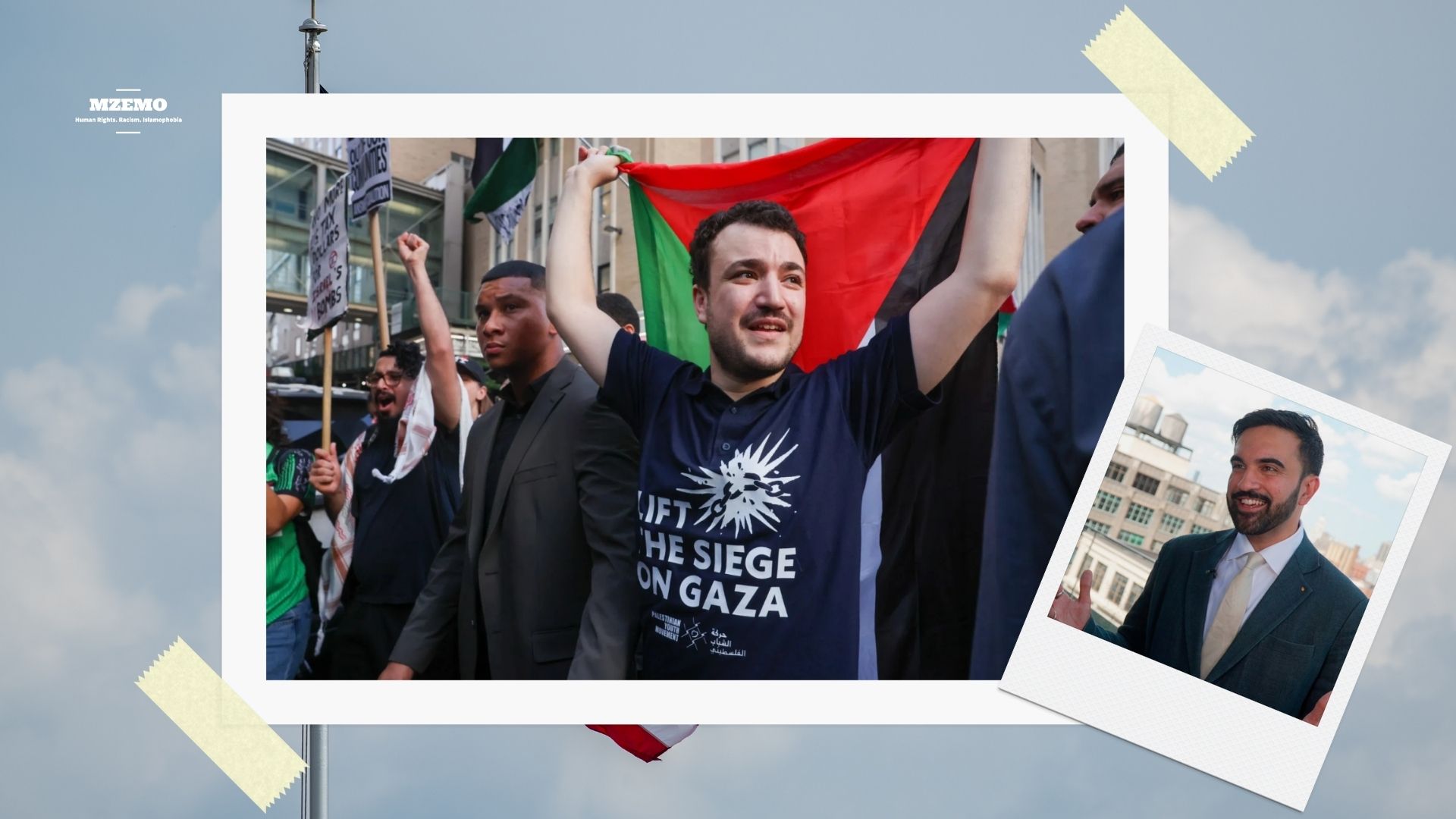
The first time Mahmoud Khalil’s name began circulating beyond activist circles, it was not because of a speech or a protest, but due to a legal notice – a deportation order.

In the 21st century, it is appalling to see people’s right to life and other basic human rights being ridiculed. In the larger picture, the deportation drive is a hidden assault on whoever talks about the rights of the Palestinians in the United States.

A Case That Refused to Stay Quiet

Mahmoud Khalil is a Palestinian activist based in the United States. His work has focused on raising awareness about Gaza and advocating for Palestinian rights through public events and campus-linked activism.

Since Israel is being largely supported in the West, anyone who talks about the fundamental rights of the people of Gaza is dealt with extreme brutality. In this context, the Federal agencies of the United States moved forward with his deportation proceedings even though he is a permanent American citizen and married to a US citizen too.

It is not about Mahmoud Khalil or any individual but about a greater cause that is to allow the freedom of speech, expression, and association.

Palestinian Rights and the Mayor of New York

Zohran Mamdani, a prominent elected official, publicly defended Khalil, arguing that deportation should not be used as a tool against political expression. In doing so, Mamdani shifted the conversation from immigration procedure to constitutional principle.

His message remains clear: “advocacy for Palestinian rights is not a crime, and deportation should not become a backdoor method of punishing dissent.”

The response was swift, and the supporters praised the stance as a rare act of political courage. Critics accused Mamdani of shielding extremism. Media coverage intensified, and Khalil’s case became symbolic.

People are dying in Gaza due to bombings, famine, poor health, and absolutely no sense of security. In this environment, instead of allowing the people of Gaza to breathe, it is inhumane that their voices are being silenced.

Deportation and the Chilling Effect

Immigration law experts note that deportation proceedings are uniquely powerful. Unlike criminal trials, they operate in a separate legal universe—one with fewer protections, lower evidentiary thresholds, and limited public scrutiny.

For activists who are students, workers, or asylum-seekers, this vulnerability is well understood.

Civil rights groups have documented a growing sense of fear among foreign-born activists involved in Palestine-related advocacy. Some report withdrawing from public organizing, while others avoid protests altogether, worried that visibility could trigger legal consequences unrelated to their conduct.

Since the escalation of the Gaza war, US campuses have seen a surge in pro-Palestinian demonstrations. These demonstrations came alongside suspensions, surveillance concerns, and disciplinary actions. Khalil’s case sits squarely within this context.

A Broader Pattern Takes Shape

Across the US, Palestinian and pro-Palestinian activists, especially those without citizenship, describe increased scrutiny. Immigration status has become a pressure point, a way to narrow the space for political engagement without directly confronting free speech protections.

Moreover, some legal scholars point out that while citizens may face arrest or prosecution for protest-related activity, non-citizens face an additional, existential risk: expulsion.

This asymmetry reshapes activism. Ultimately, it creates two classes of dissent—those who can speak and those who must calculate the cost of every word.

Where the World is Heading

The world conscience would definitely be questioned in the annals of history when the chapter of Palestine comes. The world is getting divided among the nations that support the Palestinian right to existence and the other ones that do not support this very basic human right.

In his book, “On Palestine”, Ilan Pappe and Noam Chomsky clearly described the atrocities by Israel and the ground-breaking support it gets from the West. Peppe even claimed that there is ethnic cleansing being done in Palestine by Israel.

In fact, the current deportation trends are about the advocacy tied to Palestine. The question is how a responsible democracy responds when uncomfortable voices refuse to appear.

As one civil liberties advocate put it: “You don’t have to win every case to change the climate. You just have to make people afraid.”

Ultimately, this is about changing the political climate and making people afraid of speaking against Israel or in favor of Palestine. The outcome of Khalil’s case remains uncertain. However, the signals it sends to activists, institutions, and the state are already unmistakable.

In today’s world, speaking about Gaza can follow you far beyond the protest!

Continue Reading

Featured

Life Inside Gaza’s Tents: Cold Nights, Illness, and Endless Waiting

Published

on

Life-Inside-Gazas-Tents

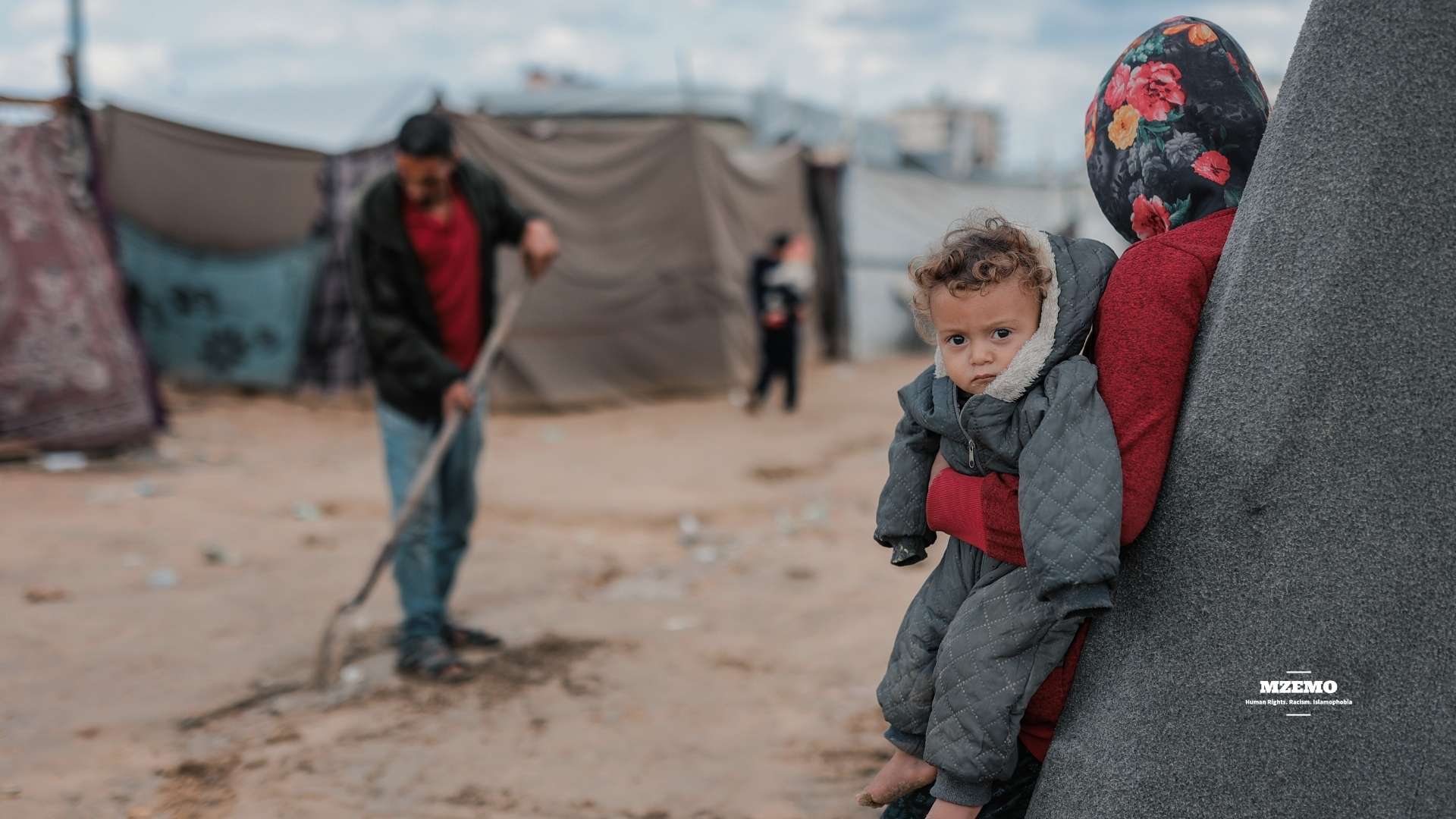
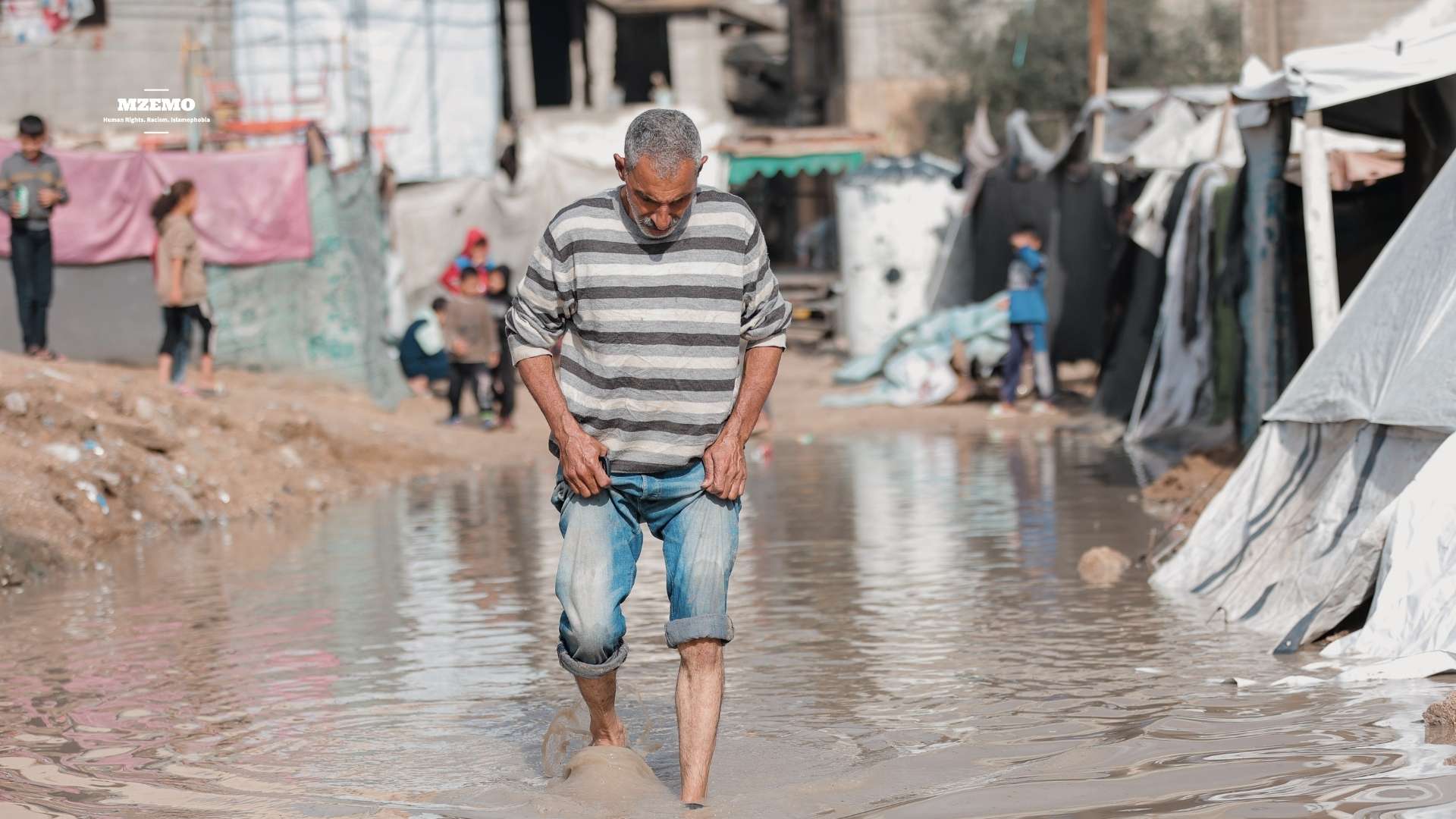
Before sunrise, the camp is already awake. A woman steps carefully between puddles that did not exist the night before. To add more to the inhumane conditions, rainwater has mixed with waste and ash, turning the ground into a thin, foul-smelling slurry. She is carrying two empty containers, hoping the water point has not run dry again today.

Nearby, a child coughs, a persistent dry cough that has become common in the tents since winter set in. This is just a glimpse of life now for hundreds of Palestinians in Gaza. This is not a story of a temporary stop, nor of an emergency night or two, but of a prolonged existence inside fabric shelters that were never meant to last months.

According to the United Nations, around 1.7 million people remain displaced across Gaza. Not only that, a large share of them is living in tents, plastic shelters, or overcrowded informal sites. These sites are often pitched on rubble, farmland, or roadsides. The ceasefire might have changed the tempo of the war but for those in the camps, it did not restore normal life at all.

From Homes to Tents

Entire neighborhoods across Gaza have been flattened or rendered uninhabitable. As per the UN satellite assessments, well over half of Gaza’s housing stock has been damaged or completely destroyed, leaving families with no realistic option to return.

Tents were supposed to be temporary, but as the atrocities continue to inflict the people of Gaza, now these are standing for months.

Moreover, most of those tents offer no insulation. At night, cold air moves freely through torn seams. During rain, water pools inside, soaking thin mattresses and blankets. When storms hit, some tents collapse entirely, forcing families to crowd into neighboring shelters or even sleep outdoors until replacements arrive — if they arrive at all.

These are not the conditions for life to even exist. Aid agencies describe these sites less as camps and more as open-air holding zones, where survival depends on irregular deliveries of water, food, and fuel.

Smoke, Plastic, and the Air People Breathe

With fuel scarce and electricity almost nonexistent, many families burn whatever they can find to keep warm or cook food. Plastic packaging, scraps of rubber, and mixed waste are common substitutes.

The smoke hangs low in the evenings. Burning plastic releases toxic fumes that aggravate respiratory problems, especially among children and older people. A few clinics, which are fortunately left, operating inside or near displacement sites report rising cases of persistent coughs, chest infections, and eye irritation, conditions that are difficult to treat in overcrowded settings with limited medicine.

For many families, the choice is brutal. Either to breathe toxic smoke or to endure freezing nights. This is like a Hobson’s choice for them to live in these conditions.

Childhood on Hold

Children make up nearly half of Gaza’s population, and many are growing up almost entirely inside tents.

There is no school routine, no playground, and no sense of safety after dark. Parents describe children waking at night from cold, fear, or hunger. It is not surprising that the aid workers are noting signs of trauma, including withdrawal, bed-wetting, sudden aggression, and silence.

Mental health professionals working with humanitarian teams have warned that prolonged displacement, especially under such harsh conditions, can leave long-term psychological scars. On the other hand, counselling services are scarce, and survival needs usually come first.

For many children, days pass without structure. Time is measured not by lessons or play, but by queues for water, food distributions, and the arrival, or absence, of aid trucks.

Rain, Sewage, and the Winter Toll

The appalling living conditions were already very severe, but in the winter, it makes them tenfold, turning shelters into hazards.

Heavy rainfall has flooded multiple displacement sites, washing sewage into living areas and soaking tents beyond repair. In some camps, families have raised bedding on bricks or broken furniture in an attempt to stay dry.

Humanitarian reports, including those from Transparency International, document tents collapsing under wind and rain, forcing repeated displacement even within camps. Each move strips families of what little stability they have managed to create.

Cold weather has compounded illness. Without proper clothing, heating, or medical care, respiratory infections have become harder to manage. Clinics, already overstretched, struggle to cope with demand.

A Ceasefire Without a Way Home

For people living in tents, the ceasefire did not bring clarity. Some families hoped it would mean a return home. Instead, many areas remain inaccessible, unsafe, or destroyed. In some cases, new evacuation orders have continued, forcing further movement even after the fighting slowed.

Aid workers say uncertainty is one of the heaviest burdens. Families do not know whether to rebuild makeshift shelters, prepare to move again, or wait for instructions that may never come.

“We Are Still Here”

In the camps, people talk less about politics and more about endurance and survival.

They talk about missing ordinary things, like doors that lock, floors that are dry, and nights without smoke. They talk about children growing up too fast, about illness that lingers, about days that blend into each other.

One displaced man summed it up simply: “We are alive, but this is not living.”

In a nutshell, survival continues, measured in blankets, liters of water, and the hope that tomorrow will bring something other than uncertainty to breathe.

Continue Reading
Advertisement

Trending