
Featured
Impact of Technology on Human Rights


We are living in an era of disruptive technologies, witnessing incidents of human rights violations with the use of technologies. History always changes itself with the introduction of revolutionary technology. Introduction of technologies like Artificial Intelligence, Machine Learning, Big Data Analysis and IoT are such technologies that are changing the way societies are behaving, people’s relationships are evolving, businesses are conducting and the overall future is being shaped.
AI has been considered a tool-free from biases in the human decision-making process. But many incidents show that the issue of racism and systematic discrimination are rooted in AI tools and technologies through its algorithms. Indeed, AI poses a greater threat to human rights violations of vulnerable sections of society by facilitating discrimination and hence manifesting a new wave of oppression and torture based on technology.
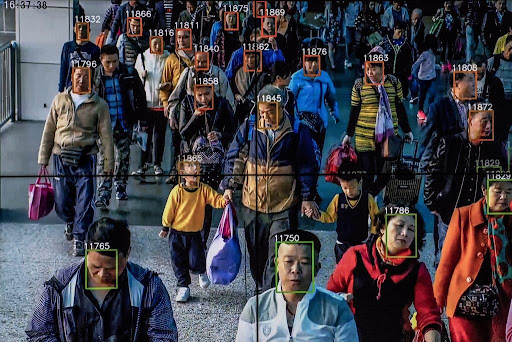
A facial recognition software that is in use at Megvii, an artificial intelligence company located in Beijing.
Racial Discrimination by AI Tools and Algorithms
It has been witnessed how AI-based face recognition systems repeatedly failed to provide equal treatment to Black people and even present them with a derogatory view.
Google Photos, an AI-Based advanced face recognition system 2015 categorised the photos of two Black persons as gorillas.
Researchers also revealed in their studies that algorithms that find out which patients need additional medical care underestimate the medical needs of Black patients enhancing the racial discrimination in the medical needs of Black people. This problem was highlighted in an AI-based medical decision-making solution provided by a leading healthcare services company, Optum.
This racial bias has been identified in many other leading companies’ software and medical tools as well.
The algorithm was not intentionally racist but particularly excluded race when considering the medical needs. It considers only costs as criteria to determine the needs for future medical care. White people spend more on medical care presented that they would need more care in future as well. In this way, it is excluding the Black people for future medical care who already suffer from a lack of spending on necessary medical needs.
Now, the increased use of AI-based solutions could perpetuate digital bias in society and hamper the rights of equal treatment and the right to protection.
Many countries like Hong Kong, India, China and Denmark are adopting the AI-based face recognition system as a tool in predictive policing. But research points out that such tools are unevaluated for their inherited biases and further enhance the pre-existing discriminatory law enforcement practices in the policing system. It has been found that such face recognition algorithms have repeatedly put Black people at a higher risk of being perceived as a high-risk offenders.
Related Article: Techno-Racism: Technology Automating Racial Discrimination
Perceived Threats from Technology for Human Rights Violations
Data Privacy and Surveillance
It has a long history of collecting private data and information of citizens by the governments in the name of national security, economic stability and other social benefits. Now with the advent and intrusion of more advanced technologies, even private companies are collecting a huge chunk of personal, private and financial data of people in the name of serving them in their best interest. Sometimes even people remain unaware about their data being kept by the companies and bought and sold with other parties without their consent. This form of data theft and sharing is hampering the right to privacy. People should have complete control of their data and information. The government needs to be equally focused on issues of data control, privacy, surveillance, digital rights and protection along with the step-up of digital infrastructure.
Source of Unemployment
Universal Declaration of Human Rights under its Article 23, International Labour Organisation through Article 1(2) and International Covenant on Economic, Social and Cultural Rights declares collectively for the protection against unemployment and the right to work.
But rapid automation, AI and IoT based technological tools and business solutions are fast disrupting the industrial way of doing business. The future of work is seen as more automation based. Many researchers are already cautioning about the huge job loss in the future market due to AI-based automation.
Businesses are also willing to adopt advanced technologies to replace their human workforce for the achievement of more precision, fewer defects and errors, higher productivity, lesser cost and higher profits. One Chinese company, Changying Precision Technology, 2017 successfully replaced around 90% of its human workforce with machines and achieved great success by enhancing productivity by 250%. Likewise, Adidas is moving towards companies which are only robot-based.
This will force the people to engage in low labour wages and face less work opportunities. It will affect mostly the already vulnerable low and middle-skilled groups who depend on low wage jobs and manual work. But eventually, AI might disrupt every field and pose a threat to job security for all skilled and less-skilled workers.
It seems that technology may further divide the world into extremely poor and extremely rich sections of society. Thus it is highly required by the national and international governments to force a balance between technology and human relations so that human societies, work relations and their rights remain safe. Technology should be an enabler for humankind rather than a cause for its doom.
Restriction on People’s Movements and Choices
It is the basic right of people to freely move. But many countries are using AI-based surveillance systems to check on the illegal activities and movement of the people. But such systems are placed in areas without people’s knowledge with underlying biases toward Black people, refugees and migrants. In the name of community policing and predictive policing, such surveillance are only creating mistrust between the police and the community members.
In addition, countries like the USA are employing cameras to take pictures of people inside the vehicles while entering and leaving the country.
Key Takeaways
Technology should not aim to reduce humans to just a string of 1’s and 0’s in the database and dictate the control of machines over them without considering the ethical, emotional, and psychological dilemmas and needs.
Machines can not replace the human wit, intelligence, emotions and decision-making ability that needs humane rationale.
It is important to consider and use technologies as an enabling hand to humans rather than degrade their position in society by amplifying pre-existing biases of race, status, nationalism, gender or religion.












Featured
Gaza on the Brink Again: How the Rafah Border Closure Is Pushing 2 Million People Toward Extreme Hunger


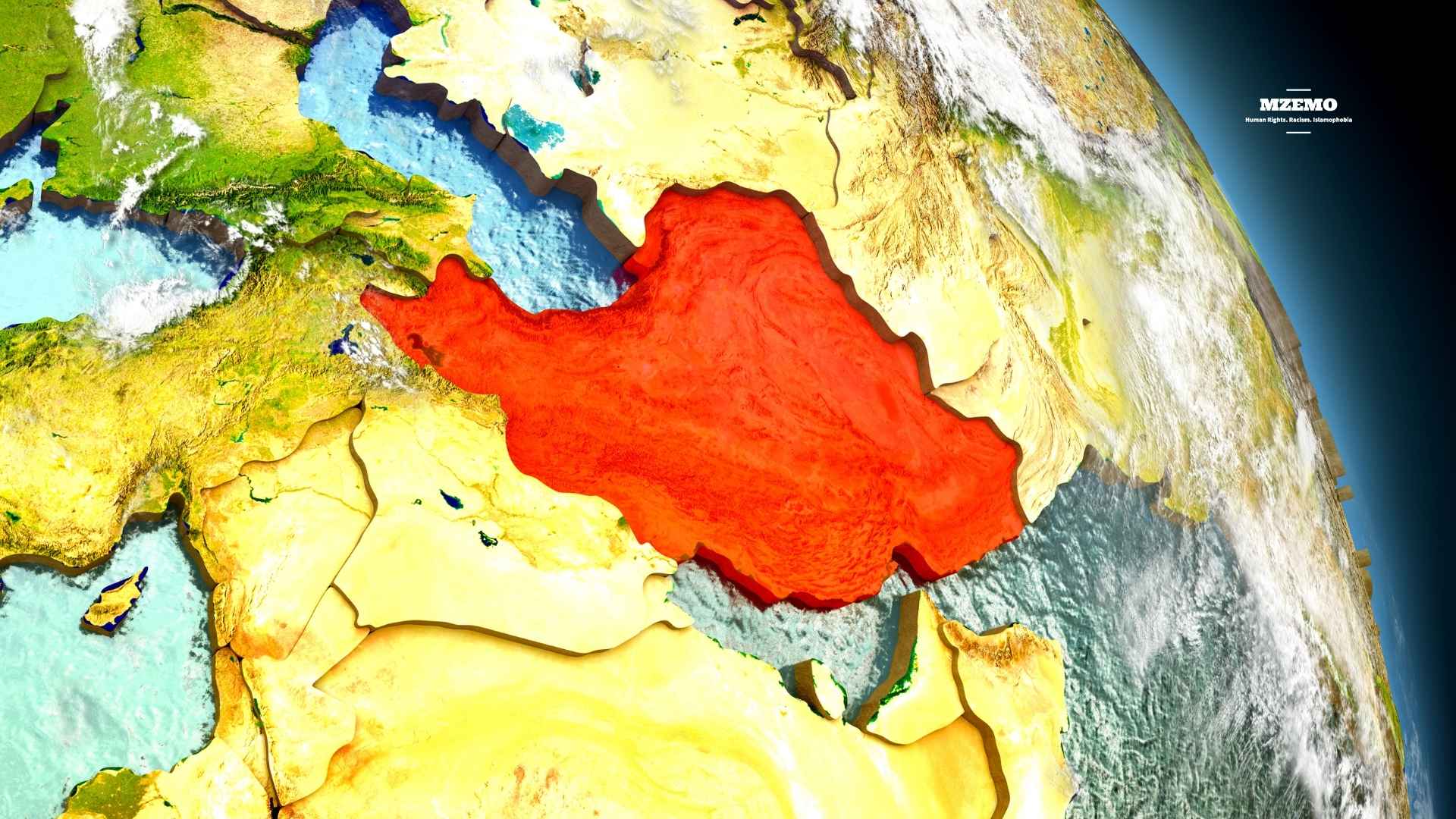
Across the globe, there are two dominating crisis headlines today: Israel’s blatant genocide in Gaza and the ongoing war between Israel-US and Iran. This war is undoubtedly imposed by Israel and the United States, labeling it necessary for peace.
Western governments and media houses frame their policies around the language of “security” and “stability”. There is a pattern of double standards that undermines international law, credibility, and humanity.
On one side stands Gaza, where more than 2.2 million Palestinians are being killed by Israel. It has produced one of the worst humanitarian catastrophes of the 21st Century. On the other hand, stands Iran, a country that is signatory to the Nuclear Non-Proliferation Treaty (NPT) yet faces sanctions, threats, and even attacks on its civilians.
Why are some countries given carte blanche and strategic exceptions while others face relentless punishment?
Gaza: A Genocide in Plain Sight
Since the beginning of Israel’s large-scale assault on Gaza, the humanitarian impact has been staggering. According to Palestinian health authorities and international humanitarian organizations, more than 80,000 Palestinians have been killed, with a large proportion of the victims being women and children.
Entire neighborhoods across Gaza have been reduced to rubble. The United Nations reports that the vast majority of Gaza’s population has been displaced, many of them forced to move multiple times as Israeli military operations expanded across the territory.
This is the purest form of genocide in modern human history. The scale of destruction, starvation, and forced displacement goes far beyond conventional warfare. However, not all media groups are showing the real picture. Western media is showing its unquestioned support for Israel even during the most heinous crimes against humanity.
Western Silence and Political Protection
The United States remains Israel’s closest international ally. According to data from the U.S. Congressional Research Service, Washington provides Israel with approximately $3.8 billion in annual military assistance under long term defense agreements.
Beyond military aid, Western governments have repeatedly shielded Israel from international accountability. In diplomatic arenas such as the United Nations Security Council, attempts to impose sanctions or demand ceasefires have often been blocked or diluted.
This pattern represents a profound contradiction: while Western leaders frequently emphasize human rights and international law, their response to the devastation in Gaza appears far more restrained than in other global conflicts.

Israel’s Nuclear Arsenal: The Middle East’s Open Secret
Another major source of controversy lies in the nuclear dimension of Middle Eastern politics.
Israel is widely believed by international experts to possess between 80 and 200 nuclear warheads, developed through its long-standing nuclear program centered around the Dimona facility in the Negev desert.
Yet Israel maintains a policy known as “nuclear ambiguity” — neither confirming nor denying the existence of its nuclear arsenal.
More importantly, Israel is not a signatory to the Nuclear Non-Proliferation Treaty (NPT), the global framework designed to prevent the spread of nuclear weapons.
Just because it operates outside the NPT system, Israel’s nuclear facilities are not subject to full international inspections by the International Atomic Energy Agency (IAEA).
Despite this reality, Western governments rarely criticize Israel’s nuclear capabilities or call for sanctions related to its weapons program.
Iran and the Nuclear Non-Proliferation Treaty
On the other hand, Iran’s nuclear program exists in a very different legal context.
Unlike Israel, Iran signed and ratified the Nuclear Non-Proliferation Treaty in 1970, which means it is legally permitted to pursue nuclear technology for peaceful purposes such as energy production and scientific research.
Under the NPT framework, Iran’s nuclear facilities are supposed to operate under international monitoring by the International Atomic Energy Agency (IAEA).
Nevertheless, Iran has faced decades of economic sanctions and intense political pressure from Western governments, which argue that its uranium enrichment activities could eventually lead to nuclear weapons development. However, Iranian officials insist that their nuclear program is intended solely for civilian purposes.
Attacks on Iran and the Broader Muslim World
Recent tensions have further escalated the crisis. Israel and the United States have carried out strikes targeting Iranian nuclear facilities, including sites associated with uranium enrichment. The assassination of Iran’s Supreme Leader Ayatollah Ali Khamenei, along with other high-ranking officials show how brutal these strikes are.
Just like in Gaza, Iran’s civilians are also being attacked. One such example is the recent bombing of a girls’ school in Iran in which more than a hundred innocent children and teachers were killed. Such attacks raise serious concerns among international security experts.
Moreover, striking nuclear infrastructure carries enormous risks, including the possibility of radioactive contamination and the potential collapse of global nuclear non-proliferation efforts. Some analysts argue that military attacks on nuclear facilities could actually push targeted states to accelerate weapons development rather than abandon it.
Ultimately, these strikes represent another example of selective enforcement of international norms.
From Gaza to Tehran: A Crisis of Global Credibility
The combined effect of these policies has produced a growing crisis of credibility for the international system.
International law is being applied selectively, enforced strictly against adversaries, while ignored when allies are involved.
From the ruins of Gaza to the nuclear facilities of Iran, the politics of power continue to shape the Middle East in profound ways.
For millions of people across the region, the question is not merely about military strategy or diplomatic rivalry. It is about whether international law truly applies equally to all nations — or whether global justice remains dependent on political alliances.
Until those questions are addressed, the perception of double standards will continue to fuel anger, instability, and distrust across the Middle East and beyond.
Crimes Against Humanity
Shockwaves Across the Gulf: How the US–Israel Strike on Iran Could Redraw the Region

-
 Featured2 years ago
World passively watching as Israel perpetrates open-ended massacre in Gaza
-
Featured3 years ago
Argentina wins the World Cup; are there any other winners?
-
Featured2 years ago
Israel is Hiding Crucial Demographic Facts About Palestinians
-
Featured5 years ago
History of the Ottoman Empire
-
Featured3 years ago
Christian militia infiltrate Lebanon
-
Featured5 years ago
“Do Not Waste Water Even If You Were at a Running Stream” Prophet Muhammad
-
Featured2 years ago
Muhammed: The Greatest Man to walk on Earth
-
Featured4 years ago
World Leaders Remain Silent Over Human Rights Violations in the UAE










