Featured
Gun Violence: The Urgent Need to Rethink the Silent Genocide in the US

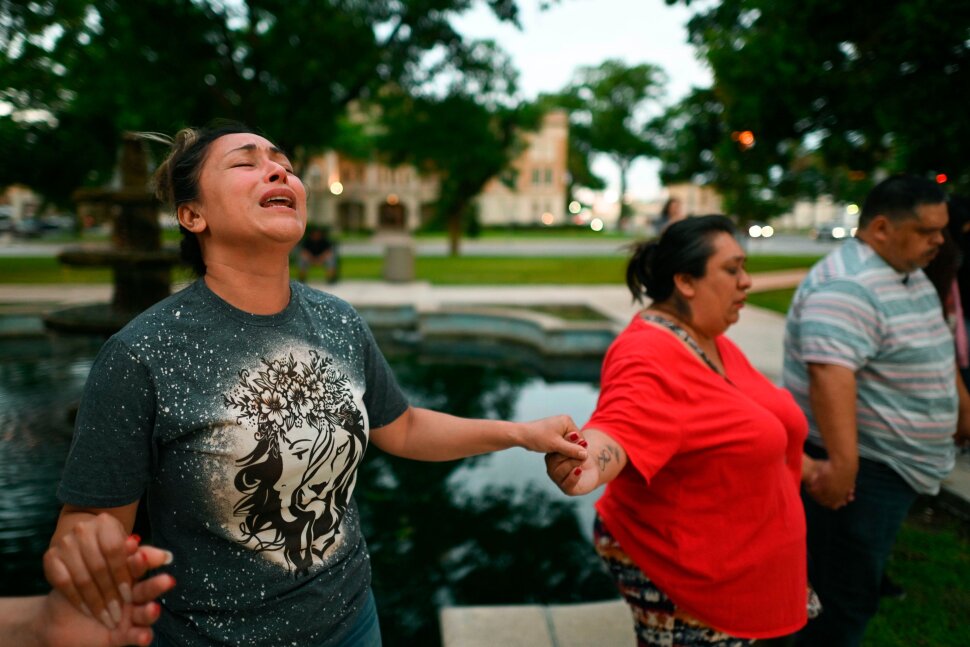
Call it madness, call it a cycle, or call it a script. But, the death of nineteen innocent children and two adults gunned down in the recent texas school massacre is not new in the US. In fact, over the years, gun violence has killed more people than the total fatalities recorded by the country in all its wars.
Collages of beautiful young faces, surrounded by families who will bear a loss so significant that we shudder at the prospect of having to bear it ourselves. We read and hear the same hand-wringing headlines, condemn the perpetrator and prey for the victims, and find ourselves amidst the same discussion. But, just until we move on and the moral necessity vanishes.
Gun violence in the US is a political story but also a psychological one. It dictates a narrative about what many claims to cherish but never defends and what they claim to desire but never genuinely demand. Death by the gun lobby defeats American democracy, a let-down society, and learned helplessness, whose only weapons are protests and demonstrations that change is possible.
So, what is behind the increasing gun violence in the US? What is the government doing to halt it? And is there a way out?
Breaking Down Lives Lost in Gun Violence in the US
As per the US Center for Disease Control and Prevention, 45,222 lives were lost from gun-related injuries in 2020 alone. This includes cases of gun murders and gun suicide.
However, while gun violence and mass shootings grab tremendous media attention, gun suicide accounts for about 54% (24,300) of all gun-related deaths. Furthermore, according to a 2016 study published in the American Journal for Public Health; states with a higher number of gun owners are associated with higher firearm suicide rates.
Advocates of stricter gun laws often use this statistic to persuade policymakers in the United States to allocate more funds to mental health and less to loosen firearms restrictions.
When terrorists attacked a school in Afghanistan, America called it “senseless targeting of innocent civilians.” However, in 2020 alone, ten schools across the US were attacked, followed by almost no actions against halting such violence.
Over 2,900 people died in the deadly 9/11 terrorist attack, and in response, the American military invaded Afghanistan. But, more American have been killed by guns at home than in all its wars abroad.
So, what is the US doing to defend its citizen from the terror within?
How is the Flawed Constitution Promoting Gun Violence in the US?
The constitution of America gives every American the right to bear and carry arms. As a result, today, the US has more guns than people; 393 million firearms over a population of 327 million. With just 4% of the world’s population, the country accounts for 46% of the entire stock of privately owned arms.
But why do so many Americans need arms?
Anyone above the age of 18 is eligible to own a shotgun, while at the age of 21 citizens are allowed to own a handgun. The only criteria are passing the NICS (Nationation Instant Criminal Background Check System), which takes less than ten minutes.
Furthermore, in many instances, the NICS has failed to flag criminals. Lapses like this are alarmingly common. In most such instances, the media plays it down by branding the terrorists as perpetrators.

Earlier, the blame was pinned on violent video games, and now the finger is pointed at mental health problems. However, if headlines like these came out from any other country, the US would have screamed human rights violations, not brushed it under the carpet by labeling it a mass shooting.
But, in reality, the problem lies in the constitutional flaw of giving everyone easy access to arms. The US policies have put millions in the line of firearms. They have allowed the frequency, and the most significant hand behind the concrete policies of owning a gun is the NRA.
The NRA and Gun Lobby in the US
National Rifle Association (NRA) was founded in 1817 with the ambition to promote and encourage rifle shooting based on scientifically proven data.
The association was governed and controlled by some high-profile members, including the late George HW Bush (former US president).
Though the numbers of members are uncertain, the association claimed the number to reach as high as five million after the Sandy Hook school mass shooting in 2012. However, officials estimate that the NRA’s budget exceeds all the budgets of gun-control advocacy groups in the country. For example, in 2020 alone, the NRA spent over $250 million. On average, the organization spends over $3million per year to sustain its influence on the gun policy.
High Time to Deal with the Terror at Home
In the United States, gun terror has grown into a silent genocide, but it is not without racial disparities. For example, African Americans make up 14% of the US population but account for 58.5% of lives lost to gun homicides since 2017.
The disparity can also be assessed by the response to gun violence and recent Pew Research Center studies. For example, 82% of black adults agree that gun violence is a problem, in comparison with only 39% of white adults.
The leaders of the United States have failed to confront systematic prejudice, safeguard their children, and dismantle domestic terrorism. As a result, when purchasing pistols, big capacity magazines, assault weapons, and military-type rifles in the United States today, you are spoiled for choice.
But why do people of the United States require war weapons?
Perhaps to boost the country’s arms industry. How will the huge arm manufacturers survive if American citizens give up their weapons? How can strong gun control legislation withstand the political clout of powerful gun lobbyists like the NRA if the US president enacts them?
What’s playing out in the US is appeasement politics, and it is flowing from the barrel of the gun. This is an example of the United States valuing gun rights over human rights. The result is gun violence at bars, concerts, schools, churches, malls, and even Times Square.
Read More: Ukraine War: Arms Supplier Profiting From the Russia-Ukraine Crisis
Gun Violence: The Much Needed Change
President Joe Biden has recently issued a Zero Tolerance Policy on gun violence that will include:
- Tougher background check
- Calls for ban on assault weapons, high-capacity magazines
- Boost community policing
Though they look like harsh measures on the face, will they deliver any results?
Experts believe dropping arms is the only solution that could show a drastic fall in gun violence. America needs strict gun laws, and the answer is simple; give up on guns. But it requires political will and the courage to face hard facts and undo the historical wrongs.
“The right to live and the right to own guns are contradictory. They cannot co-exist.”


Featured
Gaza on the Brink Again: How the Rafah Border Closure Is Pushing 2 Million People Toward Extreme Hunger



Across the globe, there are two dominating crisis headlines today: Israel’s blatant genocide in Gaza and the ongoing war between Israel-US and Iran. This war is undoubtedly imposed by Israel and the United States, labeling it necessary for peace.
Western governments and media houses frame their policies around the language of “security” and “stability”. There is a pattern of double standards that undermines international law, credibility, and humanity.
On one side stands Gaza, where more than 2.2 million Palestinians are being killed by Israel. It has produced one of the worst humanitarian catastrophes of the 21st Century. On the other hand, stands Iran, a country that is signatory to the Nuclear Non-Proliferation Treaty (NPT) yet faces sanctions, threats, and even attacks on its civilians.
Why are some countries given carte blanche and strategic exceptions while others face relentless punishment?
Gaza: A Genocide in Plain Sight
Since the beginning of Israel’s large-scale assault on Gaza, the humanitarian impact has been staggering. According to Palestinian health authorities and international humanitarian organizations, more than 80,000 Palestinians have been killed, with a large proportion of the victims being women and children.
Entire neighborhoods across Gaza have been reduced to rubble. The United Nations reports that the vast majority of Gaza’s population has been displaced, many of them forced to move multiple times as Israeli military operations expanded across the territory.
This is the purest form of genocide in modern human history. The scale of destruction, starvation, and forced displacement goes far beyond conventional warfare. However, not all media groups are showing the real picture. Western media is showing its unquestioned support for Israel even during the most heinous crimes against humanity.
Western Silence and Political Protection
The United States remains Israel’s closest international ally. According to data from the U.S. Congressional Research Service, Washington provides Israel with approximately $3.8 billion in annual military assistance under long term defense agreements.
Beyond military aid, Western governments have repeatedly shielded Israel from international accountability. In diplomatic arenas such as the United Nations Security Council, attempts to impose sanctions or demand ceasefires have often been blocked or diluted.
This pattern represents a profound contradiction: while Western leaders frequently emphasize human rights and international law, their response to the devastation in Gaza appears far more restrained than in other global conflicts.

Israel’s Nuclear Arsenal: The Middle East’s Open Secret
Another major source of controversy lies in the nuclear dimension of Middle Eastern politics.
Israel is widely believed by international experts to possess between 80 and 200 nuclear warheads, developed through its long-standing nuclear program centered around the Dimona facility in the Negev desert.
Yet Israel maintains a policy known as “nuclear ambiguity” — neither confirming nor denying the existence of its nuclear arsenal.
More importantly, Israel is not a signatory to the Nuclear Non-Proliferation Treaty (NPT), the global framework designed to prevent the spread of nuclear weapons.
Just because it operates outside the NPT system, Israel’s nuclear facilities are not subject to full international inspections by the International Atomic Energy Agency (IAEA).
Despite this reality, Western governments rarely criticize Israel’s nuclear capabilities or call for sanctions related to its weapons program.
Iran and the Nuclear Non-Proliferation Treaty
On the other hand, Iran’s nuclear program exists in a very different legal context.
Unlike Israel, Iran signed and ratified the Nuclear Non-Proliferation Treaty in 1970, which means it is legally permitted to pursue nuclear technology for peaceful purposes such as energy production and scientific research.
Under the NPT framework, Iran’s nuclear facilities are supposed to operate under international monitoring by the International Atomic Energy Agency (IAEA).
Nevertheless, Iran has faced decades of economic sanctions and intense political pressure from Western governments, which argue that its uranium enrichment activities could eventually lead to nuclear weapons development. However, Iranian officials insist that their nuclear program is intended solely for civilian purposes.
Attacks on Iran and the Broader Muslim World
Recent tensions have further escalated the crisis. Israel and the United States have carried out strikes targeting Iranian nuclear facilities, including sites associated with uranium enrichment. The assassination of Iran’s Supreme Leader Ayatollah Ali Khamenei, along with other high-ranking officials show how brutal these strikes are.
Just like in Gaza, Iran’s civilians are also being attacked. One such example is the recent bombing of a girls’ school in Iran in which more than a hundred innocent children and teachers were killed. Such attacks raise serious concerns among international security experts.
Moreover, striking nuclear infrastructure carries enormous risks, including the possibility of radioactive contamination and the potential collapse of global nuclear non-proliferation efforts. Some analysts argue that military attacks on nuclear facilities could actually push targeted states to accelerate weapons development rather than abandon it.
Ultimately, these strikes represent another example of selective enforcement of international norms.
From Gaza to Tehran: A Crisis of Global Credibility
The combined effect of these policies has produced a growing crisis of credibility for the international system.
International law is being applied selectively, enforced strictly against adversaries, while ignored when allies are involved.
From the ruins of Gaza to the nuclear facilities of Iran, the politics of power continue to shape the Middle East in profound ways.
For millions of people across the region, the question is not merely about military strategy or diplomatic rivalry. It is about whether international law truly applies equally to all nations — or whether global justice remains dependent on political alliances.
Until those questions are addressed, the perception of double standards will continue to fuel anger, instability, and distrust across the Middle East and beyond.
Crimes Against Humanity
Shockwaves Across the Gulf: How the US–Israel Strike on Iran Could Redraw the Region

-
 Featured2 years ago
World passively watching as Israel perpetrates open-ended massacre in Gaza
-
Featured3 years ago
Argentina wins the World Cup; are there any other winners?
-
Featured2 years ago
Israel is Hiding Crucial Demographic Facts About Palestinians
-
Featured5 years ago
History of the Ottoman Empire
-
Featured3 years ago
Christian militia infiltrate Lebanon
-
Featured5 years ago
“Do Not Waste Water Even If You Were at a Running Stream” Prophet Muhammad
-
Featured2 years ago
Muhammed: The Greatest Man to walk on Earth
-
Featured4 years ago
World Leaders Remain Silent Over Human Rights Violations in the UAE