Connect with us

Palestine

Rally in support of Palestine held in Sweden, Belgium and Australia

Published

on

Supporters carrying the Palestinian Flag

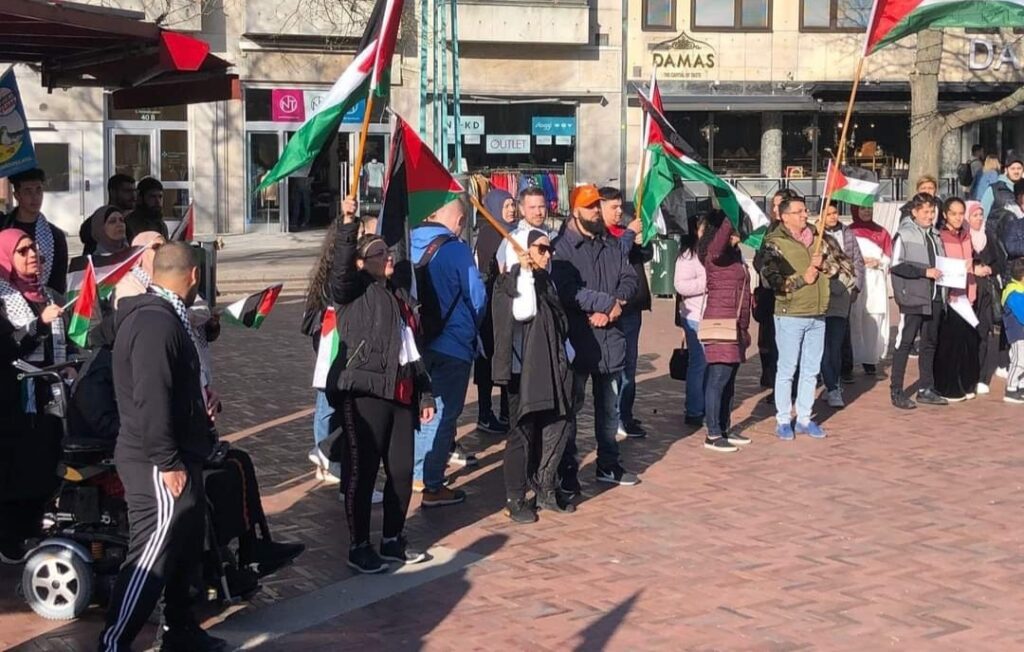
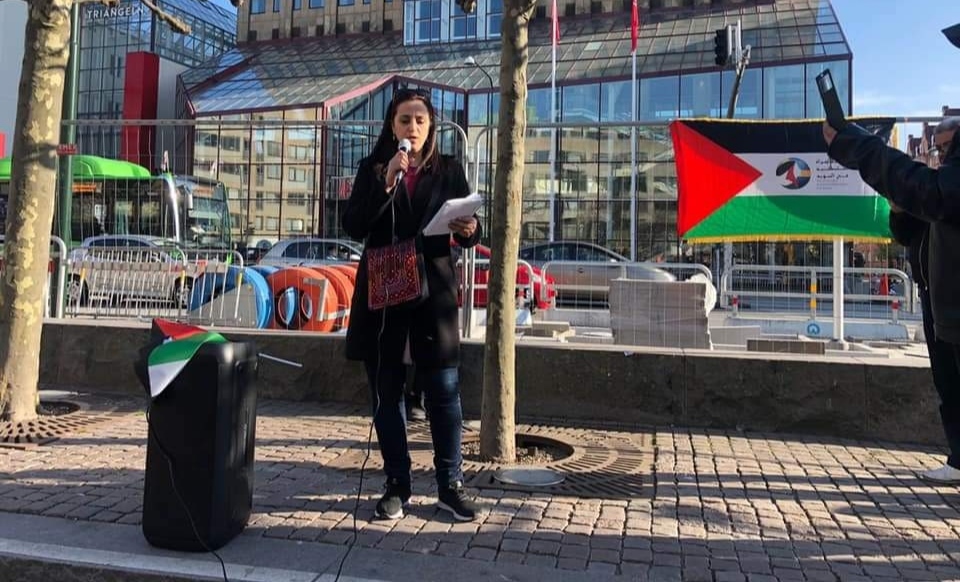
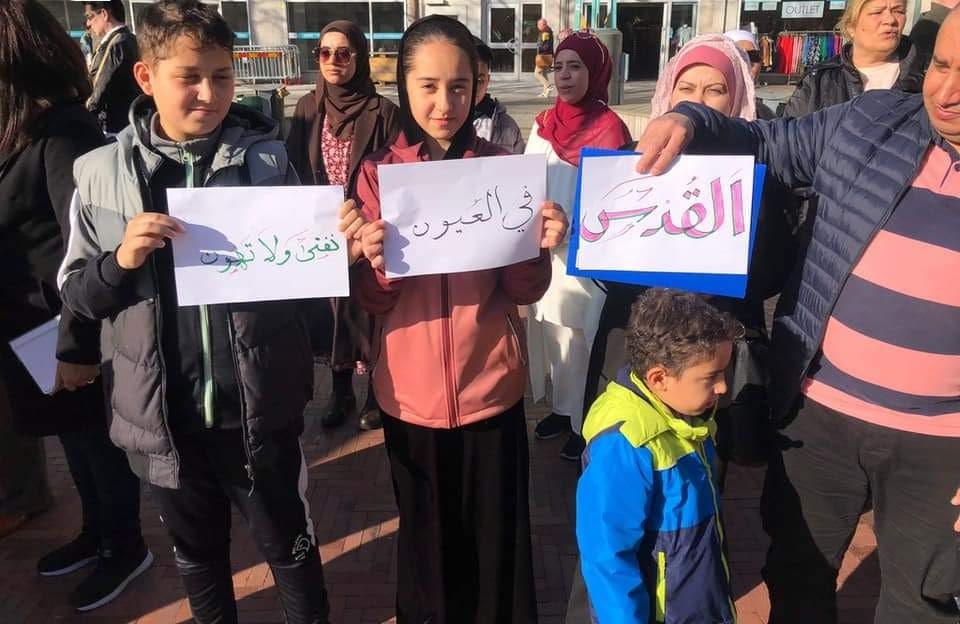
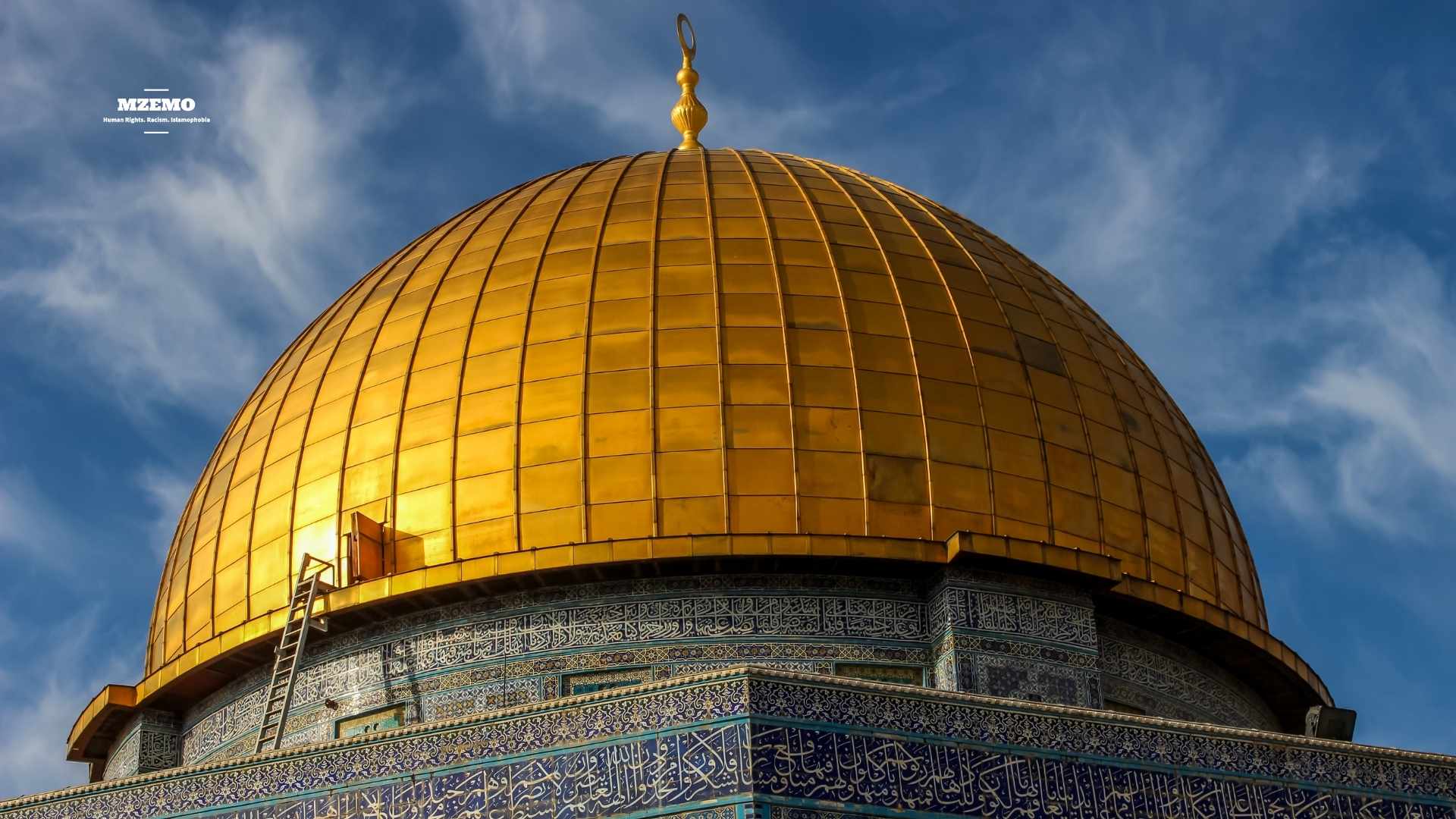
Palestine supporters in the Swedish city of Malmo took to the streets on Saturday in solidarity with the Palestinian people and against the Israeli occupation brutal attacks on the Al-Aqsa Mosque, occupied Jerusalem.

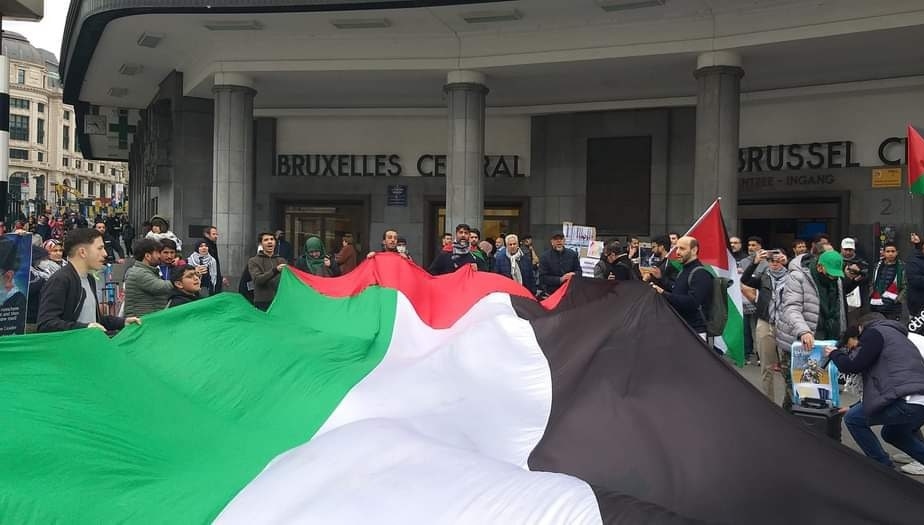
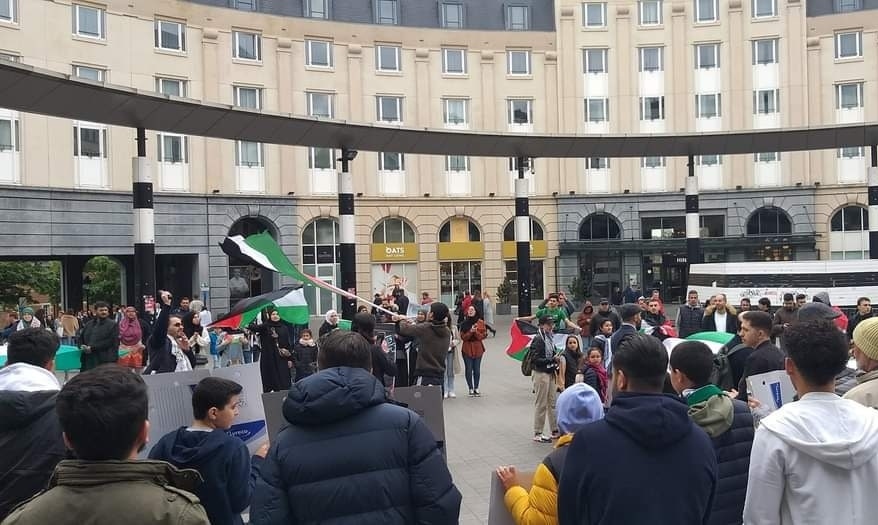
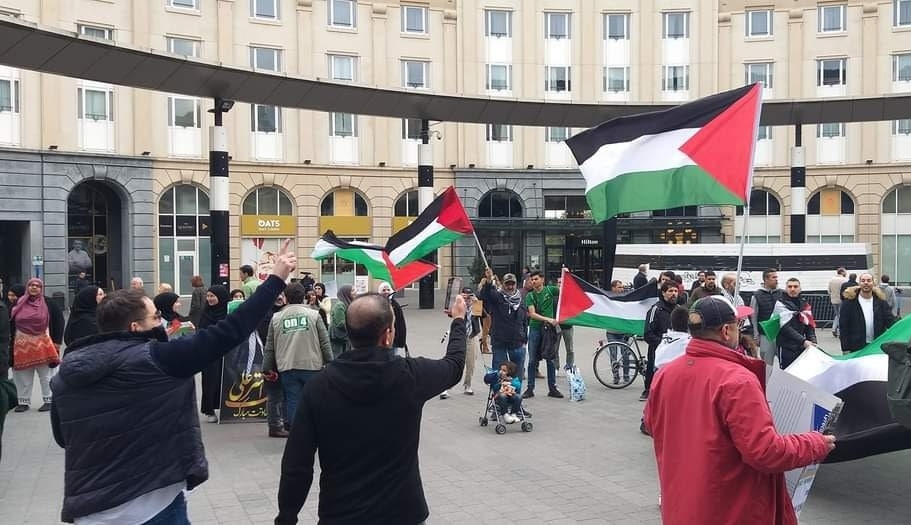
Also, Palestine supporters in the Belgium capital, Brussels, took to the streets on Saturday in solidarity with the oppressed Palestinian people at Al-Aqsa mosque, occupied Jerusalem.

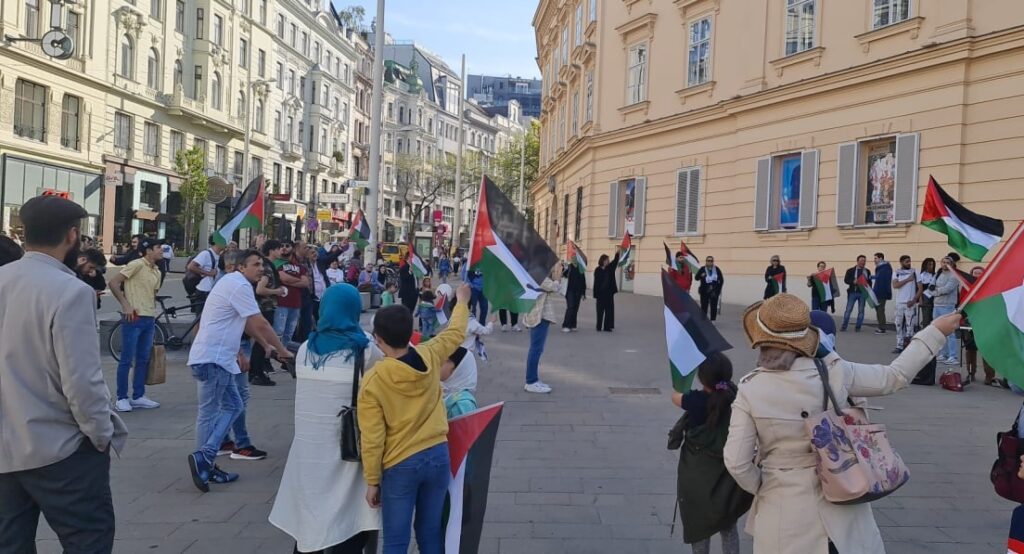
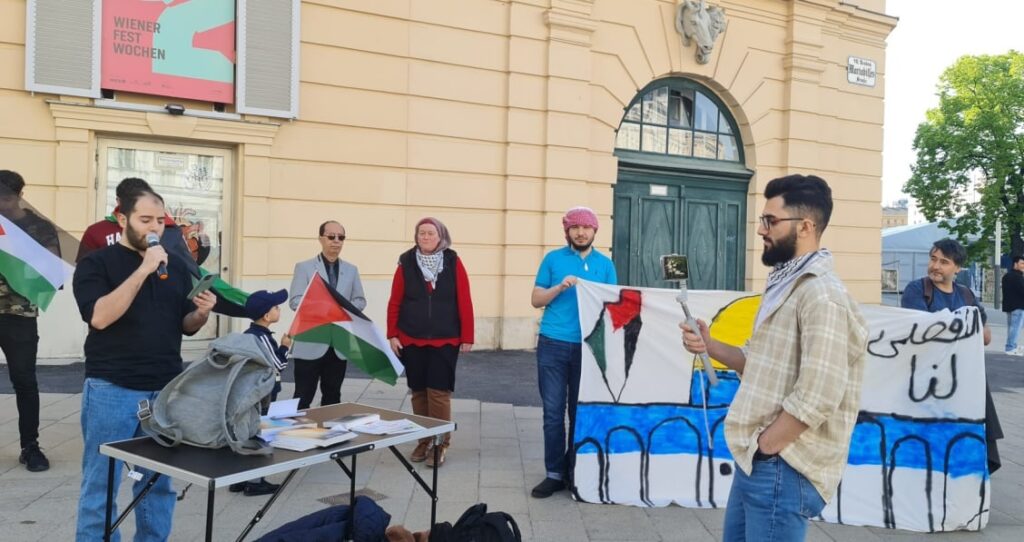
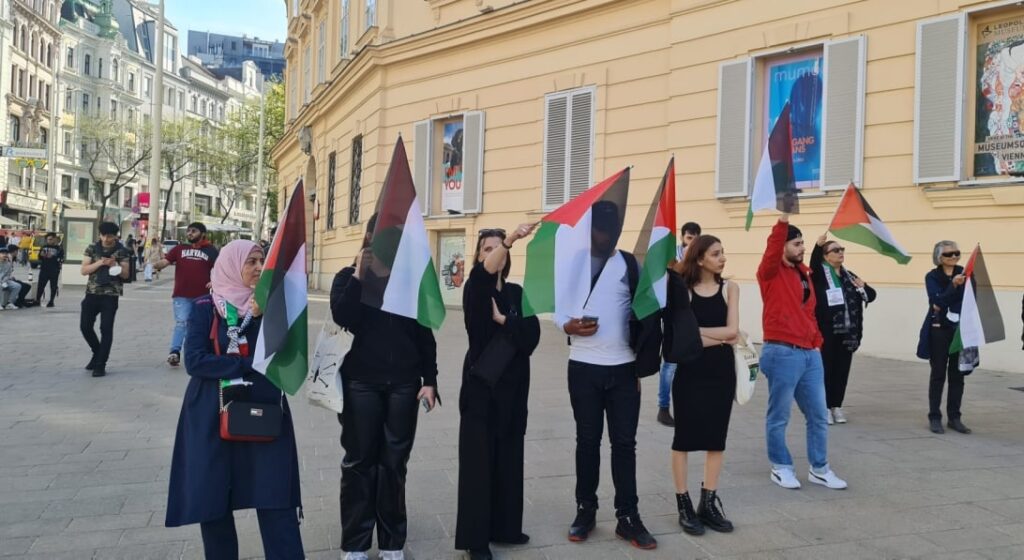
In addition to the Palestinian supporters in the Austrian capital Vienna stand in solidarity with the Palestinians in Jerusalem and they rejected Israeli occupation attacks on Jerusalem and Al-Aqsa Mosque.

They held banners calling for a boycott of “Israel”, and Supported the Palestinian oppressed in Jerusalem, the demonstrators chanted calling for freedom for Palestine, an end-all way of aggression against Palestinian by Israeli forces, especially in the Al-Aqsa Mosque, Jerusalem and West Bank.

Continue Reading
Click to comment

Leave a Reply

Your email address will not be published. Required fields are marked *

Featured

Militias, Fragmentation, and Escalation Across Palestinian Territories

Published

on

Militias-Fragmentation-and-Escalation-Across-Palestinian-Territories

When Israel and the United States launched a full-scale military assault against Iran, international attention shifted instantly toward the possibility of a wider Middle Eastern War. The blockage of the Strait of Hormuz, the reluctance of the US and Israel to completely obliterate Iran and wipe out their leadership, are not just threats to the Middle East but to the entire world.

Currently, headlines are focusing on missiles, regional alliances, and the risk of escalation between powerful adversaries. On the other hand, the situation across the Palestinian territories did not pause. Instead, a series of heinous developments inside Gaza and the occupied West Bank reveal that the genocide is entering a new and increasingly complex phase.

Some of the recent trends reshaping the reality across Palestinian territories include the rise of militias, fragmentation inside the Gaza Strip, and intensified violence across the West Bank.

Together, these developments suggest that the genocide is evolving into a more layered and unpredictable struggle.

The Emergence of Israeli-Backed Militias in Gaza

One of the most striking developments in recent weeks is the rise of armed Palestinian factions operating inside Gaza with apparent coordination with Israeli forces.

In this context, several groups have begun carrying out operations targeting Hamas members and infrastructure within areas of Gaza under Israeli military control.

Among the groups identified are organizations known as the Popular Army, including Northern Forces and the Free Homeland Forces, which are believed to be connected to a broader network sometimes referred to as the Popular Forces.

Moreover, these militias have carried out activities in Gaza, including:

  • Raids on different locations
  • Abductions of civilians
  • Intelligence gathering operations for Israel

Their presence introduces a new dimension to the conflict. For years, the main dynamic inside Gaza has centered on the confrontation between Israeli forces and Hamas. The appearance of armed Palestinian factions aligned against Hamas complicates that structure and adds the possibility of internal fragmentation.

Security analysts warn that such developments can significantly reshape power dynamics within genocidal zones, bringing further instability and chaos.

Fragmentation of Governance Inside Gaza

The prolonged genocide and the destruction of infrastructure across the enclave have weakened administrative structures and complicated governance.

Several factors now contribute to the fragmentation of authority:

  • The continued presence of Israeli military operations in Gaza
  • The emergence of new armed factions operating independently
  • The erosion of centralized administrative control due to the scale of genocide

The introduction of additional militias may further complicate efforts to establish political stability in the territory. In many genocidal zones, the proliferation of armed groups often leads to competing spheres of influence and weakened governance structures.

Ultimately, this fragmentation could make future political settlements even more difficult, as multiple actors compete for influence within the territory.

Escalation in the West Bank

The West Bank is not immune to the genocidal activities of Israel. While Gaza and Iran remain at the center of international attention, the occupied West Bank has also experienced a dramatic increase in violence since the Gaza genocide began.

According to figures cited by Palestinian authorities and international observers, more than 1,000 Palestinians have been killed in the West Bank since the beginning of the Gaza genocide.

The violence has taken several forms, such as Israeli military raids in Palestinian towns and refugee camps, armed confrontations between Palestinian militants and Israeli forces, and attacks by Israeli settlers on Palestinian communities.

In recent months, numerous Palestinian villages have reported raids in which homes were damaged, vehicles burned, and farmland destroyed. Some incidents have also led to the displacement of families from rural areas.

Settler Violence and Community Displacement

Settler violence has become one of the most significant sources of instability in the West Bank.

There is a growing number of incidents involving attacks on Palestinian property and agricultural land.

These incidents include:

  • Destruction of olive groves and crops
  • Arson attacks targeting homes and vehicles
  • Confrontations between settlers and residents

The consequences extend beyond the immediate damage. In some cases, Palestinian families have left villages after repeated attacks, contributing to gradual displacement in certain rural areas.

Gaza in the Context of a Wider Regional Conflict

The US, Israel–Iran confrontation has transformed the regional geopolitical landscape dramatically. Military tensions between these countries have raised fears of a broader Middle Eastern war involving multiple actors.

However, the conflict within Palestinian territories continues to evolve largely independent of the regional headlines. The recent closure of the Rafah border has triggered panic buying. Resultantly, the prices of food have skyrocketed. Moreover, the shortage of cooking gas triggered by Israel has also worsened living conditions.

Moreover, the emergence of militias, fragmentation of governance, and escalating violence suggest that the genocide is entering a phase of more destruction. Despite several calls by the United Nations to allow humanitarian aid into Gaza, the world is not paying heed to the innocent lives trying to survive each second there.

Continue Reading

Featured

Rafah First: Why the New Gaza Stabilization Plan Starts at the Border

Published

on

Rafah-First-Why-the-New-Gaza-Stabilization-Plan-Starts-at-the-Border

The role of the International Stabilization Force (ISF) remains doubtful due to its ambiguous mandate and powers. Some people analyze that it can be another force trying to destroy the remains of humanity in Gaza, while others hope it might ensure peacekeeping.

The official language seems to be reassuring order, security, reconstruction, and stabilization. But the real question is what sort of stabilization it is aspiring to and under whose authority?

The new architecture surrounding Gaza’s future represents the most significant external governance blueprint proposed for a territory in years. Although it is presented as a bridge toward recovery, it raises deeper questions about sovereignty, legitimacy, and control.

The Scale of What Is Being Proposed

The stabilization plan reportedly envisions:

  • Up to 20,000 international troops
  • A program to train 12,000 Palestinian police personnel
  • Initial deployment concentrated in Rafah
  • Gradual geographic expansion sector by sector

In this backdrop, several countries have signaled troop participation or readiness to contribute security personnel, including Indonesia, Morocco, Kazakhstan, Kosovo, and Albania. Moreover, Egypt and Jordan have been referenced in relation to police training coordination.

This is not a small symbolic observer mission, but a substantial security presence for a territory roughly the size of Detroit.

The numbers alone indicate that this would be one of the most significant foreign security deployments in Gaza’s history.

Why Rafah Matters

The decision to begin in Rafah is not accidental. Rafah is Gaza’s southern gateway, and it controls access to Egypt. It influences humanitarian throughput and is central to trade corridors as well as the movement of goods.

Whoever holds operational control in Rafah influences:

  • Reconstruction material flow
  • Fuel imports
  • Humanitarian distribution
  • Commercial reopening

In a territory where reconstruction costs are estimated to exceed $53 billion, control over entry points effectively shapes the speed and nature of rebuilding.

Stabilization beginning at the border is not merely about security but also about economic leverage and how life inside Gaza will be affected.

The Dilemma of the Board of Peace

Parallel to the security force is the formation of a reconstruction governance framework commonly referred to as the “Board of Peace.” The first session was recently convened in the United States.

Its purpose is described as coordinating funding, supervising reconstruction priorities, and structuring administrative transition. On paper, that appears pragmatic, but Gaza requires massive capital and coordinated rebuilding.

When we analyze the past, reconstruction in Gaza has historically been linked to security and compliance conditions. Access to cement, steel, heavy machinery, and dual-use materials has long been subject to restrictions justified under security doctrines by Israel.

If reconstruction funding is tied to demilitarization benchmarks or governance restructuring conditions designed externally, rebuilding becomes conditional rather than sovereign.

This is where the debate shifts from security to political architecture. The people of Palestine want to breathe with safety and security more than ever.

Stabilization vs Sovereignty

Security forces can reduce immediate chaos, deter armed escalation, and protect aid convoys. But security deployment without full Palestinian political authority risks creating a managed environment rather than an empowered one.

The central legitimacy questions are unavoidable:

  • Who defines the mandate of the force?
  • Under which legal framework will troops operate?
  • Who investigates misconduct?
  • Who authorizes the use of force?
  • What is the timeline for withdrawal?
  • What political authority represents Palestinians in this framework?

Without clear answers, stabilization may freeze the genocide for some time rather than resolving it.

A Humanitarian System Becoming a Governance System

Since the conflict escalated, Gaza has increasingly functioned under humanitarian management. UN agencies, NGOs, and emergency distribution networks have sustained basic survival.

That humanitarian framework was never designed to become a long-term governance model.

Yet the introduction of a large multinational security presence, combined with externally supervised reconstruction, risks formalizing a system where Palestinians live under structured oversight rather than self-directed recovery.

The Muslim World’s Dilemma

For Muslim-majority countries signaling participation, the decision is complex.

On one hand:

  • Contributing to stabilization can be framed as supporting Palestinian civilians.
  • Participation offers diplomatic influence within reconstruction planning.

On the other hand:

  • Domestic public opinion in many of these countries remains deeply sympathetic to Palestinian self-determination.
  • Being perceived as enforcing externally designed frameworks could damage credibility.

The legitimacy of the stabilization force will depend not only on troop numbers, but on whether Palestinians see it as protection or control.

Reconstruction Cannot Be Security-Only

Rebuilding Gaza is not simply about concrete and policing.

It requires:

  • Housing reconstruction at massive scale
  • Restoration of power grids
  • Rebuilding of water desalination systems
  • Revitalization of private-sector employment
  • Educational and health system recovery

All of which depend on stable access, political clarity, and local agency.

If reconstruction is conditioned primarily through security compliance metrics rather than civic empowerment, economic dependency could deepen.

The difference between peacekeeping and management lies in who sets the long-term political trajectory.

In a Nutshell

Stabilization can reduce violence for some time but it cannot eradicate the root cause of the issue. Until Israel is completely stopped from genocidal activities in Gaza, the peaceful solution for Palestine is not possible.

If Gaza’s reconstruction and security future are designed primarily in conference rooms outside the territory, even well-funded plans risk reinforcing dependency.

The distinction will define whether the International Stabilization Force becomes a bridge toward sovereignty or an architecture of prolonged oversight.

So, the coming months will determine which path Gaza is placed upon!

Continue Reading

Featured

The Political Chessboard: Israel, Egypt, Hamas, and International Powers

Published

on

The-Political-Chessboard-Israel-Egypt-Hamas-and-International-Powers

Although Gaza is still under a so-called “ceasefire”, nothing about Gaza feels like peace. The bombs are quieter, yet the pressure is heavier. Resultantly, the Rafah border remains a battleground without bullets, shaped by political deals, blocked negotiations, and shifting alliances. In a series of events, every country involved says it wants stability, while none of them agree on what that stability should look like. However, Palestinians are not invited into the rooms where their future is being discussed.

This is the political chessboard of Gaza. In fact, a map of power where every move is made above the heads of the people who live with the consequences.

Israel’s Strategy: Control Without Responsibility

Israel’s long-term goal has become increasingly clear. It is to maintain control over Gaza’s borders, movement, and political structure while avoiding the burden of direct governance. The reopening of the Rafah crossing only for exit, not entry, is part of this design. A one-way gate would encourage Palestinian displacement without Israel having to declare it openly.

Reports published by international outlets reveal proposals that would place Gaza under a new administrative framework that excludes Palestinian political actors and leaves Israel with indirect control.

Inside Israel, political pressure from far-right ministers shapes much of its Gaza policy. They demand harsher restrictions, deeper buffer zones, and tighter control of who enters and exits the strip. The argument is always the same: “security.” The reality is more aligned with demographic engineering and territorial fragmentation.

Egypt’s Red Line: No Resettlement in Sinai

Egypt rejects any attempt to push Palestinians into Sinai. Cairo has repeated this stance publicly and privately, warning that any forced movement of Gazans into Egyptian territory would destabilize the region and undermine Egypt’s sovereignty.

Egyptian officials understand that once Palestinians cross into Sinai in large numbers, they may never return. Egypt refuses to become the “alternative homeland.” This is why the Rafah crossing remains tightly controlled from the Egyptian side as well. Egypt views the crossing as leverage, a card it will not surrender lightly.

Hamas: Squeezed but Not Erased

Two years of war have left Hamas militarily weakened and politically isolated. Large parts of its governance structure were destroyed, and the population it once administered is now scattered across tent camps and ruined cities.

Yet Hamas remains a key player because it holds the hostage file and still commands loyalty among the masses. Attempts by Israel, the U.S., and other regional actors to design Gaza’s political future without Hamas have created a vacuum. There is no clear replacement, no unified Palestinian authority ready to take control, and no roadmap that includes the people who live in Gaza.

The United States: Containing the Conflict, Not Resolving It

The United States frames its Gaza involvement as a humanitarian and diplomatic effort. However, its strategy is aimed at managing the conflict, not ending it.

Washington continues military support to Israel while pushing for a Gaza administration that minimizes Hamas’s influence. The U.S.-backed idea of a “Board of Peace” or international governance model places foreign powers over Palestinian territory, effectively sidelining Palestinian representation.

This contradiction, supporting Israel militarily while calling for humanitarian relief, has shaped U.S. policy since the first days of the war. It has also prevented any long-term political solution from taking shape.

Qatar: The Broker Between Opposites

Qatar plays a unique role on this chessboard. It mediates hostage exchanges, communicates with Hamas, and finances humanitarian operations. Israel criticizes Qatar, yet depends on it. The U.S. works through Qatar despite political discomfort, and Hamas relies on Qatar’s mediation to remain relevant.

In every negotiation since 2023, Qatar has been the only actor able to speak to all sides. Its influence comes not from military power, but from its ability to keep channels open when everyone else closes theirs.

Europe: Loud Words, Quiet Actions

European governments issue statements condemning civilian suffering, demanding accountability, and calling for more aid. However, Europe remains deeply divided.

Countries like Spain, Belgium, and Ireland push for stronger action. Others, including France and Germany, avoid measures that would pressure Israel. The EU’s economic partnerships with Israel remain intact. Security cooperation continues, and statements do not become consequences.

As a result, Europe’s diplomatic voice carries moral weight but limited political impact.

The Broader Arab World: Anger Without Strategy

Arab leaders face enormous public pressure to act for Gaza, but their responses have been largely symbolic. Economic agreements, security deals, and regional partnerships constrain stronger positions.

Saudi Arabia remains cautious as it balances global alliances. The UAE prioritizes economic stability. Jordan manages population pressure and border security. None of these states has presented a unified plan for Gaza’s future. The absence of an Arab strategy leaves the political field open for external powers.

Rafah: A Border Crossing That Reveals Everything

The Rafah crossing is not just a gate, but the clearest symbol of Gaza’s political reality.

  • Israel wants it controlled in a way that encourages displacement.
  • Egypt refuses to open it for mass entry.
  • The U.S. wants a managed framework.
  • Qatar uses it as a negotiation point.

  • Hamas sees it as a lifeline.

And Palestinians see it as the difference between survival and suffocation. Every decision about Rafah is a political move in this larger chess game.

A Homeland Negotiated Without Its People

Gaza’s political future is being shaped in Washington, Cairo, Tel Aviv, Doha, Brussels, and Riyadh. But neither in Gaza City nor in Rafah. Palestinians have no seat at the table where their homeland is being redesigned.

This is the real tragedy of Gaza’s political crisis. Occupation continues not only through military force, but through diplomatic exclusion. Every foreign plan that excludes Palestinian voices deepens instability and prolongs suffering.

The world cannot speak of stability while silencing the people who live with the consequences.

Until Palestinians are central to decisions about their land, every negotiation, border reopening, governance proposal, or ceasefire will be nothing more than another move in a game they never agreed to play.

Continue Reading
Advertisement

Trending