Featured
Bride Kidnapping & Child Marriage in Kyrgyzstan: An Explainer


Child marriage and bride kidnapping, despite being criminalized, are still prevalent in many regions of Kyrgyzstan. Be it social and economic reasons, the recent statistics show that approximately 12% of the brides in the country are below the age of 18.
What is Bride Kidnapping?
The Central Asian country of Kyrgyzstan, with a population of 6.5 million, is one of the world’s epicenters of abduction marriage.
A typical abduction takes place in a public place. For example, a group of young men spots a girl that one has chosen to be his wife and kidnaps her struggling and screaming into a waiting car. The kidnapped girl may or may not be familiar with the man.
The kidnapped woman is taken to the groom’s family’s home, where the women try to convince her to agree to the marriage. At this point, some victims may be rescued by their father or another male relative. But in many cases, being kidnapped is so shameful that the victim or her family often decides to marry rather than risk being stigmatized as a “used” woman.

Grooms can sometimes use physical violence – though it is not the norm – to coerce women into agreeing to marriage.
A few surveys indicate that most Kyrgyz people, especially those in older generations, still believe bride kidnapping is a harmless custom. However, people younger than 50 are more likely to reject the arrangement, especially when the groom is a stranger to the chosen girl.
However, consensual Bride Kidnapping is also a pre-wedding tradition in many country regions. Many Kyrgyz believe that nowadays, only staged abduction occurs where the bride has agreed to be kidnapped before the marriage.
But, in Kyrgyzstan, some kidnappings are clear non-consensual. For example, in 2018, two women were murdered when they attempted to resist the marriage of their kidnappers, Aizada Kanatbekova and Burulai Turdaaly Kyzy.
As a result of both murders, nationwide protests and protests in their hometowns followed, among one of the largest demonstrations against bride kidnapping witnessed in Kyrgyzstan since public opposition began to emerge in the 1990s.
Child Marriage in Kyrgyzstan
Child marriage is a human rights violation. Despite that, according to data by the official government, about seven to nine thousand young girls are married in Kyrgyzstan before the age of 18. An estimated 500 of whom are aged between 13 and 17 become mothers.
The country’s first crisis center established 25 years ago, SEZIM has received more than 45,000 help calls on their hotlines. Amongst which, about 35,000 have received the needed psychological and legal advice.
Also Read: In Gaza, thousands of children desperately need mental health support
Most Kazhak parents in the rural region usually marry their daughter before ninth grade. They are scared that leaving young girls in the city for studies will spoil them, leaving them ineligible for marriage.
Consequently, girls cannot attend school when plunged into family life. Domestic duties, pregnancy, and childcare fall on their shoulders. Their chances of obtaining an education or a professional career disappear, and as housewives, they are wholly dependent on their husbands.
Also Read: Afghanistan: Girl’s Education Under the Taliban Regime Hanging by a Thread
According to Byubyusara Ryskulova, the director of Sezim, one of the major reasons behind such malicious practices in Kyrgyz is the growing influence of religion and the high rate of poverty and unemployment.
Factors Associated with Child Marriage & Bride Kidnapping in Kyrgyzstan
A number of social factors contribute to the practice of child marriage, including poverty, a lack of education, the cultural emphasis on honor, and bride kidnapping. Kyrgyzstan’s poorest households have 16% of girls who marry as children, compared to 9% of those from higher-income families.
Compared with girls with a more substantial education, girls with basic education have a higher chance of getting married by age 18 – 4% compared to 33%.
As part of Kyrgyz culture, honor is emphasized in families, and child marriage is associated with the desire to prevent girls from engaging in premarital sex. Children’s weddings are also linked to bride kidnapping, where a girl is snatched away and forced to go to a man’s home, where he and his family slowly persuade her to get married.
The number of bride kidnappings is believed to be around 12,000 per year, and many girls agree to child marriages in order to avoid being kidnapped.
No Fear of Laws
Despite the criminalization of kidnapping and outlawing marriage before 18, child marriage remains a prevalent problem in the region. Instead of legalized marriages, victims are traditionally married in mosques.
The law allows nikah to be held in mosques, but not before the couple reaches the legal age. In addition, the law penalizes underage marriage with a five-year sentence while the punishment for bride kidnapping is ten years.
But, writing a law and implementing it on the ground are two different things, according to Mr. Ryskulova. Justice to the victim in such cases is extremely rare.
Women Migrating to Escape
There is no clear distinction between a “pretend” kidnapping and a “real” kidnapping in Kyrgyzstan since a woman will not be able to truly consent to kidnap if she knows her boyfriend can ignore her wishes easily.
All forms of forced marriage are considered human rights violations by the United Nations. The International Labour Organization estimates that 15.4 million people worldwide are married without their free, informed, and full consent.
There is increasing evidence to suggest that the tradition of “ala kachuu” is not harmless.
Approximately 1,500 women have sought assistance from Ak Zhurok alone this year. They request temporary shelter and employment assistance, property division, and alimony since those who have not formalized their marriages are usually left with nothing.
For example, a Kyrgyzstan survey found that the first children born to mothers who married by kidnapping were significantly smaller than their peers, likely due to higher levels of stress among kidnapped mothers.
The young adult daughters of parents who had kidnapped each other were 50% more likely to migrate for work within the country and internationally.
Declining Cases
Despite the prevalence, recent data highlight a decline in child marriage & bride kidnapping in Kyrgyzstan.
The international rights organization, the local NGOs, and the government are addressing the problem. The programs aim to strengthen the government institutions, prevent violence, support victims, and assist the women’s movement.
“I am not against starting a family, and I dream about it in the future. But the approach must be primarily the desire of the girl herself and not her parents.”
Aigerim Almanbetova
Featured
Gaza on the Brink Again: How the Rafah Border Closure Is Pushing 2 Million People Toward Extreme Hunger


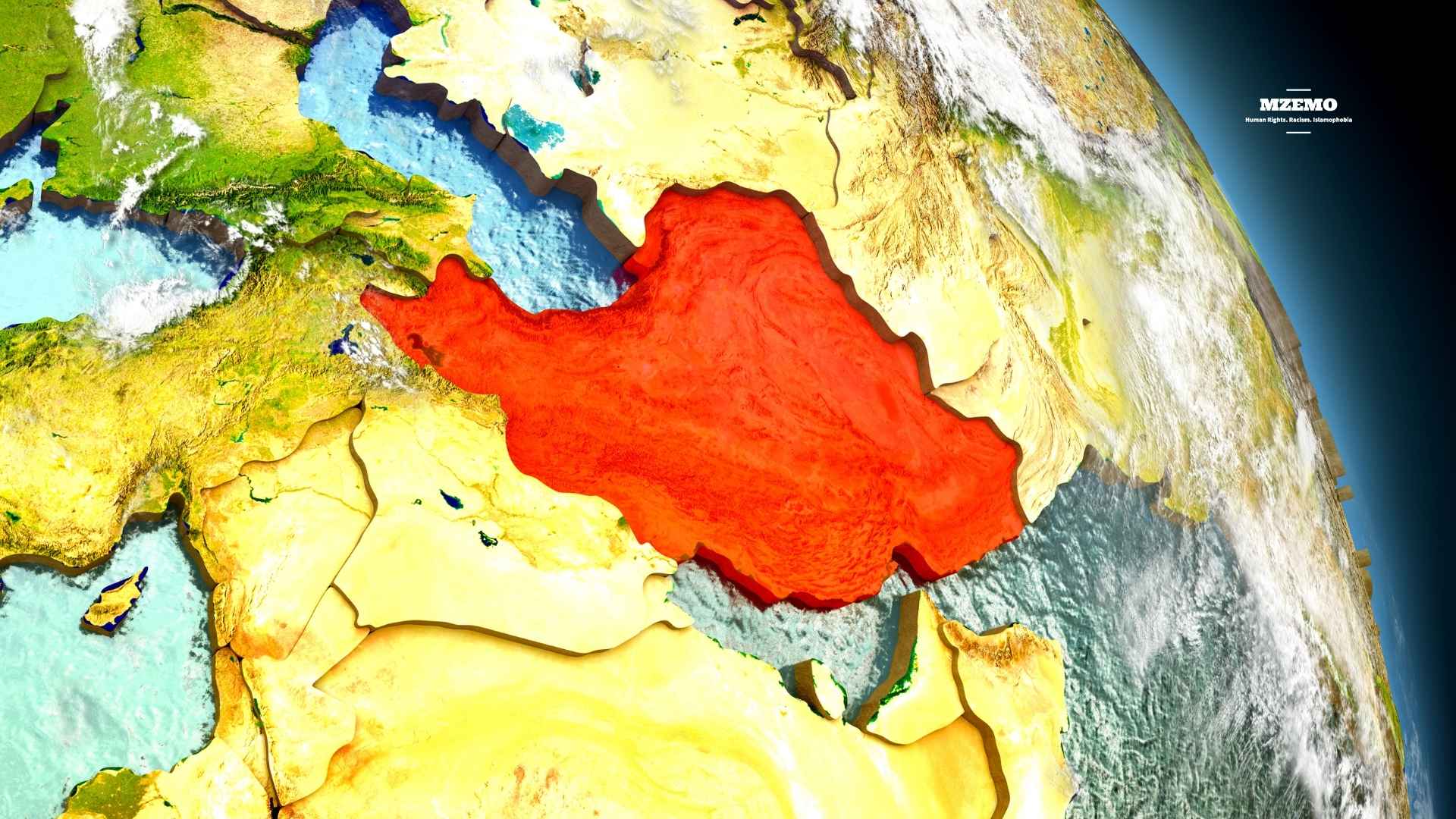
Across the globe, there are two dominating crisis headlines today: Israel’s blatant genocide in Gaza and the ongoing war between Israel-US and Iran. This war is undoubtedly imposed by Israel and the United States, labeling it necessary for peace.
Western governments and media houses frame their policies around the language of “security” and “stability”. There is a pattern of double standards that undermines international law, credibility, and humanity.
On one side stands Gaza, where more than 2.2 million Palestinians are being killed by Israel. It has produced one of the worst humanitarian catastrophes of the 21st Century. On the other hand, stands Iran, a country that is signatory to the Nuclear Non-Proliferation Treaty (NPT) yet faces sanctions, threats, and even attacks on its civilians.
Why are some countries given carte blanche and strategic exceptions while others face relentless punishment?
Gaza: A Genocide in Plain Sight
Since the beginning of Israel’s large-scale assault on Gaza, the humanitarian impact has been staggering. According to Palestinian health authorities and international humanitarian organizations, more than 80,000 Palestinians have been killed, with a large proportion of the victims being women and children.
Entire neighborhoods across Gaza have been reduced to rubble. The United Nations reports that the vast majority of Gaza’s population has been displaced, many of them forced to move multiple times as Israeli military operations expanded across the territory.
This is the purest form of genocide in modern human history. The scale of destruction, starvation, and forced displacement goes far beyond conventional warfare. However, not all media groups are showing the real picture. Western media is showing its unquestioned support for Israel even during the most heinous crimes against humanity.
Western Silence and Political Protection
The United States remains Israel’s closest international ally. According to data from the U.S. Congressional Research Service, Washington provides Israel with approximately $3.8 billion in annual military assistance under long term defense agreements.
Beyond military aid, Western governments have repeatedly shielded Israel from international accountability. In diplomatic arenas such as the United Nations Security Council, attempts to impose sanctions or demand ceasefires have often been blocked or diluted.
This pattern represents a profound contradiction: while Western leaders frequently emphasize human rights and international law, their response to the devastation in Gaza appears far more restrained than in other global conflicts.

Israel’s Nuclear Arsenal: The Middle East’s Open Secret
Another major source of controversy lies in the nuclear dimension of Middle Eastern politics.
Israel is widely believed by international experts to possess between 80 and 200 nuclear warheads, developed through its long-standing nuclear program centered around the Dimona facility in the Negev desert.
Yet Israel maintains a policy known as “nuclear ambiguity” — neither confirming nor denying the existence of its nuclear arsenal.
More importantly, Israel is not a signatory to the Nuclear Non-Proliferation Treaty (NPT), the global framework designed to prevent the spread of nuclear weapons.
Just because it operates outside the NPT system, Israel’s nuclear facilities are not subject to full international inspections by the International Atomic Energy Agency (IAEA).
Despite this reality, Western governments rarely criticize Israel’s nuclear capabilities or call for sanctions related to its weapons program.
Iran and the Nuclear Non-Proliferation Treaty
On the other hand, Iran’s nuclear program exists in a very different legal context.
Unlike Israel, Iran signed and ratified the Nuclear Non-Proliferation Treaty in 1970, which means it is legally permitted to pursue nuclear technology for peaceful purposes such as energy production and scientific research.
Under the NPT framework, Iran’s nuclear facilities are supposed to operate under international monitoring by the International Atomic Energy Agency (IAEA).
Nevertheless, Iran has faced decades of economic sanctions and intense political pressure from Western governments, which argue that its uranium enrichment activities could eventually lead to nuclear weapons development. However, Iranian officials insist that their nuclear program is intended solely for civilian purposes.
Attacks on Iran and the Broader Muslim World
Recent tensions have further escalated the crisis. Israel and the United States have carried out strikes targeting Iranian nuclear facilities, including sites associated with uranium enrichment. The assassination of Iran’s Supreme Leader Ayatollah Ali Khamenei, along with other high-ranking officials show how brutal these strikes are.
Just like in Gaza, Iran’s civilians are also being attacked. One such example is the recent bombing of a girls’ school in Iran in which more than a hundred innocent children and teachers were killed. Such attacks raise serious concerns among international security experts.
Moreover, striking nuclear infrastructure carries enormous risks, including the possibility of radioactive contamination and the potential collapse of global nuclear non-proliferation efforts. Some analysts argue that military attacks on nuclear facilities could actually push targeted states to accelerate weapons development rather than abandon it.
Ultimately, these strikes represent another example of selective enforcement of international norms.
From Gaza to Tehran: A Crisis of Global Credibility
The combined effect of these policies has produced a growing crisis of credibility for the international system.
International law is being applied selectively, enforced strictly against adversaries, while ignored when allies are involved.
From the ruins of Gaza to the nuclear facilities of Iran, the politics of power continue to shape the Middle East in profound ways.
For millions of people across the region, the question is not merely about military strategy or diplomatic rivalry. It is about whether international law truly applies equally to all nations — or whether global justice remains dependent on political alliances.
Until those questions are addressed, the perception of double standards will continue to fuel anger, instability, and distrust across the Middle East and beyond.
Crimes Against Humanity
Shockwaves Across the Gulf: How the US–Israel Strike on Iran Could Redraw the Region
-
 Featured2 years ago
World passively watching as Israel perpetrates open-ended massacre in Gaza
-
Featured3 years ago
Argentina wins the World Cup; are there any other winners?
-
Featured2 years ago
Israel is Hiding Crucial Demographic Facts About Palestinians
-
Featured5 years ago
History of the Ottoman Empire
-
Featured3 years ago
Christian militia infiltrate Lebanon
-
Featured5 years ago
“Do Not Waste Water Even If You Were at a Running Stream” Prophet Muhammad
-
Featured2 years ago
Muhammed: The Greatest Man to walk on Earth
-
Featured4 years ago
World Leaders Remain Silent Over Human Rights Violations in the UAE