Connect with us

Featured

The ِِArt of Marital Relations. See How The Prophet Muhammad Treated His Wives?!‎

Published

on

There are those who believe that a “romantic”, or “emotional” man is that person who gifts a rose to the one he loves, or lights a candle for his wife, says the most wonderful words, writes poetry, behaves delicately and softly with his wife. But honestly being romantic is not only related to saying romantic words or behaving gently to your love, romance is feelings and sensations, containment, the ability to understand the life of your partner from the look of the eyes, or the tone of the voice.

some ladies consider romance as an “emotional” man, or “gentleman,” or the man is the one who helps his wife with the house’s duties, relieves her pain, worries. The Prophet – peace be upon him – is considered the perfect role of model to learn the art of martial relations.

The prophet helps his wives

The Prophet, peace be upon him, despite the burdens he encountered during his life, he did house duties himself; to be a role model and a good example. When his wife Aisha was asked about the prophet’s attitude in the house she said: “he was a human being, sewing his dress, and serving himself”.

There are many prophetic hadiths that recommend the good treatment of women and being kind with them. Many books also tell that when the Prophet was preparing to ride his camel, he bent his honorable knee so that his wife, Safiya, could put her foot on top of her to ride the camel.

Muslims are required to follow the lead of the Prophet – peace be upon him – who complimented women, made them feel their value, make them feel confidence in themselves, helped them on their duties.

Tolerance is essential in martial life

The Prophet (peace be upon him) was tolerant of his wives. He did not beat them, and relieved them when they cried. “The messenger of Allah has never beat his women, “said Aisha. It was narrated that Safiya was travelling with the prophet, and that was her day, so she slowed down, and the prophet found her crying, complaining and saying, “I rode on a slow camel,” so the messenger of Allah wipe her eyes with his hands, and calmed her “.

Sharing his wives their joy

Aisha – may Allah be pleased upon her-she said: “the Prophet said to me: “come, I shall race you, I won. he beat me after I carried the meat, and I got fat. he made a laugh saying we are now equal.

Taking care of them in their illness

Khadija, the first wife of the Prophet, became ill, the prophet did not abandon her, but sat next to her, and remained with her most of the day, to serve her needs and taking care for her.

Dealing with the jealousy of his wives

Aisha – may Allah be pleased upon her – was the nearest wife to the prophet’s heart. One day the prophet was hosting some guest and found no food in her house, so the Prophet found no solution but to bring food from the home of his second wife “Umm Salma”, and Aisha saw this, she got jealous from “Umm Salma”, and she broke the dish while offering it to the guests. But the prophet, instead of being angry by the embarrassment he had experienced in front of his guests, laughed and picked up food from the ground, saying to his companions, “eat. Eat. Aisha was jealous “.

Women are wise, you can take their consultant

Although he is a messenger from Allah, he was consulting his wives and taking their opinion. As it was narrated in books that the prophet, after the reconciliation of hudaybiya, ordered the Muslims who accompanied him to shave and Slaughtering, but many of them refused to obey the orders of the prophet because they did not agree to the terms of hudaybiya, so he went to his wife um Salama who suggested to the prophet to go out and not speaking a word to any of them, until you slaughter and shave.” He did what Umm Salama pointed out to him. So his companions did as like the prophet did.

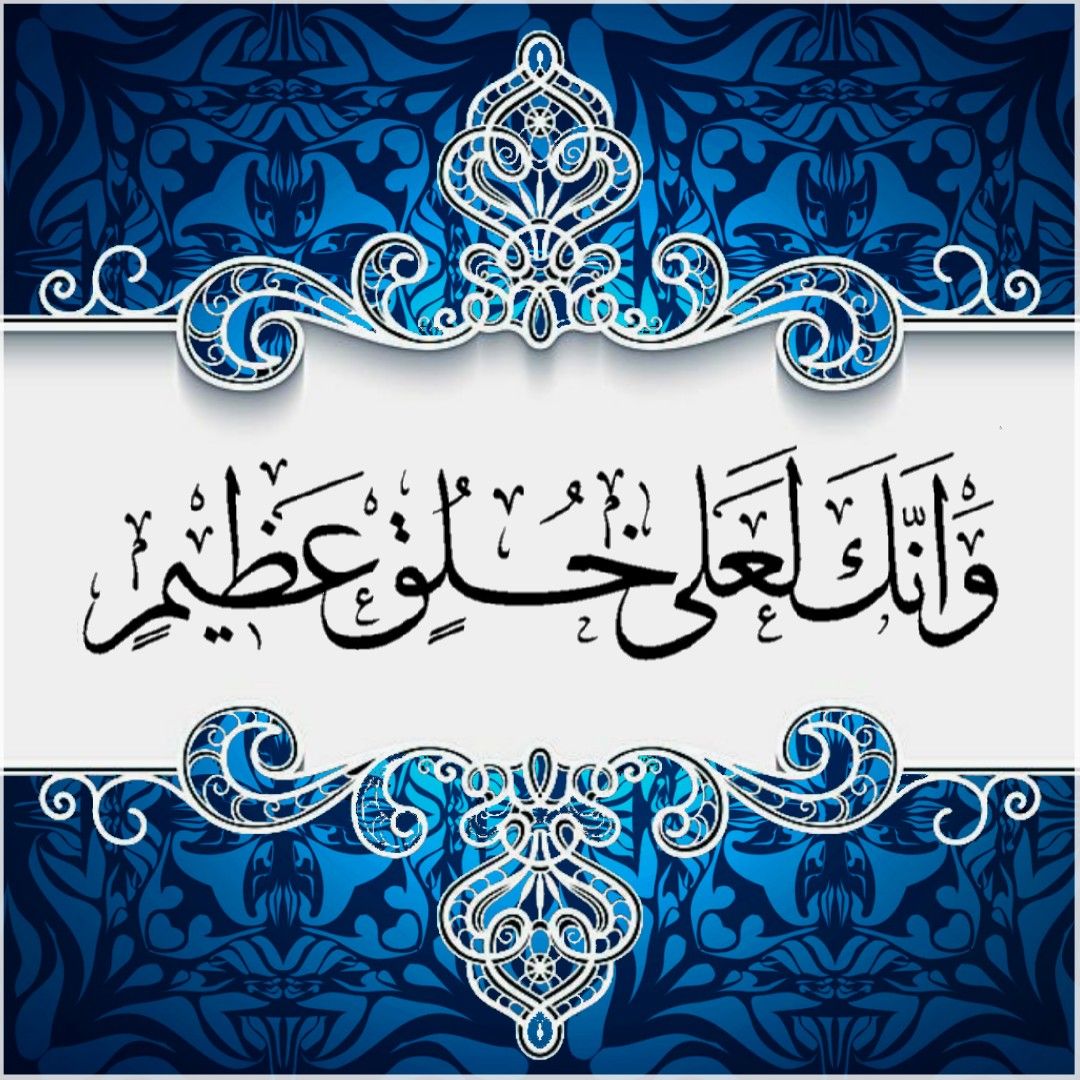
the Prophet said: “The best of you is the one who is best to his wife, and I am the best of you to my wives.”

Continue Reading
Click to comment

Leave a Reply

Your email address will not be published. Required fields are marked *

Featured

Homes Taken, Gates Closed: A Week That Shook Jerusalem

Published

on

Homes-Taken-Gates-Closed-A-Week-That-Shook-Jerusalem

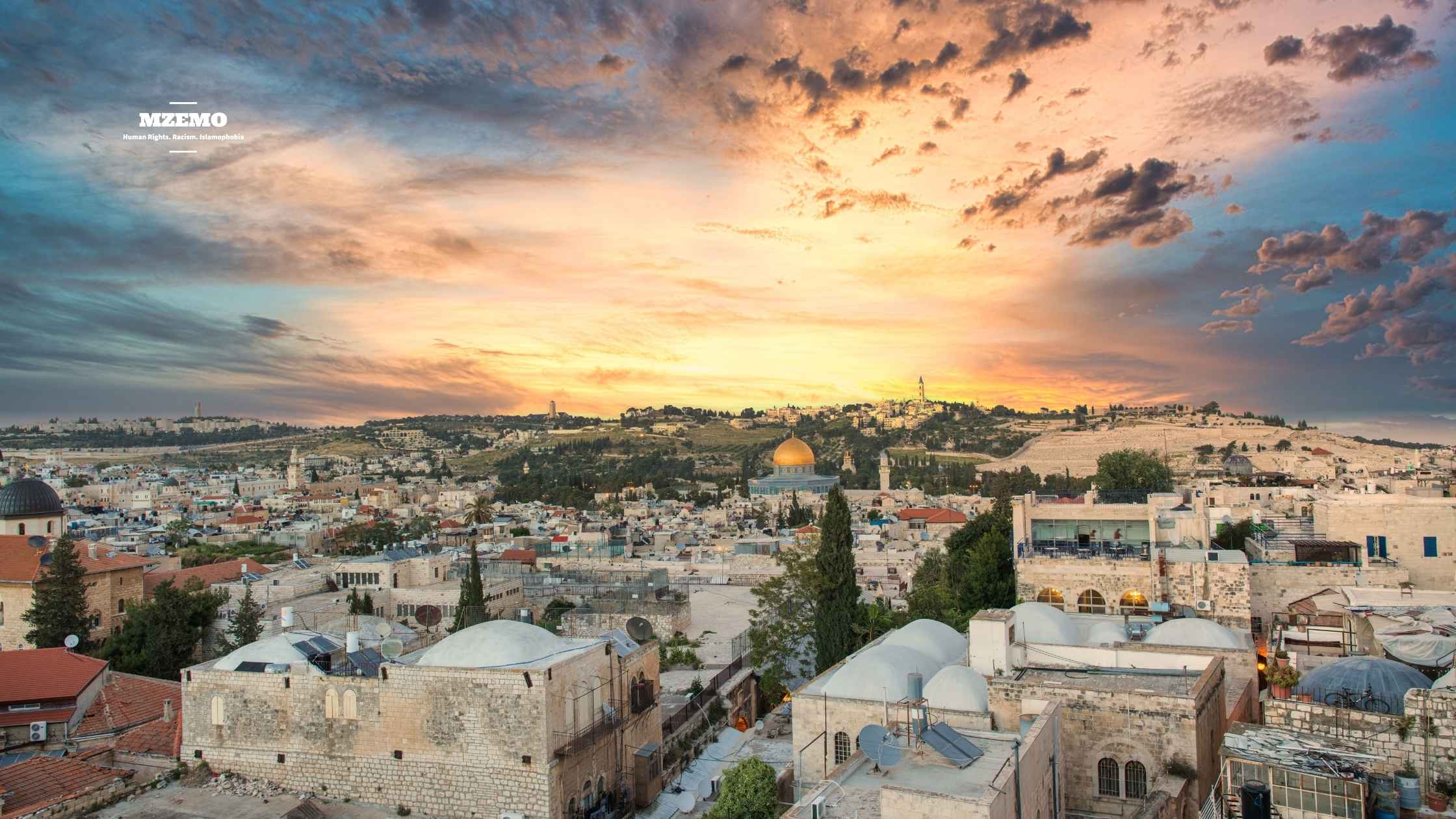
Jerusalem witnessed two deeply unfortunate and consequential developments in the same week. In Occupied East Jerusalem, eleven Palestinian families were evicted from their homes by the Israeli Defence Forces (IDF). At the same time, access to one of the holiest sites for Muslims, Al Aqsa Mosque, was blocked. The gates of the mosque were closed, with only the possibility of a limited entry.

These are not isolated events but a continuity of Israel’s blatant attacks on the civilian population of Palestine. The complete obliteration of Gaza is evidence of a broader plan of Israel to completely devastate the Palestinian homeland. Through these heinous actions, land, identity, and access to sacred places remain at the center of tensions.

Forced Evictions in East Jerusalem

According to credible sources, 11 Palestinian families were removed from their homes in East Jerusalem, an area Israel has controlled since 1967 and which is widely regarded under international law as occupied territory.

For many of these families, the homes were not temporary shelters. They had lived there for decades. Their eviction meant more than relocation, but it meant the loss of stability, community, and long-standing ties to the area.

Data from the United Nations Office for the Coordination of Humanitarian Affairs shows that hundreds of Palestinians face eviction threats in East Jerusalem each year. These cases often emerge from legal disputes over property ownership. However, the broader pattern has drawn sustained international concern.

Such evictions contribute to a gradual displacement of Palestinian residents from key areas of the city.

The Legal and Political Reality of East Jerusalem

The status of East Jerusalem remains one of the most sensitive issues. While Israel considers the entire city its capital, Palestinians view East Jerusalem as the future capital of their state. International law largely treats the area as occupied territory by Israel.

Property disputes in East Jerusalem are often shaped by a complex legal framework. In many cases, Israeli law allows claims based on historical ownership that are difficult for Palestinian residents to contest. At the same time, Palestinians face significant barriers when attempting to reclaim property lost decades ago.

The result is a system that favours Israel in the demographic balance, contributing to ongoing tensions in the entire region.

The Plight of Al-Aqsa Mosque

Especially during the holy month of Ramadan, hundreds of thousands of Palestinians attend prayers at Al-Aqsa mosque. However, during this Ramadan, Israeli authorities limited entry to the mosque compound, including the closure of gates and restrictions on who could enter. These measures came during a time when thousands of worshippers would normally gather.

Al-Aqsa holds immense religious significance. It is considered the third holiest site in Islam, after Makkah and Madinah. For Muslims worldwide, it is not only a place of worship but a symbol of spiritual and historical identity.

Ultimately, when access is restricted, the impact is felt far beyond Jerusalem. It resonates across the global Muslim community.

A Broader Pattern of Genocidal Mindset

With more than 77,000 killings in the Gaza Strip, including women and children, Israel is acting on a strategy to completely wipe out the Palestinian population. The closure of mosques and evictions is the continuation of the genocidal mindset.

Such restrictions are often justified on security grounds. However, the repeated nature of these measures creates a pattern that affects freedom of worship.

During major religious periods, when attendance typically rises, these restrictions carry even greater significance.

International Reaction

In the wake of these heinous events, Muslim-majority nations publicly condemned the closure of Al-Aqsa’s gates. Statements described the move as a violation of religious rights and called for unrestricted access to the mosque.

These reactions reflect the broader importance of Jerusalem in the entire world.

Jerusalem has long been a focal point of political, religious, and historical tension. The events of this week show how quickly these elements can converge.

As debates continue over sovereignty, security, and rights, one question remains central: Can a city of such deep religious and historical importance sustain balance when both homes and holy sites remain contested? Can a city of Holy sites bear the wrath of a country that is deeply involved in genocide?

The answer to that question will continue to shape not only Jerusalem’s future, but also its place in the wider world.

Continue Reading

Featured

Inside the Plan to Disarm Hamas and Reshape Gaza’s Future

Published

on

Inside-the-Plan-to-Disarm-Hamas-and-Reshape-Gazas-Future

Since the start of the Iran war, the first-ever formal meeting was conducted between Hamas and the “Board of Peace” during the second week of March. Israel also pledged to open the only pedestrian crossing between Gaza and Egypt during the month, but their promises have always been fabricated.

However, this announcement is a direct result of the meeting between Hamas and the United States. US President Donald Trump described the Gaza plan as the flagship initiative for the revitalization of the Middle East. However, the Middle East has also been turned into flames by the same President and Israel.

Recent Developments in Gaza

On the other hand, Hamas representatives clearly intimated to the Board of Peace that they would back away from their promises if Israel continued to oppress people and maintain restrictions imposed during the Iran war.

One of the most crucial events in Gaza is the closure of the Rafah border – the only crossing between Gaza and Egypt. Although the border was partially reopened for a limited supply of goods, the sole pedestrian crossing was closed. People in the West Bank, as well as in Gaza, are still under constant threat of being brutally killed, as observed during the ongoing genocide.

The Recent Meeting between Hamas and the Board of Peace

During the latest meetup between Hamas and the United States-led Board of Peace, a lot of demands were put in front of Hamas. One of the most prominent demands is that Hamas would be forced to allow the destruction of its vast Gaza tunnel network. This network is the primary source of Hamas operations and self-defence.

US President Donald Trump also put a plan to disarm Hamas completely and expected them to lay down their weapons in stages over the next eight months. A US-backed committee of Palestinian technocrats will be taking control of the overall security of Gaza. It is also planned that Israeli forces will withdraw from Gaza once they verify that Gaza is completely free from weaponry.

Dismantling the entire military structure of Hamas is another big demand put by the Board of Peace. The tunnel network is not just being used for operational scenarios, but it is also being used for aid supply, movement under blockade, and other defensive operations.

The Perspective of Hamas

Hamas, on the other hand, aptly understands the situation and the hollow promises of Israel and the United States. It has not publicly commented on the proposed disarmament plan.

The proposed Trump plan includes two primary components: a 12-point document including steps to implement Trump’s plan and a five-stage timeline. This timeline consists of plans for Hamas to surrender over the next eight months. Hamas adequately knows about the consequences if it leaves the field.

One Authority, One Law, and One Weapon

This is the motto of the document proposed by Donald Trump in his peace plan. It also states that only the individuals verified by the NCAG will be allowed to possess weapons. Resultantly, all armed factions need to cease military activities in all capacities.

This disarmament process will also be overseen by a weapons collection verification committee. In a nutshell, this motto clearly defines the motto of the US to completely take over Gaza. There should not be anything except the indirect rule of the United States and the direct rule of Israel.

The Waves of the Iran War

The war involving Iran has not brought any real pause to Gaza; instead, increased assault has been observed. Israeli strikes have continued across the territory even as the wider regional conflict unfolded.

The current framework for Gaza traces back to an October ceasefire, after which Israel retained control over more than half of the enclave. Meanwhile, the vast majority of Gaza’s population, over two million people, has been pushed into a densely packed area still under Hamas administration.

In the weeks before tensions with Iran escalated, the plan appeared to be gaining ground. There were renewed discussions around reconstruction efforts and even the possible reopening of the Rafah crossing, raising cautious hopes of relief for Gaza’s population.

However, the situation on the ground has remained extremely volatile. Israeli forces (IDF) have continued their operations, including recent strikes that killed at least 12 people, among them several police personnel. Israel has maintained that such actions are carried out in response to threats or attacks linked to Hamas.

Officials familiar with negotiations in Cairo suggest that Hamas views the regional conflict as a turning point. There is a belief within the group that Israel may be using the Iran war as an opportunity to step back from earlier commitments made under the Gaza plan, which is a claim Israel strongly denies.

Moreover, a key element of the proposal has been the question of disarmament. The idea centers on Hamas giving up its weapons in exchange for guarantees such as amnesty, with the expectation that this would open the door to reconstruction and a gradual withdrawal of Israeli forces.

Even so, it remains unclear whether this issue will be formally addressed or if it is just a form of manipulation, as Israel has been doing for decades.

Continue Reading

Featured

Militias, Fragmentation, and Escalation Across Palestinian Territories

Published

on

Militias-Fragmentation-and-Escalation-Across-Palestinian-Territories

When Israel and the United States launched a full-scale military assault against Iran, international attention shifted instantly toward the possibility of a wider Middle Eastern War. The blockage of the Strait of Hormuz, the reluctance of the US and Israel to completely obliterate Iran and wipe out their leadership, are not just threats to the Middle East but to the entire world.

Currently, headlines are focusing on missiles, regional alliances, and the risk of escalation between powerful adversaries. On the other hand, the situation across the Palestinian territories did not pause. Instead, a series of heinous developments inside Gaza and the occupied West Bank reveal that the genocide is entering a new and increasingly complex phase.

Some of the recent trends reshaping the reality across Palestinian territories include the rise of militias, fragmentation inside the Gaza Strip, and intensified violence across the West Bank.

Together, these developments suggest that the genocide is evolving into a more layered and unpredictable struggle.

The Emergence of Israeli-Backed Militias in Gaza

One of the most striking developments in recent weeks is the rise of armed Palestinian factions operating inside Gaza with apparent coordination with Israeli forces.

In this context, several groups have begun carrying out operations targeting Hamas members and infrastructure within areas of Gaza under Israeli military control.

Among the groups identified are organizations known as the Popular Army, including Northern Forces and the Free Homeland Forces, which are believed to be connected to a broader network sometimes referred to as the Popular Forces.

Moreover, these militias have carried out activities in Gaza, including:

  • Raids on different locations
  • Abductions of civilians
  • Intelligence gathering operations for Israel

Their presence introduces a new dimension to the conflict. For years, the main dynamic inside Gaza has centered on the confrontation between Israeli forces and Hamas. The appearance of armed Palestinian factions aligned against Hamas complicates that structure and adds the possibility of internal fragmentation.

Security analysts warn that such developments can significantly reshape power dynamics within genocidal zones, bringing further instability and chaos.

Fragmentation of Governance Inside Gaza

The prolonged genocide and the destruction of infrastructure across the enclave have weakened administrative structures and complicated governance.

Several factors now contribute to the fragmentation of authority:

  • The continued presence of Israeli military operations in Gaza
  • The emergence of new armed factions operating independently
  • The erosion of centralized administrative control due to the scale of genocide

The introduction of additional militias may further complicate efforts to establish political stability in the territory. In many genocidal zones, the proliferation of armed groups often leads to competing spheres of influence and weakened governance structures.

Ultimately, this fragmentation could make future political settlements even more difficult, as multiple actors compete for influence within the territory.

Escalation in the West Bank

The West Bank is not immune to the genocidal activities of Israel. While Gaza and Iran remain at the center of international attention, the occupied West Bank has also experienced a dramatic increase in violence since the Gaza genocide began.

According to figures cited by Palestinian authorities and international observers, more than 1,000 Palestinians have been killed in the West Bank since the beginning of the Gaza genocide.

The violence has taken several forms, such as Israeli military raids in Palestinian towns and refugee camps, armed confrontations between Palestinian militants and Israeli forces, and attacks by Israeli settlers on Palestinian communities.

In recent months, numerous Palestinian villages have reported raids in which homes were damaged, vehicles burned, and farmland destroyed. Some incidents have also led to the displacement of families from rural areas.

Settler Violence and Community Displacement

Settler violence has become one of the most significant sources of instability in the West Bank.

There is a growing number of incidents involving attacks on Palestinian property and agricultural land.

These incidents include:

  • Destruction of olive groves and crops
  • Arson attacks targeting homes and vehicles
  • Confrontations between settlers and residents

The consequences extend beyond the immediate damage. In some cases, Palestinian families have left villages after repeated attacks, contributing to gradual displacement in certain rural areas.

Gaza in the Context of a Wider Regional Conflict

The US, Israel–Iran confrontation has transformed the regional geopolitical landscape dramatically. Military tensions between these countries have raised fears of a broader Middle Eastern war involving multiple actors.

However, the conflict within Palestinian territories continues to evolve largely independent of the regional headlines. The recent closure of the Rafah border has triggered panic buying. Resultantly, the prices of food have skyrocketed. Moreover, the shortage of cooking gas triggered by Israel has also worsened living conditions.

Moreover, the emergence of militias, fragmentation of governance, and escalating violence suggest that the genocide is entering a phase of more destruction. Despite several calls by the United Nations to allow humanitarian aid into Gaza, the world is not paying heed to the innocent lives trying to survive each second there.

Continue Reading
Advertisement

Trending