Connect with us

Islamophobia

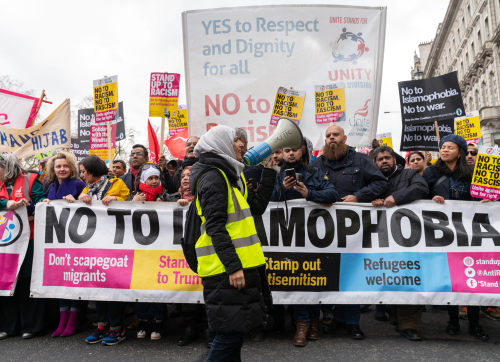
The Hidden Links between Islamophobia and Racism

These are some hidden links between Islamophobia and Racism.

Published

on

welcoming people affected by islamophobia

Islamophobia can be defined as hostility and hatred towards Islam. Moreover, it is usually described as an exaggerated fear of Islam based on negative thoughts and discrimination. While a particular race is something related to ethnic background, facial features, or skin color, and it has deep roots that cannot be changed.

Its standard components are based on stereotypes, myths, and caricatures. Thought of superiority is widespread among races. People who belong to one race most of the time think that they are superior to other races, not all but most of them. Islam is a religion that is related to belief. People from different races may have the same beliefs, and people from the same race may have different beliefs.

According to the All-Party Parliamentary Group (APPG) of the UK:

“Islamophobia is rooted in racism and is a type of racism that targets expressions of Muslimness or perceived Muslimness.”

It could be the case but not always, and this statement was also opposed by many critics afterward.

“Phobia” is a medical condition that is incorporated with fear of an object or a situation.  Islamophobia was present among people in the late twentieth century, but it had boosted after the incident of 9/11. Sometimes Islamophobia and racism can be observed at the same time in different countries.

If people who belong to different races are practicing Islam and they face problems due to their ethnic background as well as their belief, then we must say that Islamophobia and racism have some hidden roots and origins.

Ethnic Backgrounds and Islamophobia

If we talk about the United Kingdom, most Muslims are non-white, so racial discrimination and Islamophobia can overlap. International human rights and UK law clearly state that when two different things overlap, then these may cause more discrimination and can strengthen each other. So, Islamophobia cannot be regarded as racism simply because people of different races may have the same belief. They can observe discrimination only based on their beliefs, such as Muslims of the UK and the USA are facing discriminated behaviors the society towards them.

Islam and Christianity are followed worldwide, so it is evident that people from different ethnic backgrounds and races are following these religions. Being a Muslim, you must believe that there is no God but Allah, and Muhammad (PBUH) is His Last Prophet. Religion is a matter of belief and practice, but race is something different. If someone wants to change his or her religion, then it can be changed easily, but your facial features and skin tone cannot be adjusted. So the race is something far different from religion.

Islamophobia within Muslims?

Some people may be found involved in some suspicious activities, and they claim practicing Islam, but in reality, they are not practicing the true spirit of Islam. If a community opposes them based on these suspicious activities, then we cannot say this is Islamophobia.

Some sects of Islam also have some reservations for other sects, and they sometimes feel fear of the other sects. Should we consider this Islamophobia as well? But we are going to differentiate it because it is happening within the groups that may have different ethnic backgrounds but the same belief.

For more Check

Teachings of Islam and Racism

Racism is basically defined as giving superiority to one race over the other, and it is a reality that racism brings only hate and destruction. Today the world is suffering a lot because of it at various levels, so it is essential for us to know about the teachings of Islam on this issue.

If we look at the teachings of Islam, it talks about equity. Prophet Muhammad (PBUH) talked about it in his last sermon during Hajj, Khutba Hajjatul Wida:

“All humankind is from Adam and Eve, an Arab has no superiority over a non-Arab nor a non-Arab has any superiority over an Arab; also a White has no superiority over a Black nor a Black has any superiority over a White except by piety and good action. Learn that every Muslim is a brother to every Muslim and that the Muslims constitute one brotherhood. Nothing should be legitimate to a Muslim which belongs to a fellow Muslim unless it was given freely and willingly.”

Islam itself is against racism, but people facing Islamophobia may couple it with racism, and sometimes it is true as well.

Conclusion

There is no sharp borderline that can differentiate Islamophobia and racism on some occasions. It depends on many factors, whether Islamophobia is racism or not. Islamophobia is increasing day by day in the west due to negative propaganda in some regions of the world. Muslims are facing restrictions based on Islamophobia, but sometimes these restrictions are merely based on race or ethnic background. So, we cannot claim these restrictions under Islamophobia.

WELCOME

MZEMO

GET EXCITING NEWS

Continue Reading
Click to comment

Leave a Reply

Your email address will not be published. Required fields are marked *

Featured

The New Islamophobia: From Al-Quds Day Ban to America’s Anti-Muslim Surge

Published

on

The-New-Islamophobia-From-Al-Quds-Day-Ban-to-Americas-Anti-Muslim-Surge

The world has witnessed Islamophobia in different intensities, especially during the last two decades. However, in recent years, especially after the genocide in Gaza and the US-Israel versus Iran war, it has moved from the margins of public debate to the center of social and political discussions in Western societies. Recent research data shows hostilities toward Muslim communities have reached unusual levels, both in Europe and the United States.

Recently, two significant decisions brought this issue into sharper focus. One is the decision to restrict London’s annual Al-Quds Day march, and the second is the record surge in anti-Muslim complaints reported across the United States. Both of these events highlight a broader trend that is affecting Muslims globally.

The Al-Quds Day Debate in London

Since 1979, Al-Quds Day has been observed internationally to demonstrate solidarity with Palestinians. It also serves as a platform for discussing Middle Eastern political issues. Specifically in London, the annual march has taken place for decades, drawing activists, community organizations, and political groups.

However, this year, authorities moved to prevent the traditional procession, citing concerns over public safety and rising geopolitical tensions. Officials argued that large demonstrations related to the Middle East could create security challenges, particularly at a time when international conflicts were intensifying.

The decision immediately sparked debate across the United Kingdom. Supporters of the restrictions argued that authorities must prioritize public safety and prevent potential unrest. On the other hand, numerous people, including many civil liberties groups, questioned whether banning such demonstrations risked limiting legitimate political expression.

Regardless of the political positions surrounding the decision, the controversy reflects a larger question facing Western societies. How to balance public security concerns with the rights of communities to express political solidarity and participate in democratic debate.

Islamophobia in the United Kingdom

Stats from the United Kingdom show that anti-Muslim hostility remains one of the most significant forms of religious discrimination in the country.

According to credible estimates, roughly 4,500 Islamophobic incidents were recorded in a recent year, ranging from verbal abuse and online harassment to physical attacks and vandalism targeting mosques.

Official government crime statistics reveal a similar trend. Muslims make up around 5 percent of the population of England and Wales, yet they account for close to half of all victims of religious hate crimes recorded by police.

Many incidents involve everyday harassment in public spaces or online platforms. Others include damage to religious buildings or threatening messages directed at Muslim institutions.

Community leaders often point out that such incidents can have wider social consequences. Fear of harassment can discourage individuals from fully participating in public life, from attending religious services to engaging in civic activism.

A Record Surge of Complaints in the United States

On the other hand, similar concerns are emerging over the Atlantic. The Council on American-Islamic Relations (CAIR), which is the largest Muslim civil rights organization in the United States, reported 8,683 complaints of anti-Muslim discrimination or harassment in 2025. According to the organization, this represents the highest number of complaints recorded since it began collecting data in 1996.

These complaints cover a wide range of situations, including the following:

  • Workplace discrimination
  • Immigration-related harassment
  • Online threats and intimidation
  • Discrimination in education and housing

But such figures often represent only a portion of actual incidents, since many victims choose not to report harassment.

Researchers studying patterns of discrimination have found that spikes in anti-Muslim hostility frequently occur during periods of heightened geopolitical tension involving Muslim-majority regions. Moreover, political rhetoric, media narratives, and international crises can all shape how minority communities are perceived domestically.

Universities and the Politics of Protest

Many educational institutions, like universities, have increasingly become a focal point in debates over political expression related to the Middle East.

Student demonstrations, particularly those connected to the Gaza genocide, have appeared on campuses across Europe and North America. Several universities have responded by imposing restrictions on certain protest activities or relocating demonstrations to designated areas. In some cases, police have been called to disperse encampments or enforce campus rules.

These situations have sparked broader discussions about academic freedom and the role universities play as spaces for political debate.

Media Narratives and Public Perception

Another factor shaping the conversation around Islamophobia is the role of media representation. Academic studies examining media coverage in Western countries have found that Muslims are often disproportionately associated with security issues, extremism, or geopolitical conflict in news reporting. Ultimately, such framing can influence public perceptions and reinforce stereotypes.

At the same time, Muslim communities in Europe and North America are diverse, encompassing millions of citizens and residents engaged in every sector of society, from medicine and education to business, public service, and the arts.

Understanding this diversity is a crucial step in addressing misconceptions that sometimes contribute to social tensions.

Addressing the Challenge

“Every life is equal, and every human deserves respect.”

Governments and civil society organizations across Western countries have increasingly acknowledged the need to confront anti-Muslim discrimination.

When it comes to the United Kingdom, policymakers have discussed establishing clearer definitions of anti-Muslim hatred and improving the monitoring of hate crimes. On the other hand, in the United States, advocacy groups continue to push for stronger legal protections and better reporting mechanisms.

Moreover, educational initiatives, interfaith programs, and community partnerships should also be promoted for a peaceful community.

In a nutshell, ensuring democratic societies remain inclusive and respectful of religious diversity is the way forward for a peaceful and prosperous future.

Continue Reading

Featured

Muslim World League Chief’s Visit to India

Published

on

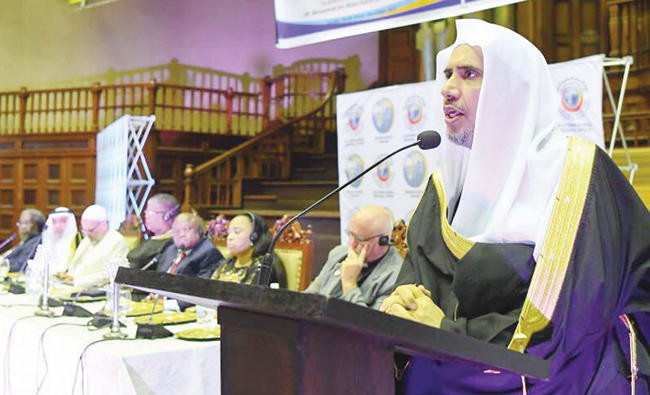
The recent visit of Sheikh Mohammed Bin Abdulkarim Al-Issa, Chief of the Muslim World League, to India holds significant importance in fostering interfaith dialogue, promoting peace, and countering extremism. Al-Issa’s condemnation of terrorist organizations, emphasis on the disassociation between Islam and extremism, and calls for unity and love amidst conflicts resonate with diverse communities. His visit to prominent religious sites, including the Akshardham temple and the Jama Masjid, further reinforces the significance of mutual respect, understanding, and cooperation among different faiths in the pursuit of global harmony.

Also, read Umar Khalid Completes 1000 Days in Jail Without Trail

Muslim World League’s Efforts for Peace and Countering Extremism

The Muslim World League, under Al-Issa’s leadership, has been actively engaged in countering extremist ideologies and promoting peace globally. Al-Issa’s visit to India provides an opportunity to reinforce their commitment to fostering dialogue, understanding, and cooperation among political and religious leaders, addressing critical issues related to countering extremism and promoting harmony within societies.

Read here, G20 Summit in J&K: China, Turkey, Egypt, Saudi Arabia opted out

Emphasizing Islam’s Rejection of Extremism

During his visit, Sheikh Mohammed Bin Abdulkarim Al-Issa made significant remarks emphasizing Islam’s rejection of extremism and its commitment to peace and harmony. He highlighted that extremist organizations do not represent Islam or any other religion, emphasizing their disconnection from religious teachings.

“Islam does not like double-speak and Muslims need to be truthful,” the Muslim World League secretary general said in his sermon delivered in Arabic.

Al-Issa emphasized the need to counter the distortion of the Islamic faith by terrorist organizations, emphasizing that Islam stands for peace, love, and harmony. He reiterated that the teachings of Islam promote compassion, tolerance, and respect for all humanity.

By underscoring the message that Islam has no place for extremism, Al-Issa aims to dispel misconceptions and bridge gaps between different religious communities. His statements seek to foster understanding, promote interfaith dialogue, and combat the spread of extremist ideologies that falsely claim religious justifications for violence.

Through his leadership in the Muslim World League, Al-Issa and the organization actively work to counter extremist ideologies and promote a peaceful interpretation of Islam. Their efforts include educational programs, interfaith initiatives, and ideological interventions aimed at fostering a culture of tolerance, coexistence, and peace.

Al-Issa’s emphasis on Islam’s rejection of extremism not only reaffirms the commitment of the Muslim World League but also serves as a powerful message to Muslims around the world. It reinforces the importance of understanding and living by the true principles of Islam while rejecting any form of violence or extremism.

In conclusion, Sheikh Mohammed Bin Abdulkarim Al-Issa’s emphasis on Islam’s rejection of extremism highlights the core values of peace, love, and harmony within the religion. His efforts to counter the distortion of Islamic teachings by extremist groups contribute to fostering interfaith dialogue, promoting understanding, and working towards a more peaceful and inclusive world.

Also, read The Appalling State of Muslims in post-colonial India

Interfaith Engagement at Akshardham Temple and Jama Masjid

Al-Issa’s visit to the Akshardham temple and Jama Masjid exemplifies his commitment to interfaith dialogue and fostering understanding among diverse religious communities.

At the Akshardham temple, Al-Issa not only admired the architecture and cultural heritage but also engaged with the Swamis to discuss matters related to global peace, harmony, and coexistence. This interaction provided a unique opportunity for an exchange of perspectives, fostering deeper understanding and mutual respect among different faith traditions.

Similarly, Al-Issa’s presence at the historic Jama Masjid during Friday prayers was a significant gesture of solidarity and outreach to the Muslim community in India. His participation in the prayers underscored the importance of unity and shared values across religious boundaries, reinforcing the need for peaceful coexistence and interfaith cooperation. Ahead of the prayer, Al-Issa met Ahmed Bukhari, Shahi Imam of Delhi’s Jama Masjid.

These interfaith engagements highlight the significance of dialogue, respect, and mutual learning in promoting peaceful relations among diverse religious communities. By engaging with leaders and communities of different faiths, Al-Issa aims to bridge gaps, dispel misconceptions, and foster harmonious relationships based on shared values of love, peace, and understanding.

These initiatives contribute to building trust and strengthening bonds among people from various religious backgrounds, paving the way for a more inclusive and tolerant society. They demonstrate the Muslim World League’s commitment to interfaith dialogue, promoting harmony, and working towards a peaceful coexistence where diverse religious communities can thrive together.

Read here, “The Kerela Story” Controversy in India

Efforts to Counter Extremism and Promote Peace

Sheikh Mohammed Bin Abdulkarim Al-Issa reiterated the Muslim World League’s dedication to countering extremism and promoting peace globally. Their initiatives focus on ideological interventions, countering hate narratives, and fostering dialogue to eliminate extremist ideas and foster a climate of harmony and understanding. Al-Issa’s visit to India serves as a platform to strengthen collaborations in countering extremism, promoting interfaith harmony, and advancing peacebuilding efforts.

Sheikh Mohammed Bin Abdulkarim Al-Issa’s visit to India as Chief of the Muslim World League carries significant implications for fostering interfaith dialogue, promoting peace, and countering extremism. His emphasis on Islam’s rejection of extremism, engagement with diverse religious sites, and commitment to countering extremist ideologies reflect the efforts of the Muslim World League in combating the distortion of religious teachings. Through dialogue, understanding, and concerted actions, Al-Issa and the Muslim World League strive to build bridges among different faiths and promote a climate of peace, love, and harmony in India and beyond.

However, Abdulkarim Al-Issa chose not to speak of the atrocities happening in India against the Muslim population nor did he speak of the Kashmir issue, and what people are calling a bloody silence disappointed many Muslims.

Also, read India Ranks 161st in Terms of Journalistic Freedom- RSF

Continue Reading

Featured

The Appalling State of Muslims in post-colonial India

Published

on

South Asia is home to one-third of the world’s Muslim population. Contrary to the popular belief there are more Muslims in South Asia than there are in middle-east which is popularly known to be the heart-land of Islam. After Indonesia, India is the second country in the world with the largest Muslim population. India is anciently known to be the hub of Hinduism, Buddhism and Jainism. So, when and how did a country largely consisting of Hindus, Buddhists and Jains become so densely populated by Muslims? How did Islam emerge in pre-colonial India? As much as there is a controversy around this inquisition, there is also a lack of historical, geographical and political awareness related to it. The most important aspect to this bone of contention is the appalling state of the Muslims in post-colonial India, and how is it different from that of the Muslim diasporas in the rest of the world, in specie the West. Albeit there have been events of religious violence in pre-colonial and British India, the post-colonial period has seen an enormous increase in riots and hate crimes against Muslims in India.

Also read, India Ranks 161st in Terms of Journalistic Freedom- RSF

The Image of Muslims in the West

The image of Muslims in the west has been in question lately more than ever in the world in general. The rise of hate crimes against Muslims usually chalk up to the 9/11 attack against the United States which was allegedly carried out by a religious extremist organization Al-Qa’ida. Having said that there have been some crucial conspiracy theories that called for a new investigation into the attacks, because they asserted that there was evidence of individuals from within the US government being either responsible for or knowingly having conspired in the attacks as a means for America of justifying the war in Afghanistan and Iraq. However, majority of the general public held the opinion that Al-Qai’da had orchestrated the attack. Because the members of the Al-Qai’da were people who proclaimed to be the adherents of the religion of Islam, this gave rise to a sense of bigotry and intolerance in the west towards the entire Muslim community.

The widely accepted notion among the broad commonality incriminated the Muslims of effectuating the attack. Non-Muslims started generalizing Muslims and started viewing them as people who endorsed terrorism, which led to a common prejudice against them in the western society. From their customs and religious practices, including their eating habits, to their appearance and clothing, Muslim men and Women were looked down upon and stereotyped as radical and fundamentalists. This generalization and stereotyping of Muslims gradually turned violent in nature and this turn of events gave rise to a series of hate crimes resulting in abuse and even unfortunate deaths of many Muslims. Howbeit, even before the 9/11 attack, many bookmen and laypeople alike had accepted a prior perception that religious terrorism had become the most common form of terrorism, particularly with regard to Islam. This suggests that Islamophobia was a common practice even before 2001.

Read here, “The Kerela Story” Controversy in India

Islamophobia before 9/11

People have associated Islamophobia with various manifestations. While some people reckon the phenomena with the increasing population of Muslims in the United States and Europe, others deem it to be retaliation for an ostensible anticipation of the emergence of a global Muslim identity. Yet many others identify Islamophobia with xenophobia and racism. Another less talked about reason for Islamophobia is the media’s double standards while reporting terrorism. A recent study has found out that terror attacks by “muslims” receive 357% more press attention. This was University of Alabama researcher’s newly study which was published in Justice Quarterly (academic journal covering criminology and criminal justice) authored by Dr. Erin Kearns, UA assistant professor of criminology and criminal justice. Still and all the causes of Islamophobia have always been and till date are debatable.

In the spate of attacks on Muslims in the western countries including the United States, United Kingdom, Canada, Switzerland and New Zealand, it should be noted that the occurrence of such deplorable crimes in the West have one regularity. They are all driven by Islamophobia, the impetus of which is the bigotry for Muslims, a sequence to the specious notion that Muslims endorse Terrorism.

Also, read Muslim OBC Reservation scrapped by BJP government of Karnataka

Appalling State of Muslims in post-colonial India- Partition

Talking about Islam and Muslims, then like in West the appalling state of Muslims is much the same in parts of South Asia explicitly in India, but for wholly different reasons. Though there have been incidents of religious violence in pre-colonial and British India, the history of modern India has seen a compelling surge in the estimate of both subjective and objective violence. But what accounts for this rise of violence against Muslims in independent India? Is it Islamophobia that drives this hatred, just like it does in the West.

Inasmuch these crimes are a result of anti-Muslim sentiments in both the West and in India, the causes of these crimes are primitively much different. Benchmarking the nature of these crimes and the disparity in the claims of the perpetrators, one finds out that there is significantly a historical aspect to the nature of violence against Muslims in India. The partition of British India into two different countries, now called India and Pakistan, was originally borne out of a religious divide amongst Hindus and Muslims. As history claims, different people were for and against partition, as each had a different vision in mind.

There are many theories that explain the reasons for the establishment of Pakistan. One of the most agreed upon consensus of the pro-partition leaders for the formation of Pakistan was the subject of safety of the Muslim minority in the otherwise Hindu majority India. The earlier incidents of religious violence in India had taken a toll on both the Hindus and Muslims. The Muslims being the minority were now more insecure about their safety while living amongst Hindus. Because the safety of Muslims had been in question, ultimately the demand for a separate country for Muslims by the pro-partition leaders was unanimously supported by most Muslims. The Muslims who were not able to migrate then to the land given to Pakistan were left in India, and thus were even less in number, making them an even smaller minority than before.

Read here, India- The Killing of Gangster-Turned-Politician Atiq Ahmad

Commencement of the Appalling State of Muslims in post-colonial India

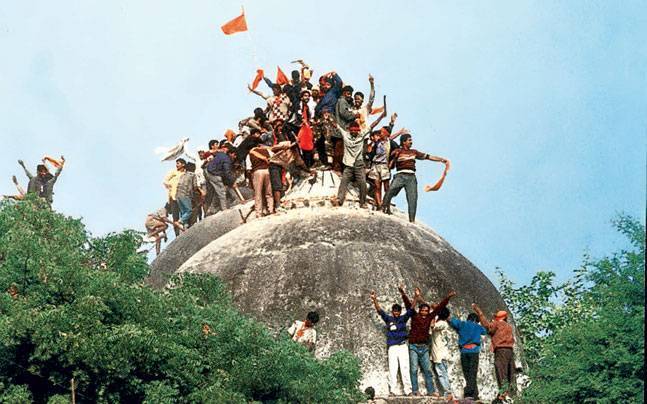
 What marked the commencement of the violence against Muslims in Independent India was the demolition of Babri Masjid, a 430 year old mosque in Ayodhya by extremist Hindus and members of Vishwa Hindu Parishad(VHP) and Bajrang Dal. What followed was a sequel of incidents feuled by the religious animosity stirred between Hindus and Muslims. There has been a continuing rise in the manifestation of hate crimes and incidents of religious prejudice against Muslims in India ever since. However, with the emergence of the current government in India, the last few years have seen an enormous and noticeable amount of hate driven crimes including rape, public flogging and lynching. The motives of the perpetrators for committing such heinous crimes are as bizarre as they are abominable. Concepts like cow vigilantism and theories like “Ghar Wapsi” have been doing rounds in the air and have accounted for most of these crimes if not all.

Also, read UN Defender Demands End to Crackdown on Kashmiri Activists

The idea of “Ghar Wapsi” in the appalling state of Muslims in post-colonial India

The idea of “Ghar Wapsi” has also been endorsed and publicized by the right-wing extremists in India, including the leaders of the current government. It is a concept that propagates religious conservation of non-hindus to Hinduism. The reason behind the ideology of these people is their belief that all the people living in pre-colonial and ancient India were originally Hindus. They believe that the emergence and presence of non-hindus in India is only because of the forced conversions by missionaries and invaders that came to India from outside, who were by and large Muslims. This ideology is linked to the pre-colonial past of India. It refers to the period when Islam first emerged in India in 711, when Mohammad Bin Qasim, who was a general in the Umayyad -empire conquered the area of the Southern Pakistan. This was the initial interaction of Islam with South Asia.

Afterwards in the 13th century, the Mongol Invasion uprooted a large number of Persian Turks from Iran and Central-Asia driving them to India where they settled in. And so gradually the tradition and practices of these people started to blend in the syncretic culture of India. Subsequently in the late 13th century with the establishment of the Empire of Timur, began the era of the rise Muslim rulers in India.

Later on in 1526, Babur, a direct descendant of Timur, founded the Mughal Empire, which then ruled almost all of the Indian subcontinent for more than 200 years. During the growth of the Mughal Empire under Babar’s son Akbar (1526-1605) there was an essential blending of Hindu-Muslim cultures. Akbar married a Hindu princess of a pure Hindu Rajput blood-line. This made Akbar’s son Jehangir half Rajput and half-Hindu.  After Akbar, his son also married a Hindu woman, and therefore Jehangir’s son Shahjahan was three-quarters Rajput. With the rise of the Mughal Empire, biologically each successor of the dynasty became less and less Turkic and more and more Indian. They adapted the culture of India and also the Indian culture was insinuated by the Islamic traditions, resulting in the concoction of two separate cultures and religions.

Read here, Festival turns bloody after Hindutva Mob Burnt Centennial Mosque

Historic Bias as a reason for the Appalling State of Muslims in Post-Colonial India

These religious and cultural adaptations are, however, still seen as unethical and blameworthy by many Hindus in India, as they see Islam as a threat to their own culture and identity, as a foreign concept brought to India from outside. They consider the presence of Muslims in India as a result of the historic invasions and forceful conversions by Muslim outlanders and conquerors, and not the gradual amalgamation of two different cultures and religions over the course of time. Crimes like lunching and theories like “ghar wapsi” are not mere co-incidents but are borne out of such historic beliefs. They are a corollary of a historic hurt that these people carry. The violence in the west or bread out of islamophobia is sporadic in nature and often spontaneous while in India violence is structured. Unlike the west, the primeval and ever-growing intolerance towards the practices and culture of Muslims in modern day India is not because of the nature of these practices. On the contrary, in India Islam as a religion is not seen as much of a threat but Muslims are.

Also, read Dehumanizing Representation of Tribals and Muslims in the Oscar fame RRR

Continue Reading
Advertisement

Trending