Connect with us

Featured

G20 Summit in J&K: China, Turkey, Egypt, Saudi Arabia opted out

Published

on

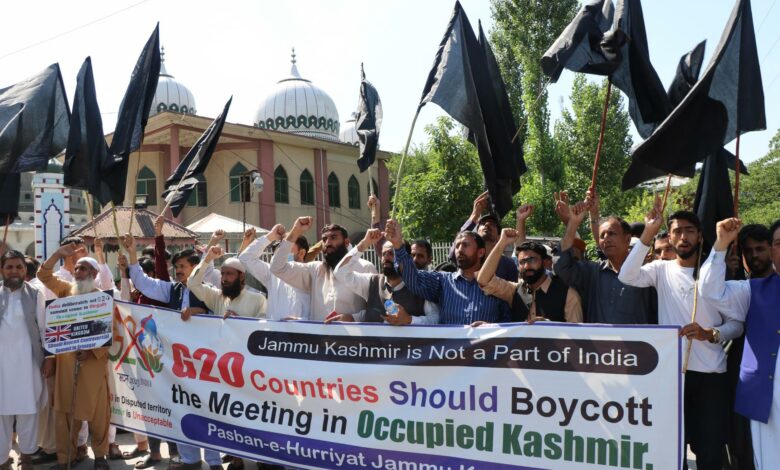
The G20 Summit, an international forum for discussing economic cooperation and global issues, is typically held in prominent cities across the world. However, the recent decision to hold the summit in Jammu and Kashmir, a disputed region in India, has raised significant concerns and drawn widespread criticism. Countries including China, Turkey, and Egypt are among G20 member states that did not attend the tourism working group meeting that was held in Srinagar during May 22-24, while several other countries will were said to have low-level participation in the event, people familiar with the matter said.

The decision by China, Turkey, Egypt, and Saudi Arabia to opt out of the G20 Summit reflects concerns over security, regional sensitivities, and potential implications of endorsing a summit held in a disputed territory. It also underscores the complexity of the Kashmir issue, highlighting the need for a nuanced and diplomatic approach in resolving the long-standing disputes.

Also, read “The Kerela Story” Controversy in India

Ignoring the Sensitivity of the Disputed Region of J&K

Jammu and Kashmir, a region marred by territorial disputes between India and Pakistan, is known for its historical and ongoing political tensions. By choosing this region as the venue for the G20 Summit, the international community effectively overlooked and in fact ignored the complexity and sensitivity of the situation. The decision entailed risks of deepening existing divisions and was perceived by many stakeholders as an endorsement of one-sided claims, undermining the prospects for a peaceful resolution.

Read here, India Ranks 161st in Terms of Journalistic Freedom- RSF

Undermining Diplomatic Neutrality

The G20 Summit is meant to foster cooperation and dialogue among the world’s major economies. However, by hosting the summit in a disputed region, the host country India inadvertently injected its own biases into the proceedings. It is essential for such an event to be conducted in a neutral location, allowing participating nations to engage in discussions without feeling pressured or influenced by local political dynamics. Unfortunately, this fundamental principle of diplomacy was overlooked in selecting the venue of the G20 summit in J&K.

Also, read Muslim OBC Reservation scrapped by BJP government of Karnataka

Threat to Regional Stability in J&K

The decision to hold the G20 Summit in Jammu and Kashmir carried significant risks for regional stability. The disputed nature of the region made it a potential flashpoint for conflict between India and Pakistan, both of which possess nuclear capabilities. The heightened presence of global leaders, along with the intense media coverage, could exacerbate existing tensions and lead to further escalations. Instead of promoting peace and cooperation, this move had the potential to reignite hostilities, putting the entire region of J&K at risk.

Read here, India- The Killing of Gangster-Turned-Politician Atiq Ahmad

Neglecting Human Rights Concerns- Display of Fake Normalcy in J&K

Jammu and Kashmir has witnessed long-standing human rights concerns, including allegations of arbitrary detentions, restrictions on freedom of speech, and the use of excessive force by security forces. By hosting the G20 Summit in this region, the international community inadvertently downplayed and ignored these pressing issues with India’s display of fake normalcy in J&K. The decision undermines the principles of human rights, as it sends a message that economic interests supersede the need to address the grievances and aspirations of the local population.

The decision to hold the G20 Summit in Jammu and Kashmir, a disputed region in India, continues to draw criticism and controversy. Recent developments reveal that several countries have opted out of participating in the summit, raising concerns about the event’s credibility and its potential impact on regional stability.

Fernand de Varennes, the UN’s special rapporteur on minority issues, issued a statement saying the G20 was “unwittingly providing a veneer of support to a facade of normalcy” when human rights violations, political persecution and illegal arrests were escalating in Kashmir.

Also, read UN Defender Demands End to Crackdown on Kashmiri Activists

China Opted out of G20 Summit in J&K

China, one of the major global players and a member of the G20, firmly opposed the G20 Summit being held in Jammu and Kashmir. It expressed its opposition due to concerns over the security situation in the region. China’s decision to skip the summit reflects its reservations about endorsing a meeting held in a disputed area, which could be perceived as taking sides in the territorial dispute between India and Pakistan. “China firmly opposes holding any form of G20 meeting in disputed areas and China will not attend such a meeting,” Chinese foreign ministry spokesman Wang Webin told reporters in Beijing on Friday.

Read here, The Saudi-Iran Deal and its Implications

Turkey Opted out of G20 Summit in J&K

Turkey, another G20 member, also opted out of attending the G20 Summit in Jammu and Kashmir. While the exact reasons for Turkey’s decision are not explicitly stated in the sources, it can be inferred that concerns over security and regional sensitivities might have influenced their choice. Turkey has been historically involved in the Kashmir issue due to its shared cultural and religious ties with the region, and its absence further highlights the complexities surrounding the choice of venue.

Turkey, which has close diplomatic ties to Pakistan, has recently criticised India for how it has handled the Kashmir conflict, and in 2020, its president, Recep Tayyip Erdogan, brought the issue up at the UN General Assembly.

He had stated that the Kashmir dispute between India and Pakistan, which was essential for maintaining security and peace in South Asia, was still a “burning issue” at the moment.

Also, read Festival turns bloody after Hindutva Mob Burnt Centennial Mosque

Egypt Opted out of G20 Summit in J&K

Egypt, a non-G20 country, also decided not to participate in the G20 Summit in Jammu and Kashmir. The specific reasons behind Egypt’s choice are not provided by the sources. However, it is worth noting that Egypt has traditionally maintained strong ties with India, and its decision to opt-out may be related to concerns about the sensitivity and potential implications of holding such a high-profile event in a disputed territory.

Read here, Dehumanizing Representation of Tribals and Muslims in the Oscar fame RRR

Saudi Arabia Opted out of G20 Summit in J&K

Saudi Arabia, another prominent G20 member, decided not to register for the G20 Summit in Jammu and Kashmir. Similar to Egypt, the specific reasons behind Saudi Arabia’s decision are not outlined by the authorities. However, given Saudi Arabia’s close relationship with India and its role as a regional power, its decision might be influenced by various factors, including geopolitical considerations and concerns over regional stability.

Also, read Pro-Khalistan Activist Amritpal Singh declared fugitive- What is happening in “India’s Bread Basket” Punjab?

The Absence of Countries from G20 Summit in J&K

The absence of these countries from the G20 Summit in Jammu and Kashmir adds to the controversy surrounding the choice of venue. It raises questions about the summit’s credibility, as the non-participation of major global players weakens the potential impact and diminishes the prospects for meaningful dialogue and cooperation. The absence of key participants casts a shadow over the event and calls for a re-evaluation of venue selection in future international summits to ensure impartiality, neutrality, and inclusiveness in addressing global challenges. Ultimately, the controversies surrounding the G20 Summit in Jammu and Kashmir remind us of the delicate balance between diplomacy, territorial disputes, and regional stability. Only through genuine dialogue, respect for international norms, and a commitment to finding peaceful resolutions can lasting solutions be achieved in disputed regions around the world.

The decision to hold the G20 Summit in Jammu and Kashmir was an ill-conceived move that undermines diplomacy, neglects regional sensitivities, and diverts attention from global priorities. By hosting the summit in a disputed region, the international community risked exacerbating tensions and derailing the prospects for peace. In the interest of maintaining neutrality and prioritizing dialogue, future decisions regarding the venue of major international summits must be made with careful consideration of the potential consequences.

Read here, India: Violence Against Women on Holi Reeks of Communal and Racial Tensions

Continue Reading
Click to comment

Leave a Reply

Your email address will not be published. Required fields are marked *

Featured

Hind Rajab and Israel’s Machinery of Denial

Published

on

Hind-Rajab-and-Israels-Machinery-of-Denial

On August 19, 2026, the Israel Defense Forces (IDF) finally admitted that its soldiers had fired at the car carrying five-year-old Hind Rajab and later shelled the ambulance sent to rescue her. Shockingly, this acknowledgement came 933 days after the brutal attack.

This wasn’t the discovery of new evidence but the collapse of an old lie. Palestinian witnessed and numerous independent investigators had already established that Israeli forces were present and that a tank had fired from close range. Initially, Israel denied responsibility until the evidence became impossible to silence.

In fact, Hind’s killing reveals more than one atrocity. It blatantly exposes a machinery of denial built to protect Israeli soldiers, commanders and political leaders from accountability.

The Child Left Inside the Car

Two years back, on January 29, 2024, Hind was travelling through Tel al-Hawa in Gaza City with her aunt, uncle and four cousins. The family was attempting to escape as Israeli troops advanced into the neighbourhood.

Israeli fire tore through their vehicle. Hind and her 15-year-old cousin, Layan Hamada, initially survived. Layan called the Palestine Red Crescent Society and described a tank beside the vehicle. Seconds later, intense gunfire ended her voice.

Hind was now alone among the bodies of her relatives. Emergency workers remained in intermittent contact with her as she waited in fear for someone to reach her.

She was not missing at an unknown location. Dispatchers knew where she was. Israeli forces controlled the area, and an innocent Palestinian child was still alive inside a clearly identifiable civilian vehicle.

The Rescue Israel Approved and Destroyed

The Palestine Red Crescent could not immediately send an ambulance because its workers spent hours seeking Israeli authorisation and arranging a safe route.

After numerous hours of waiting, permission was received, and paramedics Yusuf al-Zeino and Ahmed al-Madhoun drove towards Hind. Their ambulance displayed emergency lights. As they approached the car, their final radio transmission ended with an explosion.

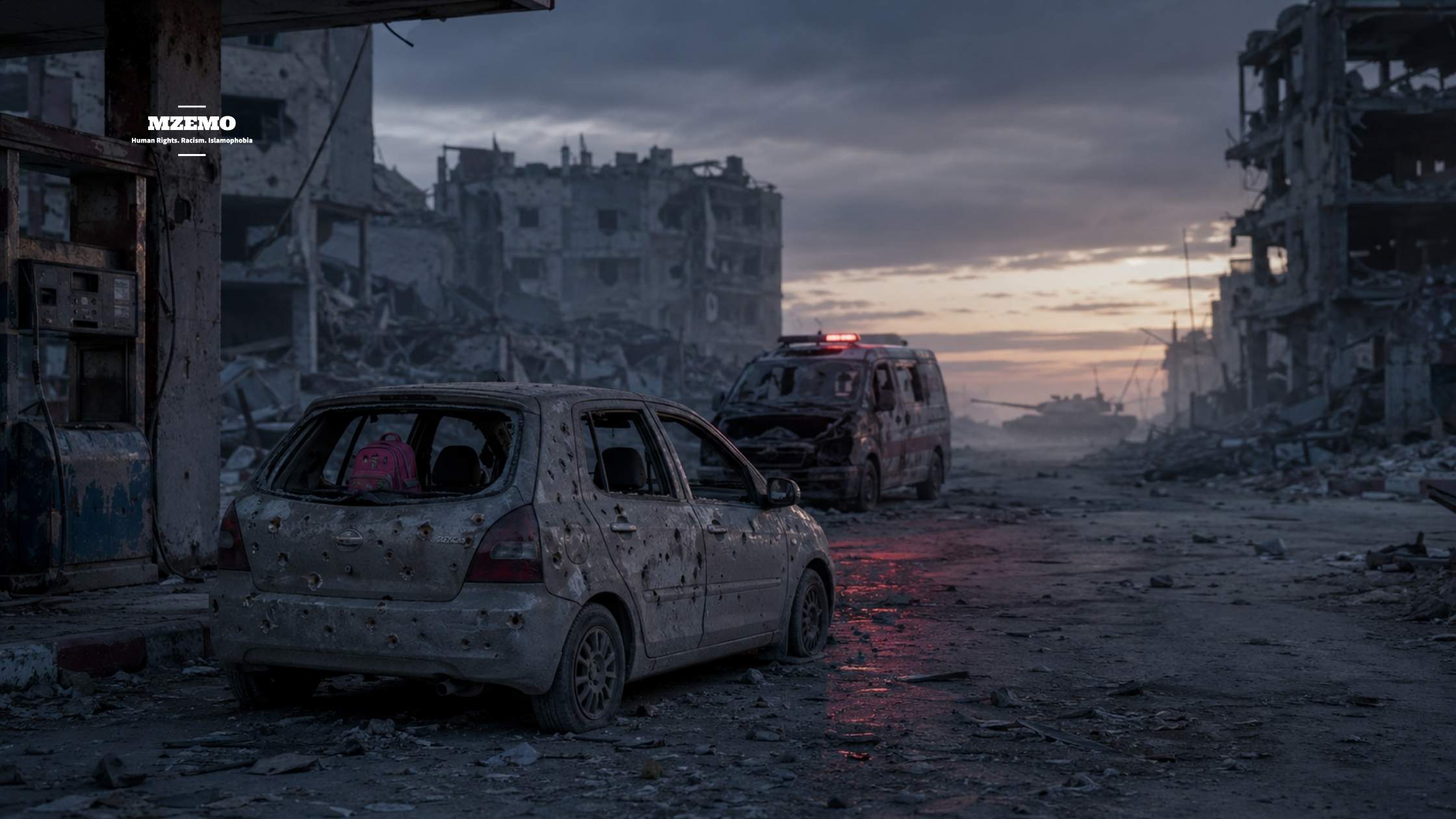
Israeli forces remained in the area, preventing recovery teams from reaching the scene. Hind, her relatives and the two paramedics were found dead 12 days later, after the troops withdrew. The destroyed ambulance stood approximately 50 metres from the family’s car.

Israel had been informed about the medical mission. The ambulance followed a coordinated route. So, its destruction cannot honestly be reduced to a simple communication failure.

The Evidence Israel Could Not Bury

Forensic Architecture, Earshot and Al Jazeera reconstructed the attack using satellite imagery, audio ballistics, vehicle damage and 3D modelling. Their findings dismantled Israel’s initial denials:

  • Investigators mapped 335 bullet holes on the family’s car.
  • Layan’s final call captured 64 shots in six seconds.
  • Audio analysis placed the shooter only 13 to 23 metres away.
  • The firing position provided a clear view of the vehicle and its passengers.
  • Satellite images showed vehicles consistent with Israeli Merkava tanks nearby.
  • The ambulance damage matched the impact of a 120mm tank round.

The evidence did not describe distant or uncontrolled fire. It placed an Israeli tank close enough for its operator to see the people inside the car, including the children.

The ambulance wreckage told the same story. Its damage, the direction of impact, and the Israeli tanks visible in the area all pointed towards heinous Israeli fire.

Denial Was Part of the Crime

Israel first claimed that its troops were not present at all. When satellite and audio evidence contradicted that assertion, official explanations shifted towards uncertainty, possible crossfire, and failures of coordination. But now, the Israeli military eventually admitted that their soldiers fired at the car and that a shell was later directed at the ambulance.

This changing story was definitely an effort at damage control.

Israeli blunt denial forces Palestinian families to prove every killing while grieving their dead. It delays international anger and allows governments to continue supporting Israel while pretending that the facts remain unclear.

Moreover, the United States has helped sustain this system. Washington continued supplying Israel with weapons and diplomatic protection while treating Israeli internal reviews as credible. Palestinian evidence was subjected to endless suspicion; Israeli claims were granted patience and authority.

Hind Must Be Remembered as a Child

Hind’s recorded voice has become one of the most recognisable sounds of the Gaza genocide. Yet she must not be reduced to a recording, a film or a symbol.

She was an innocent Palestinian child waiting for adults to save her. The rescuers came only after securing permission, and Israel brutally killed them too. Her family then spent more than two years watching the truth treated as a dispute.

By now, more than 73,000 Palestinians have been killed in Gaza. Most cases will never receive comparable forensic attention. Palestinian families should not need satellite images, international campaigns, and hundreds of bullet holes before the world agrees to believe them.

The Truth Never Needed Israel’s Permission

Israel’s admission did not make the Palestinian account true. It had always been true.

Hind’s trembling voice, the shattered ambulance, and the bullet-riddled car preserved what Israel tried to deny. Justice now requires an independent international process capable of prosecuting everyone responsible—not another internal investigation designed to bury accountability after failing to bury the evidence.

Continue Reading

Featured

Gaza Is Running Out of Graves

Published

on

Gaza-Is-Running-Out-of-Graves

When 20-year-old Omar al-Sawhi tried to bury his father in Gaza City, he found no affordable space. The cemetery was crowded with fresh graves, many identified only by stones and torn pieces of paper. Unable to pay for a new plot, the family eventually buried Mohammed in his own father’s grave.

This is what Israel’s brutal genocide has done to burial in Gaza. Palestinians are being killed faster than graves can be prepared. Cemeteries have been completely bulldozed, bodies remain beneath ruins, and families bury relatives beside tents and hospitals. In fact, Israel has denied Palestinians safety in life and dignity in death.

More Deaths and Fewer Places to Bury Them

Israel has killed more than 73,000 Palestinians in Gaza since October 2023. Thousands more are missing beneath destroyed buildings. Even after the October 2025 ceasefire announcement, at least 1,200 Palestinians have been killed.

Each body requires recovery, identification, and burial. Yet Gaza had only about 60 cemeteries before the genocide, and many were already close to capacity. Israeli attacks and movement restrictions have made much of the remaining land unusable.

Consequently, families must search for a grave while mourning relatives killed by the same military that destroyed the places meant to receive them.

Israel Has Erased Gaza’s Cemetery Map

Gaza’s Ministry of Endowments says more than 40 cemeteries have been destroyed by Israel. A wider assessment by Euro-Med Human Rights Monitor examined 62 official burial grounds and found the following:

  • 39 cemeteries destroyed
  • 19 partially damaged
  • Only four largely intact
  • 93.5% damaged or destroyed overall

Every official cemetery in Rafah was destroyed. Moreover, all 24 cemeteries in Khan Younis were targeted, as were all 10 in North Gaza.

This scale cannot be dismissed as scattered genocidal damage. Cemeteries preserve names, family histories, and generations of Palestinian connection to the land. Their destruction attacks the dead and Palestinians’ historical connection to the land.

Gardens, Schools and Hospitals Became Graveyards

With established cemeteries full, destroyed or behind Israeli-controlled lines, Palestinians have buried relatives wherever earth remains available. Graves have appeared in gardens, hospital courtyards, school grounds, displacement camps and beside tents.

Many have no proper headstones. Families use masonry from destroyed homes, corrugated metal, or handwritten paper to preserve a name. Another Israeli strike, heavy rain, or exposure can remove the only marker.

Even one Khan Younis cemetery contained about 60 graves when the genocide began. It now holds approximately 6,000. At the height of the killing, a gravedigger prepared as many as 35 graves in one day. Whole families, including babies and children, sometimes arrived together.

Even a Grave Has Become Unaffordable

A prepared grave can now cost between 700 and 1,000 shekels, approximately $235 to $335. Families stripped of homes, work, and savings cannot afford it.

Some reopen an older relative’s grave, while others share burial spaces or leave graves unfinished because cement and stone are scarce. Israel has impoverished Gaza and made burial another ordeal.

The Dead Are Returning Years Later

Some funerals held in 2026 are for Palestinians killed in 2023. In August, Gaza buried 112 members of the al-Hasayna and Abu Sharia families, whose remains had been trapped beneath destroyed residential buildings in the Sabra neighbourhood.

Moreover, Palestinian authorities said the November 2023 Israeli attack killed 308 people. Of the dead, 153 remained under the ruins. Gaza’s Civil Defence workers with limited machinery spent 17 days searching before recovering 112 remains. Their families waited nearly three years for a grave.

Another funeral was held on August 20 for 50 recently recovered Palestinians from three families. Authorities have also recovered 529 remains from seven mass graves created in hospital grounds.

Thousands Remain Beneath the Rubble

Gaza Civil Defence estimates that approximately 8,500 people remain missing beneath destroyed buildings. Recovery teams lack excavators, fuel, forensic laboratories and safe access to Israeli-controlled areas.

Evidently, around 68 million tonnes of rubble cover Gaza. It contains unexploded weapons, possessions, human remains and evidence of how people were killed. Crushing or removing debris without forensic care can fragment bodies, erase identities and destroy evidence needed for future prosecutions.

Families may know where someone disappeared but wait years for a body. Without remains, there can be no final funeral, confirmed grave, or certainty that the missing person has been found.

Destroying Graves Is Another Form of Erasure

In January 2026, Israeli forces bulldozed al-Batsh Cemetery east of Gaza City. Exhumation of more than 700 bodies was also documented. Remains were mixed, and the landscape was altered so severely that families could no longer locate previously marked graves.

Cemetery destruction also obstructs the process of justice. When bodies are moved, mixed, or crushed, investigators lose information about identity and cause of death. The state responsible for the genocide is damaging the physical record of its crimes.

The Graves Will Testify

Israel has turned homes into tombs and hospitals into mass burial grounds. Yet every recovered name and makeshift marker resists its attempt to erase Palestinian identity.

Gaza may be running out of graves, but Israel cannot bury the truth. The dead remain evidence, and their families continue demanding the dignity and justice that were denied to them.

Continue Reading

Featured

Settler Terror and the Theft of Palestinian Water

Published

on

Settler-Terror-and-the-Theft-of-Palestinian-Water

Settler occupation has been a long-standing mechanism of Israel to illegally occupy Palestine. For instance, in Fasayil, Israeli settlers diverted a spring that irrigated Palestinian fields. In Qusra, settlers surrounded numerous Palestinian homes and cut residents off from essential supplies.

These are not isolated attacks by uncontrolled extremists. They are part of the Israeli strategy to seize Palestinian resources, terrorize families, and make remaining on their land increasingly impossible.

The weapons include bulldozers, water pumps, roadblocks and an occupation system that protects the aggressor while restricting the victim.

Fasayil: A Palestinian Spring Becomes a Settler Attraction

For farmers in Fasayil, in the Jordan Valley, the spring sustained crops, jobs and household survival. Settlers captured that lifeline by diverting its water into a pool promoted as an Israeli attraction.

A pipeline belonging to Palestinian farmer Saad Nemer was also seized in June. Water that once nourished Palestinian fields was redirected towards the settler-controlled site while nearby homes and farms faced extreme shortages.

So, the sequence is deliberate. Farming becomes unviable, and families face pressure to leave. The emptied land can then be absorbed into expanding Israeli control.

Qusra: Besieged Inside Their Own Homes

In Qusra, south of Nablus, more than 15 innocent Palestinians, including two children, were trapped in three homes for nearly a week. Settlers blocked food, medicine, and other necessities while residents lost water and electricity.

The Israeli military declared a closed zone and removed a makeshift settler tent. Soldiers later withdrew, but settlers remained with chairs and blankets outside the homes. The Palestinian families were still besieged.

Palestinians were imprisoned inside houses they owned while Israeli trespassers occupied the surrounding land. Even US Ambassador Mike Huckabee, a vocal supporter of Israeli settlements, described the perpetrators as “Israeli terrorists”.

His condemnation came only after international attention. It did not challenge the occupation system that allowed the siege to happen.

The Numbers Destroy the “Few Extremists” Excuse

By July 23, the UN Office for the Coordination of Humanitarian Affairs had documented the following:

  • More than 1,330 settler attacks across 250 Palestinian communities during this year.
  • An average of more than six attacks per day.
  • About 880 Palestinians injured, including 720 injured directly by settlers.
  • More than 18 Palestinians killed in settler-related incidents.
  • Approximately 160 water and sanitation structures damaged, destroyed or seized.

OCHA recorded another 38 attacks in one August week. In Tuba, Masafer Yatta, settlers injured five Palestinians and destroyed three homes, displacing 23 people, including 14 children.

Violence continues until communities become too isolated, impoverished, or frightened to remain.

Water Is Being Used to Empty the Land

Without reliable water, families cannot drink safely, cultivate crops, raise livestock, or maintain adequate sanitation. Attacking water ultimately damages an entire community at once.

Reports found average Israeli consumption at 247 litres per person daily, three times the 82.4 litres available to Palestinians in the West Bank. In Palestinian communities disconnected from the grid, daily consumption can fall to 26 litres per person.

Nature did not create this inequality. Israel controls infrastructure, drilling permissions and access to major sources. Israeli illegal settlers reinforce that control by attacking tanks, pipelines, wells and repair crews.

In January as well, settlers repeatedly attacked the Ein Samiya wells, damaging control equipment and cables. Workers attempting repairs were threatened and assaulted. The disruption affected a principal water source for about 20 villages and an estimated 100,000 Palestinians in eastern Ramallah.

Displacement Without an Expulsion Order

By June, more than 1,000 settler attacks had displaced over 2,200 Palestinians in 2026. Even Ras Ein al-Auja, one of the Jordan Valley’s largest Bedouin communities, was emptied after years of threats, livestock theft, water restrictions and violence. Moreover, about 600 residents were displaced in January.

Palestinian families may leave without receiving a formal expulsion order. They go because settlers seize grazing land, destroy water tanks, invade homes and threaten children. But then Israel portrays their departure as voluntary.

However, there is nothing voluntary about choosing between displacement and living without water, livelihood, or safety.

One Israeli Project Across Palestine

Gaza and the West Bank face different intensities of the same Israeli project. Gaza endures genocide, siege, and territorial fragmentation. Meanwhile, the West Bank confronts settlement expansion, military raids, settler terror and the steady theft of land and water.

Both aim to weaken Palestinian society and prevent a free, connected and sovereign Palestine. The International Court of Justice has concluded that Israel’s continued presence in the occupied Palestinian territory is unlawful.

Yet foreign governments continue issuing statements while Israel changes reality on the ground.

In a nutshell, a stolen spring in Fasayil and besieged homes in Qusra tell the same story. Settlers take the resource, the occupation protects the seizure, and Palestinian families are expected to disappear completely.

Continue Reading
Advertisement

Trending