Connect with us

Featured

How does work-from-home sustain workplace development?

Published

on

Work from home

Closure of schools and non-essential businesses during COVID-19 pandemic gives an opportunity for more people to work remotely. Under this context, this report will analyse how remote work affected gender-equality at work. If the teleworking environment makes the women fortunate to have a work-life balance, opt for more well-paid jobs and become truly financially independent.

Teleworking was never a new phenomenon but COVID-19 pandemic made it almost compulsory. Now, a number of big companies have allowed remote work even post COVID era. So, remote working seems to be a normal feature of corporate culture in future. It becomes an essential tool for the economies to survive. Reports suggest the likelihood to continue teleworking by almost 87% of employees.

So, we can think if remote work is going to bridge the gender divide. While many reports claimed that COVID-19 impacted women negatively and they lost their Jobs. Hence, in this article we would like to present teleworking as a double edged sword for the women and gender disparities that need to be carefully analysed and managed. We will analyse if it can eliminate the culture of “presenteeism” that penalises the female workers? Will women lead in teleworking in future? What would be the effects on pay gap, training, remuneration, and overall career growth? Another important question to dwell upon is their probable role in home responsibilities and child care. 

Benefits of Teleworking

After COVID-19 pandemic, teleworking has gained acceptance tremendously. Countries where remote work was more common saw even more spectacular growth in remote jobs after the pandemic. According to a report by Eurofound 2020, in Finland, remote working reached around 60% while in Italy and Austria, it is about 40%.

Some reports even show short term productivity gains like OECD, 2020 and CIPD, 2020. While some reports present a low productivity. So, overall productivity results are still inconclusive. But one can count upon the visible gains to the employees flexibility and ease. 

Employees can work from everywhere and anytime as per their schedule and flexibility. They can fulfil commitments for their family life and interests. This work-life balance would definitely improve their satisfaction, ease their frustration and enhance their innovation and creativity, which all are key indicators for the organisational productivity gains as well. Even less time on commute will help the employees to spend more time on family, leisure activities, sports or learning new skills.

Studies show that employees have been using extra time saved by not commuting for their primary jobs. Researchers at the University of Chicago and University of Stanford found that in America, employees are using 35% of their saved work to perform their primary work. This is beneficial for the businesses. 

Gains from Remote Work for Women

Most media attention has been on the job losses by the women due to the pandemic. There has been less research and attention being given to those women who retained their jobs and work remotely. It is highly crucial for the understanding of impacts that women actually feel and likely to face due to teleworking on their career and life-work balance. 

Social scientists always blame inflexible work schedules and locations as one of the major reasons behind gender inequality at workplaces and the economy.

The failure of companies to make flexible work arrangements for women led to inability of women to apply for the well-paid jobs. While men could not contribute towards their fair share at home. COVID-19 has changed the scenario completely. Companies have now forcefully changed their work policies in favour of remote work. Luckily improvements in communication technologies enable this remote work environment to become more seamless and efficient.

Now, employees are reluctant to lose their newfound flexibility and back to offices even if the COVID-19 would subsidise completely.

Now what is required is a change from “management from control” to “management by results”.

Game Changer for Women

For most people remote work means work from home with flexible work arrangements provided by the businesses. 

Women usually avoid longer commutes due to their household responsibilities. Now location doesn’t matter. Women can work for well-paid jobs at the major urban centres from remote locations.

There might be two effects of teleworking on men and the companies. Men might realise the importance and joy of family upbringing and companies can realise that work performance of an employee is not tied with the workplace. Hence, these two consequences might force even more prominent teleworking. In such a scenario, women can be trusted more by the companies to adopt telework without the presumption that they would devote their time to childcare and thus hamper quality of work.

Overall, remote work can help achieve sustainable development goal five of the United Nations that promotes gender equality. With flexible work schedules and remote job opportunities women can perform their jobs at their own schedules and simultaneously can perform their household duties. Women do not need to choose between work and family. They do not need to sacrifice any of their responsibilities. They can be effective professionals with high-quality work. Research also shows that remote work makes employees more productive.

The best part is that even gender diverse companies outperform other companies financially by 15%.

Families can balance household responsibilities more equally among men and women.

An average worker spends at least 52 minutes commuting. With remote work this extra time can be saved and spent on personal tasks. Not only women but men who save this time can share their household responsibilities and hence giving extra time to women for their professional work. This promotes the SDG 5 with target 5.4 that promotes shared responsibilities within the household and the family.

More Diverse, Inclusive and Empowered Workplaces

Remote work not only enhances productivity and gives flexibility to the employees but it also makes the workplaces more inclusive and diverse crucial to bring gender equality, creativity and fresh ideas.

Due to travelling and fixed workplaces and schedules millions of women left the workforce. Hence, removal of schedule and time constraints would help women to join the workforce and make the workplaces more diverse, productive and gender inclusive.

Quality remote work culture would focus more on productive contribution by the employees instead of where the employees sit, what is the facetime and what is the gender. Now the main focus would be on the performance of employees to achieve organizational goals rather than penalising employees for not presenting physically at work location.

Women can provide their best skills for the businesses with flexible schedules and time limits. They don’t need to be  full time workers and they can earn as per their skills and time.

We surely need to save companies assets and track employees’ performance but not at the expense of employees’ privacy and choice.

Overall, remote work is an opportunity for all women to join the workforce and earn well-paid remuneration. After all, half of the world population can not remain idle and unproductive. 

Continue Reading
Click to comment

Leave a Reply

Your email address will not be published. Required fields are marked *

Featured

Settler Terror and the Theft of Palestinian Water

Published

on

Settler-Terror-and-the-Theft-of-Palestinian-Water

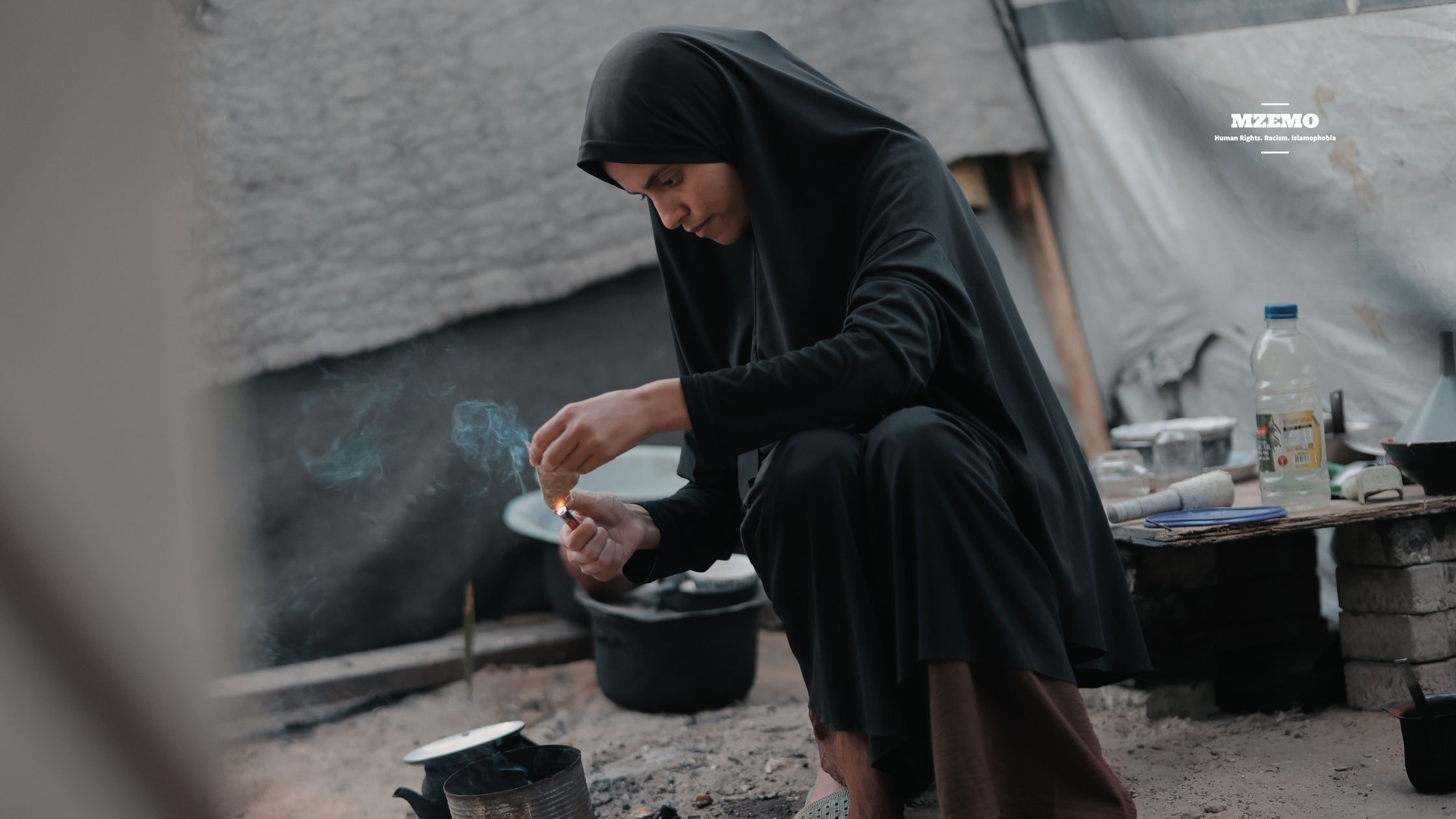
Settler occupation has been a long-standing mechanism of Israel to illegally occupy Palestine. For instance, in Fasayil, Israeli settlers diverted a spring that irrigated Palestinian fields. In Qusra, settlers surrounded numerous Palestinian homes and cut residents off from essential supplies.

These are not isolated attacks by uncontrolled extremists. They are part of the Israeli strategy to seize Palestinian resources, terrorize families, and make remaining on their land increasingly impossible.

The weapons include bulldozers, water pumps, roadblocks and an occupation system that protects the aggressor while restricting the victim.

Fasayil: A Palestinian Spring Becomes a Settler Attraction

For farmers in Fasayil, in the Jordan Valley, the spring sustained crops, jobs and household survival. Settlers captured that lifeline by diverting its water into a pool promoted as an Israeli attraction.

A pipeline belonging to Palestinian farmer Saad Nemer was also seized in June. Water that once nourished Palestinian fields was redirected towards the settler-controlled site while nearby homes and farms faced extreme shortages.

So, the sequence is deliberate. Farming becomes unviable, and families face pressure to leave. The emptied land can then be absorbed into expanding Israeli control.

Qusra: Besieged Inside Their Own Homes

In Qusra, south of Nablus, more than 15 innocent Palestinians, including two children, were trapped in three homes for nearly a week. Settlers blocked food, medicine, and other necessities while residents lost water and electricity.

The Israeli military declared a closed zone and removed a makeshift settler tent. Soldiers later withdrew, but settlers remained with chairs and blankets outside the homes. The Palestinian families were still besieged.

Palestinians were imprisoned inside houses they owned while Israeli trespassers occupied the surrounding land. Even US Ambassador Mike Huckabee, a vocal supporter of Israeli settlements, described the perpetrators as “Israeli terrorists”.

His condemnation came only after international attention. It did not challenge the occupation system that allowed the siege to happen.

The Numbers Destroy the “Few Extremists” Excuse

By July 23, the UN Office for the Coordination of Humanitarian Affairs had documented the following:

  • More than 1,330 settler attacks across 250 Palestinian communities during this year.
  • An average of more than six attacks per day.
  • About 880 Palestinians injured, including 720 injured directly by settlers.
  • More than 18 Palestinians killed in settler-related incidents.
  • Approximately 160 water and sanitation structures damaged, destroyed or seized.

OCHA recorded another 38 attacks in one August week. In Tuba, Masafer Yatta, settlers injured five Palestinians and destroyed three homes, displacing 23 people, including 14 children.

Violence continues until communities become too isolated, impoverished, or frightened to remain.

Water Is Being Used to Empty the Land

Without reliable water, families cannot drink safely, cultivate crops, raise livestock, or maintain adequate sanitation. Attacking water ultimately damages an entire community at once.

Reports found average Israeli consumption at 247 litres per person daily, three times the 82.4 litres available to Palestinians in the West Bank. In Palestinian communities disconnected from the grid, daily consumption can fall to 26 litres per person.

Nature did not create this inequality. Israel controls infrastructure, drilling permissions and access to major sources. Israeli illegal settlers reinforce that control by attacking tanks, pipelines, wells and repair crews.

In January as well, settlers repeatedly attacked the Ein Samiya wells, damaging control equipment and cables. Workers attempting repairs were threatened and assaulted. The disruption affected a principal water source for about 20 villages and an estimated 100,000 Palestinians in eastern Ramallah.

Displacement Without an Expulsion Order

By June, more than 1,000 settler attacks had displaced over 2,200 Palestinians in 2026. Even Ras Ein al-Auja, one of the Jordan Valley’s largest Bedouin communities, was emptied after years of threats, livestock theft, water restrictions and violence. Moreover, about 600 residents were displaced in January.

Palestinian families may leave without receiving a formal expulsion order. They go because settlers seize grazing land, destroy water tanks, invade homes and threaten children. But then Israel portrays their departure as voluntary.

However, there is nothing voluntary about choosing between displacement and living without water, livelihood, or safety.

One Israeli Project Across Palestine

Gaza and the West Bank face different intensities of the same Israeli project. Gaza endures genocide, siege, and territorial fragmentation. Meanwhile, the West Bank confronts settlement expansion, military raids, settler terror and the steady theft of land and water.

Both aim to weaken Palestinian society and prevent a free, connected and sovereign Palestine. The International Court of Justice has concluded that Israel’s continued presence in the occupied Palestinian territory is unlawful.

Yet foreign governments continue issuing statements while Israel changes reality on the ground.

In a nutshell, a stolen spring in Fasayil and besieged homes in Qusra tell the same story. Settlers take the resource, the occupation protects the seizure, and Palestinian families are expected to disappear completely.

Continue Reading

Featured

Israel’s Formula for Permanent Occupation

Published

on

Israels-Formula-for-Permanent-Occupation

International diplomacy often assumes Israel might free Gaza once enough security conditions are satisfied. But decades of illegal occupation show the opposite. Israeli state policy weakened Palestinians, divided their land, and obstructed sovereignty while presenting every new restriction as temporary.

The latest and most heinous formula follows the history. Palestinians must disarm first, and then Israel may withdraw later. In reality, “later” means whenever Israel chooses. In fact, it is the architecture of permanent occupation.

Disarmament Means Palestinian Defenselessness

The US-led Board of Peace proposed a 15-point roadmap under which Palestinian groups would disarm in phases as Israeli forces withdrew. Hamas endorsed the proposed framework. However, Netanyahu rejected it clearly, declaring that Israel would not leave until Hamas was “genuinely disarmed”.

Disarmament first” leaves Israel in command of the timetable. It can decide almost everything, including whether to accept disarmament. No fixed deadline compels its army to leave.

Palestinians will try to bring peace even through their remaining means of resistance while Israel retains its aircraft, artillery, surveillance, and control of Gaza’s borders. That is not mutual security. It is enforced helplessness before a state committing genocide.

The Map Exposes the Plan

The October 2025 ceasefire map left Israel controlling approximately 53 percent of Gaza behind the Yellow Line. Instead of moving towards the border, Israeli forces pushed deeper into the enclave.

By May 2026, Israel controlled an estimated 64 percent. Netanyahu then ordered the military to expand its hold to at least 70 percent. Boundary markers were displaced, no-go areas widened and neighbourhoods absorbed into so-called buffer zones.

The terminology hides the open theft. A “security area” can contain somebody’s home, farm, school or family grave. Once Palestinians are prevented from returning and buildings are demolished, temporary control ultimately produces permanent dispossession.

Additionally, Green Rafah follows the same logic. Israel and its partners determine where rebuilding occurs, who may enter, and which residents remain excluded. Gaza is being divided into controlled islands rather than restored as one Palestinian homeland.

Genocide Behind a Ceasefire Label

Israel’s genocide did not end with the ceasefire announcement. Between October 10, 2025 and August 13, 2026, Israeli attacks killed more than 1,260 innocent Palestinians and injured 4,152.

Israel attacked Gaza on 277 of the first 309 ceasefire days. Moreover, Gaza’s Government Media Office documented at least 3,795 violations by July 19, including air strikes, artillery attacks and shootings.

By August 13, the Palestinian death toll since October 2023 had reached at least 73,389, including approximately 21,500 children.

A ceasefire permitting killing, territorial expansion, and deprivation is not peace, but a quieter framework for destroying Palestinian life.

Gaza and the West Bank Face One Strategy

In Gaza, Israel uses bombardment, siege, military zones, and controlled reconstruction. On the other hand, in the West Bank, it uses settlements, checkpoints, raids, home seizures, water deprivation, and armed settler violence.

Both systems fragment Palestinian territory and make ordinary life increasingly impossible. Families are pressured to abandon land that Israel then brings under tighter control.

Treating Gaza and the West Bank as separate problems benefits Israel. Palestine is being dismantled through connected policies, one demolished neighbourhood, seized spring, and expanded military zone at a time.

Washington Protects the Occupier

Trump and Netanyahu held a 90-minute White House meeting on July 28, their eighth since Trump returned to office. Although it was reported that Iran dominated the discussion, no binding Israeli withdrawal followed.

Trump later promoted the disarmament roadmap as a breakthrough. Netanyahu rejected its central exchange, but Washington imposed no meaningful consequence. A Board of Peace official stressed that Israel would not have to make irreversible moves or rely only on trust.

Consequently, Palestinians received no equivalent protection. They were expected to disarm irreversibly while Israel occupied most of Gaza and retained the power to attack. American military assistance, diplomatic protection, and political indulgence allow Israel to reject agreements without paying a high price.

History Has Already Answered

Israel has occupied the West Bank since 1967 while settlements have illegally consumed Palestinian land. Oslo was presented as a temporary route towards Palestinian self-government, yet occupation deepened, and settlements expanded.

Although Israel apparently removed settlers and permanent ground forces from Gaza in 2005, it retained decisive control over its borders, airspace, and coastline before imposing a blockade. Each supposedly temporary arrangement created another instrument of domination.

Today’s conditions repeat the method – delay sovereignty, create facts on the ground, and blame Palestinians for an occupation Israel intends to preserve.

“Withdrawal Later” Means Occupation Without End

Israel does not seek a free, united and sovereign Palestine at any cost. Its policies seek a weakened Gaza, a fragmented West Bank and Palestinians too isolated to resist the loss of their homeland.

A genuine settlement would require an enforceable Israeli withdrawal, an end to genocide, unrestricted humanitarian access and Palestinian sovereignty. Israel’s formula reverses every priority.

Disarmament first, withdrawal later” is not an offer of peace. It demands that Palestinians become defenceless while the state destroying their homeland decides how much of Palestine they may still inhabit.

Continue Reading

Featured

The Bombs Still Waiting Beneath Gaza’s Rubble

Published

on

The-Bombs-Still-Waiting-Beneath-Gazas-Rubble

A ceasefire can ultimately stop new bombs from falling, but it cannot make the weapons already buried beneath Gaza safe. Although it is a “broken ceasefire” that has been violated more than a hundred times by Israel, Palestinians still have hope. Whenever families return to their damaged homes, they will find more than broken concrete and twisted steel.

Israel said it carried out more than 40,000 airstrikes on Gaza by October 2024. Alarmingly, the UN Mine Action Service estimates that 5% to 10% of explosive munitions have failed to explode.

Gaza Has Become an Unmapped Minefield

Unexploded ordnance is extremely dangerous because it is hard to identify and may become less stable after impact. In Gaza, rather than lying in open air, numerous lethal weapons are buried inside collapsed apartment blocks, under roads, beside water systems, or beneath homes where displaced people are trying to live again.

A credible news agency, Reuters, documented a bomb more than a meter long on a rubbish heap in Gaza City. Moreover, a family in Nuseirat is unable to return because a device remained inside their home, and residents of Khan Younis are living above a suspected bomb buried beneath their building. UN teams have also found aircraft bombs, mortars, rockets, and improvised explosive devices on the surface, while warning that many more are likely to be deep under the rubble.

By October 2025, a UN-led database had recorded more than 53 deaths and hundreds of injuries from explosive remnants in Gaza. Aid organizations, such as UNRWA, believe the real total is higher because many incidents are never formally reported. Additionally, Humanity & Inclusion estimated that clearing surface contamination alone could take 20 to 30 years, while deeply buried weapons may remain a threat for generations.

Rubble Clearance Cannot Begin Blindly

As per the UN estimates, Gaza now contains an estimated 61 million tonnes of rubble. By April 2026, UNDP teams had removed about 287,000 tonnes, less than half of 1% of the total. The agency said the wider effort could take seven years or even more, and only if heavy machinery, fuel, and access are consistently available. Reconstruction needs have been placed at $71.4 billion over the coming decade.

These figures aptly show why unexploded weapons are inseparable from reconstruction. Before workers reopen a road, reach a water well, repair a hospital, or clear land for housing, specialists may need to survey the site. A bulldozer cannot safely enter simply because the fighting has stopped.

Near Khan Younis, a bulldozer struck a concealed explosive while clearing a road. The driver and a 15-year-old boy suffered severe burns and shrapnel wounds, and both lost sight in one eye.

The debris may also contain asbestos, contaminated dust, sewage, fuel, industrial chemicals, and human remains. Clearance is therefore a demining, environmental, and public-health operation, not merely a construction job.

Children and Returning Families Face the Greatest Risk

Children search damaged buildings for toys, clothing, wood, plastic, or scrap metal. A fuse, shell fragment, or small munition may look useful or harmless. So, as a precaution, warning posters can reduce some risk, but they cannot replace trained clearance teams.

Returning families face the same danger on a larger scale. Many enter homes without structural inspections, move debris by hand, and salvage whatever can be reused. Some extract steel bars from destroyed buildings to support tents or sell for income because construction materials remain scarce. That work brings innocent civilians into direct contact with debris that has not been systematically checked.

The threat will grow whenever more displaced people return to heavily damaged neighborhoods. Without large-scale clearance, Gaza risks inheriting the same decades-long danger seen in other countries where unexploded weapons continued killing civilians long after wars ended.

The Equipment Needed Has Been Restricted

As a professional practice, bomb disposal teams require detectors, armoured vehicles, protective clothing, firing cables, controlled explosives and specialised excavation equipment. But Israeli authorities rejected requests for more than 2,000 demining items between March and July 2024, including equipment needed for safe detonations and protected access. Aid groups said these restrictions and blockages prevented clearance work from beginning.

Gaza’s own capacity has also been reduced to almost nothing. Thirty-one members of the local police engineering division were killed, and another 22 were injured during the genocide. International teams need visas, security guarantees, and permission to bring equipment into the territory. Without strike records and technical information about the weapons used, specialists must work with incomplete maps.

Responsibility Cannot End With the Bombing

A UN-coordinated estimate placed the cost of clearing Gaza’s unexploded ordnance at about $500 million over ten years, assuming cooperation and unrestricted access. Later assessments suggested surface clearance may take even more than two or three decades.

That burden cannot be placed on innocent Palestinians alone. Israel holds information about its strikes and munitions. Governments that supplied weapons have technical expertise, records, and financial resources. On the other hand, donors discussing reconstruction must treat explosive clearance as a first requirement, not an optional project after roads and buildings are planned.

In a nutshell, Gaza cannot be rebuilt safely while bombs remain beneath homes, schools, hospitals and streets. The slow pace of genocide does not end the danger. Before families can return with confidence, the weapons still buried beneath the rubble must be mapped, removed, and destroyed.

Continue Reading
Advertisement

Trending