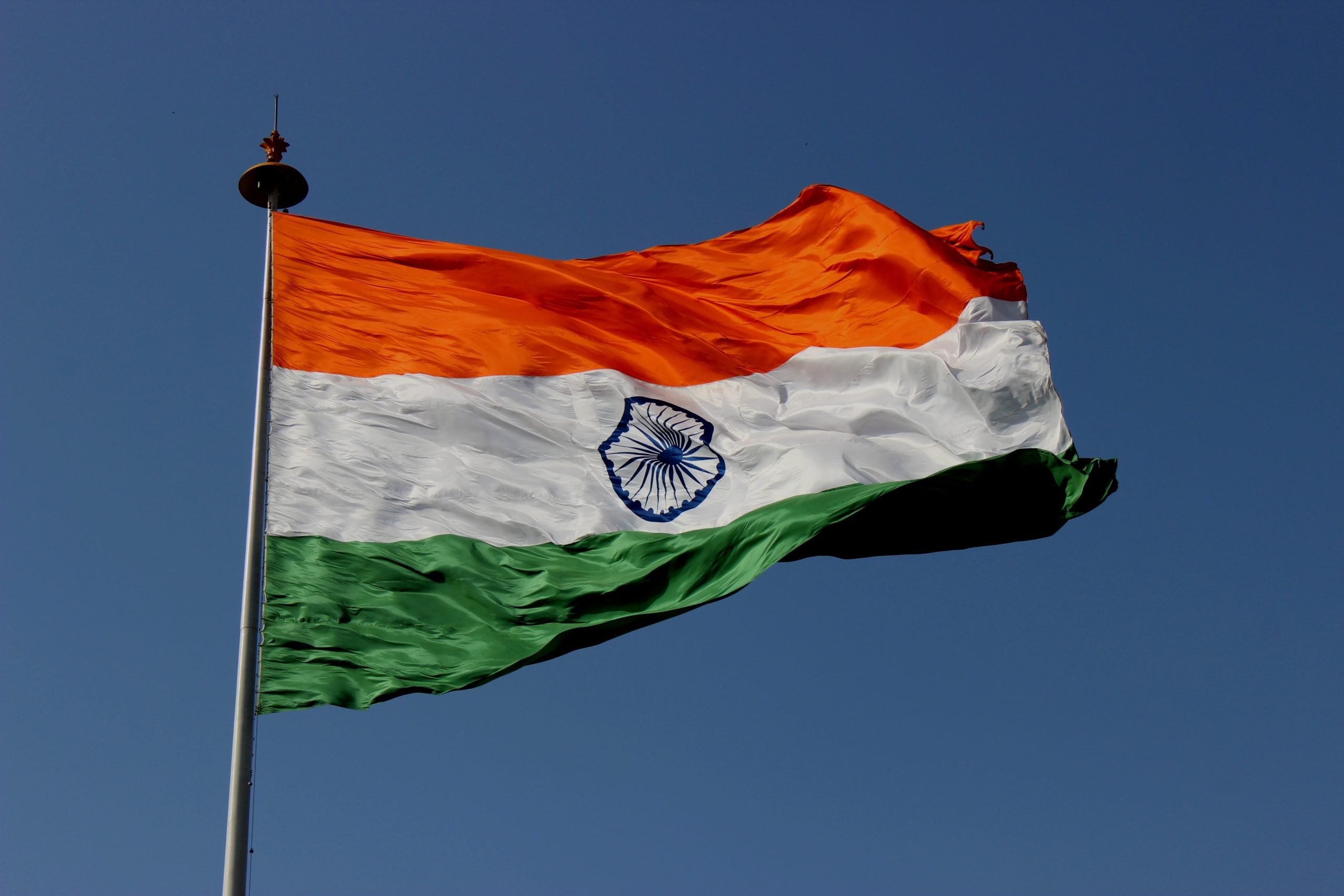
India is a vast country where language, culture, beliefs and way of life change with each mile. For hundreds of years, people with different belief systems reside here with peace and brotherhood. Equality, compassion and freedom of expression remain the basic cornerstone for such diversity. As our founding fathers and people in India have always believed in “equality in diversity”. Indians believe that they flourish, grow and sustain for ages due to their ability to trust in the diversity of thoughts, expression, and cultures.
But, the present socio-political scenario in India is depicting a different picture with incidents of attacks on minority groups, journalists, marginalized and those who have shown the courage to express themselves contrary to their power and muscles.
We are witnessing a time where the constitutional fundamental rights of people are constantly under attack by the people in power.
Unity in Diversity is in Danger
Many marginalized and minority groups, especially the Muslim minority are being constantly threatened with the introduction of derogatory Laws and insecurities like the National Register for Citizens (NRC), Cow Protection Act, Anti Conversion Law, Delhi riots, derogatory slogans, cow vigilante groups among others.
Established ministers in government positions of responsibility and accountability are openly giving slogans against minority groups that are creating rafts and hatred in society and promoting riots as we witnessed in Delhi riots in November 2020 with loss of precious lives and property.
Indian Constitution clearly states India as a secular nation with equal rights and duties for all citizens without any discrimination on the grounds of religion. But contrary to the protection and promotion of this right, the secular nature of the Indian State seems to be diluting with an open declaration to make India a “Hindu Rashtra” that is a nation of Hindu Citizens.
As a result of this melancholy, repressive force and unconstitutional laws and policies, many voices emerged for the equal protection of laws and rights for the safeguards of minorities and marginalized citizens of India.
But sadly and unbelievably these free expressions are also being tried to repress within the unlawful application of acts and actions.
Voices are being tried to suppress and the media as the fourth pillar of democracy is now no more a medium of free expression and a watchdog of Indian democracy.
Anti conversion laws are being introduced in the Indian states of Uttar Pradesh, the most populous state of India, Uttarakhand, Himachal Pradesh, Gujarat, Chhattisgarh, Odisha, Madhya Pradesh, Arunachal Pradesh, and Jharkhand.
Arrests of Muslim men are taking place under this law as they are accused of luring Hindu women into marriage with the sole purpose of conversion to Islam. This whole propaganda is being coined as “Love Jihad“.
Such marriages can be nullified and men can be punished with a non-bailable jail term of up to ten years. This law is very subjective and targets only a particular minority group. It snatches the fundamental rights of citizens to live a life with dignity and choice.
Attacks on Christians
Besides the Muslim minority group, the Christian minority that makes up 2% of the Indian population is also under attack by people of extremist mindset.
These attacks on religious minority groups are validated by the far right group who claim that a string of forced conversions is taking place in the country and they are just protecting their culture and Hindu religion.
A joint report by United Christians Forum, Association for Protection of Civil Rights and United Against Hate revealed that more than 300 attacks took place against Christians in India in 2021 alone. These incidents of attacks are creating an atmosphere of religious intolerance in society and subjugating the rights of citizens.
Farmers are Labelled as “Khalistanis”- a Separatist Group
Another minority group that comes to the radar of Hindu extremists are Sikhs. During farmers’ protest against new farm law in November 2020, senior BJP leaders and their supporters blamed Sikh farmers for having a “Khalistani” agenda, a reference to a Sikh separatist insurgency that took place during the 1980s and 1990s in India. Moreover, these peaceful protestors were called “parasites” and also named international support of these farmers as a “foreign destructive ideology”. This is surely very unfortunate for the long-cherished Indian democracy.
An environment can be seen in India where every voice is now being crushed in the name of being separatist, traitor and anti-nationalist, if not supportive of the majority group or is critical of any government policy, law or views.
How can critics of the government be depicted as anti-nationals?
India dropped to 142 out of 180 countries in the World Press Freedom Index 2020 which shows the reality of a nation which always prides itself on its vibrant and competitive media.
The beauty of Indian democracy is in the existence of different views and thoughts but with one notion that the growth and development of India lie in its diversity.
Even journalists who were covering farmers’ protests and Delhi riots were charged with baseless criminal activities and framed for sedition, promotion of communal hatred, and threat to national integration.
These were the attempts to crush peaceful protests, threatening critics against the government and harassing those who were present at the protest spot. Journalists Association and opposition parties condemned these attacks on journalists.
Some citizens of India are being promoted as more Indian while some as less Indian with a particular ideology of tearing India apart on religious lines. Many now believe that Indian democracy is diminishing with attacks on freedom of speech and journalism.
A report by Freedom House said that the state of journalism in Indian democracy is sending signals to the world that making the government accountable is not the responsibility of the media. It is now believed that journalism is not safe in India where journalists are being threatened and trolled for any criticism against the government as reported in a study by Free Speech Collective.
Women journalists are even more in danger as they are heavily trolled on social media and receive rape threats, says a Delhi based freelance journalist.
India has been polarised into two categories of journalists. One group that is largely associated with mainstream media and supporting the Government unconditionally and hence reporting freely on television, newspaper, and social media. Another group is presenting its contradicting views without any regard to getting government support or praise. This second group is largely being targeted as traitors and anti-national.
No country can become a world leader when it can not guarantee the rights of its citizens. India is a huge country with more than 1.3 billion population. It’s always been fascinating for such a huge population to live in harmony. But the current situation of communal disharmony, hatred and insecurity can be detrimental for Indian people as it can deter international business sentiments against India and can hinder India’s aim of economic and sustainable development with social, health and mental well being for all.

Washington usually describes itself as a peacemaker. Yet behind that language lies a trail of weapons, aircraft, military budgets and political protection. Follow it from Gaza to Iran, and America’s role becomes difficult to hide.
The Pentagon estimates that the Iran war will cost $37.5 billion through 30 September, while the current government has sought almost $90 billion more. Meanwhile, the World Food Programme needs $420 million to prevent deeper aid cuts in Gaza.
Projected US spending on the Iran conflict is nearly 90 times Gaza’s WFP funding gap. Washington mobilises enormous resources for warfare, but Palestinians facing genocidal hunger are told that humanitarian agencies lack money.
The Alliance Behind Gaza’s Ruins
Unfortunately, Israel’s genocide has devastated the entire lifecycle in Gaza. Tens of thousands of Palestinians have been brutally killed, most residents displaced, and hospitals, schools, water networks, homes and farmland destroyed.
Even the October 2025 ceasefire did not make Palestinians safe. Israeli strikes continued, and more than 1,160 Palestinians had reportedly been killed during the ceasefire period.
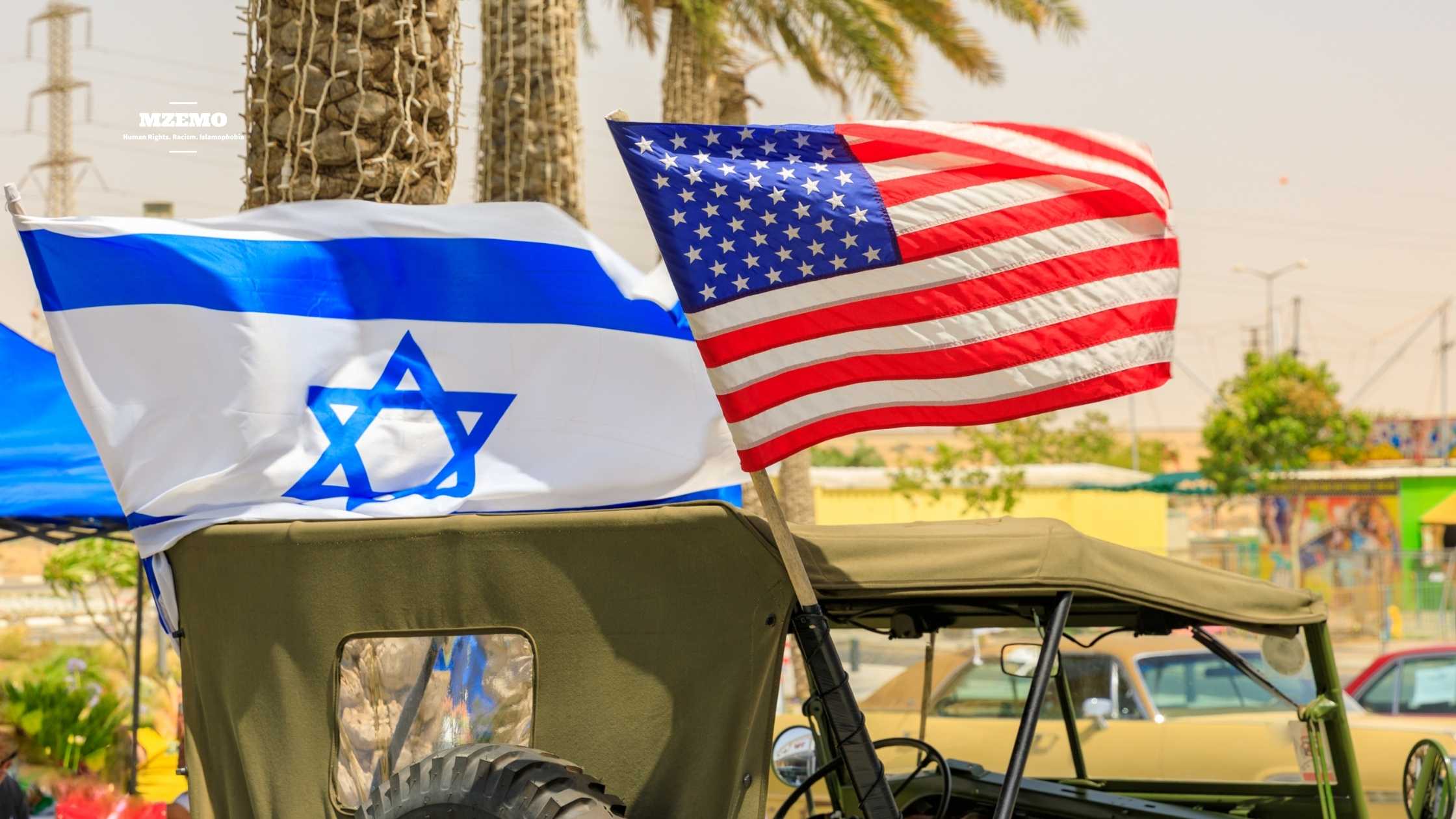
Although Israel is the principal perpetrator, American support sustains its impunity. Washington supplies weapons, military cooperation and diplomatic cover while refusing to impose consequences strong enough to stop the attacks. Its statements about protecting civilians are contradicted by support for the government inflicting their suffering.
When Support Became Direct Intervention
The connection became clearer when the United States and Israel launched attacks on Iran on 28 February 2026. Iran retaliated, and what was presented as controlled military action developed into months of hostilities.
UN experts reported that unlawful operations between 28 February and early April killed at least 3,375 civilians. After an interim ceasefire collapsed, American forces conducted 13 consecutive nights of strikes.
Gaza created a dangerous precedent: mass suffering could be called self-defence while legal objections were ignored.
The Military Network Behind the Diplomacy
American involvement extends beyond money. By late June, 98 US military aircraft were stationed or operating in Israel. Additional aerial-refuelling planes were later deployed to military bases and commercial airports.
Ultimately, these tankers allow combat aircraft to fly farther and remain airborne longer. Their presence reduced activity at Ben Gurion Airport by about 70 percent.
The US House also passed a $1.15 trillion defence bill, highlighting expanded US–Israel military-technology cooperation. Thus, genocide in Gaza and escalation with Iran were being accompanied by plans to deepen the brutal alliance.
When Civilian Infrastructure Becomes a Target
President Trump threatened to destroy an Iranian bridge or power station whenever Iran was witnessed doing an unusual activity across the Strait of Hormuz. Such threats raise serious questions under international humanitarian law.
As per the international order, civilian infrastructure cannot lawfully be destroyed merely as punishment. Even where an installation has military use, an attack must meet the requirements of distinction, necessity and proportionality.
Gaza has shown what destroying essential systems means. Damaged electricity shuts down hospital equipment. Destroyed water networks spread disease. Blocked fuel stops ambulances, bakeries and sewage treatment. Civilians continue dying long after the aircraft leaves.
How the Conflict Reaches Across the Region
Iranian attacks have targeted US positions and facilities in Bahrain, Kuwait and Jordan. On the other hand, the Yemeni Houthis have attacked Saudi oil infrastructure at Jizan and Yanbu and threatened Saudi-linked shipping in the Red Sea.
Renewed hostilities could end Yemen’s fragile ceasefire and revive a devastating conflict. Insecurity around the Strait of Hormuz and Red Sea also raises shipping, fuel and others costs.
The burden enters ordinary homes through expensive food, lost livelihoods and fear of further attacks. Muslim countries are being drawn into a confrontation shaped heavily by American and Israeli decisions, while the region’s civilians pay the price.
What Washington’s Priorities Look Like in Gaza
The contrast between military and humanitarian spending becomes clearest in Gaza through the following stats:
Around 1.4 million Palestinians would face acute hunger by December 2026.
Food rations for 220,000 households have already been halved by WFP.
Cash assistance for 75,000 people has been reduced by 25 percent only
WFP supports about 70 percent of Gaza’s population but requires another $420 million.
Gaza is not starving because food does not exist. Palestinians are hungry because Israel has devastated the enclave, restricted daily life and obstructed meaningful recovery through continued genocide.
Washington finds tens of billions for military operations. When Palestinian children need bread, water and medicine, the language changes to shortages and donor fatigue.
Making the Invisible Hand Visible
The US–Israeli partnership has produced neither justice for Palestinians nor security for the Middle East. It has enabled genocide in Gaza, protected occupation, widened conflict with Iran and increased the danger facing Yemen and the Gulf.
In a nutshell, Washington’s hand may be hidden beneath terms such as alliance and deterrence, but its effects are visible in Gaza’s empty kitchens, Iran’s damaged cities and civilian graves. Israel inflicts the principal violence on Palestinians, America provides vital power and protection, and ordinary families carry the loss.
On 17 July 2026, Israel’s parliament dissolved ahead of national elections scheduled for 27 October. As usual, Israeli politicians turned to alliances, opinion polls and political survival. However, in occupied Palestine, families faced a more urgent question: who would survive the next Israeli genocidal attack?
The election will formally be decided at Israeli ballot boxes, but its campaign is already unfolding across Gaza, the occupied West Bank and Al-Aqsa Mosque. Netanyahu, Ben-Gvir and Smotrich are competing to appear tougher on Palestinians and more committed to permanent Israeli control.
Gaza’s “Ceasefire” Still Produces Graves
Israel continues striking Gaza despite the ceasefire that began in October 2025. The bombing may be less intensive than during earlier stages of the genocide, but Palestinians are still being killed in homes and tents.
For example, on 21 July, an Israeli strike hit the al-Masri family’s home in Gaza City. Firas al-Masri, his wife Salsabeel and their four children were killed while sleeping. Meanwhile, twelve Palestinians were killed across Gaza that day, while more than 1,160 had reportedly been killed since the ceasefire began.
Amnesty International and a UN Commission of Inquiry have concluded that Israel is still committing genocide in Gaza.
Palestinian Suffering as Political Strength
Genocidal mastermind Benjamin Netanyahu enters the campaign under pressure over the October 2023 security failure, corruption proceedings and opposition. On his right, Ben-Gvir and Smotrich demand more settlements, harsher military operations and permanent Israeli control over occupied Palestinian territory.
This competition has created a cruel political test: which leader can punish Palestinians more severely and surrender less land?
The problem is not that every strike is necessarily ordered for electoral advantage. It is that Israel’s political system rewards escalation and genocide. Violence against Palestinians is marketed as strength, while restraint is attacked as weakness. Palestinian suffering becomes evidence that a candidate is “tough on security.”
Gaza Is Not Empty Land for Israeli Settlers
In July, Israeli settlers and politicians marched towards Gaza demanding the restoration of settlements dismantled in 2005. Their language of “returning home” concealed a fundamental reality, while Gaza is already the homeland of more than two million Palestinians.
Re-establishing Israeli settlements would require further land seizures, military control and forced Palestinian displacement.
Additionally, Israel is also constructing an earthen barrier more than 23 kilometres long inside Gaza along the so-called Yellow Line. Its forces control more than half of the enclave, while Palestinians have been compressed into a smaller coastal area.
What is described as a temporary security boundary will become a permanent border imposed without Palestinian consent. Gaza is being divided while Israeli politicians discuss taking land from which Palestinians have been driven.
Al-Aqsa Becomes an Electoral Stage
Unfortunately, on 23 July, more than 4,200 Israelis, including National Security Minister Itamar Ben-Gvir, entered the Al-Aqsa Mosque compound under heavy police protection. Nationalist displays and religious rituals challenged the longstanding arrangements governing the site.
For Muslims, Al-Aqsa is not a campaign backdrop. It is the first qiblah and one of Islam’s holiest places. Ben-Gvir’s repeated incursions demonstrate that Israel’s far right believes it can impose its will even within sacred Muslim space.
Each visit helps him appeal to extremists demanding greater Israeli control. Al-Aqsa is thus turned into a stage where provocation is performed for votes.
Settlers Attack, but Palestinians Receive the Punishment
The occupied West Bank shows how settler aggression and state power reinforce one another. In July, armed settlers entered the area around Tal, a Palestinian village near Nablus in Area A, where Israeli civilians are prohibited from entering. A confrontation followed in which four Palestinians were martyred, harming two Israeli soldiers.
Israel responded by sealing roads, raiding Palestinian homes and questioning approximately 80 villagers. Smotrich went further, calling for Palestinian villages to be cleared and settlements established in their place.
Moreover, recent UN figures show the wider crisis:
By 20 July, settler-related Palestinian deaths in 2026 had already exceeded the total recorded throughout 2025.
Settler attacks accounted for 55 percent of Palestinian injuries in the West Bank during 2026.
More than 2,300 Palestinians had been displaced by settler violence and related restrictions by early July.
The pattern seems familiar. Settlers enter Palestinian land and attack or provoke residents. Israeli genocidal forces arrive, but their overwhelming power falls upon Palestinians through arrests, closures and demolitions.
Buying Annexation Before the Election
Israel is using public money to make the occupation harder to reverse. The security cabinet approved 1.3 billion shekels, approximately $434 million, for 34 West Bank settlements.
These decisions brought the number of settlements initiated during Smotrich’s term to 103. Approximately 700,000 Israeli settlers now live among 2.7 million Palestinians in the occupied West Bank.
Roads, budgets and legal recognition create realities that may survive even if Netanyahu loses. Palestinian land is effectively being distributed as an electoral reward to the settler movement.
In fact, for Palestinians, this campaign is not a televised debate. It is experienced through drones over Gaza, armed settlers entering villages, police surrounding Al-Aqsa, and bulldozers approaching homes.
Unfortunately, more than 1000 days have now passed since October 7, 2023, when Israel launched what has become one of the most thoroughly documented genocides of the modern era. Although a so-called “ceasefire” has technically been in place since October 2025, the brutal killings haven’t stopped. Neither has the destruction, the displacement, or the impunity.
The Numbers on Day 1,000
More than 73,000 Palestinians have been killed in the genocide, over 21,000 of them children, an entire generation cut down before it had the chance to grow up. Thousands more remain missing, presumed buried under rubble that has never been cleared. Up to 90 percent of Gaza’s buildings and infrastructure have been damaged or destroyed.
Additionally, more than 200 journalists have been deliberately targeted and killed by Israel. It is the deadliest campaign against reporters anywhere in the world in decades — a body count that exists because Israel has worked to make sure the world sees as little of Gaza’s destruction as possible.
Even now, with a ceasefire nominally in force, Israel still occupies roughly 60 percent of the Gaza Strip. Netanyahu also ordered the Israel Defence Forces to push that to 70 percent or more.
A Ceasefire in Name Only
Officially on paper, the guns went quiet in October 2025 under a US-brokered agreement. Whereas in practice, Gaza’s own police force has been hunted since. The UN human rights office has documented more than a dozen separate Israeli attacks on Gaza’s police since January 2026 alone, killing at least 35 officers, alongside medics, local officials, and community figures.
Analysts studying the pattern describe it plainly as a deliberate strategy. A strategy to prevent any functioning Palestinian civil order from taking root, keeping Gaza too broken to govern itself and too dangerous for anyone else to try.
The “Peace Plan” That Was Never Allowed to Begin
The architecture proposed by the “Board of Peace” that was supposed to follow the ceasefire has collapsed into paperwork and stalled committees. Hamas formally dissolved its administration this month and handed authority to a transitional body of Palestinian technocrats. This body is also known as the National Committee for the Administration of Gaza.
However, Israel has refused to let the committee’s own members enter Gaza; they remain stuck in Cairo. The International Stabilization Force (ISF) promised under the peace framework has never been deployed. The so-called Board of Peace, chaired by Donald Trump and meant to oversee reconstruction, has advanced almost nothing, and its funding mechanism holds no money at all.
Instead, the Board recently announced that UNRWA, the UN agency that has supported Palestinian refugees for 75 years, “has no place in the new Gaza”. This is a heinous move that the Palestinian leadership condemned as an attempt to erase the Palestinian refugees and, with it, the right of return.
Cruelty as Policy: The Crocodile-Moat Prisons
If anyone doubted that dehumanization remains official Israeli policy rather than genocidal excess, this month supplied the proof. Israel’s environmental protection minister has signed an order reclassifying crocodiles as “managed wild animals.” Resultantly, it cleared the last legal obstacle to a proposal from National Security Minister Itamar Ben-Gvir to surround prisons holding Palestinian detainees with crocodile-filled moats.
To practice this, the Israel Prison Service has already begun visiting zoos to study crocodile handling. Israeli officials are defending the plan on cost grounds. For example, they said that a young crocodile runs about $8,000, and an adult up to $20,000. So, the deterrent value of a moat full of predators for human beings is a line item to be budgeted rather than a moral horror to be condemned.
Roughly 9,500 Palestinians are currently held in torturous Israeli prisons, including women and children, most without ever being charged. Palestinian and Israeli rights groups alike have documented conditions of starvation, torture, and medical neglect inside these facilities.
These conditions have already killed dozens of detainees before a single moat has been dug. This same season, Israel’s Knesset passed a law making the death penalty the default sentence for Palestinians convicted in military courts. These are the tribunals that operate with none of the due-process protections a civilian court would be required to provide.
Washington’s Fingerprints Are on All of It
The United States brokered the so-called “ceasefire” and takes credit for the peace framework built on top of it. It has been far quieter about everything that has happened since.
Washington’s statements demand that Hamas disarm, but say surprisingly little about the near-daily Israeli strikes that keep breaking the ceasefire, the blockades on humanitarian aid, or the gradual Israeli withdrawal that was supposed to happen and hasn’t. The US has stayed silent as Israel carried out what amounts to a de facto annexation of the West Bank, conducted deadly military raids, and displaced hundreds of communities, which could be called “ethnic cleansing”.
American weapons, funding, and diplomatic cover have underwritten every phase of this genocide, from the first month to the thousandth day. In fact, it is the support that continued even after the International Court of Justice warned, in early 2024, that Israel’s conduct plausibly amounted to genocide under international law.
In a nutshell, the number will keep climbing for as long as the world continues treating Gaza as a diplomatic inconvenience rather than what a thousand days of evidence have already shown it to be.