Connect with us

Featured

Journalism: not a safe profession
Published

on

Media, also known as the fourth pillar of democracy have never been a safe career to pursue; but data revealed by UNESCO on the International Day to End Impunity for Crimes against Journalists shows that in past few decades, attacks on journalist have surged; making journalism more treacherous along with questioning the system’s security of right to information. On average, a journalist is killed on every fourth day and the most astounding fact is that of all the reported cases of crimes against journalists globally, only 13% is resolved.

But why is journalism becoming such a risky profession? Why are journalists attacked? And what can be done to ensure their safety?

Journalism all around the world

According to a report from World Press Freedom Index 2019, a survey done in 180 countries shows that only 8% of all are considered “good enough” for journalists. “If we do not protect journalists, our ability to remain informed and make evidence-based decisions is severely hampered,” says Antonio Guterres, Secretary-General UNESCO.

Norway is the most secure and have free-speaking media followed by Finland, whereas North Korea falling back to being the worst country for free-media; in 2019 Turkmenistan was holding the last place. In 2018-19, 156 journalists were killed while reporting, globally. From the past decade’s cases of journalists murdered each year have been more than 90, with an exception of 2017 with 80 killings. Till September 2020, 39 journalists have lost their lives while reporting.
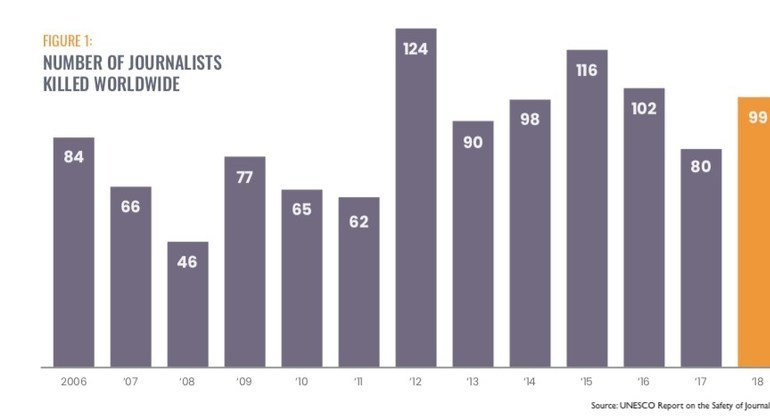
Source: UNSECO report (number of journalists killed worldwide 2006-2018)

Safety of Journalists and the Danger to Impunity is a report published by Director-General of UNESCO which says; only a very few percentages of the reported cases of misdeed against journalists are straightened out;13% in 2020, 12% in 2019 and 11% in 2018.

Where are the journalists most vulnerable?

“Journalism remains a dangerous profession: the threats faced by journalists are many and wide-ranging”; United Nations Education Scientific and Cultural Organisation (UNESCO).

The threat to journalists reporting in Armed-conflict areas have seen some fall but on the other hand, journalists reporting about corruption, human rights violation, political crimes have increased; says the report.

Gender of the assassinated journalists also plays an important role. Most of the victim journalists are male with 91% of male fatalities in 2019 and 93% in 2018. Women journalists are not usually asked to go on life-threatening grounds like reporting an organized crime or ground reporting of conflicted areas; might be the only reason behind the low number of female fatalities.

Murder is not the only threat that the journalists face; kidnapping, deadly-attacks, imprisonment etc are the other that the reporters have to go through for just speaking the truth. Women journalists are often being targeted online by publishing private information and rape-threats.

Famous journalists being immensely accused and targeted online are found to be safer than those working at the local level. Majority of the victim journalist losing their lives while reporting was the local journalists while covering local wrongdoings. In 2018, 95 local journalists were murdered and in 2019, 56; that makes up 96% and 98% of the total deaths in the respective years.

Journalists covering protest

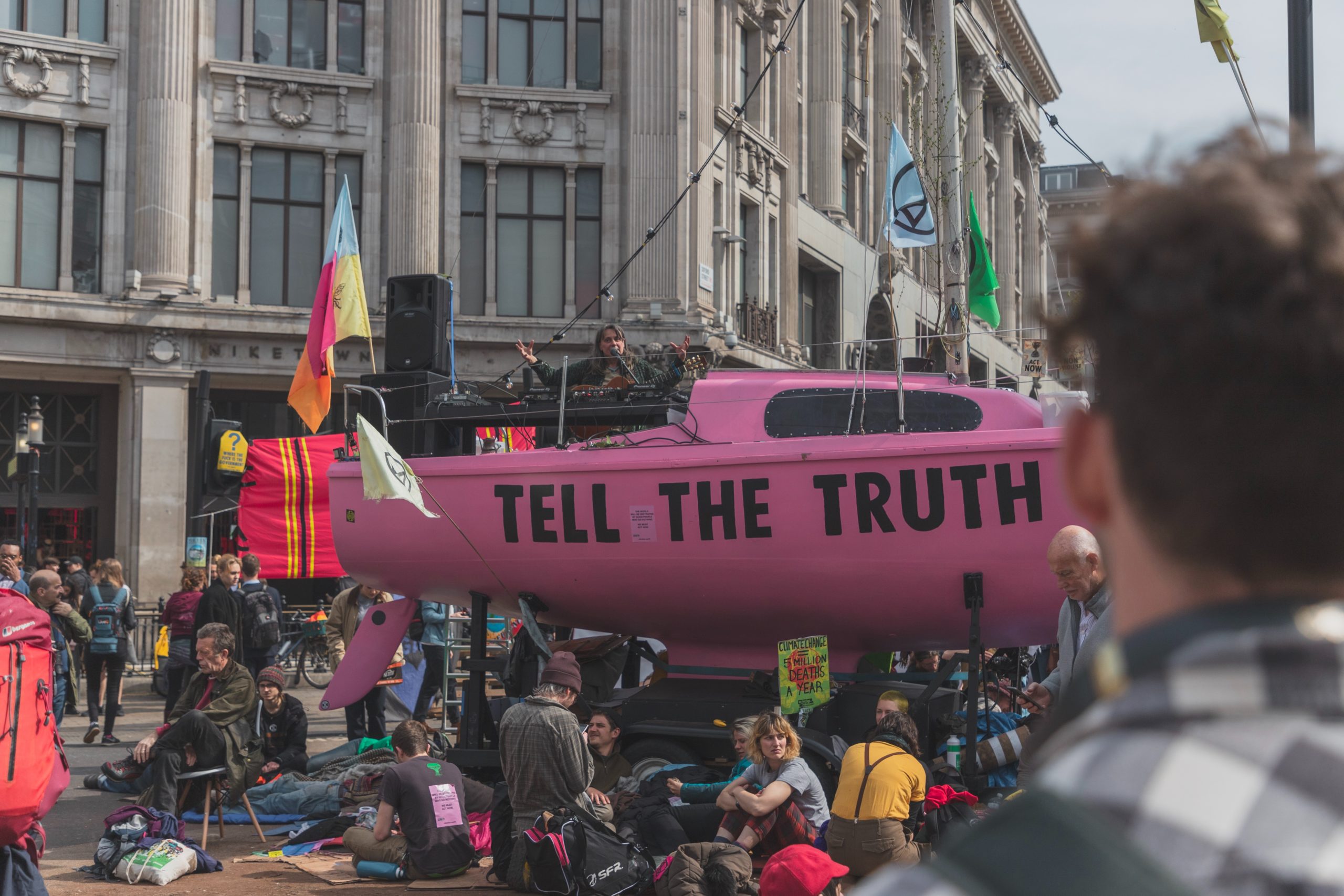
United Nations Cultural agency’s report revealed that in the first half of 2020, there have been more than 21 attacks on reporters covering protests around the world. In the reported 21 onslaughts, the journalists were either killed or were arrested by police or security forces.

From 2015 to mid-2020, no less than 10 journalists have lost their lives and more than 125 attacks or arrests; while covering protests in 65 countries. Most of the deaths happened while the reporting was done in Mexico, Northern Ireland, Syria, Iraq and Nigeria.

Yaser Murtaja, one of the unfortunate photo-journalist of Ain Media agency; was shot in the stomach while filming the Great Return March Protest in the south of the Gaza Strip. Despite wearing a jacket with “PRESS” written, he was shot dead.

The UNESCO report says, “Hundreds of journalists around the world trying to cover protests have been harassed, beaten, intimidated, arrested, put under surveillance, abducted, and had their equipment damaged”. The majority of these attacks are done by security and police force.

Journalism without fear and favour

We are living in the most connected time of human history where every information just a few touches away. But a lot of misinformation and disinformation for spreading hatred amongst each other are being circulated all the time. Free-media in this crucial stage plays an important role in maintaining peace and justice.

COVID19 pandemic have shows us the importance of free-media, the one that shows the truth. Attack on journalists while reporting the truth is an attack on the free-voice; “Fact-based news and analysis depend on the protection and safety of journalists conducting independent reporting, rooted in the fundamental tenet: ‘journalism without fear or favour”.

Freedom to press is one of the most important parts of any nation, a crime against journalists is a crime against right to information, and the when journalists are not safe reporting the truth that means the pillar of democracy has started to fall.
Continue Reading
Click to comment

Leave a Reply

Your email address will not be published. Required fields are marked *

Featured

Gaza’s Water Crisis: When Thirst Becomes a Weapon of War

Published

on

Gazas-Water-Crisis

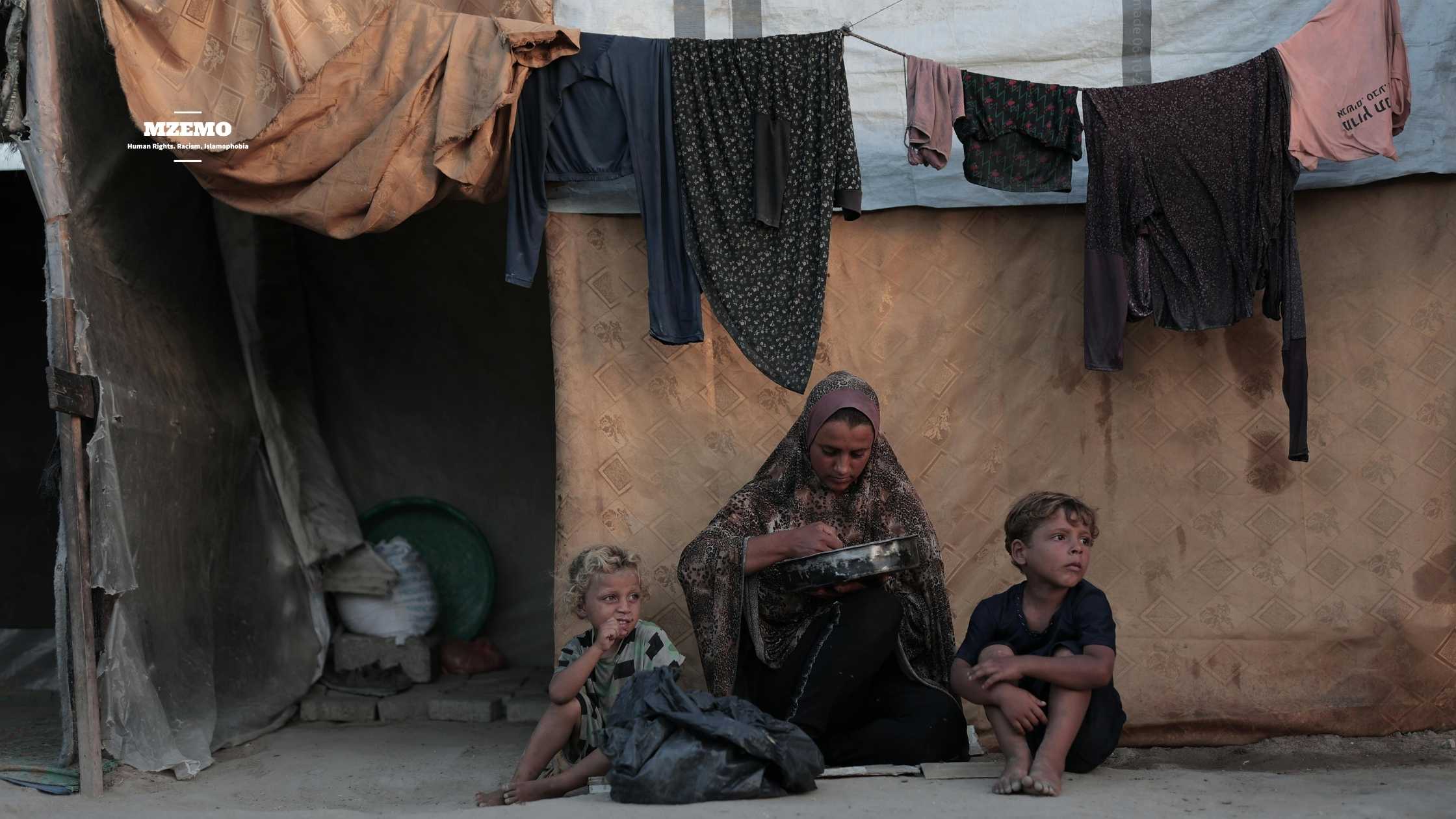
In Gaza, water is no longer something families can expect to find when they need it. It has become a daily search, a health risk, and a painful measure of how deeply daily life has collapsed. For thousands of displaced families, the day begins with containers, queues, extreme uncertainty, and the fear that even the little water they manage to collect may not be enough for drinking, cooking, washing, or protecting children from deadly diseases.

This is not a normal shortage caused by dry weather or poor planning. Gaza’s water crisis is part of the genocide stretched far beyond its limits.

“Water is life and the right to life is a basic human right.”

When water systems fail, the impact is immediate and personal. A family cannot cook properly; a mother cannot keep her child clean, and a wounded person cannot wash safely. Thirst becomes only one part of a much wider and often unseen disaster.

Gaza’s Children Are Living With Daily Water Uncertainty

UNICEF’s latest Water, Sanitation and Hygiene report paints a devastating picture. It highlights that 1.1 million children in Gaza face daily water uncertainty, while 82% of families remain water insecure. Even more alarming, up to 70% of people are unable to collect the minimum six litres per person per day needed only for drinking and cooking. UNICEF and partners are still trying to support emergency water services through trucked water, desalination, wells, and limited network supply, but access and operating conditions remain highly restricted.

Six litres is an extremely small amount when seen against real family needs. It may help someone survive the day, but it does not allow a household to live with dignity. Families need water for hygiene, laundry, cleaning shelters, caring for infants, supporting the elderly, preparing food safely, and preventing disease. In Gaza, these normal needs have become difficult choices.

More specifically, children suffer first in such conditions. They are more vulnerable to dehydration, diarrhoeal disease, skin infections, and the emotional stress of living in dirty, overcrowded spaces. Many have already lost homes, schools, routines, and safety. Now even the simplest comfort, a clean drink of water, is uncertain.

The Collapse of Water Systems Is Deepening the Genocide

Gaza’s water emergency is not only about empty containers. It is a deliberate genocidal strategy by Israel. Water primarily depends on pumps, wells, desalination plants, pipes, electricity, fuel, chemicals, spare parts, engineers, drivers, and safe roads. Most of these parts have either been destroyed or entirely blocked by Israel.

In another report, UNICEF states that seawater desalination output fell from 20,000 cubic metres per day in March to 16,000 cubic metres per day because of shortages of chemicals and spare parts. It also says shortages of engine oil, lubricating oil, and other essential items are disrupting water production and related services.

The Al Mansoura filling point shows how fragile the system has become. Water-trucking operations there were suspended after two UNICEF-contracted truck drivers were killed in April. UNICEF says the site had been critical for the daily drinking-water access of 285,000 people, and partners are now trucking water from desalination plants at an additional cost of about $40,000 per day to replace the two million litres previously collected from that point.

Sanitation Failure Turns Thirst Into Disease

When clean water disappears, sanitation collapses simultaneously. Gaza’s overcrowded displacement sites are already under severe pressure, and the lack of proper water makes hygiene almost impossible. Waste accumulates, pests spread, and families are forced to live in conditions where preventable diseases can move quickly.

OCHA’s latest humanitarian report warned that health risks from pests and rodents remain high because access to landfills is restricted and essential sanitation items remain difficult to bring in. It also highlighted UNICEF’s warning that water shortages are forcing families into a daily trade-off between drinking, hygiene, and disease prevention.

This is where the crisis becomes especially cruel. A family may know what it needs to do to stay healthy, but knowledge is not enough when there is no water, no soap, no proper waste collection, and no safe place to live. Parents are not failing their children, but the conditions around them are failing every basic standard of human protection.

Aid Is Shrinking While Needs Keep Growing

The emergency response is also under serious strain due to Israel’s complete blockade of all borders, especially the Rafah border. OCHA reports that since mid-May, four partners have been forced to start phasing out water-trucking activities because of funding shortages. Some have already stopped, while others are expected to complete the phase-out by mid-June. As a result, more than 330,000 people across around 250 sites risk losing their primary drinking-water source.

For people outside Gaza, this may sound like a usual problem, but for a displaced family, it means tomorrow’s water may not arrive. In a place where markets are broken, movement is dangerous, and public services are shattered, losing a water-trucking route can immediately push families toward death.

Thirst as a Test of the World’s Conscience

Water is one of the clearest measures of human dignity. Without it, people cannot remain healthy, clean, or safe. In Gaza, the water crisis shows how genocide destroyed life even beyond the moment of Israel’s attacks. It continues through damaged pipes, stalled pumps, empty tanks, contaminated surroundings, and children growing up around scarcity.

The world should not wait until disease spreads further or water systems break beyond repair. Gaza needs safe humanitarian access, fuel, spare parts, treatment chemicals, protected workers, restored sanitation services, and sustained funding for emergency water delivery. Most of all, people need protection from the conditions that are turning basic survival into a daily struggle.

Continue Reading

Featured

Gaza Flotilla Activists Face Extreme Israeli Abuse as the World Watches the Blockade’s Brutality

Published

on

Credit-Courtesy-Gulcin-Bekar

The Global Sumud Flotilla, which was made up of 40 vessels, tried to sail towards Gaza with much-needed humanitarian aid and a direct challenge to Israel’s blockade. Unfortunately, Israeli forces intercepted the boats in international waters and detained around 430 activists.

It is not a story of a blocked aid mission but a collection of facts revolving around intense abuse, humiliation, anger, and a brutal reminder of what Gaza’s blockade really means. For the people of Gaza, the flotilla is a symbol of hope, but for Israel, it is being perceived as a threat to its heinous genocidal mission.

A Hope Against the Siege

For decades, Gaza’s people have lived under an intense blockade that restricts movement, controls access to goods, separates families, and turns humanitarian relief into a political bargaining tool. Since Israel’s genocide in Gaza intensified, the siege has become even deadlier.

Hunger, destroyed hospitals, mass displacement, disease, and extreme shortages of fuel and medicine now shape daily life. This is why flotilla mattered, but the question that the world is asking is legitimate: Why should food, medicine, and solidarity be treated as crimes?

The flotilla, as a hope for the people of Gaza, who are suffering from famine and diseases, was intercepted by Israel about 250 miles or roughly 400 km off Gaza’s coast. These aid vessels were still far from Gaza when Israeli forces illegally captured them from international waters.

Analysts are highlighting that these flotilla activists, who volunteered from more than 40 countries, were not entering an Israeli city or attacking any military base. In fact, they were sailing through open waters to help innocent people who were dying of extreme hunger and bombardment.

Extreme Abuse by Israel

After the release of some of the detainees, they described inhumane treatment that had never been imagined before. South African activists highlighted that they were electrically shocked, denied water, food, and toilets, and were kept in abysmal conditions.

Moreover, most of the activists said that they were sexually assaulted in a very harsh manner. Some other activists also reported extreme beating and humiliation. For example, 15 cases of sexual assault, including rape, have been reported during May 2026.

Ben-Gvir Turned Humiliation into Spectacle

The most shameful moment came from Israeli minister Itamar Ben-Gvir. Even the government of France banned him from entering French territory after he taunted zip-tied detainees and waved an Israeli flag over them. France’s foreign minister called his actions “unspeakable,” and Poland also imposed a five-year ban.

He also shared footage of restrained activists, triggering international outrage and calls for broader European sanctions.

This was not hidden mistreatment accidentally exposed. It was deliberately performed, and the minister chose to stand over bound detainees and turn their humiliation into a political message.

When a genocidal state official proudly films powerless detainees, cruelty is no longer a secret, but a policy theatre.

Airport Violence Added Another Layer

It did not end with unlawful detention and punishment, as another episode of extreme humiliation was shown at the airport. At the Bilbao Airport, after some activists returned from Israeli detention, police harshly beat them. Videos showed some police officers brutally beating and dragging humanitarian activists.

This was just a glimpse of how Israel treats people who come to help humanity. They were maltreated in such an inhumane way to make them an example for the world. Anyone who comes to Gaza to help people will either be killed or detained in death-like prisons.

In this scenario, words are not enough as Palestinians remain heavily trapped, and those trying to reach them are harshly beaten, detained, deported, or killed. Condemnation must turn into legal action, sanctions, arms restrictions, diplomatic costs, and pressure to end the genocide.

The World Saw the Blockade’s Face

Israel may deny everything, but the world knows about its genocidal policies far better than ever before. It may deport activists and call the flotilla a provocation, but this episode revealed something the world should not unsee.

Even some activists from Brazil and Spain are still detained by Israel, and they are being punished in unprecedented ways. In this regard, Amnesty International also reported several injuries to these flotilla activists during detention.

After observing all this, one thing is certain: Israel is trying to eliminate Palestine from the world map and make every effort to stop necessary aid from reaching Gaza. Nobody can imagine the instances of cruelty by Israel in the 21st century. Even the International Court of Justice has urged this prolonged genocide to be stopped as soon as possible; otherwise, life in Gaza is under extreme threat.

Gaza’s isolation is being enforced with extreme cruelty. This time, the world did not have to imagine it. It is already watching!

Continue Reading

Featured

Gaza’s Disease Crisis: How Hunger and Siege are Burning Children’s Skin

Published

on

Gazas-Disease-Crisis-How-Hunger-Filth-and-Siege-Are-Burning-Childrens-Skin

In Gaza, children’s skin is now the harbinger of uninhabitable conditions and a brutal siege. Painful rashes, infections, scabies, sores, and wounds are spreading throughout Gaza. This is mainly due to overcrowded camps where families have a shortage of water, food, medicine, and almost no safe space left to live.

Credible reports also highlight that children in Gaza are suffering from severe, burn-like rashes as skin diseases surge in most displacement camps. Although adults are suffering from these diseases too, the crisis is hitting children the hardest because they have less immunity.

Moreover, healthcare services have collapsed, shelters are overcrowded, and families are unable to access necessities like water, soap, medicine, or even proper nutrition. In fact, it is not a natural health crisis, but a manifestation of what happens when bombing, blockade, hunger, sewage collapse, waste piles, insects, heat, and medical shortages are enforced.

Ultimately, Gaza’s innocent children are not only surviving genocide, but also unprecedented diseases that the genocide is leaving behind.

An Unusual Rash That Tells a Bigger Story

A skin infection may sound insignificant compared with air strikes and famine, but in Gaza, it is not small.

A painful rash on a properly nourished child with clean water, soap, and a clinic nearby can be treated adequately. But a deadly rash on a malnourished, famine-driven child in a hot tent, surrounded by sewage, insects, and garbage, can become a painful and dangerous infection. Parents are watching their children with bleeding skin, while hospitals are obliterated and no longer exist.

Skin diseases are spreading throughout Gaza’s camps. As summers are approaching, healthcare workers fear more deadly consequences than in 2024, when at least 150,000 people suffered from severe skin diseases.

Hunger Weakens Children Before Disease Arrives

Undoubtedly, hunger makes every illness worse. Malnourished children have weaker immune systems, slower healing, and less ability to fight infections.

The IPC projected that nearly 71,000 children under five in Gaza would be acutely malnourished between April 2025 and March 2026, including 14,100 severe cases.

Moreover, it is estimated that nearly 17,000 pregnant and breastfeeding women would need treatment for acute malnutrition. That means thousands of children are facing disease with bodies already weakened by starvation.

Sewage, Waste and Insects Are Feeding the Crisis

Gaza’s damaged sanitation system is also driving the spread of severe diseases. OCHA reported that only 16 of Gaza’s 73 sewage pumping stations were operational. About 40,000 cubic metres of sewage per day were being discharged into the sea, residential areas, and groundwater.

This is not only an environmental disaster but a direct assault on people’s health. Sewage contaminates living areas, spreads bacteria, attracts insects, and makes basic hygiene almost impossible.

In addition to sewage, solid waste is another danger. OCHA also reported that about 470,000 cubic metres of waste had accumulated in southern Gaza alone, creating severe congestion and raising fire and health risks as summer heat builds.

UNRWA has also reported increases in ectoparasitic diseases such as scabies, while poor water, sanitation, and hygiene conditions continue to drive infestations and infections.

For displaced families, this means tents beside garbage, children sleeping near insects, and parents trying to wash wounds with water that may itself be unsafe.

Israel Is Turning Camps into Disease Traps

Heat makes everything worse. It increases sweating and irritation, promotes insect breeding, accelerates waste decay, and turns tents into suffocating spaces where people cannot rest, recover, or stay clean.

In normal conditions, summer requires more water, more hygiene, and better shelter. Gaza has the opposite: less water, fewer hygiene supplies, overcrowded camps, and a shattered health system.

Palestinian families also have the right to clean clothes, safe toilets, shaded shelter, and medical care. Unfortunately, they have none of these. At first, a child’s skin becomes irritated by heat, then infected by scratching, then worsened by dirt, flies, and untreated wounds. What begins as discomfort becomes another layer of human suffering.

Firstly, Israel pushed the people of Gaza towards abysmal displacement camps after bombing the entire strip. Then it deliberately stopped water, food, and all basic human necessities from reaching those people. In fact, it is the worst form of genocide the world has ever witnessed.

Healthcare Cannot Keep Up

Gaza’s remaining doctors are facing multiple crises at once, including burns, amputations, trauma, dehydration, infections, maternal emergencies, and disease outbreaks.

The World Health Organization reported that by August 2025, 34 of Gaza’s 36 hospitals had been damaged and only 18 were partially functioning. It also said only 39 percent of Gaza’s primary healthcare facilities were functioning.

Moreover, treatment for injured Gaza children has been threatened by Israeli restrictions on supplies and aid organizations.

Now, the need of the hour is to provide clean water, hygiene kits, antibiotics, antifungal medicines, antiseptics, and dermatology treatments at first. There should also be fuel for sewage systems, waste-removal equipment, safer shelters, adequate food supplies, and nutrition support for innocent children and mothers.

In a nutshell, these surging deadly diseases are a warning the world should not ignore. When hunger, heat, blockade, and genocide are allowed to continue, disease becomes another weapon against childhood. These wounds are not only some medical symptoms, but the proof of a system that has made survival extremely painful.

Continue Reading
Advertisement

Trending