Europe
Is the European Union banning American travelers?










The Western modernity project, which has undeniably accomplished enormous innovations for the entire world, is yet to get rid of major ailments and liabilities still blemishing the collective western mindset. The current World Cup in Qatar has revealed the depth of that morbidity, namely the deep-rooted European racism, and recalcitrant persistence of classical and novel Orientalism in the perceptions of many Westerners.
Likewise, conventional and social media have reinforced negative stereotypes about the East, both Muslims and non-Muslims, as the current World Cup event has revealed to us that Western racism against the others is still active and far from being dormant or historical.
‘I Do Not Respect This Country and I Will Not Go to It’
An interesting comment I came across recently on Twitter from a European woman stated the following:
“I am a woman with special needs, and I learned that Qatar does not respect people with special needs, so I do not respect this country and I will not go to it.”
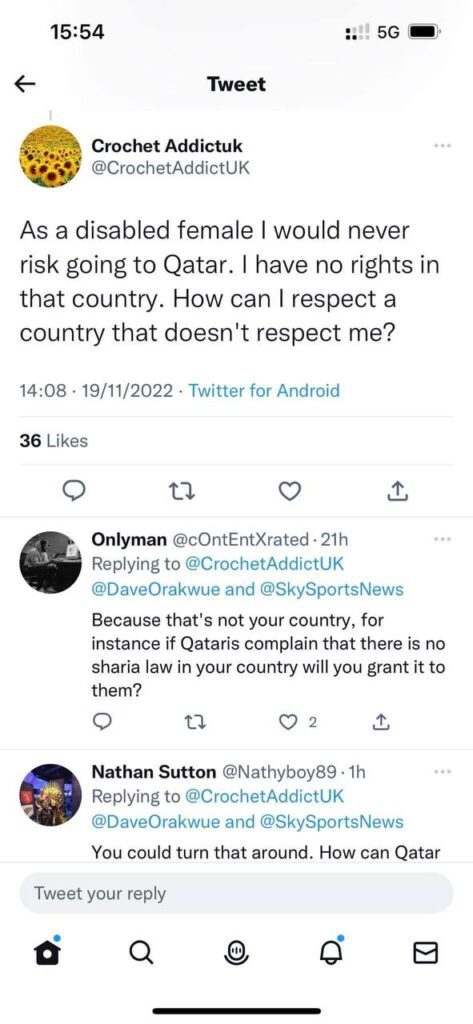
How did this lady come to the utterly mendacious realization that Qatar or any other country, (non-Western) does not respect people with special needs?
How can any country on earth not respect people with special needs and their requirements? This comment by that European lady belongs to a long catalogue of racist comments about Arabs and Muslims in general, backwardness, terrorism, etc.
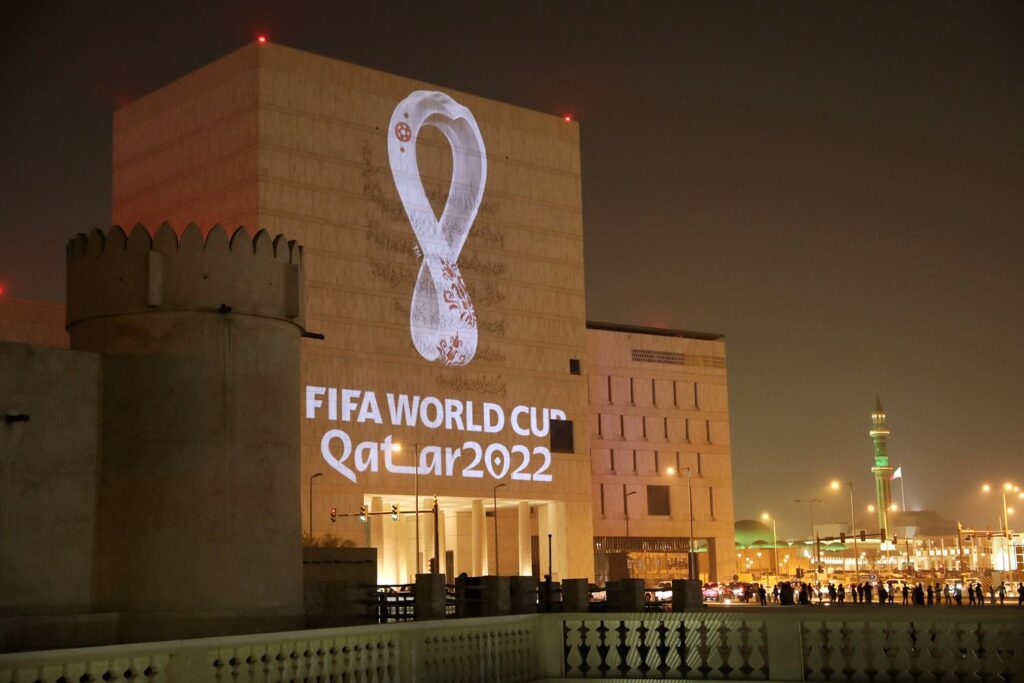
In the final analysis, the West would go as far as far as saying that Qatar effectively took advantage of the opportunity to organize the World Cup, only in order to vent its frustration and compensate for its utter insignificance! How dare they do this, embarking on such a gargantuan feat, which only Europeans and westerners should be tasked to do? Surely, the Arabs and Muslims have exceeded their proscribed boundaries!
Europe: Deep-Rooted Orientalist Racism
In the context of the explosion of this deep-rooted Orientalist racism, there are several quick points that deserve to be evoked and satisfactorily examined regarding the following question:
- Are we really living in a world of multiculturalism, diverse traditions, societies and religions where coexistence and Mutual respect is the ultimate regulator of relations,
- Or do we live in a world that is centred around the West and Europe, directly or indirectly, and therefore must willy-nilly be guided and led by Western values and standards?
This is part of a set of complex questions hovering around the limits of cultural particularism and the horizons of universal human values. But this is a discussion that needs broader spaces and wider contexts, perhaps.
The first note is related to the reported Qatari position of refusing to host gay banners during matches and festivals in the World Cup. This is in addition to preventing public demonstrations or gatherings for this specific category of spectators.
The authorities in the small Arabian Gulf state said that the public celebration demanded by homosexuals contradicts the culture, traditions and religion of the Qatari society, and while the Qataris wouldn’t ask arrivals about their sexual orientation, they prevent the expression of those orientations in the public space, whether those orientations are homosexual or non-homosexual.
Western Countries Are Not in a Position to Give “Moral Lessons” to Other Nations
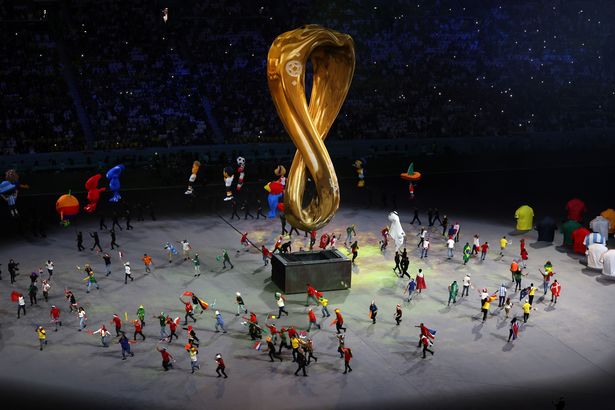
Here, the Western media arrogance manifested itself by claiming or giving the impression that they represent the overall human discourse when in fact they represent no more than one-eighth of the world’s population (Europe and America) – in fact, many Westerners do not actually agree with much of what is published and adopted by that media.
Indeed, neither the Chinese nor the Indian media nor the rest of the world stirred up this “non-conformist” Qatari position, because the majority of countries and societies around the world recognize the diversity of cultures, traditions and orientations of societies and assume mutual respect.
A One-sided Moral Lesson is Just Hypocrisy!
Media exaggerations and insinuations have reached astonishing proportions: Backward Muslim countries are condemning homosexuals to death, and there is a real danger to the lives of those going to the World Cup, and so on.
An amazing thing that calls for an occasional reminder of a historical fact dating back a thousand years ago, when the societies of Muslim countries in Baghdad, Damascus, Andalusia, and India were publishing collections of poetry and literature about homosexuals and boys, Europe considered women a demonic being.
The important thing here is to pay ample attention to the fact that societies shift and change unceasingly and do not move in a unilateral linear direction, but oscillate and turn left and right, back and forth, and sometimes in a circular pattern, according to contemporary socio-economic challenges and pressures which are extremely complex and difficult to predict, and that its cultures and traditions are organized in a changing process, not static or fixed, and Europe is one of the most important examples. Therefore, a distinction must always be made between criticism that is always needed to stimulate new human paths, and another criticism that is part of the problem rather than part of the solution.
The second note relates to the prohibition of alcohol consumption in and around the stands while confining it to specific places as announced by the organizers.
Once again, the Western media is raging, as if there were a “holy book” for football that stipulates the presence of alcohol as part of the sport that has charmed millions. The host country determined the practice, again based on local culture, religion and traditions. Why do many Westerners not want to respect non-Western cultures, while demanding that non-Westerners conform to Western culture sensitivities when others visit or reside in Western countries?
What is worse is that we do not see this brazen bullying of Qatar even in other non-Western cases. Is it acceptable in the West for some Western tourists to congregate in the center of the Indian capital, Delhi, and slaughter a cow, for example? Of course not, but it is required of Westerners and non-Westerners not to prejudice the Indian tradition of respecting cows. No one is required to agree or believe what others believe, but what is required is mutual respect.
The third note is related to the rights of Asian workers in Qatar and the purported violations of their rights, committed by some firms and employers, governmental or private.
Read also: The 2022 Qatar World Cup of Human Rights Abuses
Here, it has been made amply clear in many cases that violations have already taken place, especially in the first years of construction, and in every proven case, the media deserves a real appreciation for exposing these violations.
Needless to say, this has led to a significant improvement in the laws related to labor and workers, according to the reports of concerned international organizations. But at the same time, there has been a vitriolic black media campaign focusing on unproven data claiming that there have been as many as 6,500 deaths among these workers since 2010. Again, according to international statistics, the size of Asian labor in Qatar is around 2 million workers.
Assuming that the aforementioned death figure is correct, then, from a purely statistical point of view, it is not far from the natural and general death rate for a community of 2 million. On the other hand, the number that we do not hear much about in the black Western media (and this description does not apply to all Western media) is the 29,000 immigrants who have drowned on the shores of Europe since 2014, because the official authorities in more than one European country prevented them. And returning them to the sea, at a rate of more than 4,000 deaths annually, so far, according to statistics and reports of the International Organization for Migration.
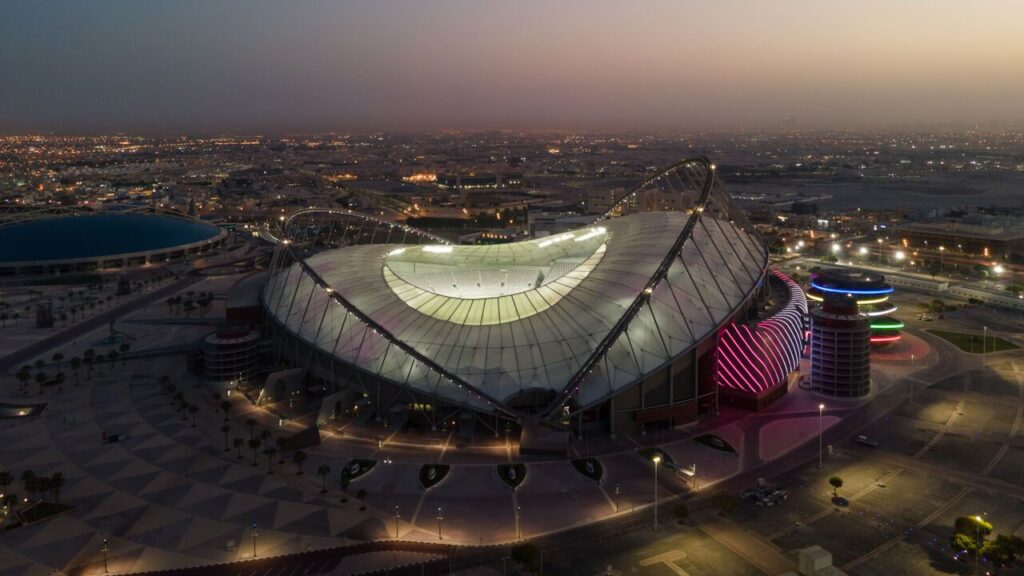
The fourth note is the tendentious Western media focus on the fact that Qatar spent 220 billion dollars on the World Cup, which is a huge figure compared to what was spent by all the countries that previously hosted the World Cup.
However, a quick search of this figure leads the researcher to the fact that this spending went away from direct spending on sports facilities, to building a modern infrastructure that includes whole cities, gathering facilities, streets, bridges, and so on, and that this spending extended between the years of 2010, which is the year Qatar was designated as the would- be host for the World Cup, and until now, i.e. the year 2022, at a rate of 18 billion every year.
This is more or less a normal figure for a country quite rich in oil and gas.
But focusing on this number in the Western media seemed to insinuate that the Arabs do not deserve the wealth that is in their hands and that they squander it rather lavishly.
Indeed, between the lines of Western criticism of this figure, an honest observer would detect a certain resentment that reflects a huge amount of envy. Unseen, this envy consists of two parts:
- The first is that the wealth of other countries is “misplaced” and should, therefore, have gone to Europe and the West. How and why did these riches come to them, and why on earth we cannot access them?
- The second: How does a “backward, Arab and Muslim” country that is the target of constant ridicule succeed in organizing a huge global event on the level of the World Cup? Organizing these events is exclusively our business.
In the colonial past, Europe arrogated the wealth of others, and plundering it over the course of centuries from Latin America to Africa, to Asia. And now, to their chagrin, the West does not reach all the wealth as easily as it used to do. Now, too, many countries and societies have acquired self-creating, organizing and innovation capabilities, and are no longer governed by the hegemony of control by European and Western centers.
Finally, there is a contemplative note: If we compare aerial photographs of European cities such as London, Paris, Amsterdam, Brussels, Berlin, with others such as Kuala Lumpur, Delhi, Doha, Dubai, Riyadh, then we can safely argue that the second group (and to which we can add numerous other cities around the world) was built thanks to the wealth of the countries themselves, whereas European cities were built historically thanks to the wealth arrogated by the colonial masters. The history of European colonial plundering of continents, which is still going on in the African continent and elsewhere, though indirectly but quite rapaciously, does not qualify Europeans and westerners in general, to teach moral lessons to the world.

The Annexation of Land by Force Under International Law – Western Hypocrisy
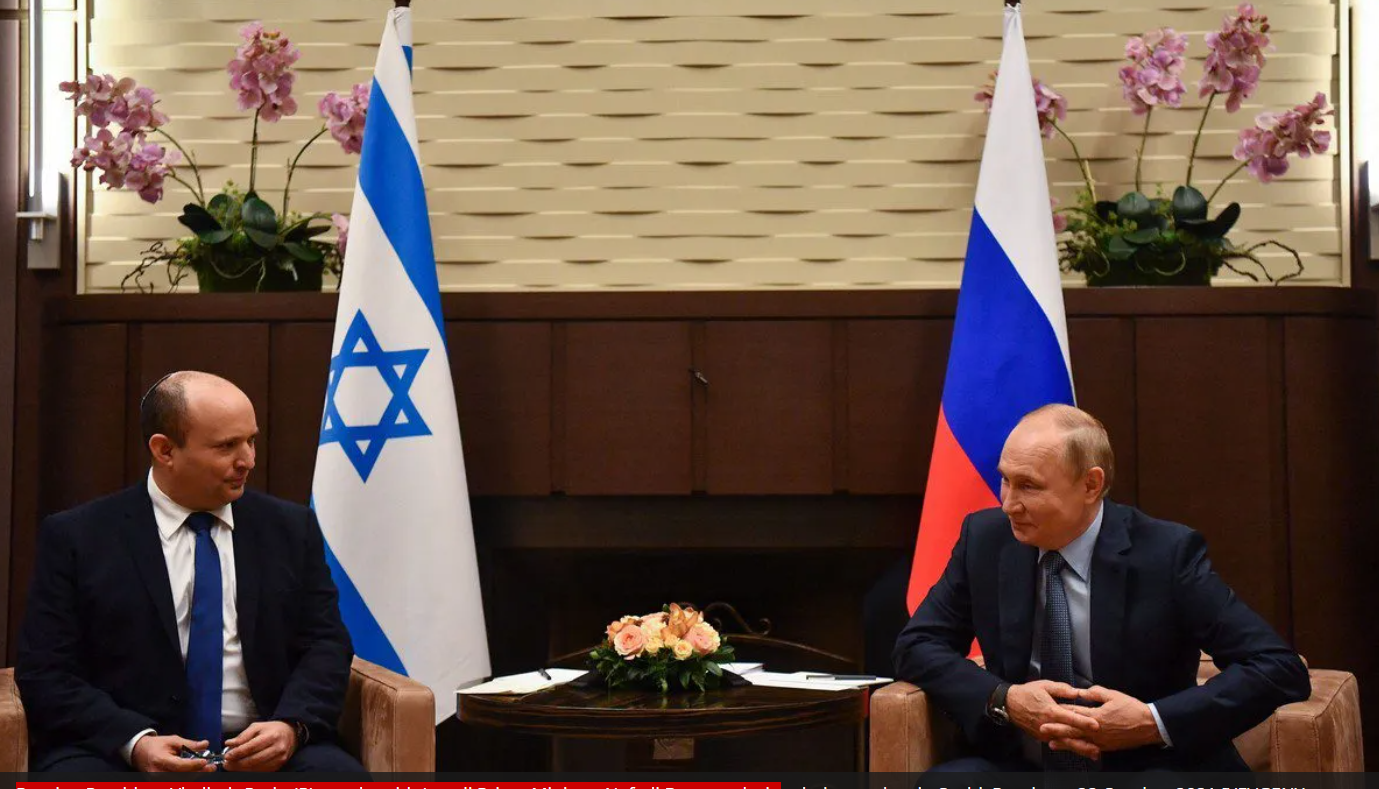
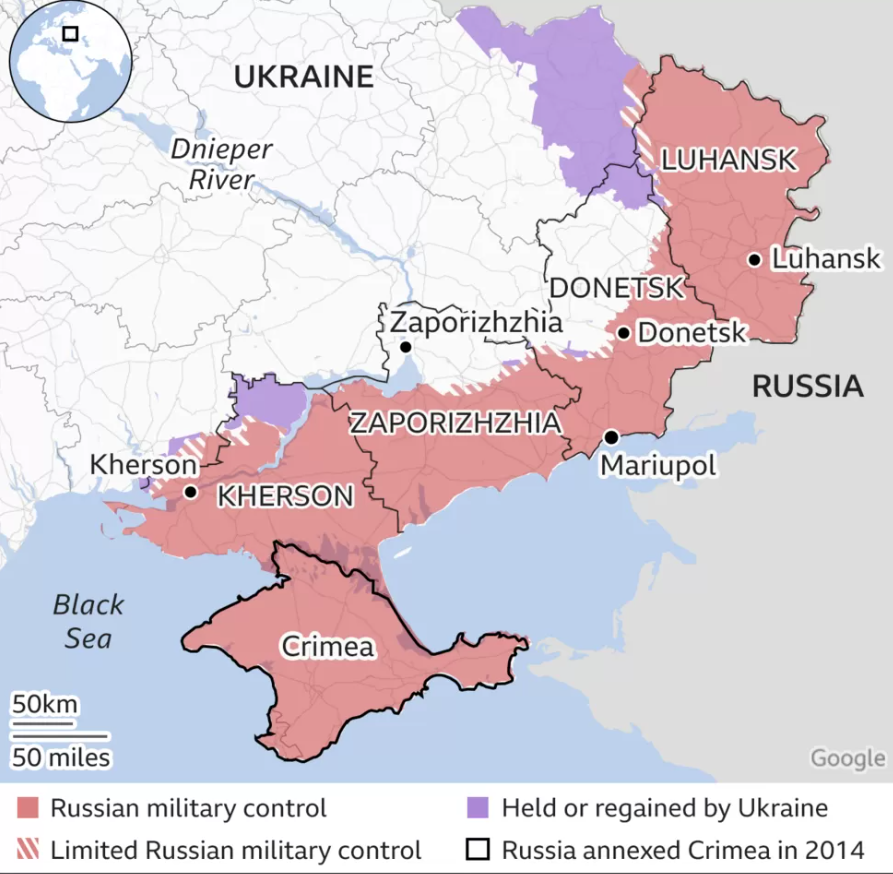
Western hypocrisy is ever-present as we see differing responses to the annexation of land by Russia in Ukraine in comparison to Israel’s continued annexation of Palestinian land since 1947. Russian President Vladimir Putin announced on September 30th 2022 that Russia would annexe four regions in Ukraine. These regions are Donetsk, Luhansk, Kherson, and Zaporizhzhia, now referred to as “new regions” of Russia.
The UN Secretary-General Antonio Guterres condemned the annexation as violating international law. Therefore, this is a “dangerous escalation” in the war between Russia and Ukraine, which began on February 24th 2022, when Putin ordered the invasion of Ukraine, classified as a “special military operation”. Hence, the annexation of a state’s territory by threat or use of force violates the principles in the United Nations Charter.
The European Commission rejected and unequivocally condemned the illegal annexation. However, western hypocrisy is ever-present. The international community condemns Russia’s violations but celebrates and protects those carried out by Israel. Consequently, Russia is creating a global security risk and undermining the leading principles of international law.
A “Sham Referenda” Executed by Russia in Ukraine
Between September 23rd to 27th, Russia orchestrated a “sham referendum” in regions of Ukraine. Residents voted on whether they wished to become part of Russia. The voting took place in polling centres while Russian authorities accompanied by soldiers went door-to-door with ballot boxes.
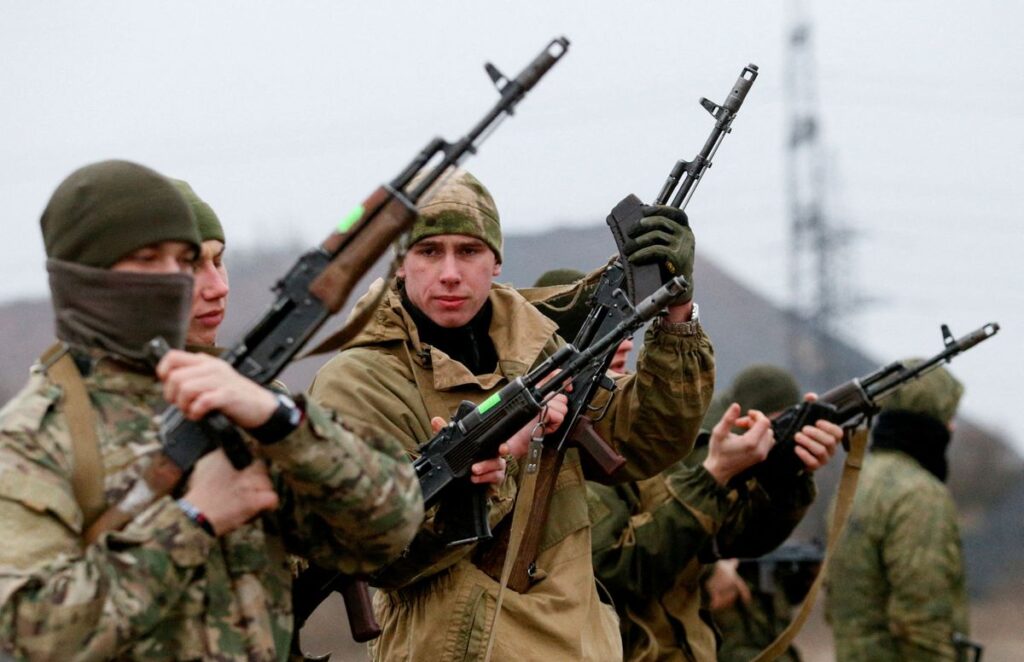
The sham referendum occurred during an active armed conflict in Ukraine under Russian control. Therefore, this is outside Ukraine’s legal and constitutional framework and cannot be classified as a genuine expression of the popular will.
“Unilateral actions aimed to provide a veneer of legitimacy to the attempted acquisition by force by one State of another State’s territory, while claiming to represent the will of the people, cannot be regarded as legal under international law.”
Under-Secretary-General for Political and Peacebuilding Affairs, Rosemary A. DiCarlo.
Annexation is a “formal act whereby a state proclaims its sovereignty over territory hitherto outside its domain”.
Israel Is Allowed to Annex Occupied Land, But Russia Isn’t
Russia’s war in Ukraine triggered immediate, swift condemnation by several countries and economic sanctions by the United States. Furthermore, many states have targeted Russian banks, oil refineries and military exports. There have been marathon emergency talks at the UN Security Council to deal with Russia’s aggression in Ukraine.
The EU and its member states stand united in their unwavering support for Ukraine, revealing western hypocrisy. There is strong criticism of Russia’s unprovoked and unjustified military aggression. However, it seems it is acceptable for Israel to annex occupied land, but in the case of Russia, it is not.
Read Also: Israel’s Apartheid Against Palestinians Reveals West’s Double Standards.
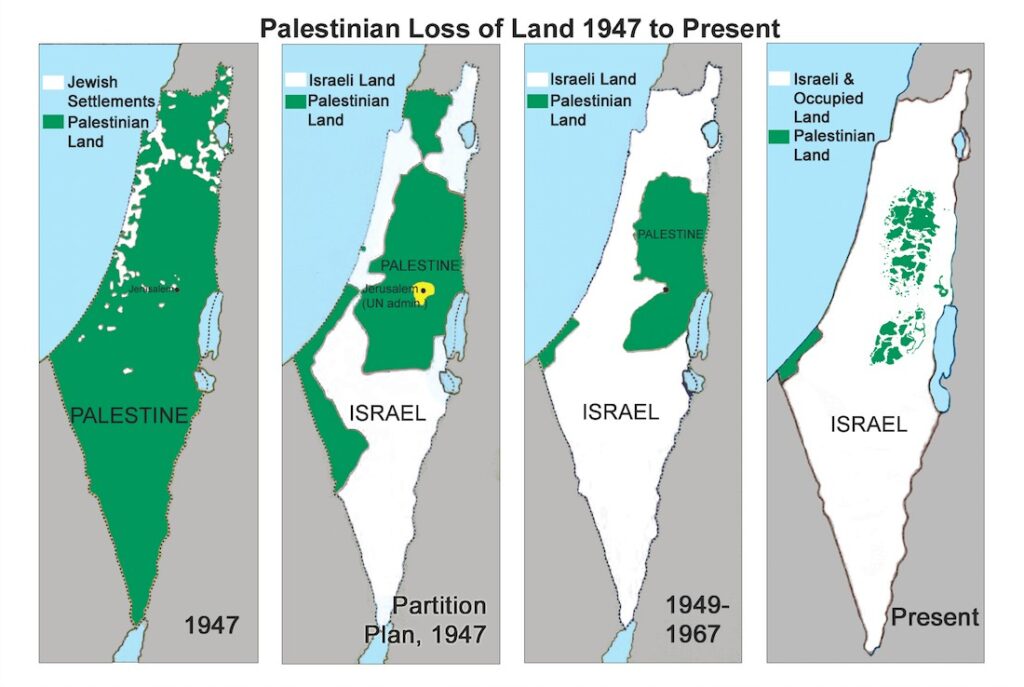
Israel occupied Palestinian East Jerusalem, the West Bank and Gaza Strip, the Syrian Golan Heights, and Egypt’s Sinai Peninsula. In 1967, Israel annexed approximately 70,000 dunams of West Bank land to the municipal boundaries of Jerusalem and applied Israeli law in breach of international law.
International Communities Differing Response to Israel v Russia Reveals A Western Hypocrisy of Double Standards
The Israeli occupation and annexation of Palestinian territories received a starkly different response in comparison to Russia’s annexation. The international community’s weak response encouraged the Israeli government to continue to annex occupied East Jerusalem on July 29th 1980, and the occupied Golan Heights in 1981. Israel’s breach of international law only triggered temporary international reactions. Consequently, no meaningful change was implemented, as no sanctions or threats were applied.
The West continues to give the Israeli apartheid state unconditional diplomatic, political, economic and military support. The peaceful Boycott, Divestment and Sanctions (BDS) movement against Israel has even been criminalised in some states.
The Analogy Between Russia and Israel’s Annexations of Occupied Land
Israel has gone to extreme lengths to clear the occupied land of the Palestinian people. This has been done by demolishing their homes, withdrawing residence permits and murdering innocent civilians. Palestinians living in the Gaza Strip have been held in a land, air, and sea blockade for fifteen years. Israel never declared where its borders lay and continued to expand its territory through illegal annexation alongside unjustified impunity. An estimated 62% of Palestinians living in Gaza require food assistance, and 78% of water flowing into Gaza is unfit for human consumption. Unemployment levels in Gaza are among the world’s highest, currently at 46.6%. Youth unemployment between the ages of 15-29 for the same period stands at 62.5%.
Ironically, Israel condemned Russia’s annexation. Israel sent humanitarian aid to Ukraine and expressed its support. However, Israel did not join international sanctions against Russia and refused to give Kyiv anti-missile systems to help counter Russian attacks. The Israeli government’s fumbled response to Russia’s annexation of Ukraine betrays Jewish history and draws attention to Israel’s similarly odious actions. Israel’s brutal annexation of Palestinian territory has been continuing without consequences for a significantly longer time with little consequences.
Comparatively, Russia has annexed four regions of Ukraine that are partially or almost entirely occupied by Russia. With a complete disregard for international law, on September 30th 2022, Putin signed treaties to begin absorbing parts of Ukraine into Russia. Together with Crimea, which Russia annexed in 2014, Russia now claims 20% of Ukrainian territory.
Ukrainian Map vs Palestinian Map of Annexations
The map below illustrates the regions of Ukraine illegally annexed by Russia.
In comparison, the map below depicts the land forcibly annexed by Israel from Palestinians from 1946 onwards. This annexation was accompanied by the expulsion of 750,000 – one million Palestinians to make way for a Jewish state following World War ll.
Concluding Thoughts: The Undeniable Parallel Between Russia and Israel
Russia continues to deny Ukraine their right to independence, sovereignty and territorial integrity. These are the core principles enshrined under the UN Charter. Similarly, Isreal continues to deny the Palestinian people the same rights. However, as discussed in this article, significant differences lie in the international community’s response to both annexations.
The parallel between Putin’s invasion of Ukraine to fulfil his imperial designs, and Israel’s 70-year history of imposing its will on the Palestinians and neighbouring Arab countries, is also evidently clear worldwide.
Russia and Israel conquered and absorbed the territories of Ukraine and Palestine in defiance of international law. Both states are facing investigations over alleged war crimes at the International Criminal Court and are demanding that their enemies bow to them or face destruction. Both Russia and Israel created powerful militaries to accomplish these goals. However, another striking observation is that no amount of ammunition can subjugate a population that refuses to be defeated or erased. There is strength in the Ukrainians and Palestinians, which cannot be destroyed.
We must acknowledge the western hypocrisy concerning the international response to both wars. Both Ukrainians and Palestinians deserve our unwavering and equal support. We must respect and preserve the integrity of international law.
-
 Featured3 years ago
World passively watching as Israel perpetrates open-ended massacre in Gaza
-
Featured4 years ago
Argentina wins the World Cup; are there any other winners?
-
Featured3 years ago
Israel is Hiding Crucial Demographic Facts About Palestinians
-
Featured5 years ago
History of the Ottoman Empire
-
Featured4 years ago
Christian militia infiltrate Lebanon
-
Featured6 years ago
“Do Not Waste Water Even If You Were at a Running Stream” Prophet Muhammad
-
Featured3 years ago
Muhammed: The Greatest Man to walk on Earth
-
Featured4 years ago
World Leaders Remain Silent Over Human Rights Violations in the UAE