Connect with us

Palestine

The Reality of Palestinian Prisoners in Occupation Jails

Published

on

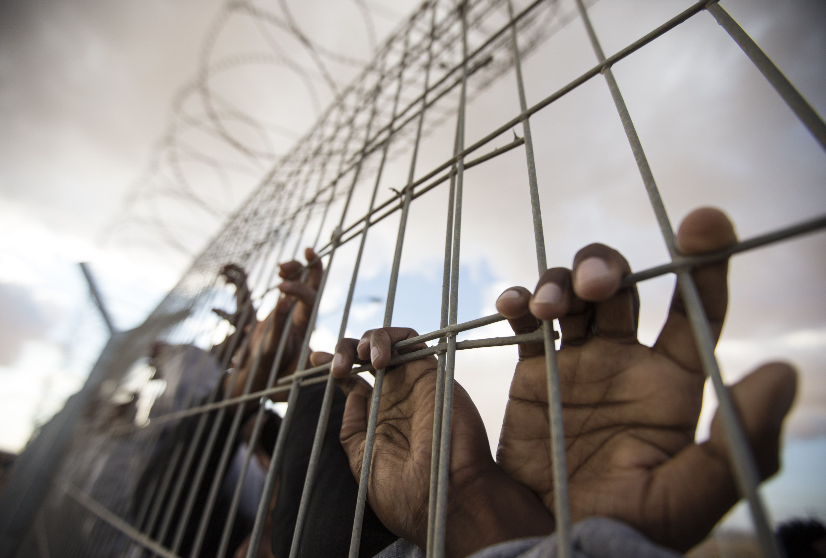
The matter of prisons, torture and lack of freedoms is an element of the discourse of the Palestinian narrative, precisely those written by the Palestinian prisoners in jails, making prison characterizations and therefore the colors of grilling and humiliation disturbing. There’s an accurate description of the force and cruelty of torturers within the cells of prisons and the humiliation and interrogation centers.

Some stories of Palestinian Prisoners in occupation jails

Palestinian prisoner Maher Abu Rayan :

A Palestinian prisoner has initiated a fast to protest the occupation’s nonchalance in getting him with needful medicine and care for over two years. 43-year-old Maher Abu Rayan, from the city of Hebron, within the occupied West Bank. Maher is serving a 25-year prison term and has suffered from many health problems within the past as an instant result of the highly violent fashion through which Israeli soldiers administered his arrest in 2003, containing breaking his nose.

Israeli prison authorities have delayed in getting Abu Rayan with the needed medical care, by which era he had progressed many other associated respiratory conditions. Three years later, in 2018, he was diagnosed with too much fluid in his lungs.

Even after going through many surgeries within the past few years, Abu Rayan still requires particular medical treatment due to the attack on him by the Israeli soldiers. He has been demanding that the Israeli prison service (IPS) provide him with the needed operation, which has now been late for over two years.

Palestinian prisoner Barghouti :

Prisoner Marwan Barghouti, generally seen as a competitor to Palestinian Authority President Mahmoud Abbas, knows running within the scheduled Palestinian presidential elections, a near associate of his confirmed.

Barghouti is spending five life sentences in an occupation prison for his role in planning deadly terror attacks against occupation within the Second Intifada. He is popular among Palestinians and broadly seen as a possible successor to Abbas.

In a 2014 letter from prison, Barghouti said that Palestinians should “support whole resistance and therefore the rifle.” Barghouti himself was convicted and punished by an Israeli court in 2004 It has been said for guiding two shootings and a bombing that killed five Israelis.

Pregnant women in occupation prison :

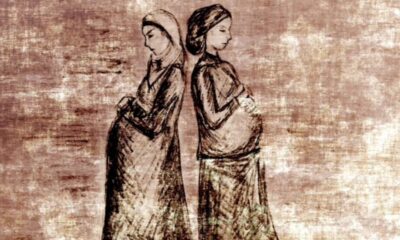
A pregnant woman from Gaza in her first forties was arrested in May 2007 at Beit Hanoun Crossing. Then transported to the Hasharon prison. Insight of her age. Needed a higher level of care and medical care. Instead, she suffered from severe weight loss and weakness thanks to bad-quality food and inadequate conditions inside the prison. In January 2008, feeling labor pain, the detainee was transported to Meir Hospital in Kfar Saba. Where the occupation Prison Administration (IPA) saved her arms and legs chained.

The cuffs were extracted only inside the delivery room, and replace quickly after childbirth. Also, she went through the dehumanizing experience absolutely alone. Since her family and husband, all Gaza citizens didn’t have permission to visit her even after the delivery of the baby. She describes her painful experiment:

“After delivery, I used to be a fetter by having one arm and one leg bound to the bed. Through this situation, I used to be left for many hours before being taken again to my room. My baby was carried to me for breastfeeding only twice a day”.

She is detained in Telmond prison, accused of holding explosives on her body so as to execute a group action. She remains not indicted, she is under detention. Nearly six months later, the baby has still not met his father or siblings.

Palestinian prisoner Ahmad Alhaaj :

Now 87 years old, was arrested in 1967 by the occupation and jailed for almost three years. While in jail, he was subjected to torture and hanging that made him miss his consciousness. Facetiously, his jailers used to offer him a pair of left socks to use because he was a left hand. Today, Alhaaj is as determined as to when he first left to turn to his village of Al-Sawafir in what is today Israel – prison has not changed his thought.

How are children treated when arrested?

Many kids are arrested in the middle of the nighttime, waked at their houses by massively armed soldiers. They wake up to the sound of soldiers banging loudly on their front door. Using stun grenades, and shouting directions for the family to leave home. Children report that they are threatened by the soldiers storming into their houses. In which furniture is at times broken, accusations and oral warnings are shouted. Family members are obliged to stand outdoor in their nightclothes. As the accused child is forcibly removed from the home and taken away with vague explanations. Such as “he is coming with us and we will return him later”, or simply that the child is “needed”. Few kids or parents are informed as to where the child is being taken, why, or for how long.

Continue Reading
Click to comment

Leave a Reply

Your email address will not be published. Required fields are marked *

Featured

Israel’s Death Penalty Law Marks a New Phase in the Dehumanisation of Palestinians

Published

on

Israels-Death-Penalty-Law-Marks-a-New-Phase-in-the-Dehumanisation-of-Palestinians

In another heinous assault on the basic human rights of the Palestinians, on March 30, Israel’s parliament, the Knesset, passed an unexpected law. It marked a significant shift in how Palestinian detainees may be treated under its legal system. The new law allows for the death penalty by hanging for Palestinians convicted in military courts of carrying out deadly attacks.

Moreover, this heinous legislation also enables executions to be carried out within 90 days, with no scope for appeal or clemency. This is not a routine legal amendment but a representation of a fundamental change in the structure of punishment under occupation. Resultantly, the intensity of this offensive law has triggered strong reactions not only from Palestinians but also from international observers and dozens of countries.

A System Already Defined by Imbalance

It seems to be a usual law passed by a parliament, but the unforgettable pain felt by the families of those prisoners is unimaginable. Mothers are crying in pain as they haven’t seen their sons for years, but this tragic news is already diminishing the hopes that they will see their sons one day.

To understand the significance of this law, it must be placed within the existing legal framework in the occupied territories.

Specifically, Palestinians in the West Bank are tried in military courts, while illegal Israeli settlers living in the same territory are subject to civilian law. This dual system has long been criticised by human rights organisations as inherently unequal.

According to credible reports, conviction rates in these military courts are estimated to be around 96%. For many Palestinians, this raises serious concerns about due process, legal representation, and the possibility of fair trials.

When the world is giving up on capital punishment, introducing it into such a system intensifies those concerns. It transforms a structure already seen as restrictive into one with irreversible consequences.

The Scope and Reality of the Law

After the law was passed, Champagne celebrations were seen in the Knesset. On the other hand, Palestinians cried with the impeccable burden of cruelty and barbarity. The law’s wording is broad, but its application is targeted.

While framed in general terms, it will overwhelmingly target Palestinians rather than Israeli citizens. Observers point out that Israeli civilians are rarely, if ever, prosecuted under the same framework or facing similar penalties for violence against Palestinians.

This disparity is central to the criticism surrounding the law. It is not only about punishment, but about who is punished and under what system.

Palestinian Reactions: Fear, Anger and Protest

The response from Palestinians has been immediate and visible due to the widespread impact of this heinous law. Resultantly, protests have taken place in both Gaza and the occupied West Bank. People gathered in numerous cities, such as Ramallah, voicing anger and concern over what they see as a dangerous escalation.

The law is being perceived as a direct threat to Palestinian detainees and prisoners. The families of these prisoners have expressed fear that this legislation could lead to executions under a system they already view as completely unjust.

International Response

Eight Muslim-majority countries, including Türkiye, Egypt, Indonesia, Jordan, Qatar, Saudi Arabia, Pakistan, and the UAE, have condemned the measure. The statements reflect extreme discrimination in Israel’s legal system. It could definitely further escalate tensions within the region.

The United Nations human rights leadership has openly stated that this law is inconsistent with international legal standards. It is ultimately an unimaginable move in the 21st century. Moreover, the European Union has also expressed concern, signaling that the law could complicate an already fragile situation in the region.

A Broader Context: Accountability and Impunity

The controversy surrounding the law is not occurring in isolation. The lack of accountability for violence against Palestinians in the West Bank is one of the most concerning issues. Reports indicate that no Israeli citizen has been prosecuted for killing Palestinian civilians in the territory since 2020, despite hundreds of fatalities.

At the same time, Palestinian civilians, including children, have been among those killed in ongoing operations and confrontations.

This contrast has become central to the debate. While one side faces increasing legal penalties, including the possibility of execution, the other is widely perceived as operating with far fewer legal consequences.

Capital Punishment and a Break from Precedent

It is believed that Israel has not carried out an execution since 1962, when Adolf Eichmann was executed following a conviction for war crimes. However, Israel is evidently involved in killing thousands of innocent Palestinians, butchering mothers, children, and the elderly in its genocidal activities.

Apparently, for decades, the death penalty has effectively been dormant in Israeli law. The new legislation represents a sharp departure from that practice.

Globally, many countries have moved away from capital punishment, citing concerns over human rights and judicial errors. Against that backdrop, the introduction of a law enabling executions under military jurisdiction stands out as a significant shift.

The law has already triggered protests, diplomatic responses, and legal criticism. It has a long-term impact as it represents state brutality. This act is far from the perceptions of justice, accountability, and equality. But, at its core, the debate is not only about law, but it is about the system of genocide that is being built on the legal framework.
Continue Reading

Featured

Homes Taken, Gates Closed: A Week That Shook Jerusalem

Published

on

Homes-Taken-Gates-Closed-A-Week-That-Shook-Jerusalem

Jerusalem witnessed two deeply unfortunate and consequential developments in the same week. In Occupied East Jerusalem, eleven Palestinian families were evicted from their homes by the Israeli Defence Forces (IDF). At the same time, access to one of the holiest sites for Muslims, Al Aqsa Mosque, was blocked. The gates of the mosque were closed, with only the possibility of a limited entry.

These are not isolated events but a continuity of Israel’s blatant attacks on the civilian population of Palestine. The complete obliteration of Gaza is evidence of a broader plan of Israel to completely devastate the Palestinian homeland. Through these heinous actions, land, identity, and access to sacred places remain at the center of tensions.

Forced Evictions in East Jerusalem

According to credible sources, 11 Palestinian families were removed from their homes in East Jerusalem, an area Israel has controlled since 1967 and which is widely regarded under international law as occupied territory.

For many of these families, the homes were not temporary shelters. They had lived there for decades. Their eviction meant more than relocation, but it meant the loss of stability, community, and long-standing ties to the area.

Data from the United Nations Office for the Coordination of Humanitarian Affairs shows that hundreds of Palestinians face eviction threats in East Jerusalem each year. These cases often emerge from legal disputes over property ownership. However, the broader pattern has drawn sustained international concern.

Such evictions contribute to a gradual displacement of Palestinian residents from key areas of the city.

The Legal and Political Reality of East Jerusalem

The status of East Jerusalem remains one of the most sensitive issues. While Israel considers the entire city its capital, Palestinians view East Jerusalem as the future capital of their state. International law largely treats the area as occupied territory by Israel.

Property disputes in East Jerusalem are often shaped by a complex legal framework. In many cases, Israeli law allows claims based on historical ownership that are difficult for Palestinian residents to contest. At the same time, Palestinians face significant barriers when attempting to reclaim property lost decades ago.

The result is a system that favours Israel in the demographic balance, contributing to ongoing tensions in the entire region.

The Plight of Al-Aqsa Mosque

Especially during the holy month of Ramadan, hundreds of thousands of Palestinians attend prayers at Al-Aqsa mosque. However, during this Ramadan, Israeli authorities limited entry to the mosque compound, including the closure of gates and restrictions on who could enter. These measures came during a time when thousands of worshippers would normally gather.

Al-Aqsa holds immense religious significance. It is considered the third holiest site in Islam, after Makkah and Madinah. For Muslims worldwide, it is not only a place of worship but a symbol of spiritual and historical identity.

Ultimately, when access is restricted, the impact is felt far beyond Jerusalem. It resonates across the global Muslim community.

A Broader Pattern of Genocidal Mindset

With more than 77,000 killings in the Gaza Strip, including women and children, Israel is acting on a strategy to completely wipe out the Palestinian population. The closure of mosques and evictions is the continuation of the genocidal mindset.

Such restrictions are often justified on security grounds. However, the repeated nature of these measures creates a pattern that affects freedom of worship.

During major religious periods, when attendance typically rises, these restrictions carry even greater significance.

International Reaction

In the wake of these heinous events, Muslim-majority nations publicly condemned the closure of Al-Aqsa’s gates. Statements described the move as a violation of religious rights and called for unrestricted access to the mosque.

These reactions reflect the broader importance of Jerusalem in the entire world.

Jerusalem has long been a focal point of political, religious, and historical tension. The events of this week show how quickly these elements can converge.

As debates continue over sovereignty, security, and rights, one question remains central: Can a city of such deep religious and historical importance sustain balance when both homes and holy sites remain contested? Can a city of Holy sites bear the wrath of a country that is deeply involved in genocide?

The answer to that question will continue to shape not only Jerusalem’s future, but also its place in the wider world.

Continue Reading

Featured

Militias, Fragmentation, and Escalation Across Palestinian Territories

Published

on

Militias-Fragmentation-and-Escalation-Across-Palestinian-Territories

When Israel and the United States launched a full-scale military assault against Iran, international attention shifted instantly toward the possibility of a wider Middle Eastern War. The blockage of the Strait of Hormuz, the reluctance of the US and Israel to completely obliterate Iran and wipe out their leadership, are not just threats to the Middle East but to the entire world.

Currently, headlines are focusing on missiles, regional alliances, and the risk of escalation between powerful adversaries. On the other hand, the situation across the Palestinian territories did not pause. Instead, a series of heinous developments inside Gaza and the occupied West Bank reveal that the genocide is entering a new and increasingly complex phase.

Some of the recent trends reshaping the reality across Palestinian territories include the rise of militias, fragmentation inside the Gaza Strip, and intensified violence across the West Bank.

Together, these developments suggest that the genocide is evolving into a more layered and unpredictable struggle.

The Emergence of Israeli-Backed Militias in Gaza

One of the most striking developments in recent weeks is the rise of armed Palestinian factions operating inside Gaza with apparent coordination with Israeli forces.

In this context, several groups have begun carrying out operations targeting Hamas members and infrastructure within areas of Gaza under Israeli military control.

Among the groups identified are organizations known as the Popular Army, including Northern Forces and the Free Homeland Forces, which are believed to be connected to a broader network sometimes referred to as the Popular Forces.

Moreover, these militias have carried out activities in Gaza, including:

  • Raids on different locations
  • Abductions of civilians
  • Intelligence gathering operations for Israel

Their presence introduces a new dimension to the conflict. For years, the main dynamic inside Gaza has centered on the confrontation between Israeli forces and Hamas. The appearance of armed Palestinian factions aligned against Hamas complicates that structure and adds the possibility of internal fragmentation.

Security analysts warn that such developments can significantly reshape power dynamics within genocidal zones, bringing further instability and chaos.

Fragmentation of Governance Inside Gaza

The prolonged genocide and the destruction of infrastructure across the enclave have weakened administrative structures and complicated governance.

Several factors now contribute to the fragmentation of authority:

  • The continued presence of Israeli military operations in Gaza
  • The emergence of new armed factions operating independently
  • The erosion of centralized administrative control due to the scale of genocide

The introduction of additional militias may further complicate efforts to establish political stability in the territory. In many genocidal zones, the proliferation of armed groups often leads to competing spheres of influence and weakened governance structures.

Ultimately, this fragmentation could make future political settlements even more difficult, as multiple actors compete for influence within the territory.

Escalation in the West Bank

The West Bank is not immune to the genocidal activities of Israel. While Gaza and Iran remain at the center of international attention, the occupied West Bank has also experienced a dramatic increase in violence since the Gaza genocide began.

According to figures cited by Palestinian authorities and international observers, more than 1,000 Palestinians have been killed in the West Bank since the beginning of the Gaza genocide.

The violence has taken several forms, such as Israeli military raids in Palestinian towns and refugee camps, armed confrontations between Palestinian militants and Israeli forces, and attacks by Israeli settlers on Palestinian communities.

In recent months, numerous Palestinian villages have reported raids in which homes were damaged, vehicles burned, and farmland destroyed. Some incidents have also led to the displacement of families from rural areas.

Settler Violence and Community Displacement

Settler violence has become one of the most significant sources of instability in the West Bank.

There is a growing number of incidents involving attacks on Palestinian property and agricultural land.

These incidents include:

  • Destruction of olive groves and crops
  • Arson attacks targeting homes and vehicles
  • Confrontations between settlers and residents

The consequences extend beyond the immediate damage. In some cases, Palestinian families have left villages after repeated attacks, contributing to gradual displacement in certain rural areas.

Gaza in the Context of a Wider Regional Conflict

The US, Israel–Iran confrontation has transformed the regional geopolitical landscape dramatically. Military tensions between these countries have raised fears of a broader Middle Eastern war involving multiple actors.

However, the conflict within Palestinian territories continues to evolve largely independent of the regional headlines. The recent closure of the Rafah border has triggered panic buying. Resultantly, the prices of food have skyrocketed. Moreover, the shortage of cooking gas triggered by Israel has also worsened living conditions.

Moreover, the emergence of militias, fragmentation of governance, and escalating violence suggest that the genocide is entering a phase of more destruction. Despite several calls by the United Nations to allow humanitarian aid into Gaza, the world is not paying heed to the innocent lives trying to survive each second there.

Continue Reading
Advertisement

Trending