Connect with us

Featured

Israel’s Formula for Permanent Occupation

Published

on

Israels-Formula-for-Permanent-Occupation

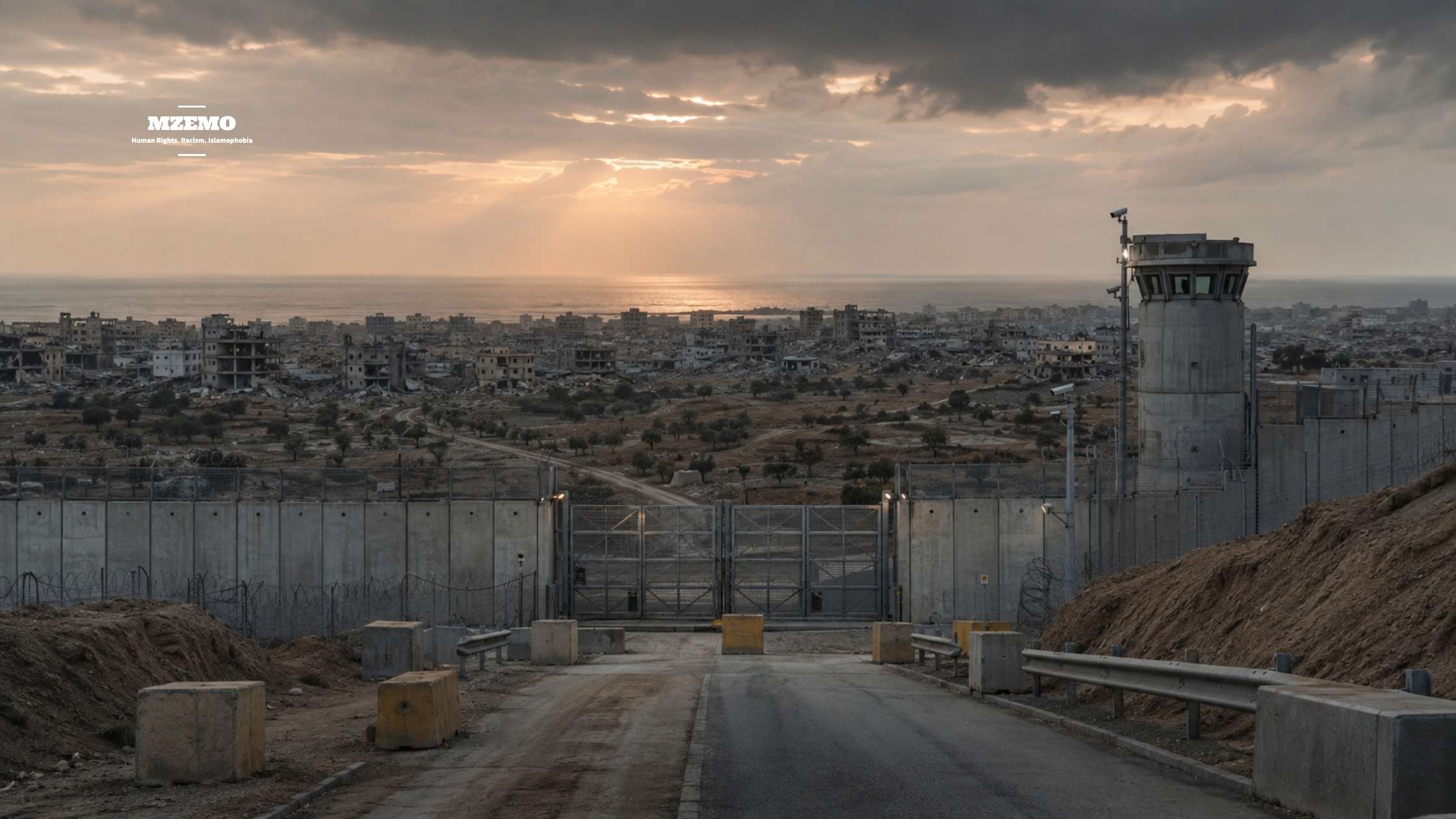
International diplomacy often assumes Israel might free Gaza once enough security conditions are satisfied. But decades of illegal occupation show the opposite. Israeli state policy weakened Palestinians, divided their land, and obstructed sovereignty while presenting every new restriction as temporary.

The latest and most heinous formula follows the history. Palestinians must disarm first, and then Israel may withdraw later. In reality, “later” means whenever Israel chooses. In fact, it is the architecture of permanent occupation.

Disarmament Means Palestinian Defenselessness

The US-led Board of Peace proposed a 15-point roadmap under which Palestinian groups would disarm in phases as Israeli forces withdrew. Hamas endorsed the proposed framework. However, Netanyahu rejected it clearly, declaring that Israel would not leave until Hamas was “genuinely disarmed”.

“Disarmament first” leaves Israel in command of the timetable. It can decide almost everything, including whether to accept disarmament. No fixed deadline compels its army to leave.

Palestinians will try to bring peace even through their remaining means of resistance while Israel retains its aircraft, artillery, surveillance, and control of Gaza’s borders. That is not mutual security. It is enforced helplessness before a state committing genocide.

The Map Exposes the Plan

The October 2025 ceasefire map left Israel controlling approximately 53 percent of Gaza behind the Yellow Line. Instead of moving towards the border, Israeli forces pushed deeper into the enclave.

By May 2026, Israel controlled an estimated 64 percent. Netanyahu then ordered the military to expand its hold to at least 70 percent. Boundary markers were displaced, no-go areas widened and neighbourhoods absorbed into so-called buffer zones.

The terminology hides the open theft. A “security area” can contain somebody’s home, farm, school or family grave. Once Palestinians are prevented from returning and buildings are demolished, temporary control ultimately produces permanent dispossession.

Additionally, Green Rafah follows the same logic. Israel and its partners determine where rebuilding occurs, who may enter, and which residents remain excluded. Gaza is being divided into controlled islands rather than restored as one Palestinian homeland.

Genocide Behind a Ceasefire Label

Israel’s genocide did not end with the ceasefire announcement. Between October 10, 2025 and August 13, 2026, Israeli attacks killed more than 1,260 innocent Palestinians and injured 4,152.

Israel attacked Gaza on 277 of the first 309 ceasefire days. Moreover, Gaza’s Government Media Office documented at least 3,795 violations by July 19, including air strikes, artillery attacks and shootings.

By August 13, the Palestinian death toll since October 2023 had reached at least 73,389, including approximately 21,500 children.

A ceasefire permitting killing, territorial expansion, and deprivation is not peace, but a quieter framework for destroying Palestinian life.

Gaza and the West Bank Face One Strategy

In Gaza, Israel uses bombardment, siege, military zones, and controlled reconstruction. On the other hand, in the West Bank, it uses settlements, checkpoints, raids, home seizures, water deprivation, and armed settler violence.

Both systems fragment Palestinian territory and make ordinary life increasingly impossible. Families are pressured to abandon land that Israel then brings under tighter control.

Treating Gaza and the West Bank as separate problems benefits Israel. Palestine is being dismantled through connected policies, one demolished neighbourhood, seized spring, and expanded military zone at a time.

Washington Protects the Occupier

Trump and Netanyahu held a 90-minute White House meeting on July 28, their eighth since Trump returned to office. Although it was reported that Iran dominated the discussion, no binding Israeli withdrawal followed.

Trump later promoted the disarmament roadmap as a breakthrough. Netanyahu rejected its central exchange, but Washington imposed no meaningful consequence. A Board of Peace official stressed that Israel would not have to make irreversible moves or rely only on trust.

Consequently, Palestinians received no equivalent protection. They were expected to disarm irreversibly while Israel occupied most of Gaza and retained the power to attack. American military assistance, diplomatic protection, and political indulgence allow Israel to reject agreements without paying a high price.

History Has Already Answered

Israel has occupied the West Bank since 1967 while settlements have illegally consumed Palestinian land. Oslo was presented as a temporary route towards Palestinian self-government, yet occupation deepened, and settlements expanded.

Although Israel apparently removed settlers and permanent ground forces from Gaza in 2005, it retained decisive control over its borders, airspace, and coastline before imposing a blockade. Each supposedly temporary arrangement created another instrument of domination.

Today’s conditions repeat the method – delay sovereignty, create facts on the ground, and blame Palestinians for an occupation Israel intends to preserve.

“Withdrawal Later” Means Occupation Without End

Israel does not seek a free, united and sovereign Palestine at any cost. Its policies seek a weakened Gaza, a fragmented West Bank and Palestinians too isolated to resist the loss of their homeland.

A genuine settlement would require an enforceable Israeli withdrawal, an end to genocide, unrestricted humanitarian access and Palestinian sovereignty. Israel’s formula reverses every priority.

“Disarmament first, withdrawal later” is not an offer of peace. It demands that Palestinians become defenceless while the state destroying their homeland decides how much of Palestine they may still inhabit.

Featured

Gaza’s Future Is Being Negotiated at UNGA While Palestinians Remain Trapped

Published

on

Gazas-Future-Is-Being-Negotiated-at-UNGA-While-Palestinians-Remain-Trapped

Gaza’s future is being discussed in rooms far from the people still living inside its ruins. At the United Nations General Assembly in New York this year, diplomats spoke about recovery, reconstruction, governance, aid, security, and statehood. Plans were presented, statements were issued, and powerful governments tried to shape what comes after Israel’s genocide in Gaza.

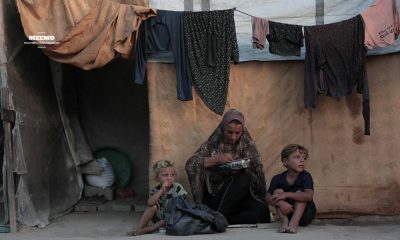
Yet Palestinians in Gaza remain trapped between destroyed homes, restricted movement, unreliable aid, and the fear that international promises will become another layer of control. The question is not whether the world can announce another plan. The question is whether Palestinians will be allowed to rebuild their own future with freedom and dignity.

A Recovery Plan With Big Numbers

On the sidelines of UNGA, Trump’s Board of Peace presented a six-month Gaza recovery plan worth $2.45 billion. The proposal includes 66 programmes covering infrastructure, economic recovery, human development, digital systems, legal affairs, peace and security.

Although the numbers sound large, Gaza’s destruction is far larger. The plan estimates physical damage at $35.2 billion, while full recovery and reconstruction may require about $71.4 billion over the next decade. That gap alone shows how limited a short-term package can be.

More importantly, Gaza is not only short of money. In fact, it is short of freedom. Roads cannot be repaired without machinery. Hospitals cannot function without fuel, medicine, and safe supply routes. Likewise, schools cannot reopen properly when children are displaced, teachers are living in tents, and families fear another heinous Israeli attack.

A recovery plan cannot work if Gaza remains under genocide, siege, military pressure, and political uncertainty.

International Support Still Faces Israel’s Control

Foreign ministers from numerous Islamic countries, including Qatar, Egypt, Jordan, the UAE, Indonesia, Pakistan, Türkiye and Saudi Arabia also met in New York during UNGA and expressed concern over Gaza’s ongoing genocide and suffering. They extended their support for the recovery efforts but also called on Israel to fulfil its commitments, including safe aid access, early recovery supplies and rehabilitation of critical infrastructure.

These statements show that major Arab and Muslim countries want Gaza’s genocide kept on the global agenda. It also links recovery with Palestinian self-determination and statehood.

However, statements cannot rebuild Gaza if Israel still controls the practical conditions of life illegally.

Netanyahu’s Election Shadow

These UNGA discussions are taking place as Israel heads towards its October 27, 2026 election. Netanyahu is again campaigning as Israel’s protector, using familiar security language despite the failures exposed by October 7 and the global backlash over Gaza genocide.

This matters a lot because Israeli elections often turn Palestinian life into campaign material. Gaza’s reconstruction, Israeli withdrawal, humanitarian access and Palestinian governance can all be delayed or hardened when politicians compete to appear tougher.

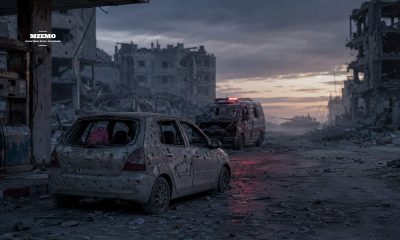
At the UN, Netanyahu defended Israel while many delegates walked out. He framed Israel’s genocides as a fight across several fronts, trying to shift attention from Palestinian civilians to Israel’s security narrative. But the destruction of Gaza cannot be hidden behind campaign language. Israel’s genocide has left Palestinians without homes, hospitals, schools, safety, and normal life that is apparent.

Gaza Is Not a Bargaining Chip

Gaza is now tied to a wider Middle East struggle involving Israel, Iran, Lebanon, Yemen, Red Sea routes, US strategy, Arab normalisation, and Gulf diplomacy. Powerful states treat Gaza as one file in a regional settlement.

But in reality, Palestinians are not bargaining chips. They are the people whose land was destroyed, children were killed, homes were turned into rubble, and the future is being discussed without enough Palestinian power in the room.

Recovery or Control?

There is a significant difference between rebuilding Gaza and managing Gaza.

Rebuilding means restoring homes, hospitals, schools, water, electricity, jobs, movement, and Palestinian political rights. While managing means controlling aid, delaying materials, conditioning governance, and keeping Palestinians dependent on permission.

The Board of Peace plan may become useful if it opens the way to real reconstruction, Palestinian unity and freedom. But if it rebuilds selected projects while Israel keeps control, it risks becoming another mechanism for managing Palestinians inside a destroyed territory.

In fact, Gaza does not need to be treated forever as a humanitarian project. It needs to be rebuilt as part of a free Palestine.

In a nutshell, UNGA speeches, recovery funds and international statements will matter only if they lead to Palestinian return, reconstruction, self-determination and safety. Gaza’s future cannot be built in New York alone. It must be built by Palestinians, in Palestine, with freedom at the centre.

Continue Reading

Featured

Gaza’s Exiles Are Still Waiting to Return

Published

on

Gazas-Exiles-Are-Still-Waiting-to-Return

They left Gaza to survive, not to disappear completely. More than 100,000 Palestinians from Gaza remain overseas after fleeing Israel’s genocide. Some escaped through Egypt for medical treatment, while others left with wounded children, elderly parents, or whatever relatives they could still protect.

Many expect to return once the bombing stops and a real ceasefire actually takes place. They remain scattered across Cairo, Turkey, and other countries, watching their homeland from a distance while the path back remains blocked by insecurity, destroyed homes, and genocide.

As per credible sources, only around 7,000 Palestinians have returned to Gaza. For the rest, exile has become a waiting room without a clear door out. Israel still controls more than 60% of the territory, airstrikes continue, and most Palestinians inside Gaza remain crowded into areas of temporary shelter with inadequate aid and no real reconstruction in sight.

Unfortunately, this is not ordinary migration. It is not the search for a better salary, a foreign passport, or a comfortable life abroad. In fact, it is forced displacement shaped by bombing, grief, closed crossings and the fear that temporary escape may become permanent removal.

Leaving Was Not Abandonment

The powerful story of Omar al-Hassayna shows the scale of the wound. He fled Gaza for Cairo after an Israeli strike destroyed apartment buildings in Gaza City where relatives had gathered for shelter. Consequently, around 308 members of his extended family were killed in that attack. His wife, four adult sons and four small grandchildren were among the dead. In August, he watched from Cairo as relatives buried 112 family members whose bodies had been recovered from the rubble, while dozens were still missing.

A man carrying that grief is not a migrant who has “moved on.” In reality, he is a survivor whose family, business, neighbourhood, and future were torn apart by Israel’s genocide in Gaza. Like thousands of others abroad, he is not free in the way outsiders imagine. He is safe from the immediate bomb, but not free from Gaza. His dead are there along with his memories and identity.

That is why the language matters. To call these Palestinians simply “overseas” or “abroad” misses the violence behind their absence. Many were pushed out by conditions Israel created: mass bombardment, destroyed hospitals, starvation, rubble-filled streets, and the collapse of ordinary life. Their displacement cannot be separated from the machinery that made Gaza unlivable.

The Right to Return Is Not Sentiment

For Palestinians, return is not nostalgia, but a political and moral right.

In reality, a person cannot be told to leave under fire and then be treated as though their absence has weakened their claim to home. A family does not lose Gaza because it crossed into Egypt to save a wounded child. A mother does not lose her street because her house was bombed. Likewise, a refugee does not stop being Palestinian because the world finds their return inconvenient.

This is why Gaza’s new exile carries the shadow of the Nakba. Palestinians know what can happen when “temporary” displacement becomes permanent. In 1948, families who believed they would soon return became refugees for generations. Today, many Gazans fear the same pattern.

In this regard, Reuters reported that some Israeli politicians have urged policies encouraging Gaza’s population to leave and preventing those who left from returning. That is not a minor political detail. It reveals why Palestinians are right to fear that displacement is not only a side effect of Israel’s genocide, but one of its possible outcomes.

Families Scattered Across Countries

Unfortunately, Gaza’s exile has split families into pieces. One daughter may be in Turkey for medical reasons, while her brother is in Cairo. A widow may be living with children in another rented room. Other relatives may still be inside Gaza, surviving in tents or damaged buildings. The family WhatsApp group becomes a map of loss – who escaped, who stayed, who died, who is missing, who cannot cross back.

These separations do not end when the genocidal bombing pauses. They continue in residency problems, unpaid rent, temporary visas, medical bills, language barriers, and the humiliation of depending on savings or charity. Many Gazans abroad cannot work legally or plan long-term. They are not fully settled where they are, yet Gaza remains unsafe and unreconstructed.

This is how genocide continues beyond the battlefield. It breaks the bonds that allow a people to live together, including a home, street, school, work, burial, marriage, memory, and return.

Continue Reading

Featured

NAZA: The Israeli Soldiers Testifying About Gaza’s Civilian Deaths

Published

on

NAZA-The-Israeli-Soldiers-Testifying-About-Gazas-Civilian-Deaths

During the last week of August, an Israeli strike hit a building in Bureij refugee camp. Unfortunately, some families could not escape. A four-year-old innocent boy was killed, while his mother and sister were wounded. Moreover, Israel also struck Shati refugee camp, saying weapons were stored inside two mosques but providing no public evidence.

Such attacks are why NAZA cannot be treated as a film about some past violence. It arrived while Palestinians were still being brutally killed by the military system its witnesses describe.

What the Word “NAZA” Hides

NAZA is a Hebrew military acronym for “collateral damage.” It refers to the number of civilians expected to die in an approved strike.

Shockingly, the term turns a mother, a child, or an entire family into a figure beside a proposed target. Their deaths are not discovered only after the bomb falls. According to testimony in the film, they can be anticipated before an attack is authorised.

In fact, the documentary challenges Israel’s claim that Gaza’s civilian toll resulted mainly from accidents, individual failures, or Hamas operating among civilians.

Twenty-Four Voices From Inside the System

The film was directed by renowned Israeli journalists Yuval Abraham and Rachel Szor, who worked on the Oscar-winning No Other Land. They spent three straight years gathering testimony from 24 Israeli soldiers and intelligence officers.

The interviews were recorded secretly on Tel Aviv rooftops. The faces and voices of these officers were altered because the participants feared retaliation. Some spoke with guilt, while others appeared indifferent or proud. The directors kept the focus on what they did rather than how they felt.

The witnesses describe surveillance, casualty estimates and remote bombing. Several discuss AI-assisted systems that processed information taken from thousands of Palestinian phones. Calls, locations and personal connections could help identify an alleged Hamas member.

One account describes words detected through a child’s phone indicating that her father had returned home. That information could trigger an airstrike on the family residence. Many people identified by these systems were alleged low-ranking members, yet their homes could be bombed while relatives were present.

In fact, an algorithm did not make these decisions alone. Officers supplied the data, commanders set the rules and human beings approved the attacks.

Families Were Included in the Calculation

One insider claims that approval was granted for an attack expected to kill 500 civilians to strike one Hamas member. The Israeli military has denied planning or approving an operation with 500 anticipated deaths.

That denial must be acknowledged, but it does not answer the testimony. Several witnesses describe civilians receiving an acceptable casualty number before strikes. They also describe attacks in which the suspected target was not confirmed inside the building.

Additionally, other accounts concern Palestinians killed after entering exclusion zones that residents could not see. Witnesses also discuss attacks near aid distribution points. Israel acknowledged that civilians were harmed at these locations and said it changed its rules.

The pattern described is not a handful of soldiers disobeying orders. It is a method built into targeting decisions.

The Refugee Camps Show the Killing Has Not Ended

The Bureij attack was not an isolated act of genocide. During the first week of September, 17-year-old Ibrahim al-Hash was killed in an Israeli drone strike in Jabalia refugee camp. Eight days later, drones struck Nuseirat camp and wounded several Palestinians, some critically. Israeli forces also opened fire near Jabalia.

These are densely populated communities where generations of Palestinians displaced during the Nakba have lived. Their homes and shelters have deliberately been attacked throughout the genocide.

Israel says its strikes target militants, weapons stores or people entering restricted areas. In reality, its explanations often come without evidence that families or independent investigators can examine.

By the second week of September, Gaza’s Health Ministry reported that Israel had killed 1,369 Palestinians and wounded 4,627 since the October 2025 ceasefire. The wider toll since October 2023 had reached at least 73,783 killed and 174,738 wounded.

Palestinians Had Already Told the World

NAZA does not make Palestinian suffering true because Israelis now describe it. Palestinian journalists, doctors, rescue workers and survivors have documented attacks on homes, hospitals, schools, tents and aid seekers throughout the genocide.

Their testimony was doubted or placed beneath Israeli military statements. The film matters significantly because people who operated the surveillance and targeting systems now describe the machinery in its own language.

Their accounts support a record Palestinians had already built with their blood, photographs and names.

Israel Turned on the Filmmakers

NAZA received a 25-minute ovation at the Venice Film Festival and won the Special Jury Prize. However, Israel’s leadership responded with fury.

Prime Minister Benjamin Netanyahu called the documentary antisemitic incitement. Their military chief Eyal Zamir accused it of falsehoods and directed military lawyers to examine possible action. Culture Minister Miki Zohar asked officials to consider stripping Abraham and Szor of their citizenship for alleged disloyalty.

This is not Antisemitism but evidence of Israeli crimes against Palestinians. The response also shows why insider testimony is dangerous. Palestinian witnesses are routinely dismissed as hostile. Israeli officers describing the same system are harder to silence.

Testimony Must Become Accountability

NAZA has broken through part of Israel’s machinery of denial. It presents insiders describing a system in which Palestinian families could be counted before they were killed.

Although a documentary cannot stop the next airstrike, its evidence must lead to independent investigations, an end to military support and accountability for those who designed, approved and protected the system.

Otherwise, NAZA will remain more than a film title. It will remain the cold number placed beside another Palestinian home.

Continue Reading
Advertisement

Trending