Connect with us

Featured

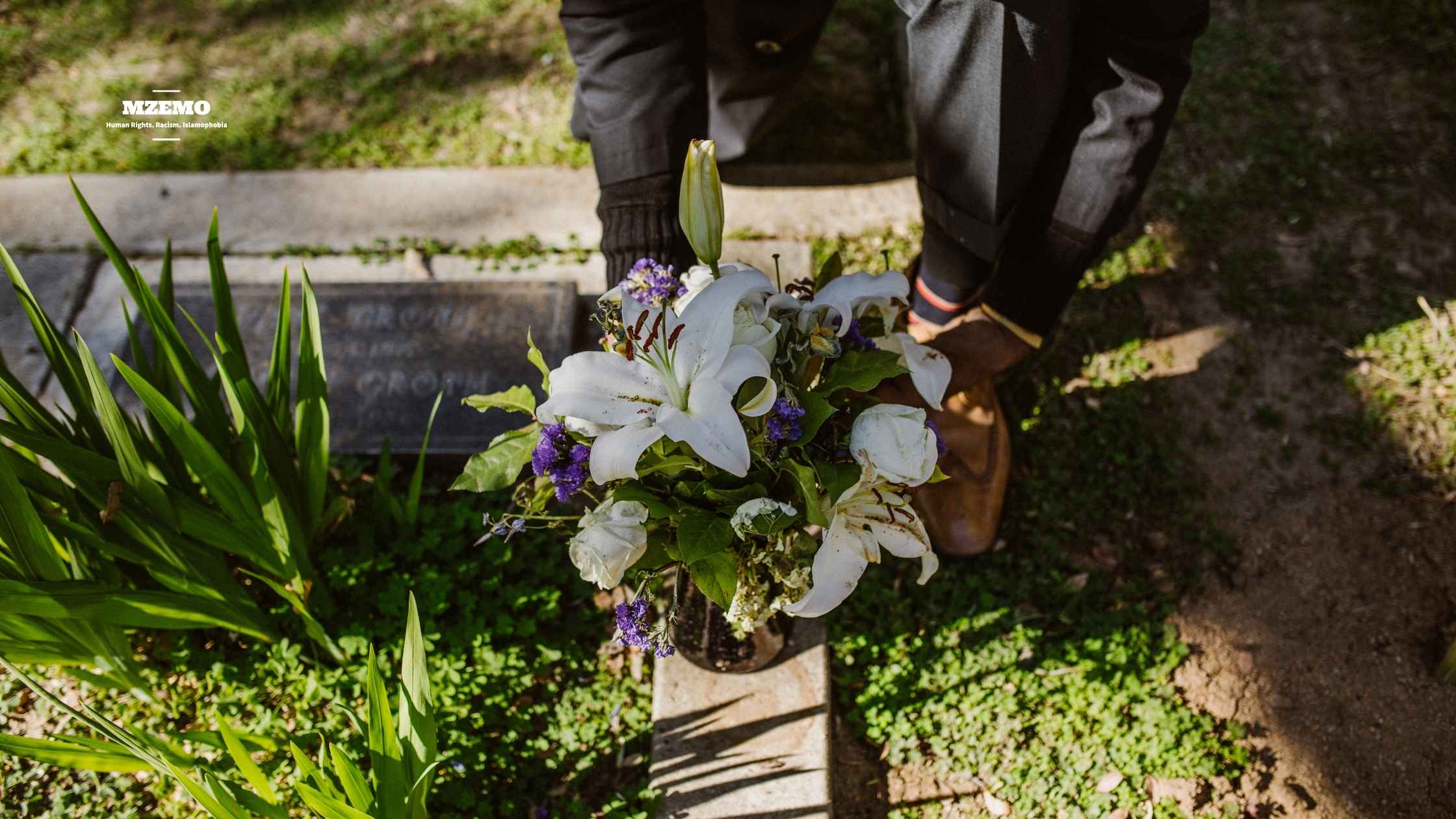
Gaza Is Running Out of Graves

Published

on

Gaza-Is-Running-Out-of-Graves

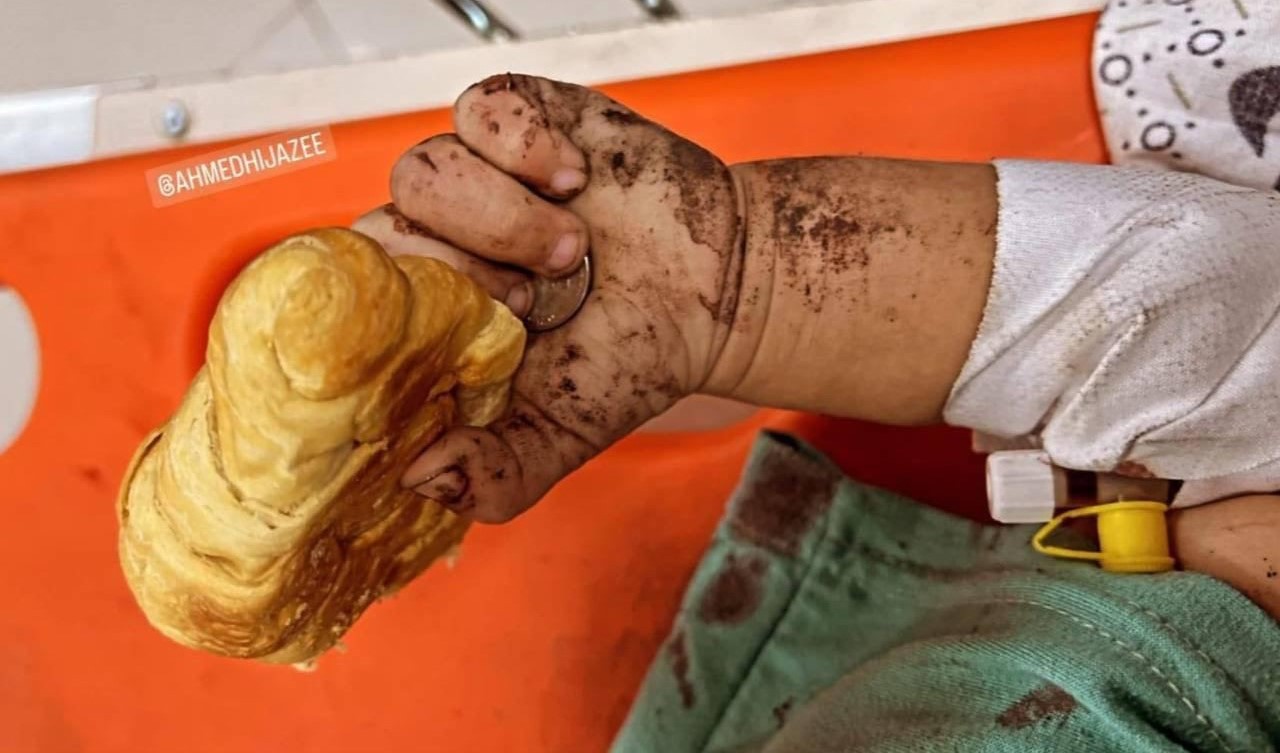
When 20-year-old Omar al-Sawhi tried to bury his father in Gaza City, he found no affordable space. The cemetery was crowded with fresh graves, many identified only by stones and torn pieces of paper. Unable to pay for a new plot, the family eventually buried Mohammed in his own father’s grave.

This is what Israel’s brutal genocide has done to burial in Gaza. Palestinians are being killed faster than graves can be prepared. Cemeteries have been completely bulldozed, bodies remain beneath ruins, and families bury relatives beside tents and hospitals. In fact, Israel has denied Palestinians safety in life and dignity in death.

More Deaths and Fewer Places to Bury Them

Israel has killed more than 73,000 Palestinians in Gaza since October 2023. Thousands more are missing beneath destroyed buildings. Even after the October 2025 ceasefire announcement, at least 1,200 Palestinians have been killed.

Each body requires recovery, identification, and burial. Yet Gaza had only about 60 cemeteries before the genocide, and many were already close to capacity. Israeli attacks and movement restrictions have made much of the remaining land unusable.

Consequently, families must search for a grave while mourning relatives killed by the same military that destroyed the places meant to receive them.

Israel Has Erased Gaza’s Cemetery Map

Gaza’s Ministry of Endowments says more than 40 cemeteries have been destroyed by Israel. A wider assessment by Euro-Med Human Rights Monitor examined 62 official burial grounds and found the following:

  • 39 cemeteries destroyed
  • 19 partially damaged
  • Only four largely intact
  • 93.5% damaged or destroyed overall

Every official cemetery in Rafah was destroyed. Moreover, all 24 cemeteries in Khan Younis were targeted, as were all 10 in North Gaza.

This scale cannot be dismissed as scattered genocidal damage. Cemeteries preserve names, family histories, and generations of Palestinian connection to the land. Their destruction attacks the dead and Palestinians’ historical connection to the land.

Gardens, Schools and Hospitals Became Graveyards

With established cemeteries full, destroyed or behind Israeli-controlled lines, Palestinians have buried relatives wherever earth remains available. Graves have appeared in gardens, hospital courtyards, school grounds, displacement camps and beside tents.

Many have no proper headstones. Families use masonry from destroyed homes, corrugated metal, or handwritten paper to preserve a name. Another Israeli strike, heavy rain, or exposure can remove the only marker.

Even one Khan Younis cemetery contained about 60 graves when the genocide began. It now holds approximately 6,000. At the height of the killing, a gravedigger prepared as many as 35 graves in one day. Whole families, including babies and children, sometimes arrived together.

Even a Grave Has Become Unaffordable

A prepared grave can now cost between 700 and 1,000 shekels, approximately $235 to $335. Families stripped of homes, work, and savings cannot afford it.

Some reopen an older relative’s grave, while others share burial spaces or leave graves unfinished because cement and stone are scarce. Israel has impoverished Gaza and made burial another ordeal.

The Dead Are Returning Years Later

Some funerals held in 2026 are for Palestinians killed in 2023. In August, Gaza buried 112 members of the al-Hasayna and Abu Sharia families, whose remains had been trapped beneath destroyed residential buildings in the Sabra neighbourhood.

Moreover, Palestinian authorities said the November 2023 Israeli attack killed 308 people. Of the dead, 153 remained under the ruins. Gaza’s Civil Defence workers with limited machinery spent 17 days searching before recovering 112 remains. Their families waited nearly three years for a grave.

Another funeral was held on August 20 for 50 recently recovered Palestinians from three families. Authorities have also recovered 529 remains from seven mass graves created in hospital grounds.

Thousands Remain Beneath the Rubble

Gaza Civil Defence estimates that approximately 8,500 people remain missing beneath destroyed buildings. Recovery teams lack excavators, fuel, forensic laboratories and safe access to Israeli-controlled areas.

Evidently, around 68 million tonnes of rubble cover Gaza. It contains unexploded weapons, possessions, human remains and evidence of how people were killed. Crushing or removing debris without forensic care can fragment bodies, erase identities and destroy evidence needed for future prosecutions.

Families may know where someone disappeared but wait years for a body. Without remains, there can be no final funeral, confirmed grave, or certainty that the missing person has been found.

Destroying Graves Is Another Form of Erasure

In January 2026, Israeli forces bulldozed al-Batsh Cemetery east of Gaza City. Exhumation of more than 700 bodies was also documented. Remains were mixed, and the landscape was altered so severely that families could no longer locate previously marked graves.

Cemetery destruction also obstructs the process of justice. When bodies are moved, mixed, or crushed, investigators lose information about identity and cause of death. The state responsible for the genocide is damaging the physical record of its crimes.

The Graves Will Testify

Israel has turned homes into tombs and hospitals into mass burial grounds. Yet every recovered name and makeshift marker resists its attempt to erase Palestinian identity.

Gaza may be running out of graves, but Israel cannot bury the truth. The dead remain evidence, and their families continue demanding the dignity and justice that were denied to them.

Featured

Jerusalem, Gaza and the Muslim World’s Red Lines

Published

on

Jerusalem-Gaza-and-the-Muslim-Worlds-Red-Lines

Unfortunately, Palestine is not being attacked on one front only. Gaza is going through a heinous genocide; Jerusalem is being pressured through holy-site violations, while the West Bank is being carved up through settlements, demolitions, and settler violence. These are connected parts of Israel’s wider attempt to weaken Palestinian life, land, and sovereignty.

Numerous Muslim countries have already mentioned many of these red lines. Specifically, in 2026, the foreign ministers of Qatar, Egypt, Jordan, the UAE, Indonesia, Pakistan, Türkiye, and Saudi Arabia issued repeated statements in favor of Palestine. Muslim nations are deeply concerned about Gaza, the situation in Jerusalem, Al-Aqsa, settlement expansion, and the E1 settlement plan. The real question is whether those red lines can become real pressure.

Jerusalem is the First Test

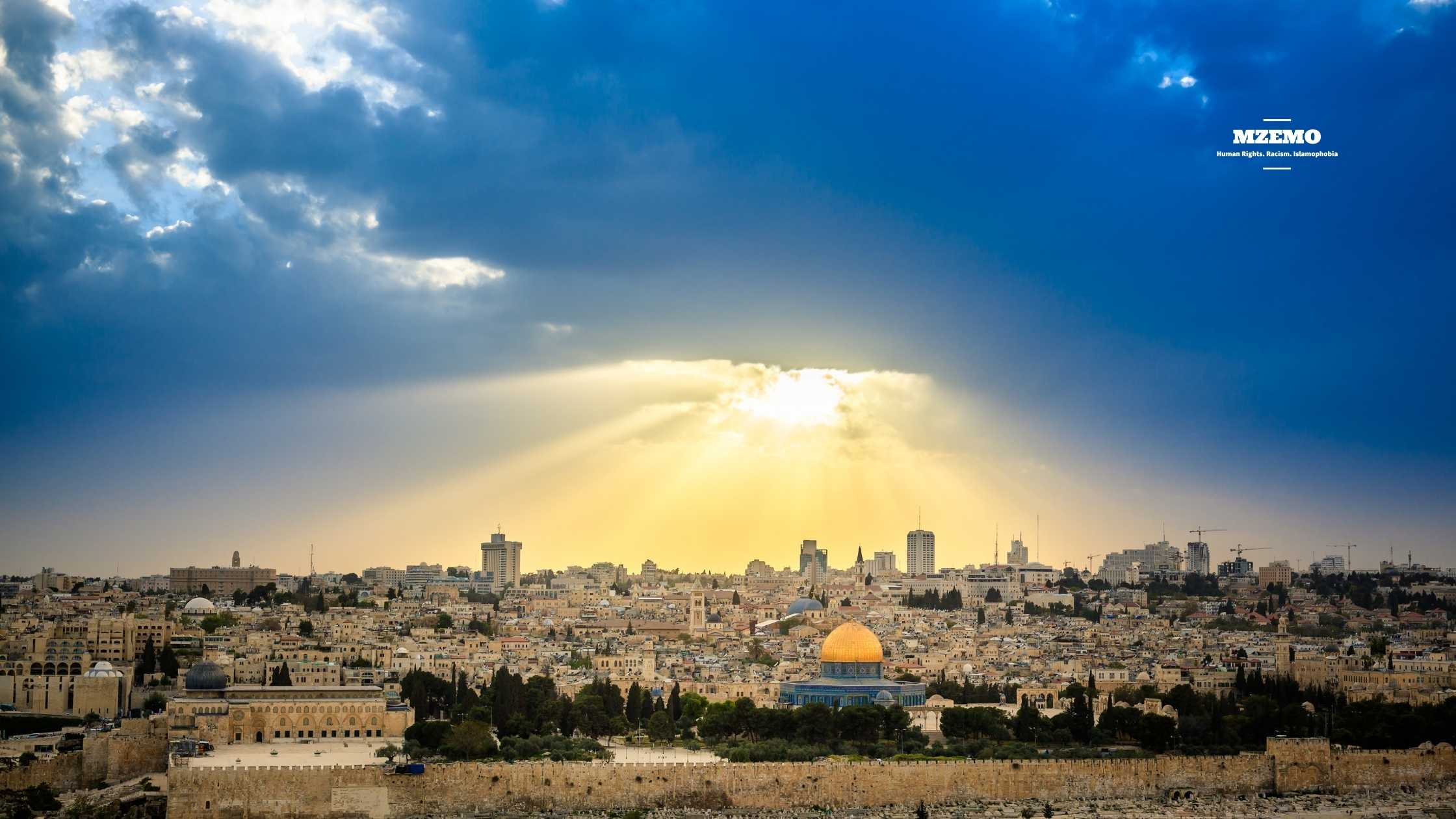
Jerusalem is not only a religious symbol, but also a political battlefield where Israel tests how far it can go. Access to Al-Aqsa Mosque, restrictions on worshippers, and incursions by settlers or extremist ministers all shape the future of illegally occupied East Jerusalem.

The Arab and Islamic states condemned Israeli restrictions on Muslim and Christian worship in occupied Jerusalem, including restrictions affecting Al-Aqsa Mosque and the Church of the Holy Sepulchre. They also stressed that Israel, as the occupying power, has no sovereignty over occupied Jerusalem.

Rather than being a small diplomatic line, it directly rejects Israel’s attempt to normalize control over the city’s sacred and political life. In this context, the UN archive published the recent joint statement on illegal Jerusalem restrictions.

If Jerusalem’s holy-site status can be repeatedly challenged without consequence, every other Palestinian red line becomes easier for Israel to test and even cross.

Gaza Shows the Real Face of Israel

The ceasefire was supposed to open the way for reconstruction, Israeli withdrawal, a new Palestinian administration and an International Stabilization Force. Even one year later, the force had not materialized, and major parts of the agreement remained stalled.

Until now, Israel’s genocidal campaign had brutally killed more than 74,000 Palestinians, while more than 1,400 Palestinians had been killed since the ceasefire took effect.

This is why the word “ceasefire” sounds completely hollow in Gaza. A ceasefire that leaves people in tents, neighborhoods in rubble, and Israeli strikes continuing does not feel like peace. Even today, fresh Israeli strikes are killing innocent Palestinians in Gaza, even as the ceasefire framework remains officially in place.

For Palestinians, the issue is not only whether aid enters. It is actually whether Gaza is allowed to live again. In the current scenario, reconstruction and peace that depend apparently on Israeli permission keep survival under the control of the same power that destroyed homes, roads, and hospitals.

The West Bank is Being Reshaped Quietly

While Gaza carries the loudest voice of genocide, the West Bank is being altered through a slower method. Settlements, outposts, checkpoints, and military restrictions not only inconvenience Palestinians, but also change the map itself.

On 2 Oct 2026, OCHA reported that West Bank humanitarian needs continue to be driven by settler violence, demolitions, and Israel’s movement restrictions. It recorded more than 70 Palestinian-owned structures demolished or sealed, 93 people displaced, including 55 children, and more than 50 settler attacks causing casualties or damage.

Adding fuel to the fire, the E1 settlement plan makes the danger even clearer. Numerous Arab and Islamic states rejected the plan east of occupied East Jerusalem because it threatens the link between East Jerusalem and the West Bank. The UN Secretary-General also warned that advancing E1 would deal a “deathblow” to the prospect of a contiguous and viable Palestinian state, while stressing that Gaza and the West Bank, including East Jerusalem, must remain politically, economically, and territorially integrated.

The Mecca Pact Raises a Sharper Question

The Mecca Joint Defence Agreement has changed the regional as well as global conversation. Saudi Arabia, Türkiye and Pakistan signed the pact in August 2026, and an armed attack on one member is regarded as an attack on all. Additionally, in October, the three countries agreed at an emergency meeting to rapidly deploy military forces and capabilities in Saudi Arabia under that framework.

The pact ultimately proves that Muslim states can coordinate quickly when security is treated as urgent.

Palestine needs that seriousness in non-military form too. It needs legal pressure, settlement trade restrictions, sanctions on violent settler networks, defense of custodianship in Jerusalem, and reconstruction funds that support Palestinian-led recovery rather than Israeli-controlled access.

Final thoughts

In conclusion, the Muslim world has already drawn its red lines on Gaza, Jerusalem and the West Bank. Israel has crossed many of them through genocide, settlement expansion, holy-site pressure and forced displacement.

What Palestine needs now is not another statement that disappears after the headlines. It needs a strategy that makes occupation costly, protects Jerusalem’s sanctity, and keeps Gaza, the West Bank, and East Jerusalem together as one Palestinian future.

Continue Reading

Featured

Gaza’s Coming Winter: Tents, Floods and Another Shape of Genocide

Published

on

Gazas-Coming-Winter-Tents-Floods-and-Another-Shape-of-Genocide

Winter is approaching Gaza, but it is not arriving as an ordinary season. For a population already crushed by continuous bombardment, acute hunger, siege, and repeated displacement, rain and cold are becoming another front in Israel’s genocide. This is because Palestinians have been deliberately left with almost nothing to protect them when storms arrive.

Across the Strip, innocent families are living in torn tents, damaged buildings, overcrowded shelters, and low-lying camps where relentless flooding is expected. These risks have also been mapped by numerous international humanitarian agencies. Yet the materials and support needed to repair shelters, reinforce camps, and protect families remain blocked, delayed, or insufficient. This is what turns winter from a weather event into a genocidal crime.

Tents That Were Never Meant to Become Homes

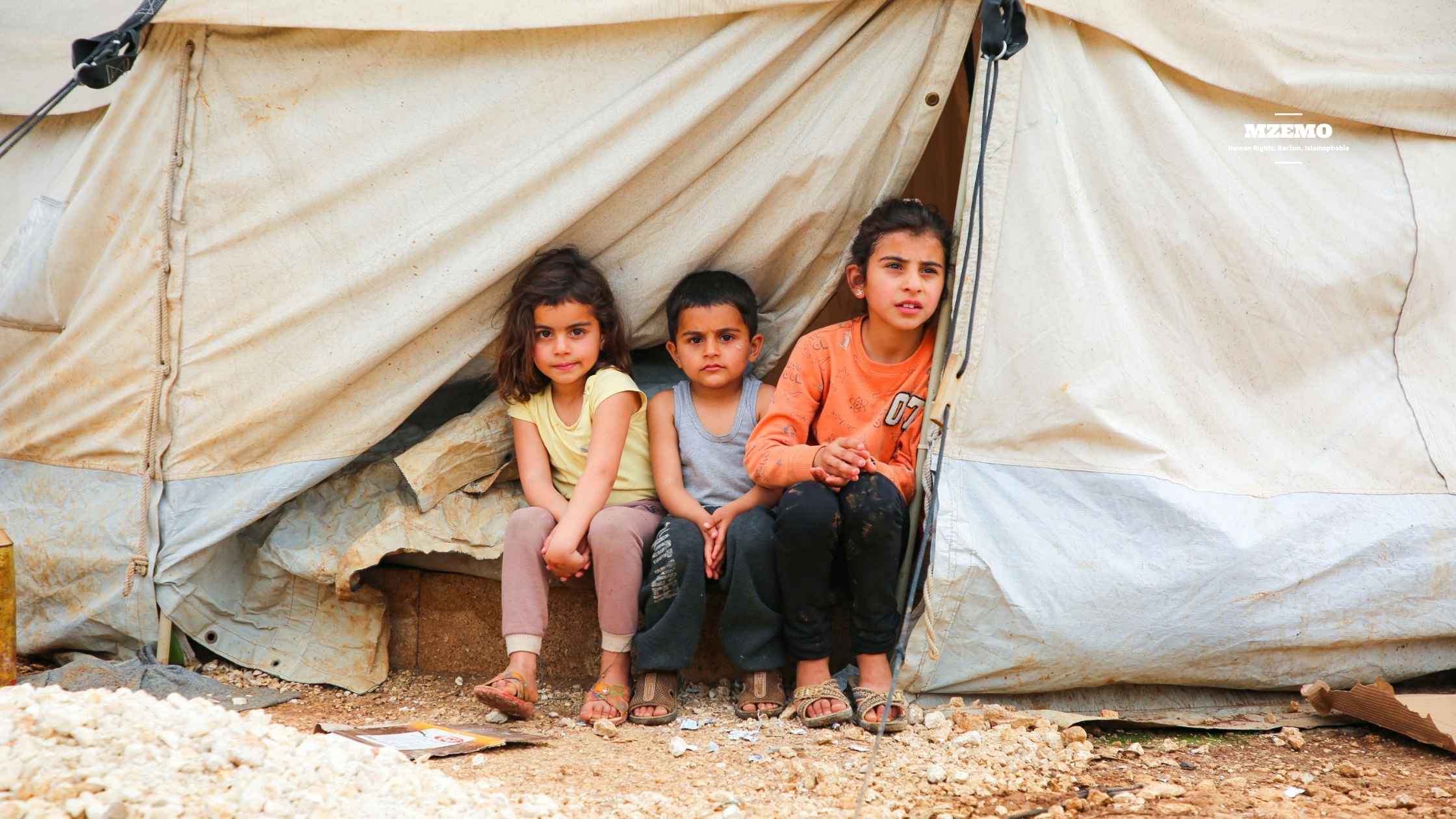
Although a tent is supposed to be temporary, in Gaza, it has become the forced architecture of survival. Families who once had homes, kitchens, schools and neighborhoods now live under plastic sheets, patched fabric and makeshift frames that cannot withstand months and even a few days of rain, wind and cold.

The International Organization for Migration has warned that nearly two million people in Gaza need shelter support before winter, while only 17% of winter shelter needs have been met. It also warned that El Niño could bring heavier rainfall, raising flood risks in a territory whose drainage systems have already been badly damaged.

This is not only a slight discomfort. Wet bedding, leaking tents and cold nights can become life-threatening, especially for babies, elderly people, pregnant women and the sick. So, when people are forced to sleep on the ground in shelters that cannot keep out water, winter becomes another form of deliberate violence.

Floods Are Not a Natural Surprise

Humanitarian groups already understand where the danger lies. OCHA reported that more than 13% of Gaza’s population is living in flood-prone displacement sites or unsafe buildings. They also elaborated that around 279,000 people are sheltering in 400 flood-prone displacement sites, while more than 2,300 remain in buildings that require demolition.

These huge numbers matter because they prove that the coming disaster is predictable. If camps flood, tents collapse, children fall ill from cold and contaminated water, no one can claim surprise. The sites have been identified, and the people at risk have been counted.

Gaza’s winter has become life-threatening because Israel’s genocide has destroyed the conditions needed to survive it. Roads are broken, drainage channels are blocked, homes are rubble, sewage systems are damaged, and families have been pushed from one place to another until displacement itself became permanent.

Disease Will Follow the Rain

Unfortunately, rain in Gaza falls on overcrowded tent camps, broken sewage networks, rubble-filled streets, and areas where clean water is still scarce. That makes flooding a public health emergency, not just a shelter problem.

OCHA also reported that communicable diseases continue to dominate health consultations in Gaza, including acute respiratory infections, skin infections, and acute watery diarrhea. These illnesses spread faster where people live close together, lack clean water and have little access to sanitation.

Moreover, it is evident that winter can deepen all of this. Cold and wet conditions can weaken children already suffering from acute hunger. Floodwater can carry waste into living areas. Families may ultimately be forced to keep wet clothes and blankets because they have no replacements. For people with chronic illness or disability, even reaching a clinic can become harder.

This is how a deliberate genocide operates beyond the bomb. It destroys the systems that keep people alive, then leaves them exposed to every season and every preventable danger.

Israel’s Restrictions Turn Weather Into a Weapon

The most significant fact about Gaza’s winter crisis is that it is not caused by weather alone. It is actually caused by a genocidal policy. The Norwegian Refugee Council has warned that Israeli restrictions continue to block critical shelter materials such as timber, cement and metal sheeting. It said two-thirds of Gaza’s population is living in tents and makeshift shelters made from materials that deteriorate within months.

NRC also said Israel allows only 15 trucks per week carrying so-called dual-use items from Jordan, while at least 500 truckloads of shelter materials are in the pipeline. At that pace, it could take more than seven months to bring in the materials needed now.

This is the heart of the crisis. Palestinians are facing winter unprotected because Israel controls what enters Gaza and restricts the items needed to make life survivable.

Another Shape of Genocide

Israel’s genocide in Gaza has taken many known and unknown forms: bombardment, starvation, mass displacement, destruction of hospitals, attacks on schools and the crushing of civic life. But winter adds another form. It threatens Palestinians through exposure, flooding, disease, and the denial of shelter.

The world has the data, the warnings, and it knows which camps may flood and how many families need help. It also knows that shelter materials are being blocked, and if children freeze, tents collapse, and disease spreads through flooded camps, those deaths will not be accidents.

Continue Reading

Featured

Gaza’s Future Is Being Negotiated at UNGA While Palestinians Remain Trapped

Published

on

Gazas-Future-Is-Being-Negotiated-at-UNGA-While-Palestinians-Remain-Trapped

Gaza’s future is being discussed in rooms far from the people still living inside its ruins. At the United Nations General Assembly in New York this year, diplomats spoke about recovery, reconstruction, governance, aid, security, and statehood. Plans were presented, statements were issued, and powerful governments tried to shape what comes after Israel’s genocide in Gaza.

Yet Palestinians in Gaza remain trapped between destroyed homes, restricted movement, unreliable aid, and the fear that international promises will become another layer of control. The question is not whether the world can announce another plan. The question is whether Palestinians will be allowed to rebuild their own future with freedom and dignity.

A Recovery Plan With Big Numbers

On the sidelines of UNGA, Trump’s Board of Peace presented a six-month Gaza recovery plan worth $2.45 billion. The proposal includes 66 programmes covering infrastructure, economic recovery, human development, digital systems, legal affairs, peace and security.

Although the numbers sound large, Gaza’s destruction is far larger. The plan estimates physical damage at $35.2 billion, while full recovery and reconstruction may require about $71.4 billion over the next decade. That gap alone shows how limited a short-term package can be.

More importantly, Gaza is not only short of money. In fact, it is short of freedom. Roads cannot be repaired without machinery. Hospitals cannot function without fuel, medicine, and safe supply routes. Likewise, schools cannot reopen properly when children are displaced, teachers are living in tents, and families fear another heinous Israeli attack.

A recovery plan cannot work if Gaza remains under genocide, siege, military pressure, and political uncertainty.

International Support Still Faces Israel’s Control

Foreign ministers from numerous Islamic countries, including Qatar, Egypt, Jordan, the UAE, Indonesia, Pakistan, Türkiye and Saudi Arabia also met in New York during UNGA and expressed concern over Gaza’s ongoing genocide and suffering. They extended their support for the recovery efforts but also called on Israel to fulfil its commitments, including safe aid access, early recovery supplies and rehabilitation of critical infrastructure.

These statements show that major Arab and Muslim countries want Gaza’s genocide kept on the global agenda. It also links recovery with Palestinian self-determination and statehood.

However, statements cannot rebuild Gaza if Israel still controls the practical conditions of life illegally.

Netanyahu’s Election Shadow

These UNGA discussions are taking place as Israel heads towards its October 27, 2026 election. Netanyahu is again campaigning as Israel’s protector, using familiar security language despite the failures exposed by October 7 and the global backlash over Gaza genocide.

This matters a lot because Israeli elections often turn Palestinian life into campaign material. Gaza’s reconstruction, Israeli withdrawal, humanitarian access and Palestinian governance can all be delayed or hardened when politicians compete to appear tougher.

At the UN, Netanyahu defended Israel while many delegates walked out. He framed Israel’s genocides as a fight across several fronts, trying to shift attention from Palestinian civilians to Israel’s security narrative. But the destruction of Gaza cannot be hidden behind campaign language. Israel’s genocide has left Palestinians without homes, hospitals, schools, safety, and normal life that is apparent.

Gaza Is Not a Bargaining Chip

Gaza is now tied to a wider Middle East struggle involving Israel, Iran, Lebanon, Yemen, Red Sea routes, US strategy, Arab normalisation, and Gulf diplomacy. Powerful states treat Gaza as one file in a regional settlement.

But in reality, Palestinians are not bargaining chips. They are the people whose land was destroyed, children were killed, homes were turned into rubble, and the future is being discussed without enough Palestinian power in the room.

Recovery or Control?

There is a significant difference between rebuilding Gaza and managing Gaza.

Rebuilding means restoring homes, hospitals, schools, water, electricity, jobs, movement, and Palestinian political rights. While managing means controlling aid, delaying materials, conditioning governance, and keeping Palestinians dependent on permission.

The Board of Peace plan may become useful if it opens the way to real reconstruction, Palestinian unity and freedom. But if it rebuilds selected projects while Israel keeps control, it risks becoming another mechanism for managing Palestinians inside a destroyed territory.

In fact, Gaza does not need to be treated forever as a humanitarian project. It needs to be rebuilt as part of a free Palestine.

In a nutshell, UNGA speeches, recovery funds and international statements will matter only if they lead to Palestinian return, reconstruction, self-determination and safety. Gaza’s future cannot be built in New York alone. It must be built by Palestinians, in Palestine, with freedom at the centre.
Continue Reading
Advertisement

Trending