Connect with us

Crimes Against Humanity

Siege to Starvation: Food as a Weapon in Gaza

Published

on

Siege-to-Starvation-Food-as-a-Weapon-in-Gaza

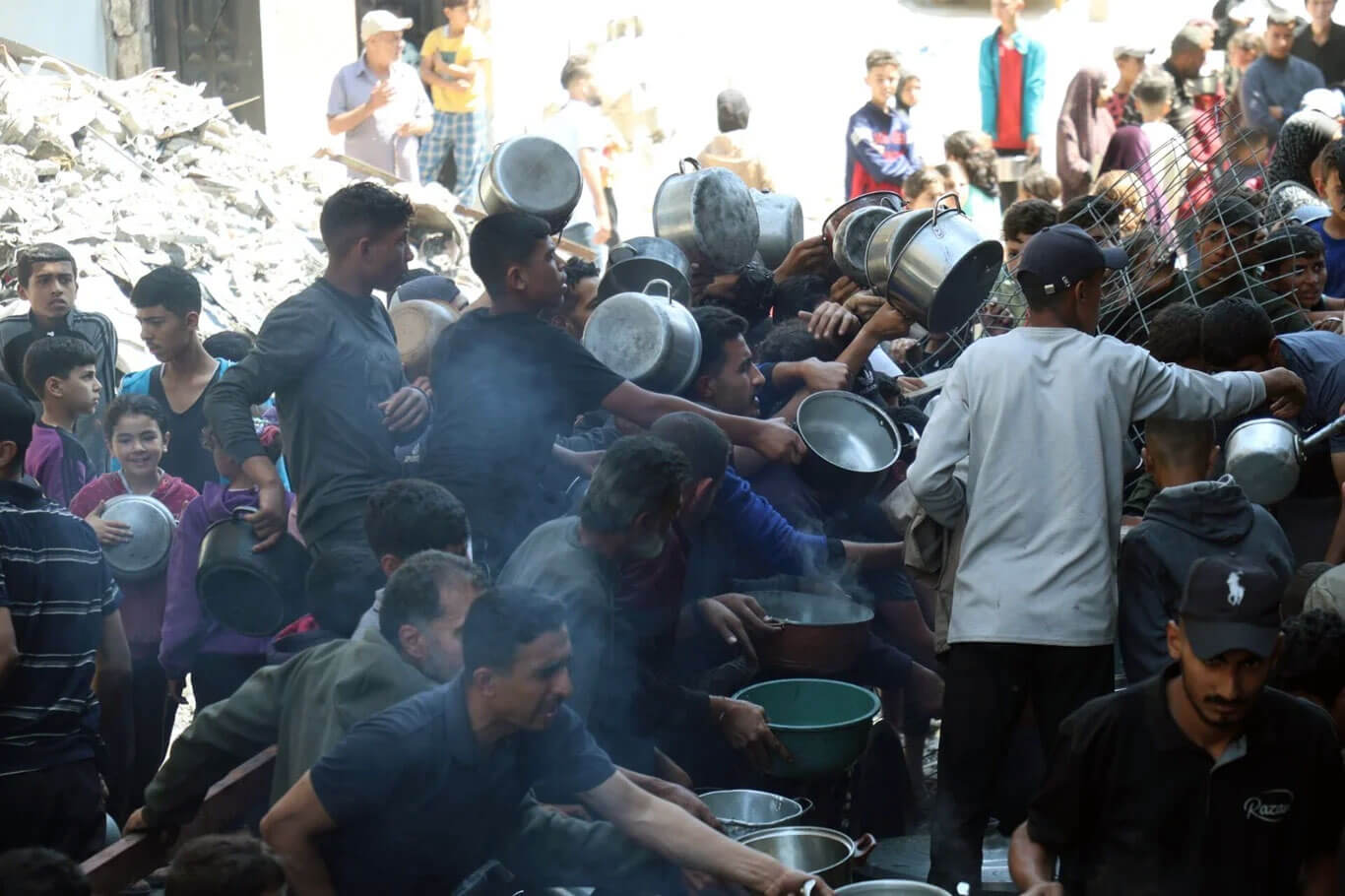
Bread should never be a battlefield, yet in Gaza, parents count the hours between air raids and the next bite, trading sleep for a place in a bread line. This is not misfortune but an outcome of the ongoing genocide. Famine has been confirmed in Gaza after months of siege and bombardment. Moreover, the pattern of atrocities by Israel is tragically quite clear: cut the crossings, choke the fuel, bomb the roads, and the entire food system.

Famine in Gaza

On 22 August 2025, the IPC Famine Review Committee confirmed Famine (IPC Phase 5) in Gaza, warning that conditions could spread south without a sustained surge in aid and safety. The famine is not a metaphor but a technical threshold that means households cannot access enough calories or care to survive without immediate, large-scale relief.

Starvation in a place rarely makes a headline, but it is clearly shown in logistics spreadsheets and cratered roads. It can also be felt in the silence of dead ovens and empty tanks.

As per the UN agencies’ estimate, around five hundred to six hundred trucks per day are the minimum to cover basic needs. However, many days in many areas of Gaza fall far short, as a trickle cannot feed two million people. Moreover, there is an increasing fuel scarcity that is killing the cold chain. With electricity unreliable and fuel scarce, bakeries stop, fridges fail, and water systems sputter. In modern times, the families living in besieged Gaza burn scrap wood to boil lentils.

The movement has also been made quite dangerous as roads are continuously bombarded. Moreover, checkpoints and shelling make a bag of flour a life-or-death decision. Food trucks cannot reliably reach warehouses, and people cannot safely reach distribution points.

Food systems are completely dismantled by Israel as fields and greenhouses are destroyed completely or made inaccessible. Fishing is also crippled, and markets and warehouses are devastated or empty. Even when aid enters, the last-mile network is broken.

The Reality of the Human Toll

Hunger creeps, then crashes. UNICEF’s August screenings found roughly 1 out of 5 children in Gaza City acutely malnourished. This pace is increasing day by day. Children are starving, and they fail to gain adequate weight. Moreover, breastfeeding falters when mothers are undernourished, too. In these conditions, water-borne diseases spread faster in bodies that are already depleted.

Mothers stretch tea and bread into a “meal,” or simply skip eating altogether, so toddlers can share a biscuit. Children, on the other hand, stand in bread lines, and schools that became shelters have no kitchens or fuel. Diabetics and dialysis patients, who need predictable food and water, see their survival routines collapse greatly.

Every siege writes a cruel equation, such as calories in versus calories needed. In Gaza, the inputs have been deliberately depressed. Rations that do arrive are often calorie-inadequate for a displaced population; staples that require long boiling are useless without fuel and clean water. High-energy biscuits keep people alive for days, not months.

International Law and the Line That Was Crossed

International humanitarian law prohibits the starvation of civilians as a method of warfare and requires the rapid, unimpeded passage of humanitarian relief. Human Rights Watch has documented how policies that block water, food, fuel, and safe access amount to using starvation as a weapon, a war crime. Whether by design or through reckless disregard for known consequences, the effect is the same: families are deprived of what they need to live.

What Relief Looks Like in Practice

Ending a heinous famine like this one is not a photo-op at a crossing. Completely ending it is about volume, tempo, and safety. Firstly, you should scale the pipeline to a figure of around five hundred to six hundred trucks per day minimum. Fuel should be reconsidered as a humanitarian commodity, including water and health facilities. For example, prices for cooking gas spiked by 4000% in early 2025 compared to pre-war levels. Therefore, families cannot cook even when they get food.

The mass starvation that is fueled by Israeli atrocities is a clear example of human rights violations. Now, the world must act with a renewed spirit before it is too late. Firstly, a permanent ceasefire is the need of the hour. Protection of civilians is also an important step to be taken.

Then, the perpetrators should face the international criminal organizations, as there are numerous cases to be faced, including one on genocide. Unconditional humanitarian access should be on the agenda. UN Resolutions should be followed in true letter and spirit. Moreover, there must be legal accountability as well as sustained funding to make the people of Gaza breathe again.

Bottom Line

Gaza’s hunger crisis is not a side story but actually “the story.” As long as aid is throttled, fuel is scarce, and farms, bakeries, and boats are broke, famine will spread quickly. The metrics may shift week to week, but the moral calculus doesn’t. Bread should not be contraband. Ending the siege on food, in policy and practice, is the minimum standard of humanity!

Continue Reading
Click to comment

Leave a Reply

Your email address will not be published. Required fields are marked *

Crimes Against Humanity

Frozen to Death: How Israel’s Blockade Turns Gaza’s Winter into a Killing Field

Published

on

Frozen-to-Death-How-Israels-Blockade-Turns-Gazas-Winter-Into-a-Killing-Field

In an unfortunate series of events in Gaza, some deaths arrive without the sound of missiles. It’s just a tent that fails in wind and rain, a baby whose body can’t hold sufficient heat, and a clinic that can’t keep a neonatal ward warm due to fuel scarcity.

This winter, cold is not an “act of nature” in Gaza, but a predictable outcome of mass displacement into makeshift shelters. Additionally, aid restrictions further exacerbate the situation.

On January 10, 2026, the death of Mahmoud Al-Aqraa, a seven-day-old infant in Deir el-Balah, was reported. Medical sources attributed his death to extreme cold. The same report highlighted nighttime temperatures in Gaza dropping as low as 9°C (48°F) in recent days.

Apparently, nine degrees sounds survivable, but only in a home with a roof, dry bedding, electricity, and heat. But when it comes to Gaza’s displacement camps, it is fatal.

The Numbers Behind the “Winter Crisis”

People in their blankets are unable to realize the heart-trembling cries of the innocent children of Gaza. The UN’s humanitarian coordination office (OCHA) documented that since 10 December, more than 42,000 tents or makeshift shelters were estimated to have sustained full or partial damage across 320 displacement sites, affecting at least 235,000 people.

However, that is not a handful of torn tents, but a shelter system collapsing in real time, over weeks, repeatedly, during storms.

OCHA also warned that winter storms are heightening the risk of cold-related illnesses and preventable deaths, particularly among children under five.

Some of them are documented as follows:

  • Gaza’s Ministry of Health recorded three children who died of hypothermia, including a two-month-old who died on 29 December.
  • OCHA also cited Médecins Sans Frontières (MSF) reporting that a 29-day-old infant died on 18 December shortly after admission to Nasser Medical Complex.

So, these are not just weather tragedies, but deaths occurring inside a controlled environment of deprivation by Israel.

How Blockade Turns Cold into An Executioner

Cold kills fastest when three protections are removed, namely: shelter, fuel, and medical capacity.

In a series of genocidal events, Israel continues to limit the number of tents and sustainable shelters entering Gaza, and also blocks mobile homes and materials used to fix damaged tents.

This matters because winter deaths aren’t random, but followed by a mechanical chain:

  1. Storm hits: Tents rip, flood, and are destroyed by a catastrophe
  2. Families move: Often to beaches or low-lying areas with poor drainage
  3. Bedding stays wet: Children sleep cold and damp for days
  4. Respiratory infections surge: Especially among infants
  5. Hospitals struggle: Cold wards are facing power/fuel instability, resulting in a higher mortality risk

Moreover, OCHA recorded that storms have inundated tents with seawater in places like Al Mawasi in Khan Younis. It rendered many shelters uninhabitable, forcing families to move again. The world knows what’s happening there, but is not paying heed to these innocent lives.

Aid Access is Being Choked at The Exact Moment Winter Demands Speed

To add fuel to the fire, Israel barred the entry to Gaza of foreign medical and humanitarian aid linked to organizations facing suspension unless they comply with new registration rules. Resultantly, it affected 37 international NGOs.

Reports also quote an MSF coordinator describing how missing key staff creates “a gap” in aid service, and notes UN concerns that registered groups would meet only a fraction of what’s required.

It is evident that aid is being deliberately blocked at a time when it is most needed. Winter is the worst time for gaps, and when tents are destroyed, the timeline isn’t “next month.” It’s tonight.

What Gaza’s Winter Proves: Deprivation Can Kill Without Airstrikes

If a population is forced into tents, storms repeatedly destroy those tents, and the entry of winter protection is restricted while aid capacity is squeezed, then winter becomes more than weather.

It undoubtedly becomes a predictable tool of attrition. Even Gaza’s Civil Defence spokesman rejected the framing of a “weather crisis,” saying the disaster results from genocidal events still going on, leaving people in torn tents and cracked houses without safety.

What Would Stop These Deaths?

Preventing these innocent lives from disease and death is the need of the hour. There are a few steps that need to be taken at an immediate scale:

  • Firstly, aid should be completely allowed to come along with relevant items for winter protection.
  • Secondly, people of Gaza must be given reliable fuel supplies, food, electricity, and healthcare services.
  • Thirdly, the bloodshed should stop, as hundreds of thousands of innocent lives have been lost by now.

To be specific, as per the OCHA reports, shelter partners have distributed 37,740 tents, 127,860 tarpaulins, and 94,980 bedding items since early December. These are far below the needs of over two million people requiring urgent shelter assistance.

In a nutshell, a winter night of 9°C should not kill a newborn.

It kills when shelter is shredded by storms, when bedding stays wet, when fuel and materials are restricted, and when humanitarian systems are squeezed.

Gaza is being forced to live outdoors through winter, and then blamed when the weather does what weather always does. Ultimately, the cold is not the killer, but the siege is.

Continue Reading

Crimes Against Humanity

Women and Children on the Frontlines of Genocide: Stories Too Few Know

Published

on

Women-and-Children-on-the-Frontlines-of-Genocide

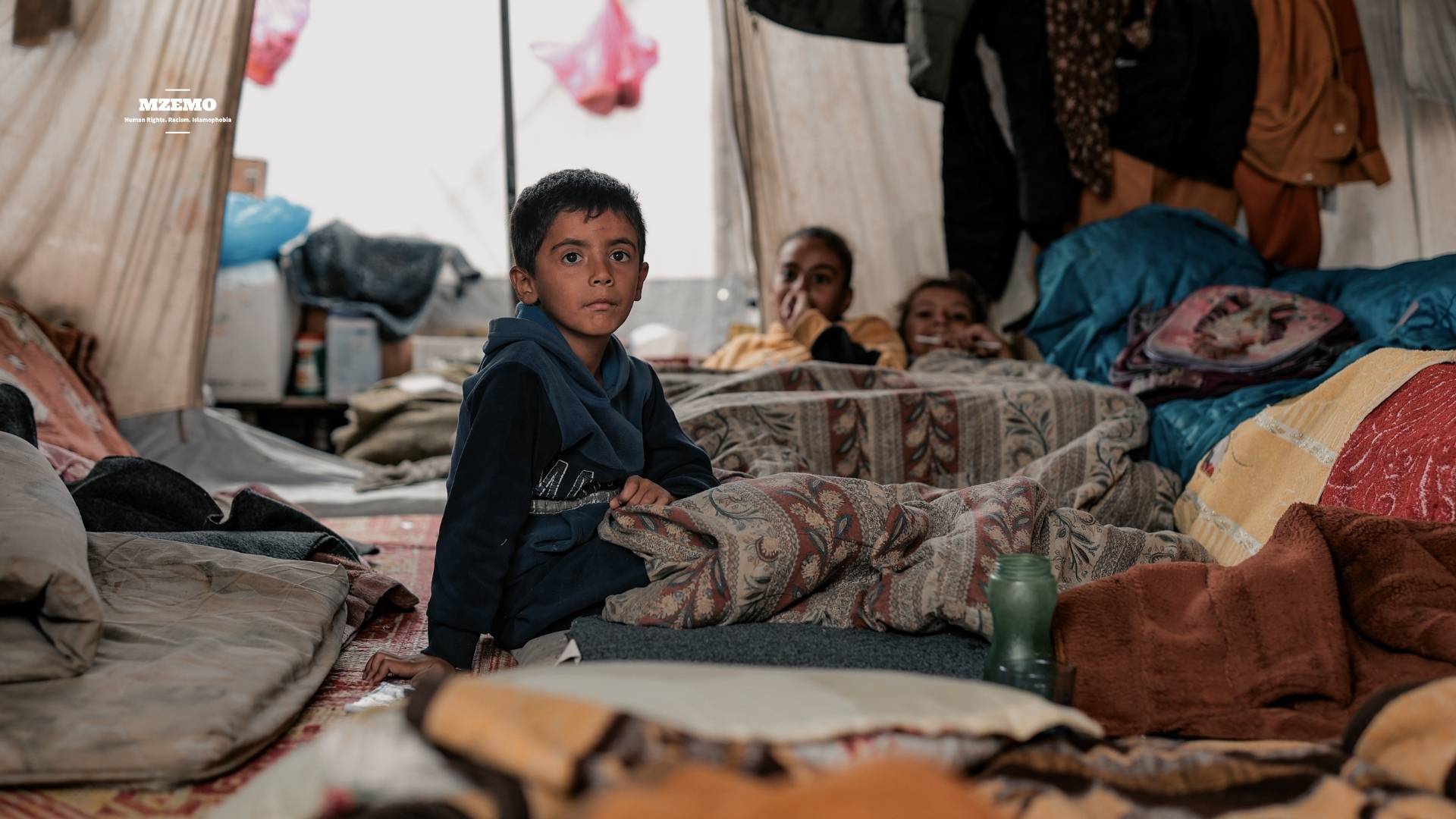
On a cold winter night in Gaza, rainwater rushed through a tent camp built on bare sand. A mother clutched her child as the floor turned into mud. Unfortunately, there was no drainage system, no insulation, and no medical post nearby. By morning, the child was dead, not from a bomb, but from severe weather exposure.

This is how genocide unfolds when the cameras move on. It unfolds not always with visible explosions, but with unlivable conditions like cold, hunger, disease, and abandonment. Especially in Gaza, women and innocent children, like angels, are bearing the heaviest burden.

A War Measured in Children’s Lives

Since October 2023, Gaza has witnessed one of the deadliest assaults on civilians in modern history. According to figures cited by the United Nations Office for the Coordination of Humanitarian Affairs (OCHA), tens of thousands of Palestinians have been killed, with women and children forming the majority of victims.

Unfortunately, the scale of harm to children is unprecedented.

UNICEF reports that more than 50,000 Palestinian children have been killed or injured during the ongoing war. It is a figure that includes deaths, permanent disabilities, amputations, and life-altering trauma.

To put this in context: this is not a “side effect” of war, but a systematic destruction of a generation.

Why Women and Children Are the First to Suffer

In siege warfare like this, vulnerability is engineered through heinous designs.

  • Displacement forces families into overcrowded, unsafe shelters
  • Blockades collapse food and healthcare systems
  • Targeted infrastructure destruction eliminates water, sanitation, and maternity care

UN Women documents that women and girls in Gaza are facing disproportionate harm due to displacement, caregiving burdens, and loss of reproductive healthcare. These conditions escalate mortality even without direct strikes.

When survival resources shrink, mothers skip meals, girls abandon education, and pregnant women deliver without doctors.

Hunger as a Weapon: Mothers Starving First

Food scarcity in Gaza has been an important strategy by Israel to make the Palestinians starve to death.

UN Women reports that the majority of women in Gaza are now facing severe food insecurity, meaning prolonged hunger that directly threatens life and health.

Ultimately, pregnant women are among the most affected:

  • Rising rates of anemia
  • Inability to access prenatal supplements
  • Increased risk of miscarriage and premature birth

For breastfeeding mothers, malnutrition translates into reduced milk supply, leaving infants vulnerable to dehydration and disease.

Pregnancy Under Bombardment: Giving Birth Without Safety

International analysts report that all the hospitals in Gaza have been bombed, besieged, or rendered inoperable. What remains is chaos.

Human Rights Watch has documented cases where pregnant women were forced to flee during labor, give birth without anesthesia, or deliver premature babies in shelters lacking electricity or clean water.

Moreover, neonatal units have collapsed under pressure. Doctors have described scenarios where multiple premature babies were placed in a single incubator, not due to medical judgment, but because there were no alternatives.

So, these are not isolated tragedies, but repeated patterns in a dismantled healthcare system.

Winter, Floods, and the Deaths No Airstrike Counts

As winter storms swept through Gaza, displaced families living in tents faced freezing temperatures and flooding.

Associated Press reporting, citing humanitarian agencies, documented children dying from exposure and illness in makeshift camps lacking insulation, heating, or drainage systems.

What would normally be routine humanitarian responses, winterized tents, blankets, and heaters, were blocked or delayed. It becomes evident that when aid is obstructed, the weather becomes lethal.

Orphans of a War the World Normalized

Beyond physical injury lies a quieter catastrophe. Thousands of children in Gaza are now orphaned or separated from their families. Schools have been destroyed or repurposed as shelters. Resultantly, education has been interrupted for months, in many cases, years.

Additionally, do not forget about the widespread psychological trauma.

When it comes to the United Nations agencies, they have warned about long-term mental health consequences for children exposed to constant bombardment, displacement, and loss. It also includes anxiety disorders, depression, and developmental regression. Consequently, this is how innocent childhood is being erased.

Gaza Is Not Alone: Children Targeted Beyond the Strip

While Gaza remains the epicenter, Palestinian children elsewhere are also under attack.

For instance, in 2025, a record number of settler attacks and child deaths in the occupied West Bank were reported, according to UN-verified data.

Moreover, children have been killed during raids, detained without charge, and subjected to night arrests. It reinforces that this violence is not confined to one battlefield but is embedded in a broader system of domination.

Counting the Dead When the Dead Are Still Buried

Critics often question casualty figures, but OCHA explains that Gaza’s death tolls are compiled through hospital records, morgues, and identification committees. Unfortunately, many victims are still missing under rubble, and the real numbers may be higher.

These numbers are delayed not because they are inflated, but because bodies cannot be retrieved.

Stories Too Few Know

  • A mother who lost her newborn because the hospital generator failed in Rafah
  • A girl who now cares for three younger siblings after her parents were killed during Israel’s bombardment
  • A pregnant woman turned away from five hospitals before delivering in a classroom in Khan Yunis

These are not exceptions, but are the architectures of this catastrophe. In every tent, every empty incubator, and every orphaned child, the truth is written plainly.

People may forget, but history will remember who spoke and who looked away!

Continue Reading

Crimes Against Humanity

Winter Without Shelter: How Floods Are Turning Gaza’s Camps Into Swamps of Despair

Published

on

Winter-without-Shelter

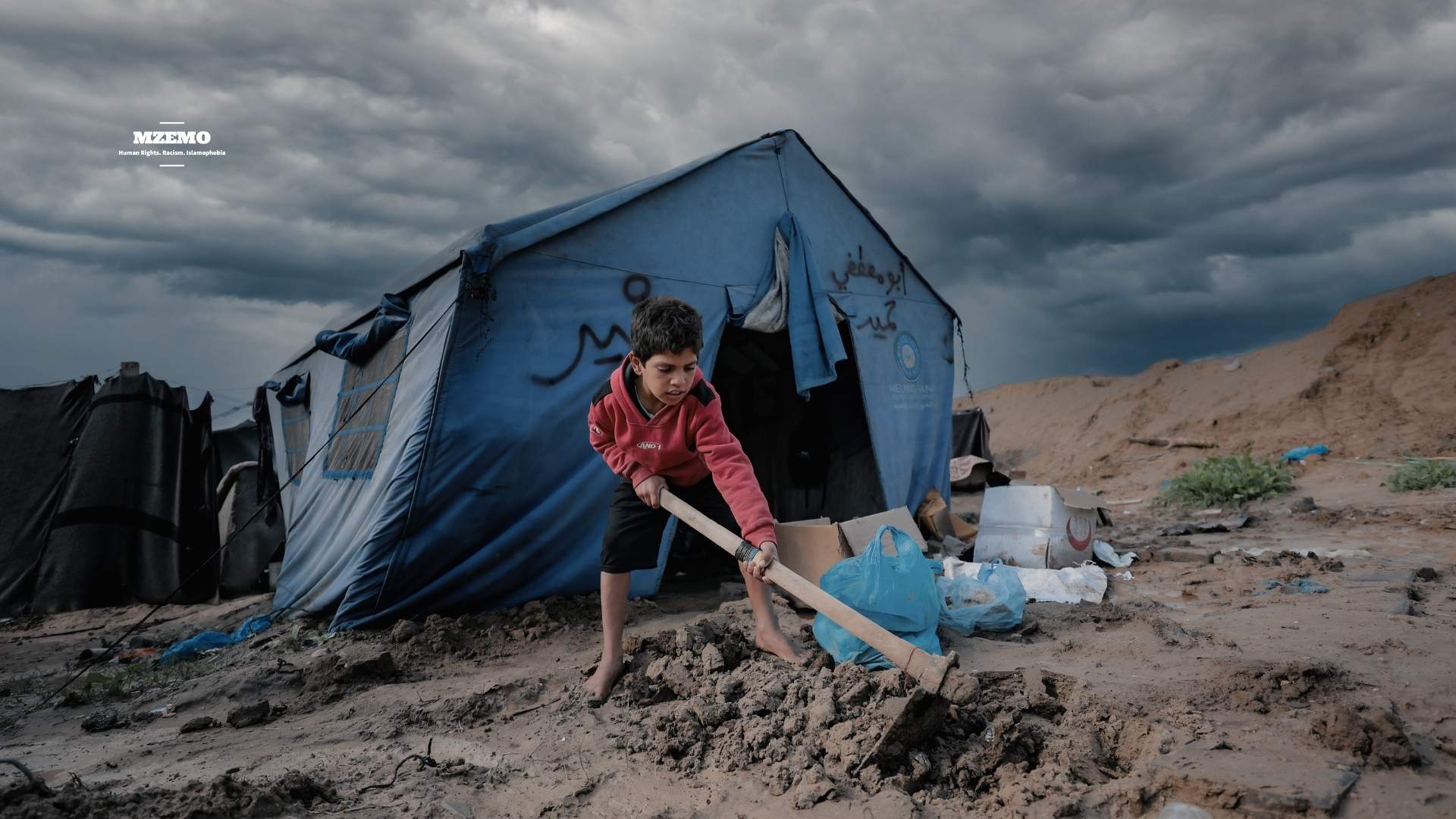
In a series of unfortunate events in the history of Gaza, the late-November storm arrived without preparations. In one of Gaza’s sprawling camps, children stood ankle-deep in freezing brown water inside their dismal tents. Their tiny feet sank into a mix of mud and sewage. Parents used plastic bowls to scoop out filthy floodwater, while battling a storm that swallowed everything they once owned. Moreover, in several low-lying areas, flood levels rose to around 40 to 50 centimeters. Resultantly, it swamped thousands of makeshift shelters and even forced one field hospital to shut down operations.

Specifically, for Gaza’s innocent families, who already fled more than two years of severe bombardment, the arrival of winter feels like a new kind of war. It was reported that a large majority of Gaza’s more than 2 million population have been displaced at least once. Furthermore, many now live in fragile tents or shacks on unstable, sandy ground. When it comes to local authorities, they estimate that around 70,000 people have been killed and more than 171,000 are injured since October 2023. The survivors now face a second catastrophe in the shape of a winter that strikes the homeless first.

Gaza After Two Years of War

After relentless airstrikes and heinous ground invasions, whole districts of Gaza lie flattened. Housing stock has been decimated, while water networks, sewage pipelines, and electrical systems have been destroyed. According to humanitarian assessments, 1.5 million people now depend entirely on emergency shelter materials, but the majority live in informal tents, unfinished buildings, or overcrowded UNRWA facilities.

Reports shared by the Norwegian Refugee Council confirm that displacement has reached historic levels. Meanwhile, UNOCHA notes that 500,000 internally displaced people attempted to return to northern Gaza in early 2025, only to find ruins of homes without doors, windows, or roofs. Gaza is no longer merely war-torn, but a mass of homelessness entering the coldest months of the year.

Floods in the Camps

This new storm has transformed whole camps into rivers of mud. It is documented how heavy rain overwhelmed Gaza’s already shattered terrain, turning roads into streams and sinking tents in minutes.

UN and aid agencies estimate that around 13,000 tents were damaged or destroyed, impacting more than 13,000 households. For families who have fled bombing, displacement, and hunger, seeing their last sheet of plastic ripped away by the storm is a cruelty that no one can prepare for.

A Desert of Tents

Local authorities and international NGOs agree that Gaza needs around 300,000 tents or prefabricated units to shelter roughly 1.5 million displaced Palestinians.

Shelter Cluster and UN assessments show that 1.5 million people urgently require winter-appropriate shelter materials, yet almost none have arrived. UNOCHA noted that at one point in early 2025, only 72 high-performance tents had been approved for entry into Gaza due to severe restrictions. Though the scale of need is immense, the world’s response has been minimal.

Why the Tents Aren’t Coming?

The bottleneck at Gaza’s crossings is not incidental but largely structural. It is reported that Israel classifies essential shelter materials, like tent poles, wooden beams, thick plastic sheets, pipes, and tools, as “dual use,” subjecting them to intense restrictions. These delays mean that even the most basic winterization efforts become impossible.

Shelter Cluster and frontline NGOs accuse Israeli authorities of arbitrary rejections, slow approvals, and constantly changing paperwork. It is making winter preparation “negligible compared to the scale of needs.” The International Rescue Committee adds that the recent storms flooded the majority of the makeshift tents, leaving families literally sleeping in the open. The winter suffering in Gaza is not a natural disaster alone, but is shaped by policy and prolonged siege.

Children, the Elderly, and the Most Vulnerable at Breaking Point

It is reported that children wearing nothing but thin shirts and flip flops, shivering in the cold. Their blankets are often wet, and their clothing rarely dries. Hunger weakens their bodies, while the cold attacks whatever strength remains.

On the other hand, many elderly people and people with disabilities cannot move quickly when tents flood, becoming stranded in freezing mud until family members can carry them to safety. UNRWA notes that around 79,000 displaced Palestinians are sheltering in 85 overcrowded schools, many of which also suffer from leaks and flood damage.

These are the faces of winter’s cruelty. Children are trembling in soaked clothes, elderly men and women unable to rise from muddy ground, and parents helpless in the face of the cold they cannot keep out.

“Ceasefire” Without Safety

Despite a ceasefire being announced in mid-October, aid flows remain far below the levels promised under the truce framework. People continue to die from exposure, untreated infections, and the compounded effects of hunger and cold.

The winter crisis reveals a fundamental truth that ending airstrikes does not end the war when siege, deprivation, and structural violence continue. For Gaza’s displaced population, winter is proof that the occupation’s harms extend far beyond bombs.

International Law and the Crime of Leaving People to Freeze

International law is explicit that denying adequate shelter or exposing civilians to deadly conditions can constitute inhuman treatment and may qualify as part of the “conditions of life” element in genocide determinations. Reports from humanitarian monitors, OCHA, and global legal experts warn that Gaza’s winter crisis is not just mismanagement, but a grave violation of human rights on a catastrophic scale.

UN rapporteurs and shelter advocacy groups continue urging states to pressure Israel to allow winterization supplies into Gaza. However, until pressure becomes action, statements remain hollow.

Conclusion

Winter storms are natural, but children sleeping in sewage-soaked clothes are not. That suffering is political, but a result of choices about what to bomb, what to blockade, and what to deny.

Gaza does not need sympathetic headlines about bad weather. It needs homes, infrastructure, open crossings, and accountability. It needs the world to stop treating winter misery as an inevitable tragedy and instead recognize it as a policy-driven crisis that can be changed.

Until Palestinians have the right to warmth, shelter, and stability, every storm will be another form of violence, and every winter will be a renewed assault on a people already fighting to survive.

Continue Reading
Advertisement

Trending