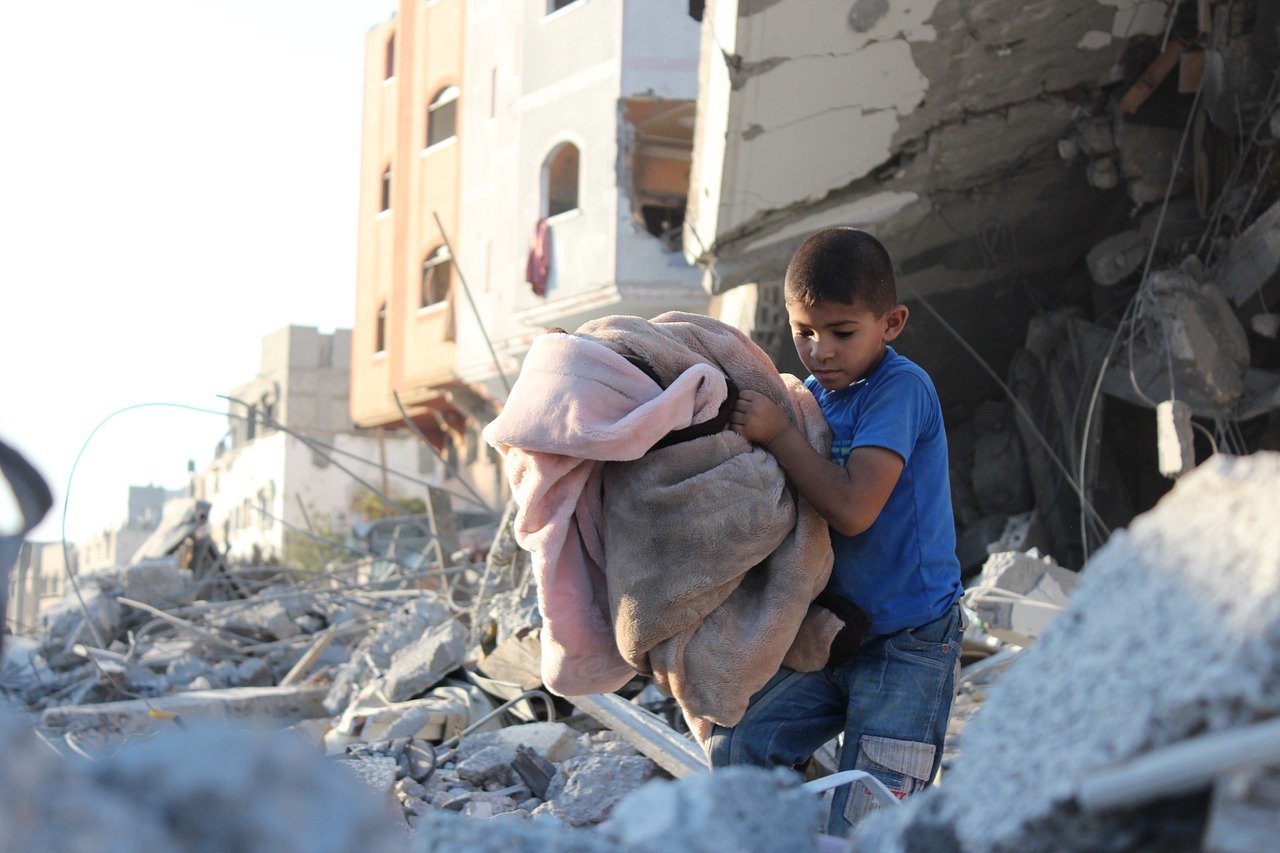
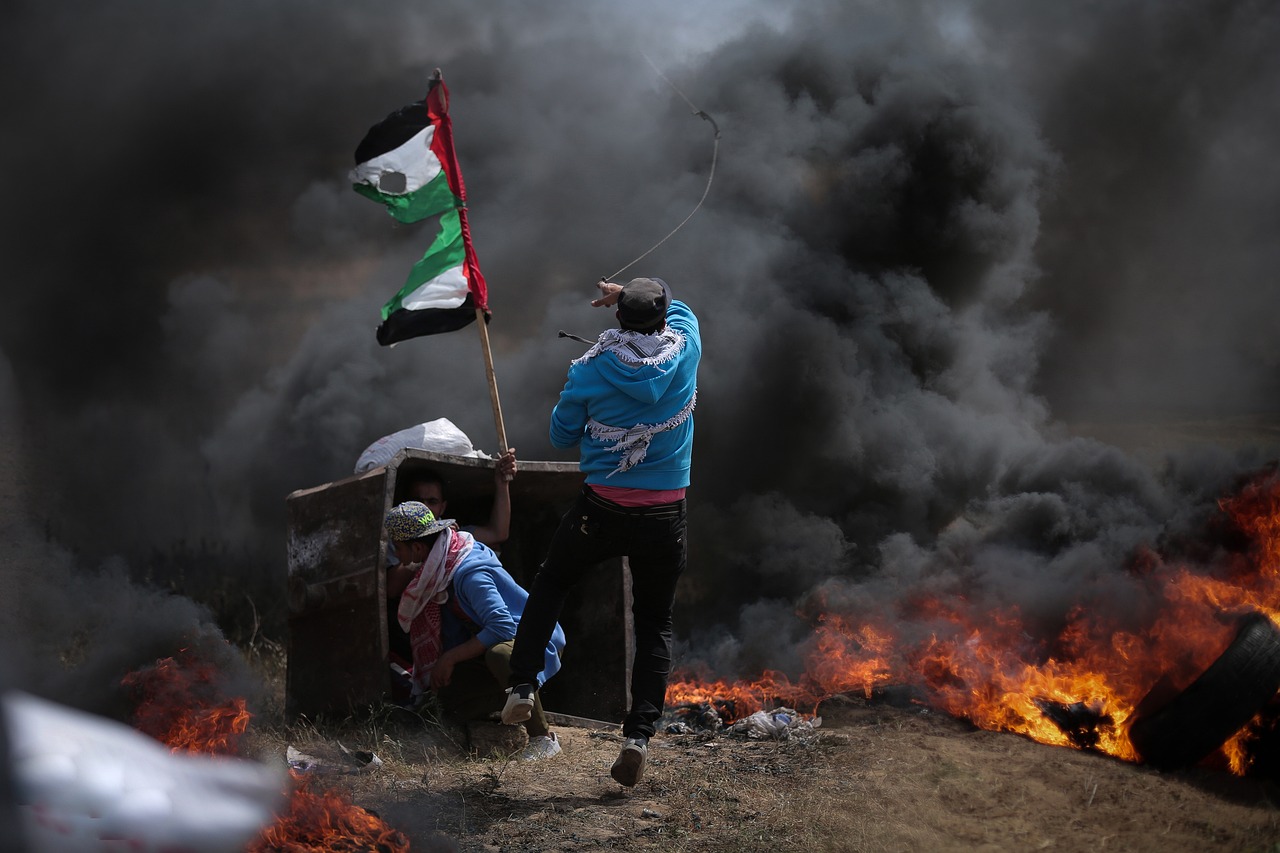
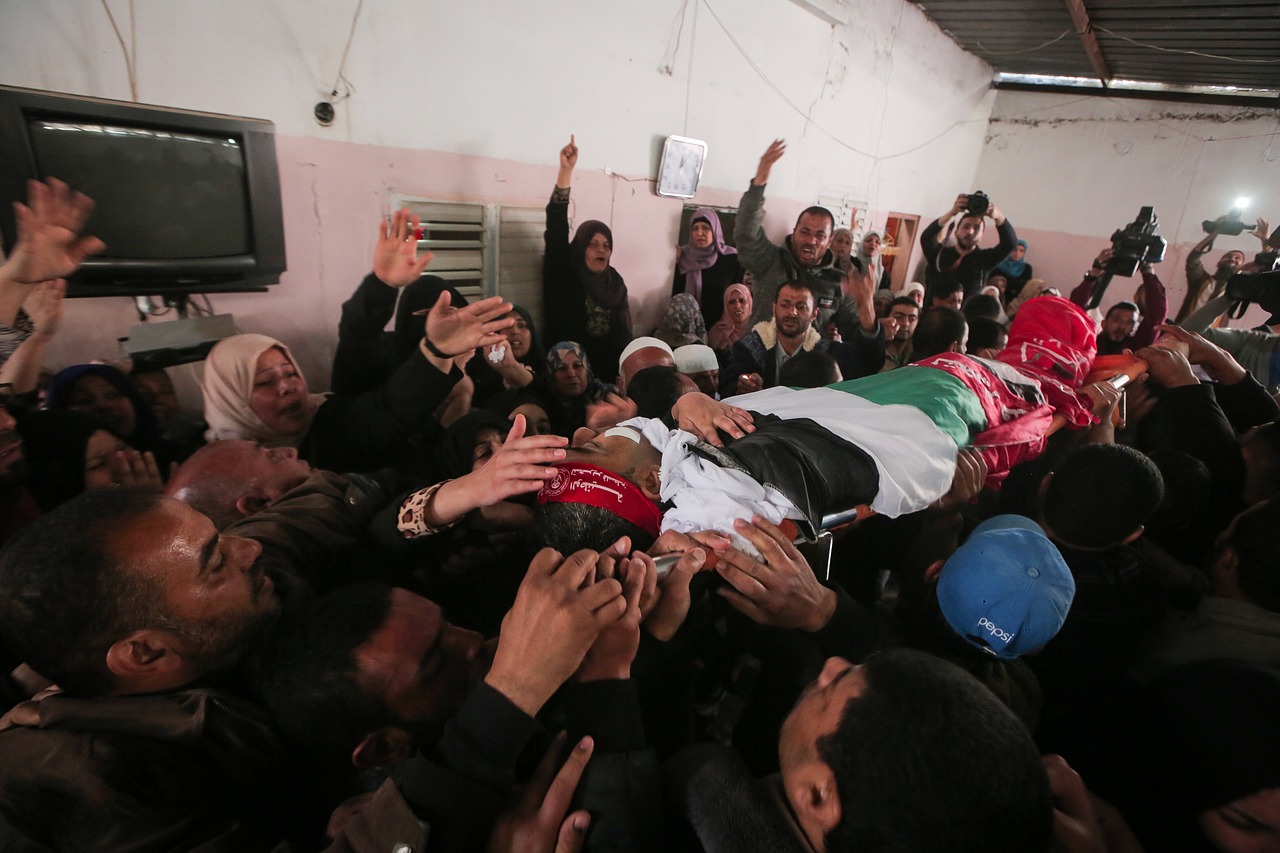
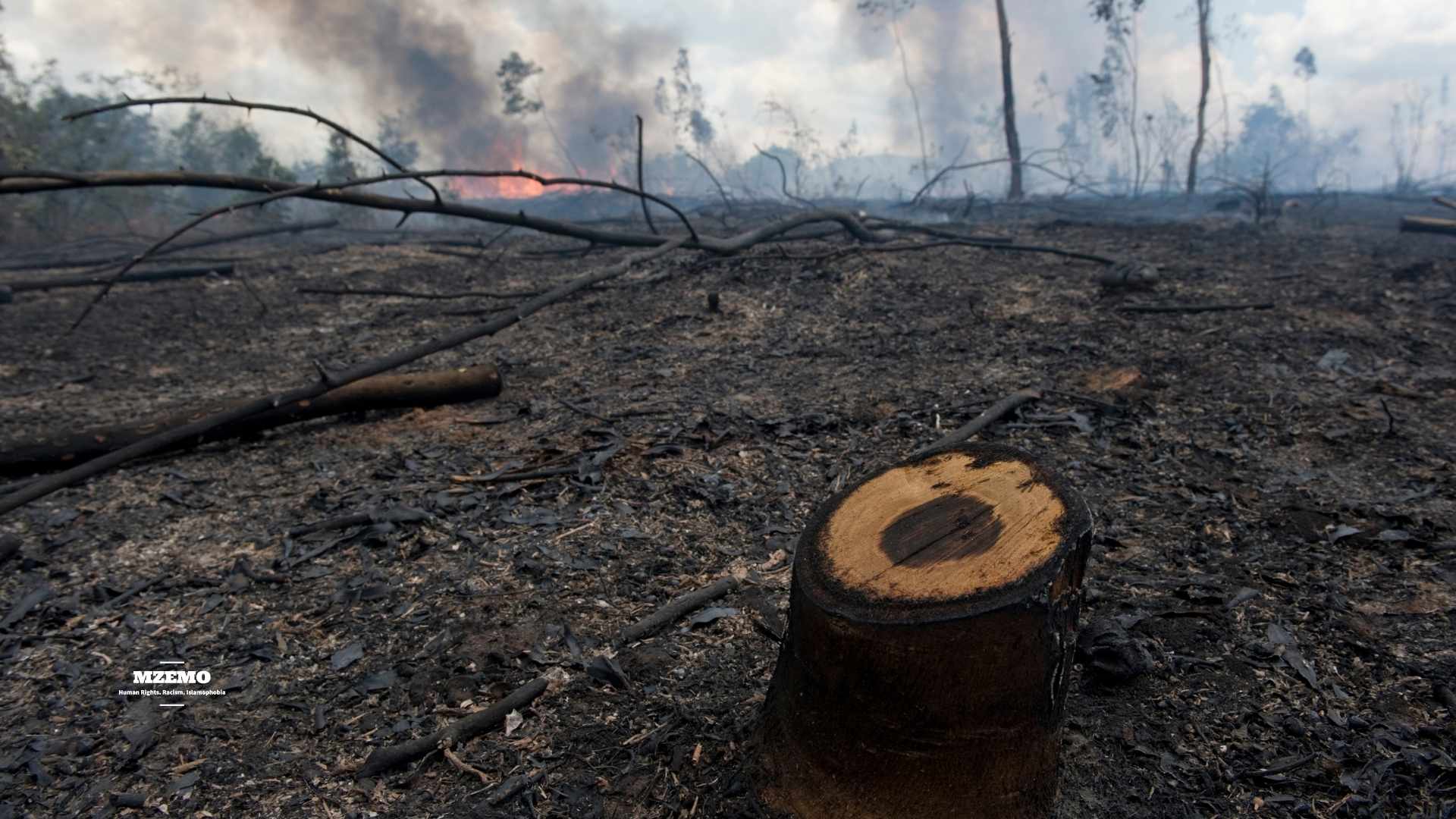
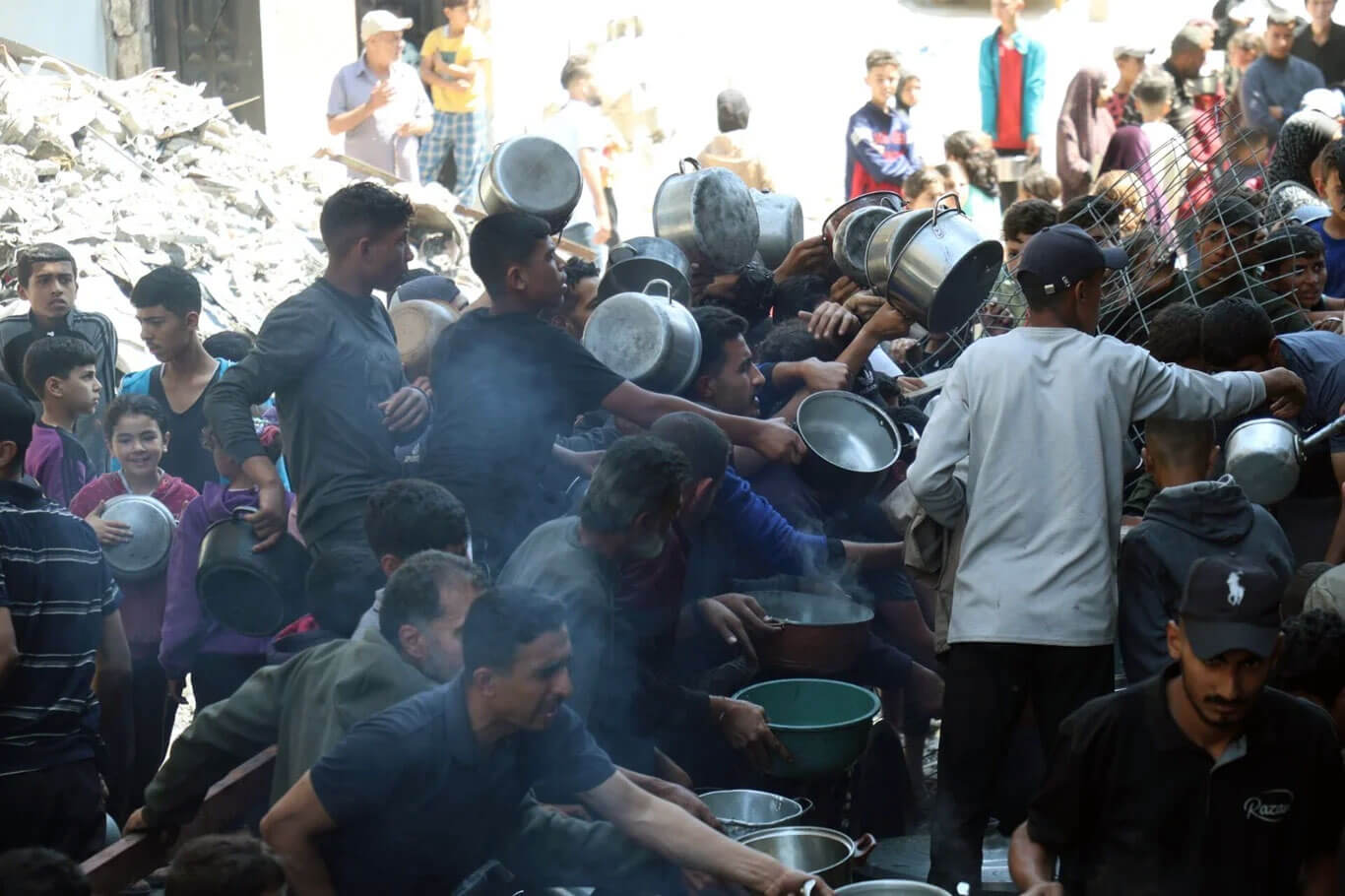
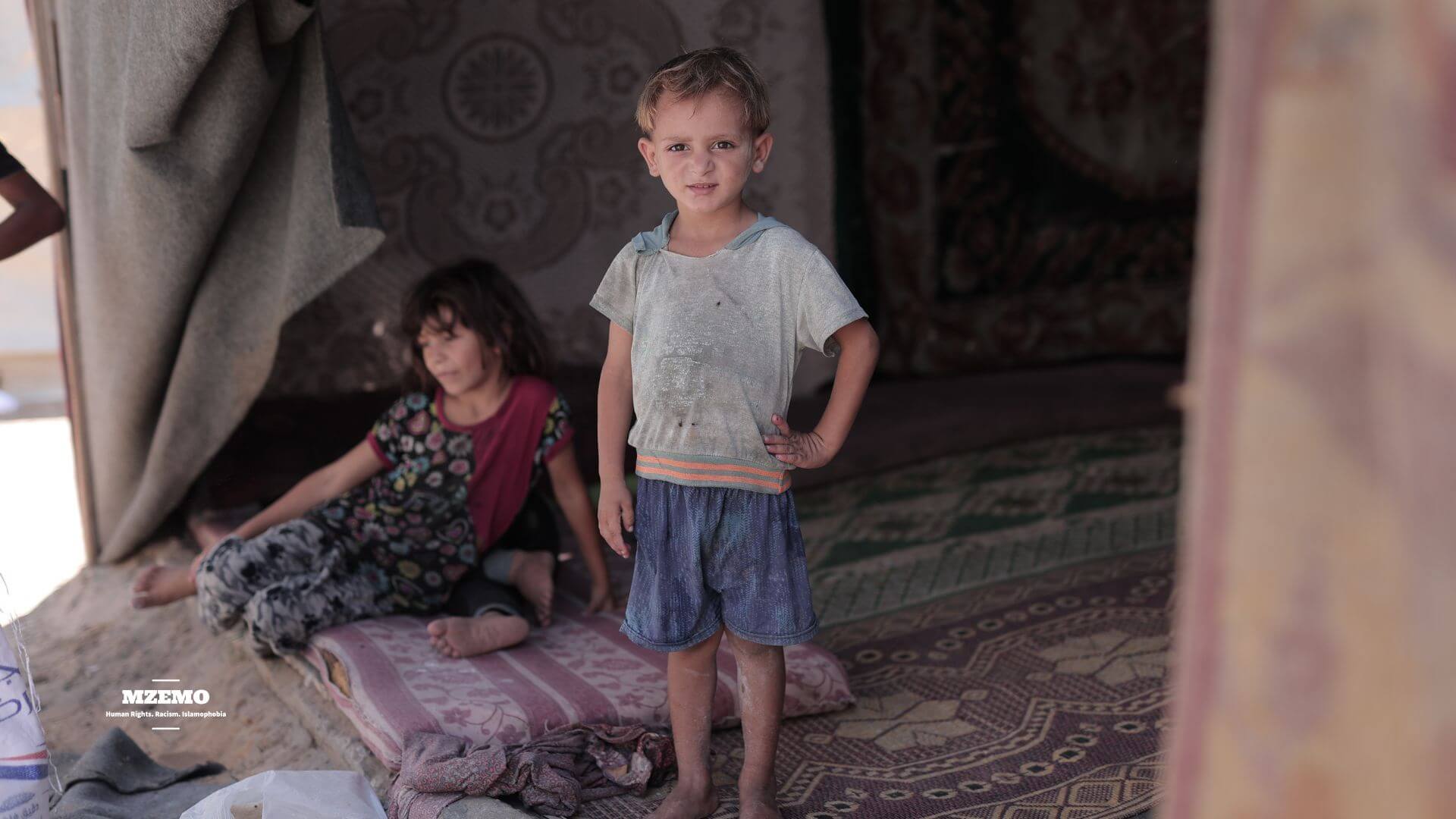
Gaza Crisis: Eid Ul Adha in a town stalked by bombardment, constant military encroachment, and widespread starvation looks devastating. As Gazans prepare for dull festivities amidst wrecked buildings, broken roads, and rubbles of mosques under the shadow of Israeli attacks, they are left with little to nothing to celebrate.
Most have lost multiple family members to the war. Thousands of children are now orphans. And amidst all the hunger looms, the threat of malnutrition and starvation.
50,000 Gaza Children in Urgent Need of Malnutrition Treatment
Continued restrictions on humanitarian aid, especially after the attacks in Rafah, have led millions of Gazan children to extreme hunger. A recent UN report highlights that over 50,000 of these children are facing acute malnutrition and need urgent treatments.
Malnutrition has already started taking the lives of innocent children in Gaza. Fayiz Abu Ataya, born into Isreale’s genocide, has little time to make a mark in his seven months of life. Abu’s death last week rang bells about the deepening crisis of Gaza’s malnutrition and starvation across the world.

Rampant malnutrition in Gaza
Till now, at least 30 children have lost the battle against malnutrition, with the majority of deaths reported in the north. Experts say if the ready-to-use therapeutic food doesn’t reach the malnourished children in time, treatment of over 3,000 children suffering from acute malnutrition will be in danger.
Before, humanitarian and medical help seeped into southern Gaza through the Egypt corridor. But with the Rafah crossing closed, Israel’s war has choked aid even through Kerem Shalom. This has resulted in a two-third drop in aid since last week, reported the UN figures.
Starvation in Gaza: A Slow-Motion Tragedy
The tragedy brought out by diminishing food and medical aid spread across the region is threatening everyone in the southern enclave. A joint statement by twenty international aid agencies shows that death from starvation, lack of medical assistance, and diseases are accelerating in Gaza.
UNICEF also says the real number of deaths from malnutrition is much higher since the majority of the cases don’t even reach hospitals. Margaret Harris, a WHO spokeswoman, said that 85% of Gazan children under the age of 5 had spent at least one day without food.
Skyrocketing prices of groceries, limited supplies, and desperation are making it even more difficult for parents to provide for their kids. But, sadly, it’s not the only risk facing innocents in the region.
Lack of clear water and sanitation also exposes children to infectious diseases. Coupled with most hospital and clinic closures and overcrowding of wounded and diseased patients, parents struggle to provide primary health care, let alone close monitoring and treatment for malnourishment.
Moreover, aid agencies are no longer able to evacuate children for urgent treatment from the war zone.
Food Insecurity in the Gaza Crisis
Due to lawlessness born out of desperation and exhaustion, aid workers find it increasingly challenging to deliver necessities on time. This, along with the active conflict spreading in the middle and southern areas, means the WFP is unable to meet the aid needs in the region.
“It’s getting harder to do our job.”
Carl Skau, Deputy Executive Director of WFP, after his two-day mission to the war-torn region
The escalating violence and insecurity amidst a large security vacuum is threatening even the aid workers.
A majority of aid worker’s time is also wasted on checkpoints. For example, despite having all the approval, a truck of medical and malnutrition supplies for 10,000 children takes about 13 hours to make a 40-kilometer round trip in average Gazan terrain. In some cases, even then, the trucks are returned.
UNICEF spokesperson James Elder, recalling the critical situation, says that “more of my UN colleagues have been killed in the Israel-Gaza war in eight months than any other conflict aided by the United Nations.”
The Long-Term Damage of Gaza Crisis
Even prior to the current genocide, 1.2 million Gazans were facing acute food insecurity. Meanwhile, 80% were reliant on humanitarian aid for survival.
For over 16 years, Israel has maintained overarching control over the region, including the movement of goods, people, and even territorial water. These unlawful closures forced the residents to depend entirely on their prosecutors to access medicine, food, electricity, and other necessities. However, since October 7, most of this movement was forced shut.
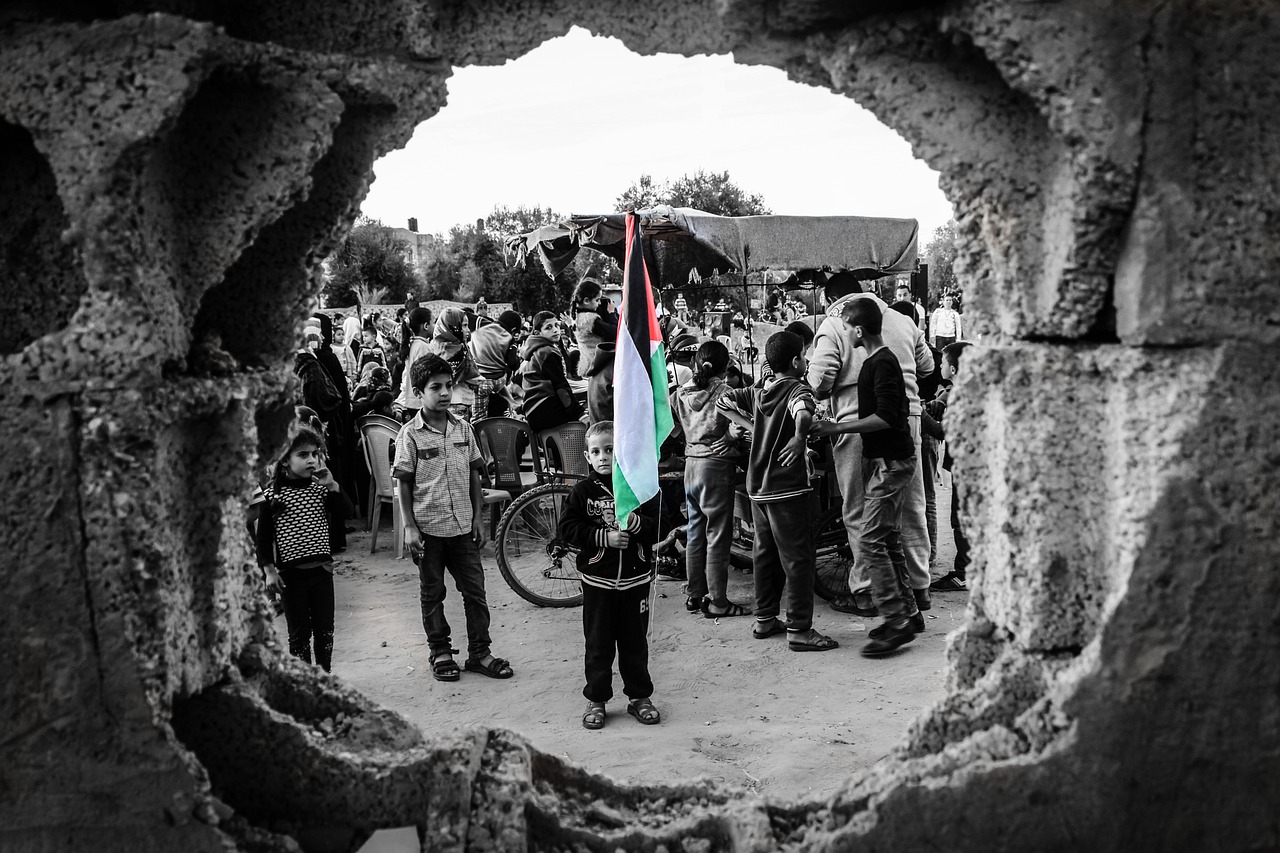
The long-term consequence of the Gaza crisis is terrifying – especially for the children. The physical, emotional, and psychological damage of the war is beyond our comprehension.
Take the mournful case of Omar, for example.
During his initial visit in November, James sat with a young boy, Omar, who had lost his mother, father, and twin brothers to the war. Omar used to close his eyes and remember the happy memories of his family. He said he did not want to lose the precious memories, as he had lost them on the ground.
Now, sadly, Omar is no longer able to recall the face of his parents. This shows the mental toll of the war on Gazan children, who are consistently surrounded by lasting violence, lost families, and death everywhere.
A ceasefire will give these children proper food, water, and physical and mental support. It’ll let the aid agencies provide safe assistance and hostage homes. But even after all this catastrophic damage, the war continues.
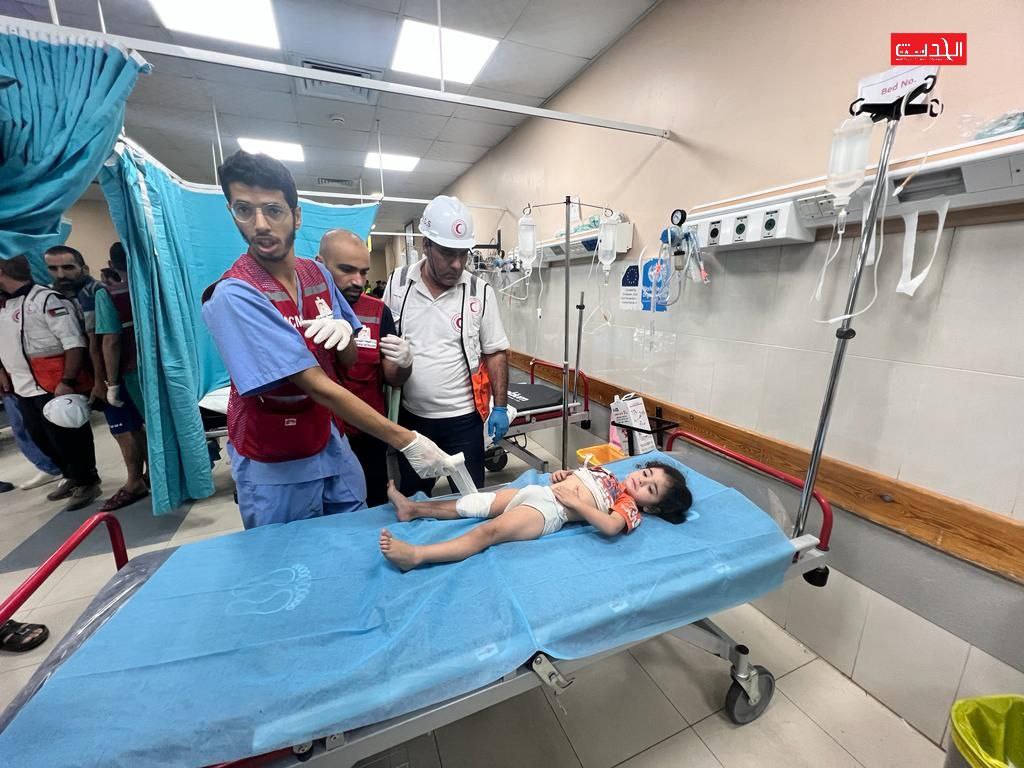
When governments talk about protecting children, their words rarely match what young Palestinians are living through. In the Gaza Strip, education is not merely disrupted; it is being systematically erased, leaving the possibility of a generation without basic schooling and awareness.
A recent analysis done by the University of California warned that children in Gaza may lose the equivalent of five years of education due to repeated school closures since 2020. These conditions are compounded by violence, trauma, and chronic destruction of infrastructure.
Almost all of the schools have been partially or completely destroyed by Israel. If schools remain out of session until at least 2027, many teenagers will be a decade behind where they should be educationally.
This is not only about education but the erasure of an entire generation, coupled with despair. It is ultimately the humanitarian consequence of genocide-scale violence and blockade. The future is being stolen from innocent lives, and the world is witnessing one of the greatest catastrophes in the history of mankind.
The Scale of the Education Collapse in Gaza
Before the genocide intensified, Gaza had an education system serving nearly 660,000 school-aged children. However, two years of bombardment, destruction, and blockade have devastated this system:
An estimated 97% of schools in Gaza are damaged or destroyed.
Hundreds of thousands of children have had little to no access to face-to-face schooling for more than two academic years.
More than 18,000 students and 780 teachers were killed as of October 2025, according to UN Office for the Coordination of Humanitarian Affairs (OCHA) data included in international analysis, representing a massive depletion of both students and educators.
UNRWA reported that around 660,000 children are out of school, with many classrooms repurposed as shelters for displaced families.
These figures combine lost school buildings with lost lives and lost opportunities. These conditions are creating structural barriers to learning that go far beyond temporary closures.
What It Means to Lose Years of Education
According to the Cambridge analysis, repeated closures since 2020, first due to the pandemic and then to ongoing genocide, have eroded more years of learning than children can realistically recover.
This isn’t just falling behind, but a fundamental derailment of life trajectory:
Delayed literacy and numeracy milestones
Increased likelihood of dropout in teenage years
Higher risks of early marriage and child labor
Limited access to higher education and careers
Resultantly, when education stops, social mobility also stops with it.
Education as a Protective Space
Children’s access to education is not just about reading and math, but about safety, structure, and psychological stability.
UNICEF and other child protection agencies have emphasized that education provides:
Protection from exploitation and abuse
Psychosocial support
A routine that counteracts trauma
Opportunities for social interaction and identity building
When schools are reduced to rubble or become temporary shelters, these protective functions disappear. Instead, Gaza’s schools increasingly resemble sites of trauma, displacement, and interruption, not growth.
Trauma, Hunger, and Learning Loss: A Spiral of Harm
The education crisis in Gaza does not exist in isolation, but it intersects with:
Widespread hunger and malnutrition, which impair cognitive development
Psychological trauma, which reduces concentration and memory
Displacement and instability, which make regular attendance impossible
A recent scientific analysis describes how children exposed to conflict, displacement, and trauma face long-term developmental challenges, including reduced educational outcomes.
Comparing Gaza to Global Conflict Patterns
Gaza’s education collapse is one of the most extreme examples today, but it reflects a broader global trend.
UNICEF estimates that globally, more than 25 million children of primary age are out of school due to conflict and insecurity.
In wider conflict zones, from Yemen to Sudan, attacks on schools and displacement keep millions from education.
However, Gaza’s situation is exceptional for the scale of destruction, cumulative closure, and overlap with famine, displacement, and repeated bombardment.
The Lost Generation is Not Just a Phrase but a Forecast
Researchers warn that, unless things change, Gaza’s children will not simply “catch up.” They will represent a generation with permanent educational loss, with consequences echoing for decades.
This is the core of the Cambridge study’s warning:
“Children in Gaza will have lost the equivalent of five years’ worth of education… and many will be a full decade behind their educational level.”
Even temporary or online learning measures introduced by UNRWA and the Palestinian Ministry of Education have been severely constrained by destroyed infrastructure, scarce resources, and ongoing insecurity.
Why This Matters Beyond Gaza
When an entire generation loses access to education:
Entire economies lose future professionals
Communities lose rebuilding capacity
Political stability becomes harder to achieve
Human rights, including dignity and autonomy, are undermined
Gaza’s children are not only Palestinian future workers and citizens. They are part of the global Muslim community, and their loss echoes in every society that values human potential.
Their right to education is universal, and its denial is not a local tragedy but a global failure.
Bread should never be a battlefield, yet in Gaza, parents count the hours between air raids and the next bite, trading sleep for a place in a bread line. This is not misfortune but an outcome of the ongoing genocide. Famine has been confirmed in Gaza after months of siege and bombardment. Moreover, the pattern of atrocities by Israel is tragically quite clear: cut the crossings, choke the fuel, bomb the roads, and the entire food system.
Famine in Gaza
On 22 August 2025, the IPC Famine Review Committee confirmed Famine (IPC Phase 5) in Gaza, warning that conditions could spread south without a sustained surge in aid and safety. The famine is not a metaphor but a technical threshold that means households cannot access enough calories or care to survive without immediate, large-scale relief.
Starvation in a place rarely makes a headline, but it is clearly shown in logistics spreadsheets and cratered roads. It can also be felt in the silence of dead ovens and empty tanks.
As per the UN agencies’ estimate, around five hundred to six hundred trucks per day are the minimum to cover basic needs. However, many days in many areas of Gaza fall far short, as a trickle cannot feed two million people. Moreover, there is an increasing fuel scarcity that is killing the cold chain. With electricity unreliable and fuel scarce, bakeries stop, fridges fail, and water systems sputter. In modern times, the families living in besieged Gaza burn scrap wood to boil lentils.
The movement has also been made quite dangerous as roads are continuously bombarded. Moreover, checkpoints and shelling make a bag of flour a life-or-death decision. Food trucks cannot reliably reach warehouses, and people cannot safely reach distribution points.
Food systems are completely dismantled by Israel as fields and greenhouses are destroyed completely or made inaccessible. Fishing is also crippled, and markets and warehouses are devastated or empty. Even when aid enters, the last-mile network is broken.
The Reality of the Human Toll
Hunger creeps, then crashes. UNICEF’s August screenings found roughly 1 out of 5 children in Gaza City acutely malnourished. This pace is increasing day by day. Children are starving, and they fail to gain adequate weight. Moreover, breastfeeding falters when mothers are undernourished, too. In these conditions, water-borne diseases spread faster in bodies that are already depleted.
Mothers stretch tea and bread into a “meal,” or simply skip eating altogether, so toddlers can share a biscuit. Children, on the other hand, stand in bread lines, and schools that became shelters have no kitchens or fuel. Diabetics and dialysis patients, who need predictable food and water, see their survival routines collapse greatly.
Every siege writes a cruel equation, such as calories in versus calories needed. In Gaza, the inputs have been deliberately depressed. Rations that do arrive are often calorie-inadequate for a displaced population; staples that require long boiling are useless without fuel and clean water. High-energy biscuits keep people alive for days, not months.
International Law and the Line That Was Crossed
International humanitarian law prohibits the starvation of civilians as a method of warfare and requires the rapid, unimpeded passage of humanitarian relief. Human Rights Watch has documented how policies that block water, food, fuel, and safe access amount to using starvation as a weapon, a war crime. Whether by design or through reckless disregard for known consequences, the effect is the same: families are deprived of what they need to live.
What Relief Looks Like in Practice
Ending a heinous famine like this one is not a photo-op at a crossing. Completely ending it is about volume, tempo, and safety. Firstly, you should scale the pipeline to a figure of around five hundred to six hundred trucks per day minimum. Fuel should be reconsidered as a humanitarian commodity, including water and health facilities. For example, prices for cooking gas spiked by 4000% in early 2025 compared to pre-war levels. Therefore, families cannot cook even when they get food.
The mass starvation that is fueled by Israeli atrocities is a clear example of human rights violations. Now, the world must act with a renewed spirit before it is too late. Firstly, a permanent ceasefire is the need of the hour. Protection of civilians is also an important step to be taken.
Then, the perpetrators should face the international criminal organizations, as there are numerous cases to be faced, including one on genocide. Unconditional humanitarian access should be on the agenda. UN Resolutions should be followed in true letter and spirit. Moreover, there must be legal accountability as well as sustained funding to make the people of Gaza breathe again.
Bottom Line
Gaza’s hunger crisis is not a side story but actually “the story.” As long as aid is throttled, fuel is scarce, and farms, bakeries, and boats are broke, famine will spread quickly. The metrics may shift week to week, but the moral calculus doesn’t. Bread should not be contraband. Ending the siege on food, in policy and practice, is the minimum standard of humanity!
Ambulance sirens shouldn’t have to race aid trucks, yet in Gaza, convoys that carry flour, water, and baby formula move like fugitives. These are picked apart by Israel’s atrocities, pinned down by gunfire, and sometimes, struck outright. When the lifeline is attacked, it is not the cargo that is lost but the promise that they are protecting the lives of the oppressed.
A Pattern, Not Just a Series of Accidents
We are long past the language of “tragic mistakes.” The record now shows a pattern: convoys delayed until crowds gather, routes publicly deconflicted and still hit, warehouses bombed, drivers and security volunteers shot at the curb. Each incident ripples outward, NGOs suspend operations, crossings tighten, and hunger grows.
If we look at the ground, there is a completely devastating picture. Trucks crawl through checkpoints and bomb-scarred roads while drones buzz overhead. Crowds surge around the first visible food in days while panic and live fire turn distribution points into trauma scenes. Moreover, routes agreed hours earlier suddenly become kill zones, and the next day, fewer trucks try again.
A Glimpse of Complete Humanitarian Blockade
The Convoy That Never Made It – World Food Programme
In July 2025, a World Food Programme convoy that had just cleared the last checkpoint north of the Zikim crossing drove into a crowd of starving innocents. However, the moment the aid appeared, the area came under intense fire with tanks, snipers, and small arms. Drivers of the convoy threw their bodies over the steering wheels and prayed the cargo would hold. Unfortunately, they made it back with bent fenders and shattered nerves. Ultimately, the food did not reach the families waiting for it.
When Aid Workers Became Targets – World Central Kitchen
The world learned the convoy jargon the night seven World Central Kitchen humanitarians were brutally killed by the Israeli soldiers. Their cars were marked, and the route had already been shared with the authorities. Three vehicles were struck in sequence. Ultimately, the charity suspended its operations, and a single brutal incident froze an entire artery of necessary meals. The message to every other driver was loud and clear: your vest is not a shield.
The People Who Guard the Lifeline
In August 2025, rights monitors catalogued a drumbeat of attacks on innocent Palestinians who escort and guard convoys. These were the men whose job is to keep order when food finally arrives. In multiple incidents across North Gaza and Deir al-Balah, dozens were killed and many more were wounded near the aid trucks they were to protect. Each funeral means one fewer pair of eyes and hands at the next distribution point and another long delay that pushes a hungry crowd to the brink.
Now, one thing is crystal clear – Israel is using every heinous means to block the necessary human rights. Aid is completely blocked in the Gaza Strip, and fuel is scarce. Moreover, roads are almost completely broken, and there is rubble everywhere. The genocide is getting intense day by day, even if there is no militant resistance.
Maritime Hope
When the roads became graves, some tried the sea route. The Global Sumud Flotilla, whichdocked in Tunisia to rest and reload, is a new effort to reach aid to the starving ones. However, two of its vessels were hit by incendiary devices within twenty-four hours. Fires licked their decks as crews scrambled with extinguishers. Moreover, one vessel was attacked by a drone. It was a warning sign by Israel that any flotilla that reached the Gaza Strip would be crushed. Although no one died, the message was the same as on land: keep away from Gaza’s hungry. Earlier flotilla attempts were intercepted in international waters. For crews who trained to haul sacks of rice, the new drills are for drones and flames.
International humanitarian law is not a menu of suggestions, but rather a clear voice that emphasizes the need to protect civilians. Humanitarian relief must be allowed and facilitated rapidly and without obstruction. Aid workers, drivers, and volunteers are not legitimate targets. When convoys are fired upon after routes are agreed, when deconflicted vehicles are hit in sequence, when local volunteers are shot at a distribution point, the rules aren’t being bent; they’re being completely broken.
Numbers cannot catch a mother’s whisper in a bread line. It is a cruel chapter of history to witness. Humanitarian staff are being killed at a rate unprecedented in recent conflicts. For instance, one UN agency has lost hundreds of its own. Countless names of aid convoys never arrived, and routes that only exist on paper—storage that burns, fuel that vanishes, and a queue that grows again the next morning.
Before it’s Too Late!
Safe corridors should be guaranteed, and aid must be allowed in each and every scenario. No law in this world allows the complete stoppage of food and water, and to use them as a weapon of war. UN resolutions and especially the latest UN General Assembly Resolution must be adhered to in true letter and spirit.
A truck loaded with flour is not a political statement but a promise that war will not swallow every last ordinary thing. When that truck is shot at or burned, the message to the civilians is brutal. Ultimately, aid under fire is not simply a violation of international law but a deliberate shredding of the only safety net left.