Connect with us

Featured

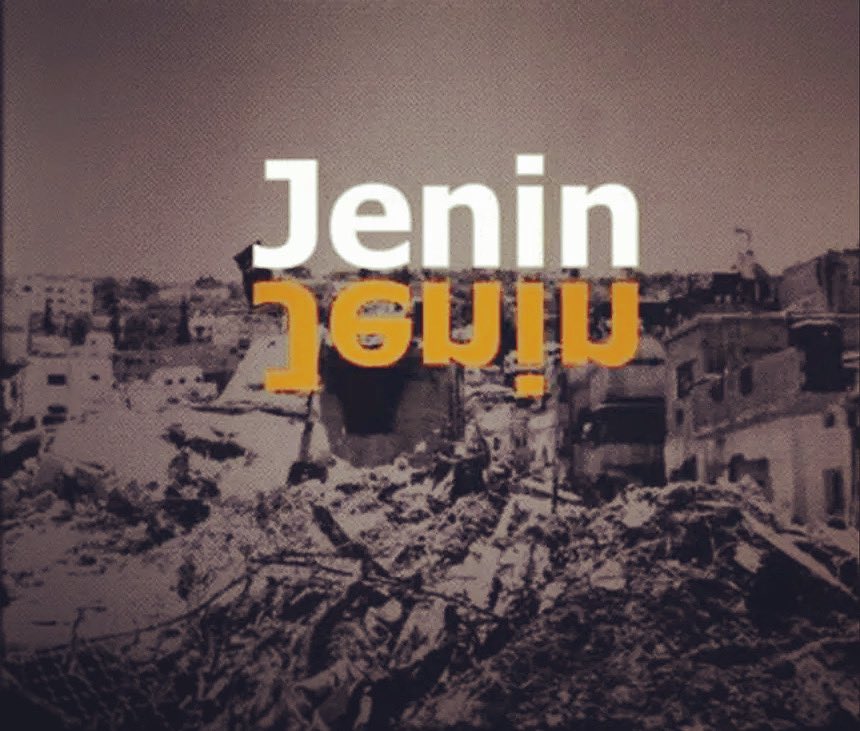
Palestinians’ surrender is unlikely in Jenin refugee camp.

Published

on

Jenin refugee camp

A massive operation of murder and terror at the Jenin refugee camp in the northern West Bank has been carried out by the Israeli army immediately after the Eid Al-Adha holiday, killing and maiming scores of Palestinians including dozens of innocent civilians.

The massive operation wreaked havoc and caused huge destruction to homes and property as well as to the camp’s infrastructures.

The latest massive operation in Jenin refugee camp began shortly before dawn on 3 July, when as many as a thousand crack soldiers and around 150 armoured vehicles stormed the unprotected civilian camp,  allegedly to eliminate Palestinian resistance fighters hiding in the area.  Israel claims the fighters occasionally attack the occupation army patrols and paramilitary Jewish settlers,  notorious for their often murderous attacks on Palestinian civilians throughout the West Bank.

Read Also: Huwara rampage: a prova for a possible Israeli Holocaust.

The settlers, emboldened by the establishment in Israel six months ago, of the most fascist government ever in Israel’s history, have escalated their organized army-backed terror against Palestinians.

The massive operation in Jenin refugee camp, which is continuing for the second consecutive day as this report is being compiled,  has been described as the biggest since 2002.

It was preceded with bombing from the air of homes and other buildings by Apache helicopters and armed drones, causing the death of several Palestinians.

The few Palestinian resistant fighters in Jenin refugee camp, lightly and poorly armed, sought to prevent the invading forces from reaching the centre of the camp.  They succeeded for a time, despite the massive operation of the occupation army. As of now, at least 10 Palestinians were martyred, and as many as 100 other Palestinians were injured, some quite seriously.

Israeli sources said one Israeli soldier was Injured. However, it is widely believed that a number of soldiers were either killed or injured as apparently wounded soldiers were seen on stretches being rushed to an awaiting helicopter which flew them to hospitals.

The Israeli army reportedly fired grenades at the main mosque at Jenin refugee camp, claiming that resistance fighters barricaded themselves inside the holy place. The army had threatened to destroy the mosque if the fighters didn’t surrender.

Massive bulldozers taking part in the latest operation caused wanton destruction to the civilian infrastructure, demolishing civilian homes, shops, and businesses.

The invading force prevented ambulances and medical teams from reaching the wounded. According to eyewitnesses, some wounded people were left bleeding to death.

Goal: Extirping any realistic hope for Palestinian statehood

 The declared purpose of the latest massive operation in Jenin refugee camp is the elimination of all vestiges of active resistance to the Jewish occupation and apartheid.

However, an Israeli lawmaker affiliated with the ruling Likud  party was quoted as saying that the ultimate strategic goal behind the latest massive operation in Jenin refugee camp was to “irreversibly extirpate  and eradicate, once and for all, any remaining  realistic hope for Palestinian statehood.”

In other words, Israel is hell-bent on imposing by force unconditional capitulation of the Palestinians.

In order to reach this ultimate goal, Israel must coerce the Palestinians to abandon, once and for all, any dreams or ambitions for freedom from the wicked tentacles of the hateful Jewish Octopus. Hence, the latest bloody massive operation in Jenin.

Palestinian surrender is highly unlikely in Jenin refugee camp.

It is implausible that the Zionist entity will achieve such a genocidal goal, since pushing the Palestinian people to the corner would cause massive tribulations throughout the Arab world, and even the wider Muslim world, given the paramount status of the Aqsa Mosque in the hearts of Muslims.

Besides,  the elimination of all realistic prospects for the establishment of a sovereign and territorially-contiguous Palestinian state, a Zionist goal that has more or less been achieved,  will, almost certainly,  prompt Palestinians to demand equal citizenship rights in a bi-national unitary state extending from the River Jordan to the Mediterranean.

Hamas appeals to Muslims: Don’t normalize with the murderers of our children 

 In the meanwhile, the Palestinian Islamic group, Hamas, has appealed to all Muslims to immediately stop all forms of normalization with the enemy.

“We appeal to all Arab and Muslim states to immediately end relations with the Zionist regime,” said Ahmed Ayyoub, a spokesman for the group in the Jerusalem area.

He added: your normalization with this Zio-Nazi  entity  is killing our children and tormenting our people.”

Saleh Aruri, deputy-head of Hamas, said during an interview with Aljazeera on 3 July that normalization with Israel was immensely harming the Palestinian cause.

Israel, he said,  is exploiting her normalized relations with a number of Arab dictatorships to encircle the Palestinians and try to liquidate the Palestinian national cause.

The United States is openly colluding with the Talmudic fascist Israeli regime to expand the so-called Abraham Accords by including some additional Arab regimes such as Saudi Arabia.

The Accords are mainly designed to isolate the Palestinian cause by neutralizing Arab and Muslim support for the Palestinian people.

So far, three Arab regimes have gone too far in their relations with the very entity that desecrates the Third most important Islamic sanctuary, namely al-Masjidul Aqsa.  These states are The United Arab Emirates which has established a quasi-alliance with Israel, the little Sheikhdom of Bahrain and Morocco.

The three despotic regimes  seem to have turned their backs. almost completely to the Palestinian cause and people.

Continue Reading
Click to comment

Leave a Reply

Your email address will not be published. Required fields are marked *

Featured

Sudan’s War and the Fracturing of the Muslim World: A Crisis Beyond the Headlines

Published

on

Sudans-War-and-the-Fracturing-of-the-Muslim-World_-A-Crisis-Beyond-the-Headlines

The situation in Sudan is now more than just another news story. The conflict, which broke out in April 2023, is now in its fourth year and has left tens of thousands dead, more than 14 million people displaced (nearly a quarter of the population), and pushed the country to the brink of famine. But beyond Sudan’s borders, the war is barely making headlines.

What started as an internal power struggle between two generals has descended into a bloody impasse, rending communities, decimating hospitals, and weaponizing food. Behind the conflict, there’s a bigger story: how this overlooked war is revealing the ugly divisions in the Muslim world. Rather than solidarity, we witness vested interests, selective muteness, and an idealised concept of Muslim unity replaced by geopolitics.

Sudan War 2026: What’s Happening?

The Sudanese war is a battle between two armies:

  • General Abdel Fattah al-Burhan’s Sudanese Armed Forces (SAF)
  • General Mohamed Hamdan Dagalo’s Rapid Support Forces (RSF), also known as “Hemedti.”

The RSF controls most of Darfur and Kordofan, and has solidified its control in most of Khartoum and its surroundings. Contrarily, the SAF controls the north and some of the east, and recently began counterattacks in Omdurman. Both sides are far from victory and the peace table. Humanitarian assistance is being looted and stolen. Furthermore, rape is being reported at a “catastrophic” rate.

  • There are more than 4.4 million refugees in neighbouring nations like Chad, South Sudan, and Egypt.
  • Over 21 million people are in need of humanitarian aid because of famine or malnutrition in areas such as El Fasher and Kadugli.
  • Hospitals and humanitarian assistance are also heavily affected by the conflict with the World Health Organization (WHO) reporting over 200 hospital attacks during the war.

What Caused the Civil War in Sudan?

There are three primary causes behind this unfortunate crisis as follows:

Competition and Conflict among Factions

The military forces in Sudan removed President Omar al-Bashir from power and established a transitional government council made up of two opposing armies, as mentioned earlier. The leaders of these two forces colluded to delay power to a civilian government in 2021, staging a coup.

Political Instability after Regime Change

A short-lived democracy ensued after the revolution of 2019. There were no leaders, parties were torn, and the international community was silent. When Bashir was pushed aside, institutions were filled with armed groups with guns and money.

Economic and Regional Inequalities

Sudan has a long history of disparities. There have been instances of discrimination and attacks on regions, such as Darfur. The poor areas suffered from inflation and a resource war, which ultimately divided Sudan.

Sudan has many resources, such as gold in Darfur and a beautiful Nile Valley. RSF had support in Darfur, whereas SAF in the north and east, as previously highlighted.

Who’s Financing the Conflict?

The other question is who finances the war in Sudan. This is a mixture of domestic and international sources.
Funding sources include:

  • Natural resource funding: The RSF owns many of the gold mines that give it enough resources to fight.
  • Regional Powers: Some states are secretly helping SAF against the massive forces of RSF.

In short, the RSF is suspiciously linked with the United Arab Emirates, which is allegedly involved in arms and gold smuggling in Darfur. However, the UAE denies military aid, but is being sued by Sudan in the International Court of Justice. The RSF has mining profits and a government of the occupied territory.
On the other hand, SAF has Egypt, the Nile, and the border. The legitimate government has the backing of Saudi Arabia and others.

Sudan and the Muslim World in Crisis

The Muslim world has been facing a multi-faceted crisis for the past two years that has similar patterns. There has been international intervention on a scale, wars for resources, failed or failing states, and the international community is divided to tackle the crises. Rather than consensus, there is disunity and division.

The nature of these crises is different, but the common thread is that there is no unity among Muslim-majority countries and organisations.

  • Israel is currently involved in genocidal activities like bombing and starving Gaza. The agreement between Lebanon and Israel was supposed to be kept, yet Lebanon remains vulnerable to attacks and is displaced from reconstruction.
  • Iran is recovering from the war with Israel and the US. It is suffering economically from sanctions, attacks, and trade issues.
  • Yemen and Syria continue to suffer from war, while Pakistan and Bangladesh have experienced political upheaval.

However, the Organisation of Islamic Cooperation has been unable to respond significantly to any of these events.

The Way Forward

Peace involves putting an end to combat and the cessation of fighting between opponents and allowing them to embrace reconciliation. The international community must adopt a new approach to the problem that would involve fewer arms and increased humanitarian aid.

Gaza and Sudan represent a case of uneven consensus among the Muslims. It is therefore the need of the hour to tackle all the challenges with the strong and practical notion of the Muslim Brotherhood.

Continue Reading

Featured

Israel Continues Engineering Starvation Policy in Gaza Despite Ceasefire

Published

on

Israel-Continues-Engineering-Starvation-Policy-in-Gaza-Despite-Ceasefire

It was supposed to be a ceasefire, but Gaza is still suffering. Since the ceasefire began at the end of 2025, UN agencies, independent observers, and even aid workers working to bring food to those in need have noted that aid is being blocked, and distribution points for food items are being deliberately targeted. Additionally, fuel and other essential items are being prevented from entering the state.

One-third of the population goes without food for days at a time, while more than 500,000 people are experiencing extreme famine conditions, and the remaining ones are facing emergency hunger conditions.

What is Engineering Starvation in Gaza?

Starving innocent civilians of food, water, and basic necessities for survival is a War Crime under international humanitarian law. An International Famine Review Committee report has reported that Gaza has been experiencing Famine (Phase 5) since August 2025.

Israel controls the flow of goods into Gaza. It also controls the basic infrastructure required for food systems to operate. Vehicles are restricted from entering certain points. The amount of humanitarian aid entering Gaza today is far less than the level needed to address basic humanitarian needs.

For instance, at least 500-600 trucks per day are required for their humanitarian needs. The lack of fuel is affecting the baking, cold storage, and water industries. They are unable to find suppliers that can meet their needs to keep their businesses running.

Moreover, farmland, greenhouses, and access to fishing have been destroyed or left inaccessible. Gaza’s internal food distribution network has been severely damaged.

Children Bear the Worst of It

Unfortunately, one in five children screened by UNICEF in August 2025 was acutely malnourished, and that number continues to rise.

Children fail to gain weight because their mothers are malnourished too and therefore unable to breastfeed them adequately. They live in a food-deprived environment where tea and bread are the only food available. A single biscuit has to be split into three pieces to survive the hunger crisis in Gaza.

A Fabricated Ceasefire

Apparently, the bombing slowed down, but the policy of starvation did not. There are restrictions on crossings, fuel, and other essentials, and the amount of aid into the Gaza Strip.

Deliberate starvation is being used as a weapon of war

The Reasons Behind These Atrocities

Israel is blatantly going against the norms of International Law, and it is not alone. The United States is also supporting it in doing these heinous atrocities. There are multiple checks to ensure this engineering starvation as follows:

Ultra-Restricted Crossings

The only crossing that is left is Rafah, which is also not completely operational. It is only being used for medical emergencies.

Deliberate Fuel Shortages

Fuel powers the whole food system, and when it remains unavailable:

  • Bakeries stop
  • Transport halts
  • Food rots before it reaches the market.

Damaged Infrastructure Due to the Genocide

Warehouses, roads, and storage facilities are either completely or partially damaged. Agricultural land has also been destroyed and is inaccessible. Moreover, fishing space is limited as well.

Complete Market Collapse

When supply falls, prices definitely go up. The food becomes unaffordable for the innocent Palestinians and their children.

The Human Cost

In many parts of Gaza, three meals are replaced with one meal, and even some families haven’t had food for days.

Children are malnourished, while parents make trade-offs every day:

  • Going without food so children can eat
  • Splitting a small piece amongst many
  • Waiting for hours for bread or aid

Health services are also under pressure, as malnutrition weakens the immune system. Disease spreads more easily, and people with chronic illnesses struggle to survive. Even after the ceasefire, 1.6 million people are still severely hungry.

Under the Scope of International Humanitarian Law

It is illegal under international law to even starve an enemy. The reports of UN experts and human-rights organisations have pointed out that blocking food and aid breaches the line.

The deliberations go on at the political and legal levels. The end effect is the same: civilians starve.

As per the data analysis:

  • Over 500,000 people are facing famine.
  • 640,000 have been in catastrophic hunger
  • A third have gone for days without food.
  • Rates of child malnutrition have grown rapidly, doubling in months.

This will Go Beyond Gaza

Engineering Starvation will lead to a large hunger crisis in the state, and people will be dying due to famine. If we do not stop the starvation in Gaza, starvation will be used as a weapon in all other battles, and civilians will be viewed as “legitimate targets” caused by famine in the future.

While the ceasefire in Gaza may have apparently come to an end, hunger has certainly not, as the means to get food to the genocidal zone remain difficult. Israel and the United States, which advocate democracy and human rights, should realize the fact that even the life of a single child is important, and their policies will soon turn out to be unsuccessful.

Continue Reading

Featured

From Gaza’s Genocide to Lebanon’s Bombing: The Assault on the Muslim World Expands

Published

on

From-Gazas-Genocide-to-Lebanons-Bombing-The-Assault-on-the-Muslim-World-Expands

What began with joint US-Israeli strikes on Iran on Feb 28, 2026, quickly spread across the region, linking Gaza, Iran, and Lebanon into a single, expanding, and unwanted conflict.

This is a series of the most volatile events of contemporary times. While a temporary ceasefire with Iran has opened the door for talks, the reality on the ground tells a different story. Gaza remains under genocidal devastation, while Lebanon is under heavy bombardment.

Resultantly, regional tensions are at their highest in years. However, this is not something happening in isolation but a large-scale genocide being unfolded across multiple fronts.

Gaza: The Genocide That Never Stopped

Even as attention shifted toward Iran, Gaza never saw even a bit of relief. More than 2 million Palestinians remain trapped, with the majority displaced internally. Entire neighborhoods have been flattened, and basic services, like water, electricity, and healthcare, have vanished.

Despite diplomatic developments elsewhere, Israeli strikes in Gaza have continued, reinforcing a central reality. The genocide in Gaza did not pause; rather, it became the foundation for a wider assault.

So, Gaza is not separate from the current regional crisis. It is where it began and where it continues.

The Iran Strikes That Changed the Region

On February 28, 2026, U.S. and Israeli forces carried out coordinated and unprovoked airstrikes targeting Iran. These strikes marked a significant shift from indirect confrontation to direct engagement. Even a primary school for girls was hit by the Israeli and US-led airstrikes in Iran, resulting in the deaths of hundreds of innocent lives.

In response to Israel’s act of aggressionand the United States’ Operation Epic Fury, Iran launched Operation True Promise IV. It also launched ballistic missiles and drones to retaliate.

After putting the entire region into flames, Israel declared a state of emergency, while regional airspace disruptions and security alerts spread across neighboring countries.

This heavy exchange transformed the conflict. What had been contained within Gaza now extended into a broader regional confrontation involving a major state actor.

Lebanon: The Expansion No One Could Ignore

If Gaza was the starting point and Iran the escalation, Lebanon became the clearest sign of expansion. So, even after a ceasefire announcement by the US, Israeli airstrikes across Lebanon resulted in:

  • Over 250 to 300 people killed within 24 to 48 hours
  • More than 1,000 injured
  • Dozens of strikes hit densely populated urban areas, including Beirut

These were among the deadliest attacks on Lebanon in decades. Crucially, these strikes continued despite the ceasefire framework announcement with Iran. Israeli leadership made it clear that they are not going to halt their heinous operations in Lebanon despite the long-awaited peace talks.

A Ceasefire That Did Not Bring Calm

The ceasefire announcement between the United States and Iran was presented as a step toward de-escalation. It opened the door for talks in Islamabad, raising hopes of stabilizing the situation.

However, events on the ground contradicted those expectations. Some of these events include:

  • Lebanon continued to face severe and unprovoked bombardment
  • Gaza remained under genocidal attacks
  • Regional military readiness stayed elevated

This created a fragile and uncertain environment in which diplomacy and escalation coexisted. A temporary ceasefire on paper did not translate into peace across the region.

The Strait of Hormuz: A Global Risk Point

Beyond the immediate Middle Eastern battle zones, the conflict has placed critical global infrastructure at risk.

The Strait of Hormuz, through which nearly 20% of the world’s oil supply passes, has become a central pressure point. Iran has signaled its ability to restrict or disrupt traffic through the strait if escalation continues.

This is to pressurize the US and Israel to think about what they are doing at least twice. So, even the possibility of disruption has:

  • Increased volatility in global oil markets
  • Triggered economic concerns far beyond the Middle East

This underscores a key reality that the conflict is not confined to borders, but its consequences are global.

A Connected Battlefield and The Muslim World

What is happening across Gaza, Iran, and Lebanon is not coincidental but a reflection of a wider ideology. This ideology has roots in Islamophobia, too, but the primary driver here is Israel, supported by the United States.

Each front reflects a different dimension of the same conflict:

  • Gaza: Genocide, humanitarian devastation, and mass displacement
  • Iran: Unprovoked and Imposed War
  • Lebanon: Expansion of active military operations by Israel

Although some countries are trying to help de-escalate the situation, such as Turkiye, Qatar, Pakistan, and Egypt, most have complex responses.

Especially the US military bases in Gulf countries such as Saudi Arabia, Oman, Bahrain, and Qatar are being attacked by Iran as a counter-strike.

Rather than observing these events in isolation, using a broader lens makes everything clear.

The future scenario could be a temporary stabilization as Iran brought their 10 points, while the U.S. brought 15 points for the ceasefire to be agreed.

While the efforts to make peace are underway, Israel is still involved in one of the deadliest assaults on Lebanon. The Muslim World should unite at this difficult time, not only for regional stability but also for global peace and prosperity.

Continue Reading
Advertisement

Trending