Connect with us

Featured

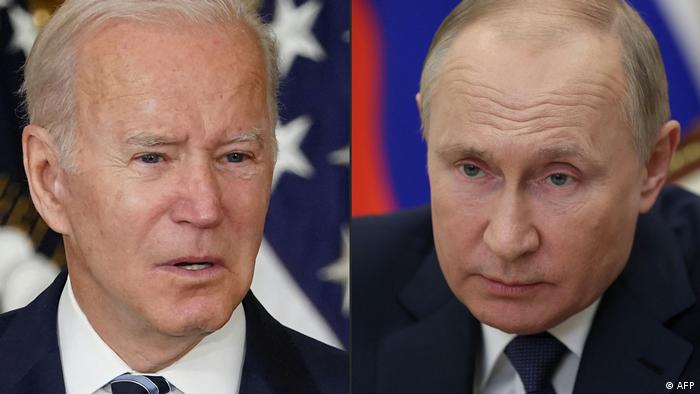
Russia could force U.S. to lift sanctions in five minutes if….

Published

on

Every experienced observer of U.S. politics and policies in the past 60 years would readily agree that Israeli interests, security and strategic supremacy have been and continue to be the most important foreign policy consideration for successive American administrations ever since Harry Truman.

In fact, one wouldn’t go too far by arguing that in many cases, Israeli interests, as defined and interpreted by the usually-hawkish Israeli leaders, were often given precedence over America’s own national interests. For example, in the late 1950s and early 1960s, there were substantial Indications that Egyptian leader Gamal Abdu-Nasser was considering a radical rethinking of his growing ties with the Soviet union, which also was an important goal of American foreign policy in the Middle East at that time.

Read also: The 1967 War Was A Defeat  Of Arabism, Nasserism, Baathism And Anti-Islam Doctrines


However, with CIA knowledge, Israel managed successfully to thwart and abort all American efforts to reach a rapprochement with the Nasser regime. In the mid of 1960s, Mossad carried out a series of terrorist operations in Cairo, targeting American interests. Israel’s goal was obviously to maintain and increase hostility between the U.S. and the Nasser regime. Israel blamed the Egyptian regime of masterminding the terrorist acts. However, the US government swallowed the mendacious Israeli claim, adopting a more hostile approach to Nasser.
On 8 June, 1967, an Israeli warplane attacked USS Liberty which was sailing in international waters north of the Egyptian town of Alarish. Thirty-four American navy officers, servicemen and civilians were killed, and 173 others were wounded, many quite badly.

Predictably, the Intelligence-gathering ship was badly damaged. Israel claimed the treacherous attack occurred by mistake. However, there was ample evidence that the Lyndon Johnson administration connived and colluded with Israel to cover up the crime in order to avoid the occurrence of a public backlash against Israel and Jews in the U.S.

Today, the Zionist-Jewish influence on the American government (e.g. the White House and Congress) is probably a hundred times stronger and more pervasive than it was when USS liberty was attacked more than 55 years ago .” In fact, we can quite safely assume that Israel today comes before America in America itself. Some ordinary people might be tempted to dismiss this view as an overstatement.

However, knowledgeable experts would readily agree that it is the truth, the whole truth, and nothing but the truth. But who in Washington would dare utter this inconvenient truth and remain unscathed even for 10 minutes?

It is for this reason, that American officials from the lowest-ranking government clerk to the man in the White House routinely keep regurgitating rather tediously the sanctimonious and sacrosanct rituals of showing unconditional loyalty to Israel, using extremely obsequious language which they wouldn’t use even in stressing loyalty to America itself.

Thus, when Joe Biden visited the repulsive apartheid entity two weeks ago, dutifully reiterated America’s “unflinching, unwavering, unfaltering and iron-clad commitment to Israel,” describing relations with the Jewish state as “bone-deep”.

The umbilical relations between the U.S. and the racist entity that demolishes innocent people’s homes at midnight and murders school children as well as Journalists, and then lies about the murder, should be fully exposed to the capitals of the world. This is because a deep awareness of American criminal priorities would immensely serve the legitimate interests of states the US is trying to subjugate, humiliate and bring to their knees.

Russia’s unused Trump card

Russia could decisively outmanoeuvre the U.S. by threatening the insolence and arrogance of power of America’s sacred cow. I don’t know if I am disclosing an open secret or revealing something that major espionage agencies don’t know or know little about. They do know it even much better than a veteran Palestinian journalist living in a rural region of the Israeli-occupied West Bank.
None the less, I am completely convinced that Russia would be able to extricate serious concessions from Washington simply by hinting that it would boost and expedite nuclear cooperation with Iran. Such a feat would immediately generate massive panic reverberations all over Washington and probably in London and other Western capitals as well.
The direct and indirect ramifications and repercussions of an audacious Russian feat as such, especially if accompanied with a stern warning similar to the ultimatum given to Britain, France and Israel by the former Soviet Union during the tri-partite aggression on Egypt in 1956.

The ultimatum, issued on 5 November, 1956, by Soviet Marshal Nikolai Bulganin” notified the French, British and Israeli governments that the Soviet Union is prepared to employ all modern forms of destructive weaponry to halt Western military intervention in Egypt.” Needless to say, it was this Soviet ultimatum, a daring act by every conceivable standard, forced the three aggressors to halt their aggression, and convinced the US to force Israel to pull out its troops from the Sinai Peninsula.

I described the Israel factor as Russia’s trump card” in the current confrontation with Washington over Ukraine because the U.S. is likely to give any concession to keep Israeli interests unscathed. In the final analysis, Israel is a thousand times more important for the political clique ruling America.

Russia retains many important cards which Putin can play to minimize the harm incurred as a result of the massive and unprecedented western sanctions.

Indeed, in addition to using overwhelming conventional firepower against the Ukrainians, Russia could always “threaten to use” its massive nuclear arsenal to hasten the advent of doomsday for the entire world. True, there is a vast gap between threatening to use and actually using. But authoritarian rulers are usually more daring in dealing with a Mutual Assured Destruction (MAD) situation that leaders answerable to their peoples.

Many political pundits believe that narrowing Russia’s horizons and pushing Putin to the corner could make him somewhat suicidal or at least make him contemplate taking some unthinkable and unusual feats. Putin is already in a state of deep disillusionment with the West. Hence, maximising pressure on him by the US is likely to seriously decrease his mental equanimity and maneuverability. That would make the Russian dictator a very dangerous man, indeed.

Russia is effectively using it energy weapon to subjugate America’s European allies who depend to a large extent on Russian gas supplies.

None the less an unmistakable Russian tacit or explicit threat to help Iran develop a nuclear deterrent would likely neutralize all American-Israeli magic.

I am not erudite in game theory and should never underestimate would-be US reactions. However, given Israel’s virtually complete control of the American government, It seems it would be very expedient for the Russian leadership to seriously consider this scenario. (END)

Continue Reading
Click to comment

Leave a Reply

Your email address will not be published. Required fields are marked *

Featured

Israel’s Formula for Permanent Occupation

Published

on

Israels-Formula-for-Permanent-Occupation

International diplomacy often assumes Israel might free Gaza once enough security conditions are satisfied. But decades of illegal occupation show the opposite. Israeli state policy weakened Palestinians, divided their land, and obstructed sovereignty while presenting every new restriction as temporary.

The latest and most heinous formula follows the history. Palestinians must disarm first, and then Israel may withdraw later. In reality, “later” means whenever Israel chooses. In fact, it is the architecture of permanent occupation.

Disarmament Means Palestinian Defenselessness

The US-led Board of Peace proposed a 15-point roadmap under which Palestinian groups would disarm in phases as Israeli forces withdrew. Hamas endorsed the proposed framework. However, Netanyahu rejected it clearly, declaring that Israel would not leave until Hamas was “genuinely disarmed”.

Disarmament first” leaves Israel in command of the timetable. It can decide almost everything, including whether to accept disarmament. No fixed deadline compels its army to leave.

Palestinians will try to bring peace even through their remaining means of resistance while Israel retains its aircraft, artillery, surveillance, and control of Gaza’s borders. That is not mutual security. It is enforced helplessness before a state committing genocide.

The Map Exposes the Plan

The October 2025 ceasefire map left Israel controlling approximately 53 percent of Gaza behind the Yellow Line. Instead of moving towards the border, Israeli forces pushed deeper into the enclave.

By May 2026, Israel controlled an estimated 64 percent. Netanyahu then ordered the military to expand its hold to at least 70 percent. Boundary markers were displaced, no-go areas widened and neighbourhoods absorbed into so-called buffer zones.

The terminology hides the open theft. A “security area” can contain somebody’s home, farm, school or family grave. Once Palestinians are prevented from returning and buildings are demolished, temporary control ultimately produces permanent dispossession.

Additionally, Green Rafah follows the same logic. Israel and its partners determine where rebuilding occurs, who may enter, and which residents remain excluded. Gaza is being divided into controlled islands rather than restored as one Palestinian homeland.

Genocide Behind a Ceasefire Label

Israel’s genocide did not end with the ceasefire announcement. Between October 10, 2025 and August 13, 2026, Israeli attacks killed more than 1,260 innocent Palestinians and injured 4,152.

Israel attacked Gaza on 277 of the first 309 ceasefire days. Moreover, Gaza’s Government Media Office documented at least 3,795 violations by July 19, including air strikes, artillery attacks and shootings.

By August 13, the Palestinian death toll since October 2023 had reached at least 73,389, including approximately 21,500 children.

A ceasefire permitting killing, territorial expansion, and deprivation is not peace, but a quieter framework for destroying Palestinian life.

Gaza and the West Bank Face One Strategy

In Gaza, Israel uses bombardment, siege, military zones, and controlled reconstruction. On the other hand, in the West Bank, it uses settlements, checkpoints, raids, home seizures, water deprivation, and armed settler violence.

Both systems fragment Palestinian territory and make ordinary life increasingly impossible. Families are pressured to abandon land that Israel then brings under tighter control.

Treating Gaza and the West Bank as separate problems benefits Israel. Palestine is being dismantled through connected policies, one demolished neighbourhood, seized spring, and expanded military zone at a time.

Washington Protects the Occupier

Trump and Netanyahu held a 90-minute White House meeting on July 28, their eighth since Trump returned to office. Although it was reported that Iran dominated the discussion, no binding Israeli withdrawal followed.

Trump later promoted the disarmament roadmap as a breakthrough. Netanyahu rejected its central exchange, but Washington imposed no meaningful consequence. A Board of Peace official stressed that Israel would not have to make irreversible moves or rely only on trust.

Consequently, Palestinians received no equivalent protection. They were expected to disarm irreversibly while Israel occupied most of Gaza and retained the power to attack. American military assistance, diplomatic protection, and political indulgence allow Israel to reject agreements without paying a high price.

History Has Already Answered

Israel has occupied the West Bank since 1967 while settlements have illegally consumed Palestinian land. Oslo was presented as a temporary route towards Palestinian self-government, yet occupation deepened, and settlements expanded.

Although Israel apparently removed settlers and permanent ground forces from Gaza in 2005, it retained decisive control over its borders, airspace, and coastline before imposing a blockade. Each supposedly temporary arrangement created another instrument of domination.

Today’s conditions repeat the method – delay sovereignty, create facts on the ground, and blame Palestinians for an occupation Israel intends to preserve.

“Withdrawal Later” Means Occupation Without End

Israel does not seek a free, united and sovereign Palestine at any cost. Its policies seek a weakened Gaza, a fragmented West Bank and Palestinians too isolated to resist the loss of their homeland.

A genuine settlement would require an enforceable Israeli withdrawal, an end to genocide, unrestricted humanitarian access and Palestinian sovereignty. Israel’s formula reverses every priority.

Disarmament first, withdrawal later” is not an offer of peace. It demands that Palestinians become defenceless while the state destroying their homeland decides how much of Palestine they may still inhabit.

Continue Reading

Featured

The Bombs Still Waiting Beneath Gaza’s Rubble

Published

on

The-Bombs-Still-Waiting-Beneath-Gazas-Rubble

A ceasefire can ultimately stop new bombs from falling, but it cannot make the weapons already buried beneath Gaza safe. Although it is a “broken ceasefire” that has been violated more than a hundred times by Israel, Palestinians still have hope. Whenever families return to their damaged homes, they will find more than broken concrete and twisted steel.

Israel said it carried out more than 40,000 airstrikes on Gaza by October 2024. Alarmingly, the UN Mine Action Service estimates that 5% to 10% of explosive munitions have failed to explode.

Gaza Has Become an Unmapped Minefield

Unexploded ordnance is extremely dangerous because it is hard to identify and may become less stable after impact. In Gaza, rather than lying in open air, numerous lethal weapons are buried inside collapsed apartment blocks, under roads, beside water systems, or beneath homes where displaced people are trying to live again.

A credible news agency, Reuters, documented a bomb more than a meter long on a rubbish heap in Gaza City. Moreover, a family in Nuseirat is unable to return because a device remained inside their home, and residents of Khan Younis are living above a suspected bomb buried beneath their building. UN teams have also found aircraft bombs, mortars, rockets, and improvised explosive devices on the surface, while warning that many more are likely to be deep under the rubble.

By October 2025, a UN-led database had recorded more than 53 deaths and hundreds of injuries from explosive remnants in Gaza. Aid organizations, such as UNRWA, believe the real total is higher because many incidents are never formally reported. Additionally, Humanity & Inclusion estimated that clearing surface contamination alone could take 20 to 30 years, while deeply buried weapons may remain a threat for generations.

Rubble Clearance Cannot Begin Blindly

As per the UN estimates, Gaza now contains an estimated 61 million tonnes of rubble. By April 2026, UNDP teams had removed about 287,000 tonnes, less than half of 1% of the total. The agency said the wider effort could take seven years or even more, and only if heavy machinery, fuel, and access are consistently available. Reconstruction needs have been placed at $71.4 billion over the coming decade.

These figures aptly show why unexploded weapons are inseparable from reconstruction. Before workers reopen a road, reach a water well, repair a hospital, or clear land for housing, specialists may need to survey the site. A bulldozer cannot safely enter simply because the fighting has stopped.

Near Khan Younis, a bulldozer struck a concealed explosive while clearing a road. The driver and a 15-year-old boy suffered severe burns and shrapnel wounds, and both lost sight in one eye.

The debris may also contain asbestos, contaminated dust, sewage, fuel, industrial chemicals, and human remains. Clearance is therefore a demining, environmental, and public-health operation, not merely a construction job.

Children and Returning Families Face the Greatest Risk

Children search damaged buildings for toys, clothing, wood, plastic, or scrap metal. A fuse, shell fragment, or small munition may look useful or harmless. So, as a precaution, warning posters can reduce some risk, but they cannot replace trained clearance teams.

Returning families face the same danger on a larger scale. Many enter homes without structural inspections, move debris by hand, and salvage whatever can be reused. Some extract steel bars from destroyed buildings to support tents or sell for income because construction materials remain scarce. That work brings innocent civilians into direct contact with debris that has not been systematically checked.

The threat will grow whenever more displaced people return to heavily damaged neighborhoods. Without large-scale clearance, Gaza risks inheriting the same decades-long danger seen in other countries where unexploded weapons continued killing civilians long after wars ended.

The Equipment Needed Has Been Restricted

As a professional practice, bomb disposal teams require detectors, armoured vehicles, protective clothing, firing cables, controlled explosives and specialised excavation equipment. But Israeli authorities rejected requests for more than 2,000 demining items between March and July 2024, including equipment needed for safe detonations and protected access. Aid groups said these restrictions and blockages prevented clearance work from beginning.

Gaza’s own capacity has also been reduced to almost nothing. Thirty-one members of the local police engineering division were killed, and another 22 were injured during the genocide. International teams need visas, security guarantees, and permission to bring equipment into the territory. Without strike records and technical information about the weapons used, specialists must work with incomplete maps.

Responsibility Cannot End With the Bombing

A UN-coordinated estimate placed the cost of clearing Gaza’s unexploded ordnance at about $500 million over ten years, assuming cooperation and unrestricted access. Later assessments suggested surface clearance may take even more than two or three decades.

That burden cannot be placed on innocent Palestinians alone. Israel holds information about its strikes and munitions. Governments that supplied weapons have technical expertise, records, and financial resources. On the other hand, donors discussing reconstruction must treat explosive clearance as a first requirement, not an optional project after roads and buildings are planned.

In a nutshell, Gaza cannot be rebuilt safely while bombs remain beneath homes, schools, hospitals and streets. The slow pace of genocide does not end the danger. Before families can return with confidence, the weapons still buried beneath the rubble must be mapped, removed, and destroyed.

Continue Reading

Featured

What Happens to Palestinian Refugees If UNRWA Finally Breaks?

Published

on

What-Happens-to-Palestinian-Refugees-If-UNRWA-Finally-Breaks

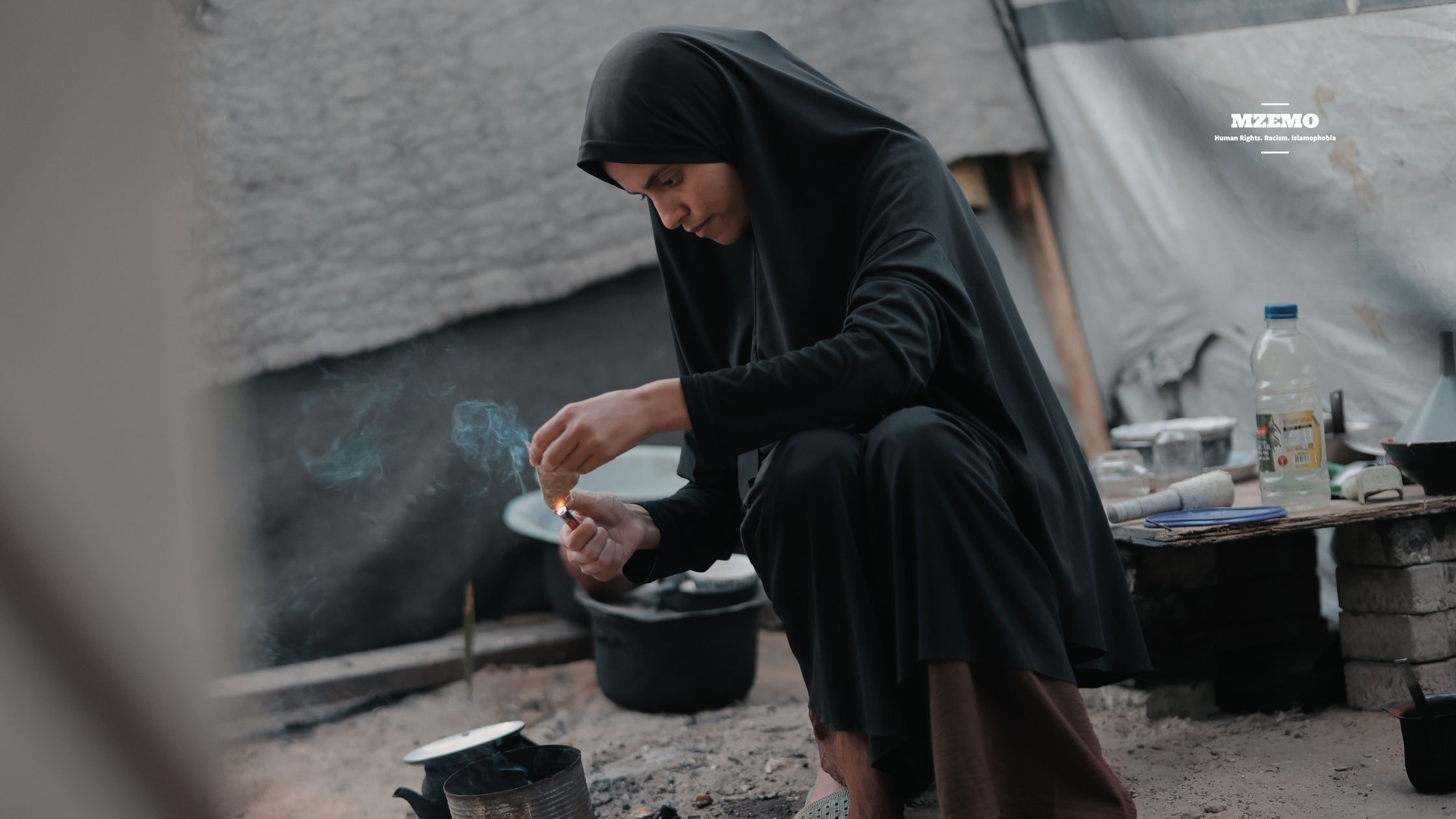
The United Nations Relief and Works Agency for Palestine Refugees in the Near East (UNRWA) was established to provide humanitarian support to the people of Palestine, especially in Gaza. However, this life-saving agency does not need to announce its collapse for Palestinian refugees to feel it. A clinic can shorten its critical hours, a school can lose teachers, and a family can suffer unimaginably due to the shortage of food, shelter, and life-saving medication.

On 30 June 2026, UN Secretary General António Guterres warned that this critical UN agency was approaching a “breaking point”. This is due to a funding gap of $100 million and restrictions by Israel. Due to this unfortunate happening, UNRWA had already reduced service hours by twenty percent. Moreover, they had cut local salaries and left 15% of international posts vacant. In 2025 alone, it received just $829 million against stated needs of $3.3 billion.

An Agency Created Because Displacement Was Never Resolved

UNRWA was established in 1949 after about 700,000 Palestinians were driven from or fled their homes during the Nakba. It was meant to provide much-needed humanitarian relief while the refugee question awaited a reliable solution. More than 75 years later, that solution has not arrived.

In fact, around 5.9 million Palestinians are registered with the agency across Gaza, the occupied West Bank, including East Jerusalem, Jordan, Lebanon, and Syria. UNRWA employs about 30,000 Palestinians and provides education, primary healthcare, relief, and emergency assistance. It is not a small charity that can be replaced by redirecting a few aid trucks. It is a regional humanitarian public-service system built over generations.

Its long existence is sometimes used against it, as though the agency created the refugee crisis. In fact, UNRWA remains because the Palestinian statehood issue remains unresolved. Closing it would only remove services, while the original injustice would continue.

Gaza Would Feel the Collapse First

Especially in Gaza, UNRWA has operated schools, clinics, warehouses, and distribution systems for decades. Its local staff know the limited communities they serve. During the genocide, its buildings became shelters, and its employees continued working while displaced and grieving.

So, if the agency breaks down, Gaza would lose far more than just food distribution. Primary healthcare would shrink. Vaccination, maternal care, and treatment for chronic illness would be largely interrupted. Sanitation and shelter support would weaken. Other humanitarian organizations would be expected to absorb an enormous caseload without UNRWA’s staff, facilities or local network.

Moreover, education would suffer just as deeply. UN officials warned that more than 660,000 children in Gaza could lose access to schooling if UNRWA collapsed. After years of bombing, displacement, and trauma, removing the main institution capable of rebuilding education would deepen the destruction of an entire innocent generation.

The Crisis Would Spread Across the Region

UNRWA is often discussed as though it exists only in Gaza. Its collapse would also be felt in Jordan, Lebanon, Syria, and the occupied West Bank.

When it comes to Lebanon, many Palestinian refugees face severe poverty and restrictions on employment. In Syria, years of internal and proxy wars have damaged camps and public services. On the other hand, in Jordan and the West Bank, UNRWA schools and clinics support large communities. Host governments would face extreme pressure to absorb hundreds of programs, yet most lack the money or capacity to do so.

Although international charities could take over isolated projects, they could not quickly reproduce a network operating across five territories. The likely result would be fragmented healthcare, overcrowded schools, lost jobs, and deeper instability.

A Financial Crisis Made Political

UNRWA’s funding problems cannot be separated from the campaign against the agency by Israel and its allies.

Israel accused several employees of involvement in the attacks of 7 October 2023. The UN investigated this matter as well. These allegations against individuals were used to attack an agency employing tens of thousands and serving millions. Several donors suspended funding; most later resumed it, but the financial damage remained.

To add fuel to the fire, Israel also passed legislation restricting UNRWA, barred official contact with it, and moved against its East Jerusalem presence. Unfortunately, in January 2026, Israeli bulldozers demolished buildings inside the agency’s East Jerusalem compound after the site had been seized. Resultantly, the UN condemned the demolition as a violation of international law.

Who Would Replace UNRWA?

Israel has notoriously said that other organizations can assume UNRWA’s work. However, what are the guarantees that the other organization wouldn’t be banned or completely obliterated in the name of revenge? No credible plan has shown how this could happen at the required scale.

When it comes to other humanitarian agencies, they have specialized mandates, but none combines UNRWA’s schools, clinics, registration systems, warehouses and Palestinian workforce. NGOs can provide emergency help, but they cannot instantly operate a regional education and healthcare system. Most importantly, the UN Security Council has called UNRWA the backbone of the humanitarian response in Gaza and warned against attempts to dismantle it.

If UNRWA disappeared, innocent civilians would suffer the most. Food, healthcare, schooling, shelter, and sanitation would still have to be provided. Ultimately, Palestinian families would bear the immediate consequences.

Closing UNRWA Would Not Close the Refugee Question

In a nutshell, UNRWA is not a substitute for Palestinian freedom, return, compensation, or statehood. It cannot negotiate a political settlement. Its schools and clinics manage the consequences of displacement rather than resolving its cause.

UNRWA may have been created as a temporary institution, but Palestinian exile was never temporary. If the agency finally breaks, the refugees will not vanish. Their needs will become more severe, the entire system more strained, and the region less stable.

The world would not have ended the Palestinian refugee crisis. It would simply have abandoned the people still living through it.

Continue Reading
Advertisement

Trending