Connect with us

Palestine

Dozens Palestinians Injured by Israeli forces in the West Bank and Jerusalem

Published

on

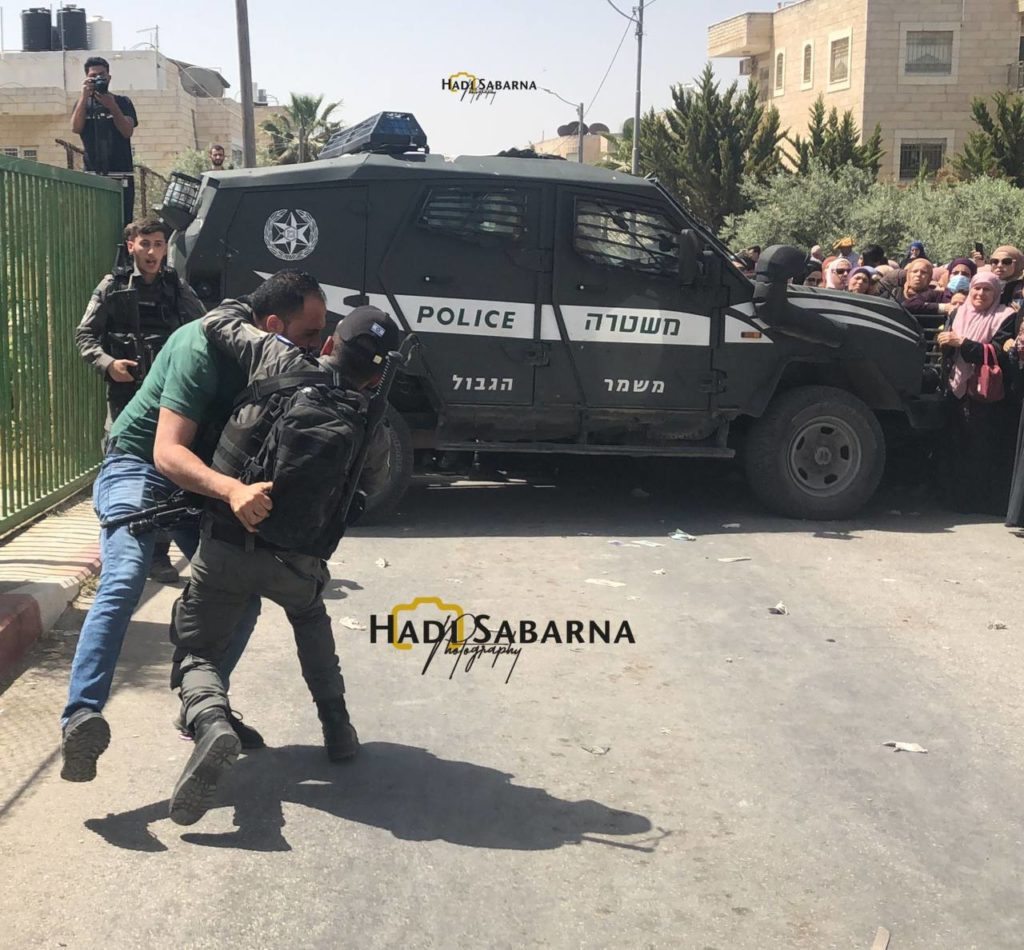
IDF attacking Palestinians

local sources reported, At least 51 Palestinians were injured by Israeli forces Friday in the occupied West Bank and Jerusalem.

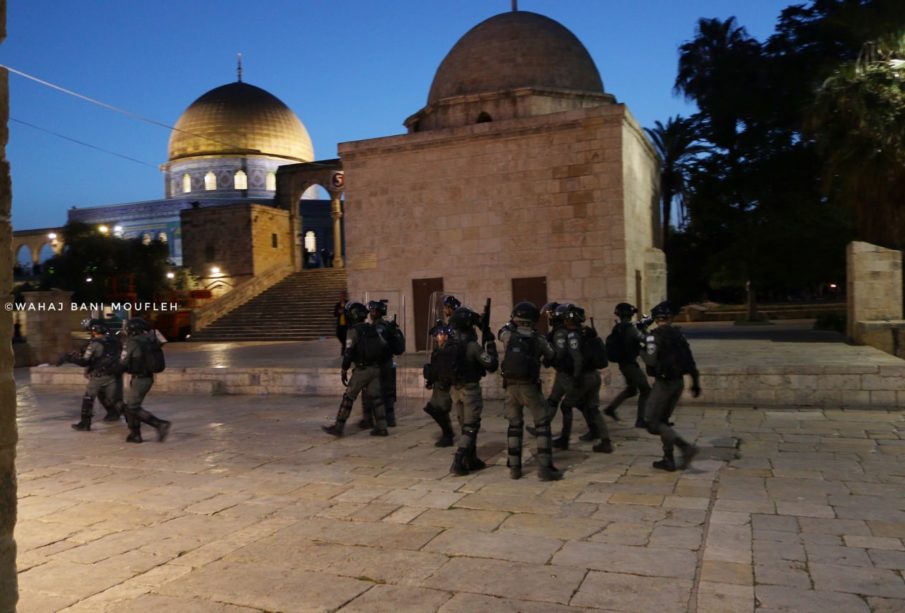
They said that Israeli suppressed Palestinians inside Al-Aqsa Mosque and injured 42.

They added that heavily-armed Israeli forces stormed the Al-Aqsa mosque from Bab al-Maghariba Gate, occupied the rooftops of several buildings, and fired rubber bullets and tear gas canisters toward the worshippers, injuring 42.

IDF soldiers in Al-Aqsa mosque

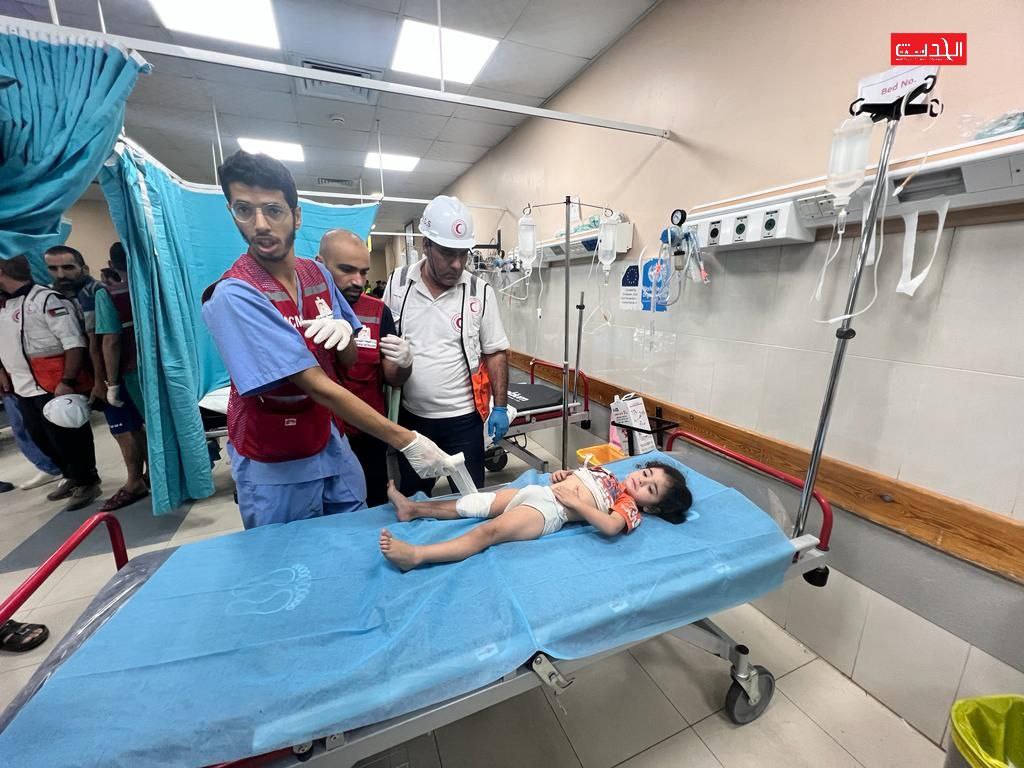
The Palestinian Red Crescent said that its paramedics provided treatment to 42 Palestinians, mostly with upper-body injuries, and transferred 20 of them to al-Makassed Hospital.

It confirmed that the Israeli forces initially prevented medics’ access to the Al-Aqsa Mosque compound and brutally assaulted a paramedic, inflicting bruises across his body.

Also Read: Israeli court’s ruling allowing Jewish prayers at Al-Aqsa Mosque

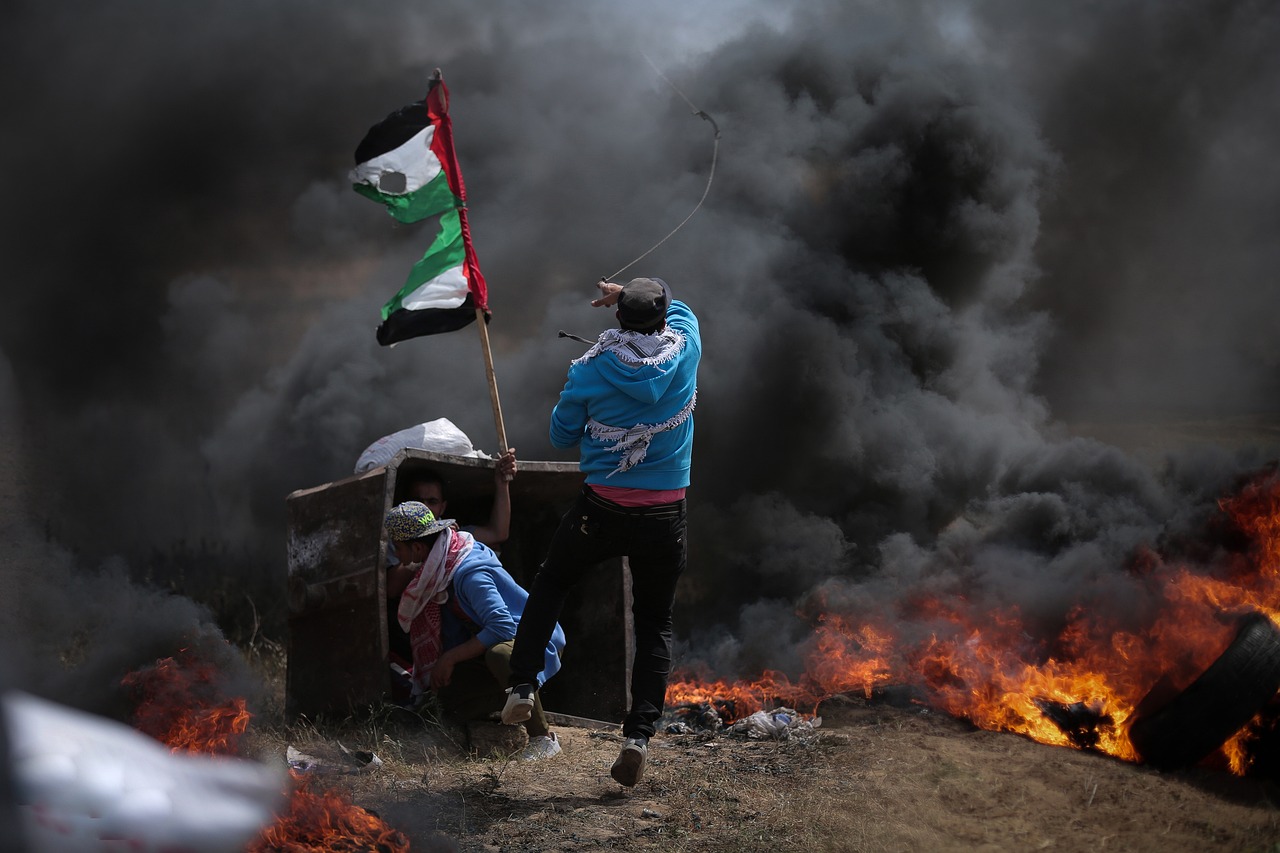
Meanwhile, more than nine Palestinians were injured by Israeli forces today during the weekly protest against Israeli settlement construction in Qalqilia.

Morad Shtewi, a local anti-Israeli occupation activist, said that Israeli forces attacked the protesters with rubber bullets and gas canisters, injuring nine of them with rubber bullets, including two children.

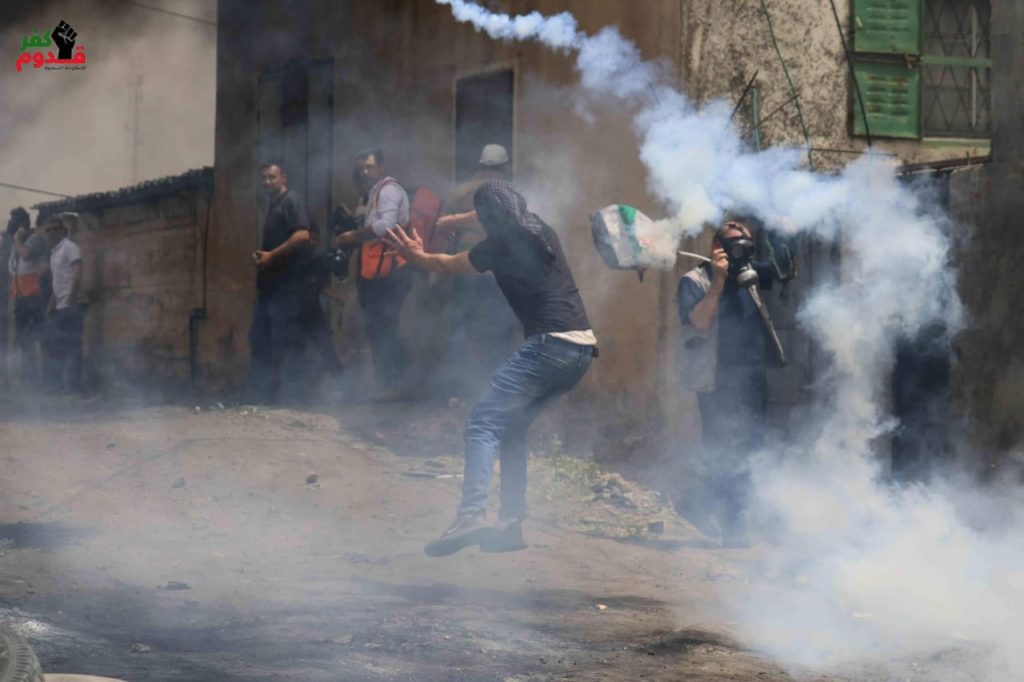
Meantime, Tens of Palestinian protesters suffered suffocation from tear gas inhalation after Israeli forces suppressed the weekly anti-colonization protest in the West Bank province of Nablus.

For years, Palestinian from Kafr Qaddum have been protesting every week on Friday against illegal Israeli settlements.

Also Read: Israel is and will always be a crime against humanity

More than 500,000 Israeli settlers live in illegal settlements across the occupied Palestinian Lands in violation the international law and Israel restricts Palestinians from movement through approximately 100 fixed checkpoints, settler-only roads, and the 70-kilometre-long apartheid wall.

IDF firing gas cannisters on Palestinians

Continue Reading
Click to comment

Leave a Reply

Your email address will not be published. Required fields are marked *

Featured

The Political Chessboard: Israel, Egypt, Hamas, and International Powers

Published

on

The-Political-Chessboard-Israel-Egypt-Hamas-and-International-Powers

Although Gaza is still under a so-called “ceasefire”, nothing about Gaza feels like peace. The bombs are quieter, yet the pressure is heavier. Resultantly, the Rafah border remains a battleground without bullets, shaped by political deals, blocked negotiations, and shifting alliances. In a series of events, every country involved says it wants stability, while none of them agree on what that stability should look like. However, Palestinians are not invited into the rooms where their future is being discussed.

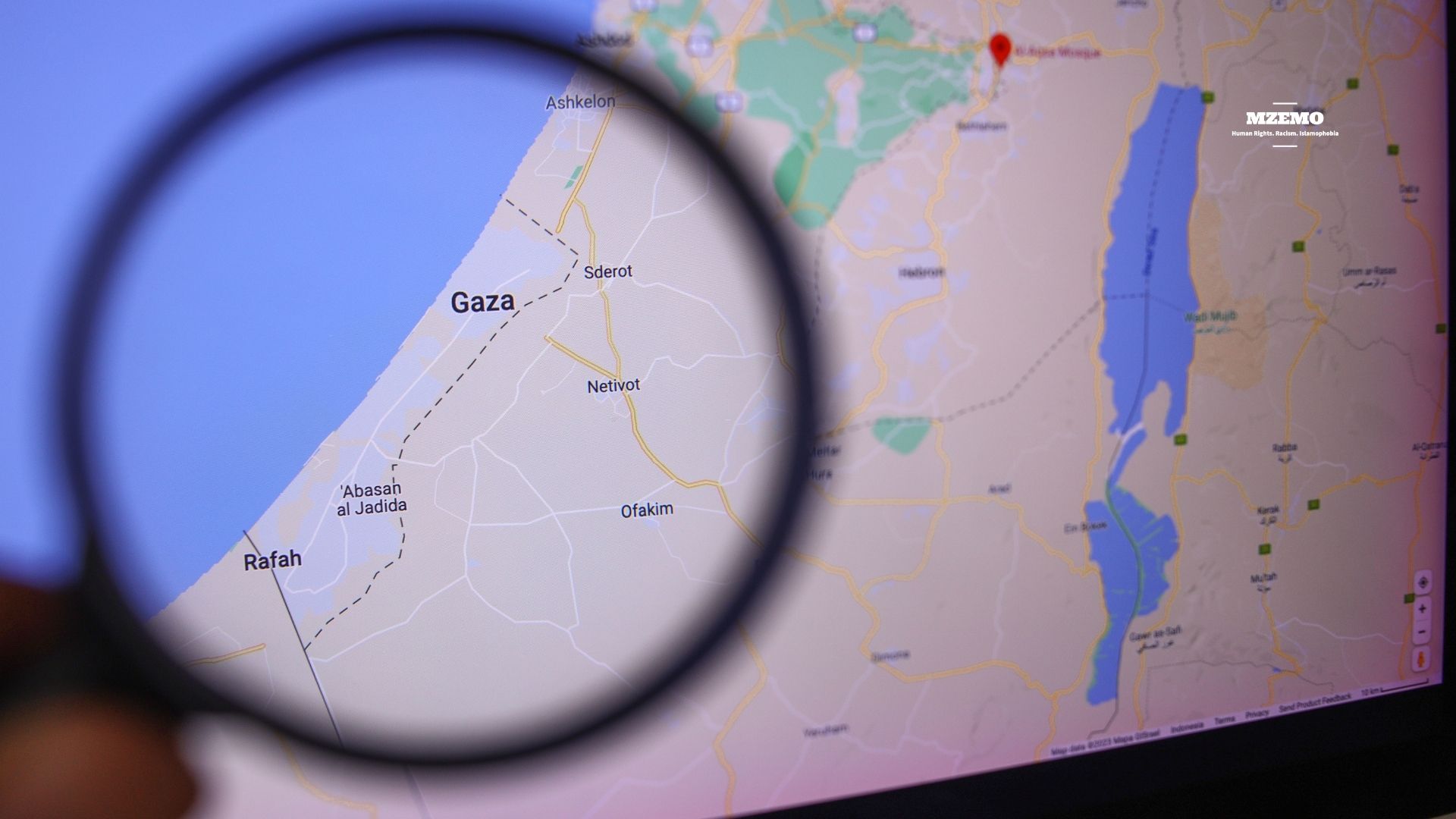
This is the political chessboard of Gaza. In fact, a map of power where every move is made above the heads of the people who live with the consequences.

Israel’s Strategy: Control Without Responsibility

Israel’s long-term goal has become increasingly clear. It is to maintain control over Gaza’s borders, movement, and political structure while avoiding the burden of direct governance. The reopening of the Rafah crossing only for exit, not entry, is part of this design. A one-way gate would encourage Palestinian displacement without Israel having to declare it openly.

Reports published by international outlets reveal proposals that would place Gaza under a new administrative framework that excludes Palestinian political actors and leaves Israel with indirect control.

Inside Israel, political pressure from far-right ministers shapes much of its Gaza policy. They demand harsher restrictions, deeper buffer zones, and tighter control of who enters and exits the strip. The argument is always the same: “security.” The reality is more aligned with demographic engineering and territorial fragmentation.

Egypt’s Red Line: No Resettlement in Sinai

Egypt rejects any attempt to push Palestinians into Sinai. Cairo has repeated this stance publicly and privately, warning that any forced movement of Gazans into Egyptian territory would destabilize the region and undermine Egypt’s sovereignty.

Egyptian officials understand that once Palestinians cross into Sinai in large numbers, they may never return. Egypt refuses to become the “alternative homeland.” This is why the Rafah crossing remains tightly controlled from the Egyptian side as well. Egypt views the crossing as leverage, a card it will not surrender lightly.

Hamas: Squeezed but Not Erased

Two years of war have left Hamas militarily weakened and politically isolated. Large parts of its governance structure were destroyed, and the population it once administered is now scattered across tent camps and ruined cities.

Yet Hamas remains a key player because it holds the hostage file and still commands loyalty among the masses. Attempts by Israel, the U.S., and other regional actors to design Gaza’s political future without Hamas have created a vacuum. There is no clear replacement, no unified Palestinian authority ready to take control, and no roadmap that includes the people who live in Gaza.

The United States: Containing the Conflict, Not Resolving It

The United States frames its Gaza involvement as a humanitarian and diplomatic effort. However, its strategy is aimed at managing the conflict, not ending it.

Washington continues military support to Israel while pushing for a Gaza administration that minimizes Hamas’s influence. The U.S.-backed idea of a “Board of Peace” or international governance model places foreign powers over Palestinian territory, effectively sidelining Palestinian representation.

This contradiction, supporting Israel militarily while calling for humanitarian relief, has shaped U.S. policy since the first days of the war. It has also prevented any long-term political solution from taking shape.

Qatar: The Broker Between Opposites

Qatar plays a unique role on this chessboard. It mediates hostage exchanges, communicates with Hamas, and finances humanitarian operations. Israel criticizes Qatar, yet depends on it. The U.S. works through Qatar despite political discomfort, and Hamas relies on Qatar’s mediation to remain relevant.

In every negotiation since 2023, Qatar has been the only actor able to speak to all sides. Its influence comes not from military power, but from its ability to keep channels open when everyone else closes theirs.

Europe: Loud Words, Quiet Actions

European governments issue statements condemning civilian suffering, demanding accountability, and calling for more aid. However, Europe remains deeply divided.

Countries like Spain, Belgium, and Ireland push for stronger action. Others, including France and Germany, avoid measures that would pressure Israel. The EU’s economic partnerships with Israel remain intact. Security cooperation continues, and statements do not become consequences.

As a result, Europe’s diplomatic voice carries moral weight but limited political impact.

The Broader Arab World: Anger Without Strategy

Arab leaders face enormous public pressure to act for Gaza, but their responses have been largely symbolic. Economic agreements, security deals, and regional partnerships constrain stronger positions.

Saudi Arabia remains cautious as it balances global alliances. The UAE prioritizes economic stability. Jordan manages population pressure and border security. None of these states has presented a unified plan for Gaza’s future. The absence of an Arab strategy leaves the political field open for external powers.

Rafah: A Border Crossing That Reveals Everything

The Rafah crossing is not just a gate, but the clearest symbol of Gaza’s political reality.

  • Israel wants it controlled in a way that encourages displacement.
  • Egypt refuses to open it for mass entry.
  • The U.S. wants a managed framework.
  • Qatar uses it as a negotiation point.
  • Hamas sees it as a lifeline.

And Palestinians see it as the difference between survival and suffocation. Every decision about Rafah is a political move in this larger chess game.

A Homeland Negotiated Without Its People

Gaza’s political future is being shaped in Washington, Cairo, Tel Aviv, Doha, Brussels, and Riyadh. But neither in Gaza City nor in Rafah. Palestinians have no seat at the table where their homeland is being redesigned.

This is the real tragedy of Gaza’s political crisis. Occupation continues not only through military force, but through diplomatic exclusion. Every foreign plan that excludes Palestinian voices deepens instability and prolongs suffering.

The world cannot speak of stability while silencing the people who live with the consequences.

Until Palestinians are central to decisions about their land, every negotiation, border reopening, governance proposal, or ceasefire will be nothing more than another move in a game they never agreed to play.
Continue Reading

Featured

Beyond the Accords: Trump’s Saudi Gambit and the Fate of Palestinian Rights

Published

on

Beyond-the-Accords-Trumps-Saudi-Gambit-and-the-Fate-of-Palestinian-Rights

The stage is being set for yet another high-profile Middle East handshake, and that could be a significant one. US President Donald Trump has just indicated that he expects a substantial expansion of the Abraham Accords by December 2025. These accords were a deal of normalization between Israel and several Arab states, including the UAE, Bahrain, Morocco, and Sudan, brokered by the United States in 2020.

His primary goal is to bring Saudi Arabia, the region’s heavyweight, into the fold. However, the question remains: will another round of normalization finally deliver justice to Palestinians, or bury their cause under diplomatic theatrics?

A New Chapter in an Old Script

Trump’s remarks at a campaign event this October came with quite confidence. “I think Saudi Arabia will join soon,” he said. “And when Saudi joins, everyone joins.” His prediction echoes the triumphalism of 2020, when the U.S.-brokered Abraham Accords led the UAE and Bahrain to recognize Israel, followed by Morocco and Sudan. Washington called it a “new era of peace.” However, for Palestinians, it marked yet another sidelining of their struggle.

When it comes to Saudi Arabia, it has long positioned itself as the guardian of Muslim interests in Jerusalem. Crown Prince Mohammed bin Salman (MBS) has signaled openness to normalization, but only if it comes with what he calls a “credible path” to Palestinian statehood. Riyadh’s diplomats repeat that line in every forum, but the details remain elusive. Will Saudi Arabia really demand binding steps toward ending occupation, or settle for economic incentives and U.S. defense guarantees?

The Cost of Recognition Without Rights

When the Abraham Accords were first signed, Israeli settlements in the occupied West Bank were already expanding at a record pace. Gaza remained blockaded by land, air, and sea. Yet none of the normalization signatories demanded measurable progress on Palestinian sovereignty. Instead, trade deals, arms contracts, and security partnerships flourished. Israel gained legitimacy without reform, while Palestinians gained little beyond rhetorical sympathy.

That imbalance is what makes Trump’s new push alarming to many in the region. The Gaza genocide has laid bare the moral bankruptcy of a peace process that ignores Palestinian suffering. To speak of “peace” while Gaza starves and the West Bank land is annexed is to misuse the word entirely.

What Saudi Arabia Could Get in Return?

For Saudi Arabia, normalization with Israel comes with a tempting list of rewards. It could include a U.S.-Saudi defense pact, advanced weapons systems, and civilian nuclear cooperation. These incentives could strengthen MBS’s global standing and accelerate his Vision 2030 ambitions. Yet the domestic and regional risks are profound. Saudi public opinion, according to Arab Barometer surveys, remains firmly opposed to any deal that abandons Palestinian statehood. Even among Gulf allies, the optics of aligning with Israel during Gaza’s devastation are politically explosive.

It is undoubtedly clear that if Riyadh proceeds without clear concessions for Palestinians, it risks forfeiting its moral authority across the Muslim world. On the other hand, demanding real steps, such as halting settlement expansion, lifting the Gaza blockade, or recognizing East Jerusalem as the Palestinian capital, would likely stall talks indefinitely. Either way, Trump’s indication looks more like political theater than a realistic roadmap.

Trump’s Calculations

For Trump, the Abraham Accords were the centerpiece of his foreign policy legacy. Reviving them now serves his campaign narrative: the dealmaker who could deliver “peace in the Middle East” while securing American interests. However, this approach once again treats Palestine as a side issue, a problem to be managed, not resolved. The White House’s language of “prosperity” and “stability” continues to mask the reality of occupation, displacement, and collective punishment.

The United States still provides Israel with $3.8 billion in annual military aid and routinely shields it from UN accountability measures. As long as this dynamic persists, any U.S.-brokered normalization will remain inherently unequal and only a peace built on power, not justice.

Regional Dominoes and Diplomatic Illusions

If Saudi Arabia joins, analysts expect smaller Muslim-majority nations, including possibly Oman, Indonesia, or even Malaysia, to face renewed U.S. pressure to follow suit. The logic remains simple as the bigger the coalition, the more isolated Palestine becomes. Each new handshake, each photo-op in front of flags, makes Israel’s occupation appear more “normalized” on the world stage.

Yet, the Arab street tells a different story. From Amman to Kuala Lumpur, protests against Gaza’s siege have reignited solidarity with Palestinians. Even in countries that signed the Accords, public anger has grown. Leaders may sign deals, but the people remember, and hunger for justice still runs deeper than political convenience.

The danger of Trump’s December timeline is that it reframes normalization as progress, even as conditions in Gaza worsen. The UN reports that 93% of Gazans face food insecurity, while thousands remain displaced amid rubble and disease. To speak of diplomatic expansion while famine spreads is not peacemaking but another way of distraction.

True peace cannot emerge from transactional diplomacy. It demands accountability for war crimes, recognition of Palestinian sovereignty, and the dismantling of apartheid structures that define life under occupation. Until those principles guide policy, every new accord will be just another headline masking a humanitarian tragedy.

A Question of Conscience

What kind of peace are we expanding when it rewards power and punishes the powerless? The real peace demands the restoration of peace and equality, and not dominance. Saudi Arabia’s decision and inclination will shape more than its own foreign policy. It will be a defining moment of whether the Arab world chooses moral leadership or political expedience.

For Gaza, the answer cannot come soon enough. The people who have endured war, hunger, and isolation deserve more than photo opportunities and vague promises. They too deserve a peace that finally includes them!

Continue Reading

Crimes Against Humanity

Siege to Starvation: Food as a Weapon in Gaza

Published

on

Siege-to-Starvation-Food-as-a-Weapon-in-Gaza

Bread should never be a battlefield, yet in Gaza, parents count the hours between air raids and the next bite, trading sleep for a place in a bread line. This is not misfortune but an outcome of the ongoing genocide. Famine has been confirmed in Gaza after months of siege and bombardment. Moreover, the pattern of atrocities by Israel is tragically quite clear: cut the crossings, choke the fuel, bomb the roads, and the entire food system.

Famine in Gaza

On 22 August 2025, the IPC Famine Review Committee confirmed Famine (IPC Phase 5) in Gaza, warning that conditions could spread south without a sustained surge in aid and safety. The famine is not a metaphor but a technical threshold that means households cannot access enough calories or care to survive without immediate, large-scale relief.

Starvation in a place rarely makes a headline, but it is clearly shown in logistics spreadsheets and cratered roads. It can also be felt in the silence of dead ovens and empty tanks.

As per the UN agencies’ estimate, around five hundred to six hundred trucks per day are the minimum to cover basic needs. However, many days in many areas of Gaza fall far short, as a trickle cannot feed two million people. Moreover, there is an increasing fuel scarcity that is killing the cold chain. With electricity unreliable and fuel scarce, bakeries stop, fridges fail, and water systems sputter. In modern times, the families living in besieged Gaza burn scrap wood to boil lentils.

The movement has also been made quite dangerous as roads are continuously bombarded. Moreover, checkpoints and shelling make a bag of flour a life-or-death decision. Food trucks cannot reliably reach warehouses, and people cannot safely reach distribution points.

Food systems are completely dismantled by Israel as fields and greenhouses are destroyed completely or made inaccessible. Fishing is also crippled, and markets and warehouses are devastated or empty. Even when aid enters, the last-mile network is broken.

The Reality of the Human Toll

Hunger creeps, then crashes. UNICEF’s August screenings found roughly 1 out of 5 children in Gaza City acutely malnourished. This pace is increasing day by day. Children are starving, and they fail to gain adequate weight. Moreover, breastfeeding falters when mothers are undernourished, too. In these conditions, water-borne diseases spread faster in bodies that are already depleted.

Mothers stretch tea and bread into a “meal,” or simply skip eating altogether, so toddlers can share a biscuit. Children, on the other hand, stand in bread lines, and schools that became shelters have no kitchens or fuel. Diabetics and dialysis patients, who need predictable food and water, see their survival routines collapse greatly.

Every siege writes a cruel equation, such as calories in versus calories needed. In Gaza, the inputs have been deliberately depressed. Rations that do arrive are often calorie-inadequate for a displaced population; staples that require long boiling are useless without fuel and clean water. High-energy biscuits keep people alive for days, not months.

International Law and the Line That Was Crossed

International humanitarian law prohibits the starvation of civilians as a method of warfare and requires the rapid, unimpeded passage of humanitarian relief. Human Rights Watch has documented how policies that block water, food, fuel, and safe access amount to using starvation as a weapon, a war crime. Whether by design or through reckless disregard for known consequences, the effect is the same: families are deprived of what they need to live.

What Relief Looks Like in Practice

Ending a heinous famine like this one is not a photo-op at a crossing. Completely ending it is about volume, tempo, and safety. Firstly, you should scale the pipeline to a figure of around five hundred to six hundred trucks per day minimum. Fuel should be reconsidered as a humanitarian commodity, including water and health facilities. For example, prices for cooking gas spiked by 4000% in early 2025 compared to pre-war levels. Therefore, families cannot cook even when they get food.

The mass starvation that is fueled by Israeli atrocities is a clear example of human rights violations. Now, the world must act with a renewed spirit before it is too late. Firstly, a permanent ceasefire is the need of the hour. Protection of civilians is also an important step to be taken.

Then, the perpetrators should face the international criminal organizations, as there are numerous cases to be faced, including one on genocide. Unconditional humanitarian access should be on the agenda. UN Resolutions should be followed in true letter and spirit. Moreover, there must be legal accountability as well as sustained funding to make the people of Gaza breathe again.

Bottom Line

Gaza’s hunger crisis is not a side story but actually “the story.” As long as aid is throttled, fuel is scarce, and farms, bakeries, and boats are broke, famine will spread quickly. The metrics may shift week to week, but the moral calculus doesn’t. Bread should not be contraband. Ending the siege on food, in policy and practice, is the minimum standard of humanity!

Continue Reading
Advertisement

Trending