
Featured
Many People Still Living in Extreme Poverty Worldwide

Published
5 years agoon
By
Editor
The world’s poorest populations suffered a huge economic blow from the novel coronavirus pandemic. Their impoverished conditions were brought to sharp relief in an environment of death, fear and agony. The poor have largely remained invisible to counterparts who are better-off when in fact, 698 million people live under the standard absolute international poverty line of $1.90 a day or in extreme poverty. They are our neighbors, the people who work in our households, the people we encounter on our travels. Reducing extreme poverty is even more significant when the prevalent excessive inequality is taken into account. The increase in billionaires’ wealth by $10.2 trillion during the COVID crisis is but one example of the status quo.
Extreme poverty – A Snapshot
The World Bank began publishing data on extreme poverty from 1981 onwards but as far back as 1820, a vast majority of people lived in impoverished conditions. Economic growth over the past two centuries lifted people out of poverty even as the world population rose over the same time. Industrialization, a key avenue for economic development, was among the major drivers of employment growth and poverty reduction. Economic liberalization, education and skill-building, technologies and infrastructure, and government interventions, played roles in alleviating poverty.
Impact of COVID19 on extreme poverty
Unfortunately, the COVID19 pandemic disrupted the steady gains in extreme poverty reduction. According to the World Bank, it has led to an additional 120 people living in poverty, and the number is expected to increase to 150 million by the end of 2021.
Lockdowns announced by governments worldwide hit businesses. Some went under, contributing to rising unemployment. Others cut wages, affecting workers’ ability to meet household needs and compelling them to take on debt to pay for medical emergencies and other expenses their salaries and savings could not cover. In India, informal workers were among the worst hit as construction halted and borders closed at the same time as employment opportunities dried up.
The economic blow isn’t expected to heal anytime soon. The International Labour Organization (ILO), in its 2020 Global Wage report noted that wages had fallen or were growing slowly in the first half of 2020. The Organization also warned that COVID19 was ‘likely to inflict massive downward pressure on wages in the near future’, with ‘women and low-paid workers disproportionately affected by the crisis’.
Before COVID-19 struck, two other issues – conflict and climate change – were standing in the way of extreme poverty reduction. Climate change, which includes global warming and large-scale shifts in weather resulting from human actions, makes the poor sink deeper into poverty. It has a disproportionate effect on farmers depending on whether they’re ably supported by government policies during climate crises. The destruction, violence and displacement engendered by civil conflict also has a debilitating effect on the economic condition of affected populations.
How does climate change affect poverty?
The extreme weather events brought about by climate change threaten communities that lack the basic infrastructure to support them against climate impacts. These front-line communities often have no option but to move away from their homes and seek out new livelihoods, increasing the likelihood of hunger and poverty.
Climate change not only changes the weather, it causes more frequent and destructive earthquakes and tsunamis. Loss of property or limb massively burdens people already living in poverty.
About 78 percent of the world’s poorest people live in rural areas and rely on agriculture for subsistence. Climate change can worsen drought, threatening livelihoods, particularly those of poor agrarian populations in developing countries.
The ensuing food shortage can trigger conflict and displace populations. In the absence of government insurance or financial assistance, farmers are left to support themselves and the odds that they will plunge deeper into poverty increase.
Climate change has varying impacts on populations and countries. Puerto Rico is still recovering from Hurricane Maria that struck in 2017 and resulted in $90 billion in damage. The poorest communities suffered the most while the wealthy fled the island or managed to rebuild their homes.
How is conflict a cause of poverty?
Violent conflict intensifies poverty in a number of ways, from destroying infrastructure, production, assets and institutions, to increasing unemployment and inflation. It causes the forced displacement of populations and separation of families. Civil conflicts can make well-off households more vulnerable to poverty. In Rwanda, the Hutus, after claiming power after generations of cyclical poverty, waged genocide against the previously-dominant Tutsi people, making them more vulnerable to poverty.
Today, the highest levels of poverty are present in countries most affected by conflict, including Columbia, Rwanda, Syria and Uganda. The Syrian Civil war wiped out the country’s middle class, and over 80% of its population lives below the poverty line. It is likely that a vast majority of Syrians are trapped in chronic poverty and may pass poverty on to future generations.
Poverty reduction programs
Many countries worldwide have implemented poverty reduction programs aimed at increasing the income-generating capacity of their poorest populations. Decades of rapid growth enabled China to help reduce the global rate of poverty by 70 percent. The country has established assistance funds and provided scholarships to people in developing countries to pursue education in China. Between 1981 and 2013, it lifted 850 million out of poverty.
Tanzania is one of the world’s poorest economies in terms of per capita income. The country has made huge strides in easing extreme poverty by reducing income poverty, increasing access to basic necessities, rebuilding government infrastructure and renewing public-private partnerships. In 2000, 86 percent of Tanzanians were impoverished; by 2018 this number fell to 28 per cent.
Tajikistan, the poorest of the former Soviet Union states, has made steady gains in growing its economy and reducing extreme poverty. Between 2000 and 2018, the landlocked country’s poverty rate fell from 83 percent to 27.4 percent of the population.
Many People Still Living in Extreme Poverty Worldwide
The world’s poorest populations suffered a huge economic blow from the novel coronavirus pandemic. Their impoverished conditions were brought to sharp relief in an environment of death, fear and agony. The poor have largely remained invisible to counterparts who are better-off when in fact, 698 million people live under the standard absolute international poverty line of $1.90 a day or in extreme poverty. They are our neighbors, the people who work in our households, the people we encounter on our travels. Reducing extreme poverty is even more significant when the prevalent excessive inequality is taken into account. The increase in billionaires’ wealth by $10.2 trillion during the COVID crisis is but one example of the status quo.
Extreme poverty – A Snapshot
The World Bank began publishing data on extreme poverty from 1981 onwards but as far back as 1820, a vast majority of people lived in impoverished conditions. Economic growth over the past two centuries lifted people out of poverty even as the world population rose over the same time. Industrialization, a key avenue for economic development, was among the major drivers of employment growth and poverty reduction. Economic liberalization, education and skill-building, technologies and infrastructure, and government interventions, played roles in alleviating poverty.
Impact of COVID19 on extreme poverty
Unfortunately, the COVID19 pandemic disrupted the steady gains in extreme poverty reduction. According to the World Bank, it has led to an additional 120 people living in poverty, and the number is expected to increase to 150 million by the end of 2021.
Lockdowns announced by governments worldwide hit businesses. Some went under, contributing to rising unemployment. Others cut wages, affecting workers’ ability to meet household needs and compelling them to take on debt to pay for medical emergencies and other expenses their salaries and savings could not cover. In India, informal workers were among the worst hit as construction halted and borders closed at the same time as employment opportunities dried up.
The economic blow isn’t expected to heal anytime soon. The International Labour Organization (ILO), in its 2020 Global Wage report noted that wages had fallen or were growing slowly in the first half of 2020. The Organization also warned that COVID19 was ‘likely to inflict massive downward pressure on wages in the near future’, with ‘women and low-paid workers disproportionately affected by the crisis’.
Before COVID-19 struck, two other issues – conflict and climate change – were standing in the way of extreme poverty reduction. Climate change, which includes global warming and large-scale shifts in weather resulting from human actions, makes the poor sink deeper into poverty. It has a disproportionate effect on farmers depending on whether they’re ably supported by government policies during climate crises. The destruction, violence and displacement engendered by civil conflict also has a debilitating effect on the economic condition of affected populations.
How does climate change affect poverty?
The extreme weather events brought about by climate change threaten communities that lack the basic infrastructure to support them against climate impacts. These front-line communities often have no option but to move away from their homes and seek out new livelihoods, increasing the likelihood of hunger and poverty.
Climate change not only changes the weather, it causes more frequent and destructive earthquakes and tsunamis. Loss of property or limb massively burdens people already living in poverty.
About 78 percent of the world’s poorest people live in rural areas and rely on agriculture for subsistence. Climate change can worsen drought, threatening livelihoods, particularly those of poor agrarian populations in developing countries.
The ensuing food shortage can trigger conflict and displace populations. In the absence of government insurance or financial assistance, farmers are left to support themselves and the odds that they will plunge deeper into poverty increase.
Climate change has varying impacts on populations and countries. Puerto Rico is still recovering from Hurricane Maria that struck in 2017 and resulted in $90 billion in damage. The poorest communities suffered the most while the wealthy fled the island or managed to rebuild their homes.
How is conflict a cause of poverty?
Violent conflict intensifies poverty in a number of ways, from destroying infrastructure, production, assets and institutions, to increasing unemployment and inflation. It causes the forced displacement of populations and separation of families. Civil conflicts can make well-off households more vulnerable to poverty. In Rwanda, the Hutus, after claiming power after generations of cyclical poverty, waged genocide against the previously-dominant Tutsi people, making them more vulnerable to poverty.
Today, the highest levels of poverty are present in countries most affected by conflict, including Columbia, Rwanda, Syria and Uganda. The Syrian Civil war wiped out the country’s middle class, and over 80% of its population lives below the poverty line. It is likely that a vast majority of Syrians are trapped in chronic poverty and may pass poverty on to future generations.
Poverty reduction programs
Many countries worldwide have implemented poverty reduction programs aimed at increasing the income-generating capacity of their poorest populations. Decades of rapid growth enabled China to help reduce the global rate of poverty by 70 percent. The country has established assistance funds and provided scholarships to people in developing countries to pursue education in China. Between 1981 and 2013, it lifted 850 million out of poverty.
Tanzania is one of the world’s poorest economies in terms of per capita income. The country has made huge strides in easing extreme poverty by reducing income poverty, increasing access to basic necessities, rebuilding government infrastructure and renewing public-private partnerships. In 2000, 86 percent of Tanzanians were impoverished; by 2018 this number fell to 28 per cent.
Tajikistan, the poorest of the former Soviet Union states, has made steady gains in growing its economy and reducing extreme poverty. Between 2000 and 2018, the landlocked country’s poverty rate fell from 83 percent to 27.4 percent of the population.
Addressing extreme poverty is a challenge that countries must tackle proactively and smartly. Apart from accelerating economic growth, reducing aspects of inequality and pursuing inclusive growth can give the extreme poor a leg up to emerge from their dire situation.
You may like
Featured
NAZA: The Israeli Soldiers Testifying About Gaza’s Civilian Deaths

Published
2 days agoon
September 27, 2026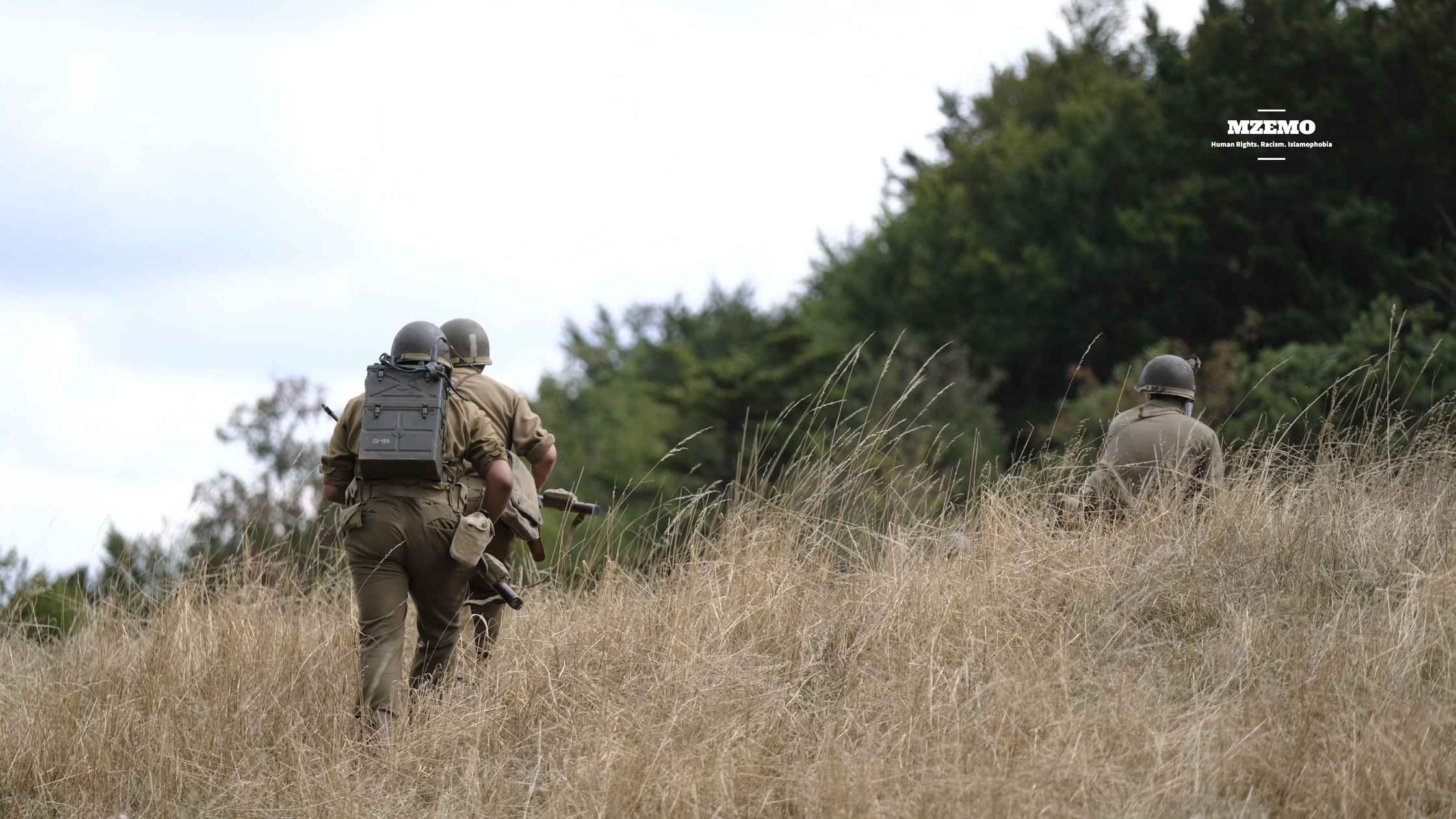
During the last week of August, an Israeli strike hit a building in Bureij refugee camp. Unfortunately, some families could not escape. A four-year-old innocent boy was killed, while his mother and sister were wounded. Moreover, Israel also struck Shati refugee camp, saying weapons were stored inside two mosques but providing no public evidence.
Such attacks are why NAZA cannot be treated as a film about some past violence. It arrived while Palestinians were still being brutally killed by the military system its witnesses describe.
What the Word “NAZA” Hides
NAZA is a Hebrew military acronym for “collateral damage.” It refers to the number of civilians expected to die in an approved strike.
Shockingly, the term turns a mother, a child, or an entire family into a figure beside a proposed target. Their deaths are not discovered only after the bomb falls. According to testimony in the film, they can be anticipated before an attack is authorised.
In fact, the documentary challenges Israel’s claim that Gaza’s civilian toll resulted mainly from accidents, individual failures, or Hamas operating among civilians.
Twenty-Four Voices From Inside the System
The film was directed by renowned Israeli journalists Yuval Abraham and Rachel Szor, who worked on the Oscar-winning No Other Land. They spent three straight years gathering testimony from 24 Israeli soldiers and intelligence officers.
The interviews were recorded secretly on Tel Aviv rooftops. The faces and voices of these officers were altered because the participants feared retaliation. Some spoke with guilt, while others appeared indifferent or proud. The directors kept the focus on what they did rather than how they felt.
The witnesses describe surveillance, casualty estimates and remote bombing. Several discuss AI-assisted systems that processed information taken from thousands of Palestinian phones. Calls, locations and personal connections could help identify an alleged Hamas member.
One account describes words detected through a child’s phone indicating that her father had returned home. That information could trigger an airstrike on the family residence. Many people identified by these systems were alleged low-ranking members, yet their homes could be bombed while relatives were present.
In fact, an algorithm did not make these decisions alone. Officers supplied the data, commanders set the rules and human beings approved the attacks.
Families Were Included in the Calculation
One insider claims that approval was granted for an attack expected to kill 500 civilians to strike one Hamas member. The Israeli military has denied planning or approving an operation with 500 anticipated deaths.
That denial must be acknowledged, but it does not answer the testimony. Several witnesses describe civilians receiving an acceptable casualty number before strikes. They also describe attacks in which the suspected target was not confirmed inside the building.
Additionally, other accounts concern Palestinians killed after entering exclusion zones that residents could not see. Witnesses also discuss attacks near aid distribution points. Israel acknowledged that civilians were harmed at these locations and said it changed its rules.
The pattern described is not a handful of soldiers disobeying orders. It is a method built into targeting decisions.
The Refugee Camps Show the Killing Has Not Ended
The Bureij attack was not an isolated act of genocide. During the first week of September, 17-year-old Ibrahim al-Hash was killed in an Israeli drone strike in Jabalia refugee camp. Eight days later, drones struck Nuseirat camp and wounded several Palestinians, some critically. Israeli forces also opened fire near Jabalia.
These are densely populated communities where generations of Palestinians displaced during the Nakba have lived. Their homes and shelters have deliberately been attacked throughout the genocide.
Israel says its strikes target militants, weapons stores or people entering restricted areas. In reality, its explanations often come without evidence that families or independent investigators can examine.
By the second week of September, Gaza’s Health Ministry reported that Israel had killed 1,369 Palestinians and wounded 4,627 since the October 2025 ceasefire. The wider toll since October 2023 had reached at least 73,783 killed and 174,738 wounded.
Palestinians Had Already Told the World
NAZA does not make Palestinian suffering true because Israelis now describe it. Palestinian journalists, doctors, rescue workers and survivors have documented attacks on homes, hospitals, schools, tents and aid seekers throughout the genocide.
Their testimony was doubted or placed beneath Israeli military statements. The film matters significantly because people who operated the surveillance and targeting systems now describe the machinery in its own language.
Their accounts support a record Palestinians had already built with their blood, photographs and names.
Israel Turned on the Filmmakers
NAZA received a 25-minute ovation at the Venice Film Festival and won the Special Jury Prize. However, Israel’s leadership responded with fury.
Prime Minister Benjamin Netanyahu called the documentary antisemitic incitement. Their military chief Eyal Zamir accused it of falsehoods and directed military lawyers to examine possible action. Culture Minister Miki Zohar asked officials to consider stripping Abraham and Szor of their citizenship for alleged disloyalty.
This is not Antisemitism but evidence of Israeli crimes against Palestinians. The response also shows why insider testimony is dangerous. Palestinian witnesses are routinely dismissed as hostile. Israeli officers describing the same system are harder to silence.
Testimony Must Become Accountability
NAZA has broken through part of Israel’s machinery of denial. It presents insiders describing a system in which Palestinian families could be counted before they were killed.
Although a documentary cannot stop the next airstrike, its evidence must lead to independent investigations, an end to military support and accountability for those who designed, approved and protected the system.
Otherwise, NAZA will remain more than a film title. It will remain the cold number placed beside another Palestinian home.
Featured
Twenty-Five Years After 9/11, Muslims Are Still Paying for the War on Terror
Published
2 days agoon
September 27, 2026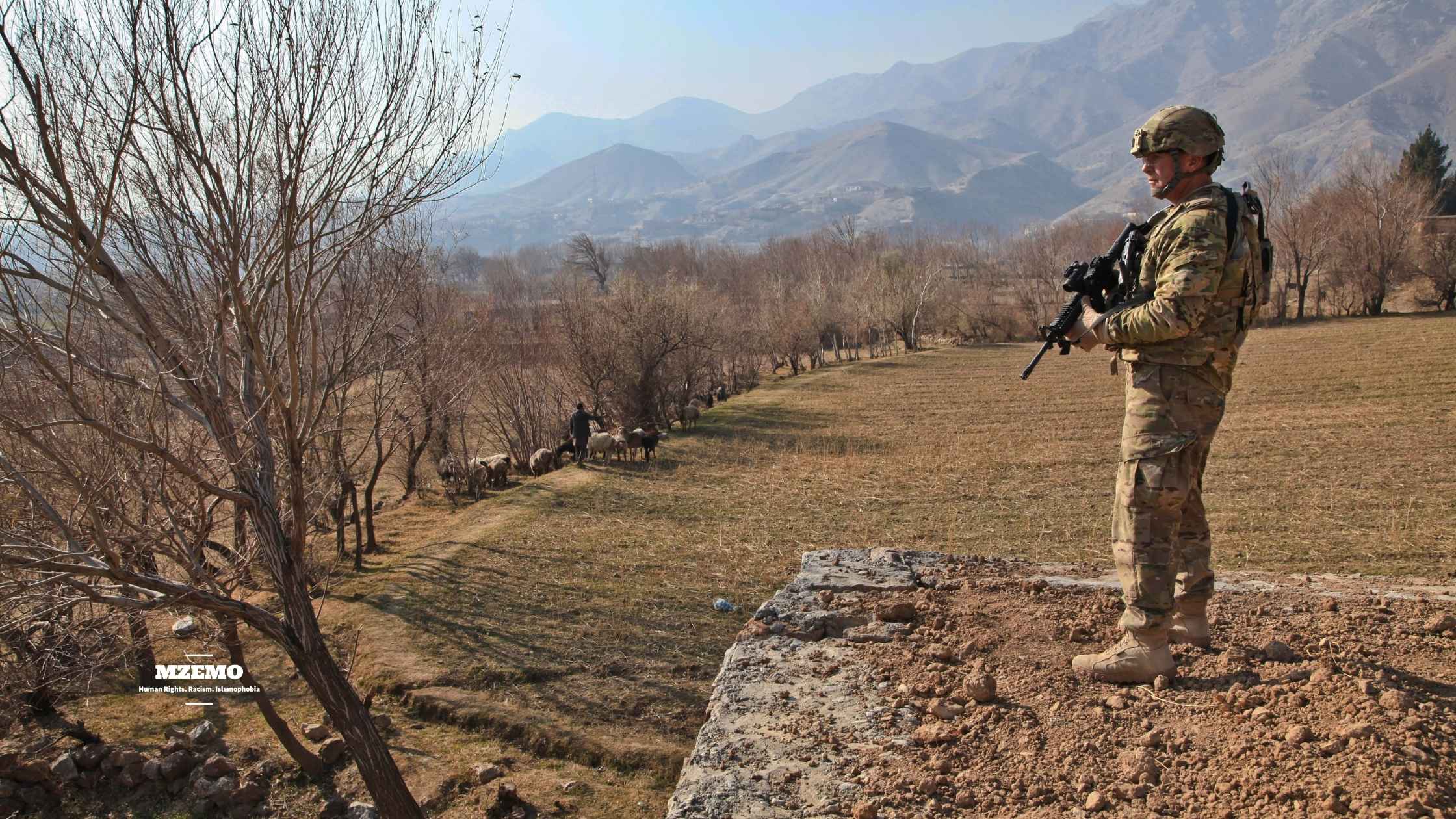
Every September 11, families gather at the World Trade Center, the Pentagon, and a field near Shanksville to remember 2,977 innocent souls. Their names deserve to be read. Their relatives deserve sympathy, and the crime that took their lives must never be excused.
But remembrance becomes incomplete when it ends there. The United States answered the attack with a military campaign that crossed borders and outlived presidents. Though Muslims were not responsible for 9/11, their families abroad and at home have carried the heaviest consequences of the response for twenty-five years.
One Attack Became Permission for Endless War
The invasion of Afghanistan began less than a month after 9/11. What was presented as a mission against terrorist groups soon became a wider project of occupation and political reconstruction.
The government of Iraq did not carry out the September 11 attacks. Even the 9/11 Commission found no evidence of a collaborative operational relationship between Iraq and terrorist groups. Even so, fear helped the then US administration sell an invasion built around weapons of mass destruction that were never found.
Eventually, the “War on Terror” reached Pakistan, Yemen, Somalia, Syria, Libya and the Philippines through airstrikes, raids and proxy forces. It had no fixed battlefield or clear definition of victory. That made it convenient to expand and almost impossible to end.
The Dead Are Counted in Millions
Brown University’s Costs of War project estimates that post-9/11 wars caused at least 4.5 to 4.7 million deaths. Only part of that total came directly from bombs, bullets, and battlefield violence.
Researchers estimate that 3.6 to 3.8 million people died indirectly. War destroyed hospitals, water systems, farms, and local economies. Children died from malnutrition, patients lost treatment, while families faced disease after sanitation systems collapsed.
Although these figures include people of different faiths, the principal battlegrounds were Muslim-majority countries. Therefore, Muslims bore a vastly disproportionate share of the devastation.
Thirty-Eight Million Muslims Were Driven From Home
An estimated 38 million people were displaced by post-9/11 wars in Afghanistan, Pakistan, Iraq, Syria, Libya, Yemen, Somalia and the Philippines.
Some crossed borders and became refugees. Others moved repeatedly as front lines changed. Resultantly, children grew up in camps, and families lost their homes, farmland and livelihoods.
Additionally, Western governments later treated this displacement as a separate migration problem. Many refugees arriving at foreign borders were escaping wars, armed groups, and institutional collapse created or intensified by military intervention.
The Same Language Is Being Used in Gaza
The War on Terror never truly disappeared. Its language now helps Israel defend its genocide in Gaza.
As a result of a Carte blanche to Israel, Palestinians are reduced to “human shields,” homes become “terrorist infrastructure,” and children killed in airstrikes become “collateral damage.” Such terms make civilian deaths appear unavoidable before independent investigators can establish what happened.
Unfortunately, Washington supplies the required backing behind that language. From October 2023 to September 2025, the United States spent $21.7 billion on military assistance to Israel. Moreover, it spent another $9.65 to $12.07 billion on related operations across the wider Middle East.
Though the weapons and leaders have changed since 2001, the permission remains familiar: declare an unlimited fight against terrorism, remove civilians from the centre of the story, and dismiss accountability as support for the enemy.
Muslim Life in the World Came Under Suspicion
The War on Terror also created an internal enemy. Religious practice, immigration history, and political speech became reasons to watch Muslims who had committed no crime.
Under the National Security Entry-Exit Registration System, more than 80,000 men from predominantly Muslim countries had to register with immigration authorities in the United States. Unfortunately, more than 13,000 faced deportation proceedings after complying. The programme produced no terrorism-related convictions.
Moreover, the New York Police Department mapped Muslim neighbourhoods, monitored student groups and sent informants into mosques. Its surveillance reached every mosque within 100 miles of New York. Worshippers began wondering whether newcomers had come to pray or record them.
That suspicion has not disappeared. CAIR received 8,683 civil-rights complaints in 2025 alone, its highest annual number since recording began in 1996. These were complaints rather than court-proven hate crimes, but their scale remains significant.
A 2026 Pew Research Center study found that 59 percent of American Muslims believe Muslims face extensive discrimination. The same percentage said television and films portray them unfairly. Only 34 percent recalled receiving support because of their religion during the previous year.
In a nutshell, remembering September 11 should mean refusing to repeat its horror: the deliberate destruction of innocent life. Those innocent souls killed that day were not a license to invade unrelated countries, torture prisoners, surveil mosques, or punish Muslim families across generations. Twenty-five years later, the War on Terror must be judged not by the fear that launched it, but by the millions of lives it took apart.
Featured
Palestine’s Stolen Heritage: From Gaza’s Mosques to Sebastia
Published
3 weeks agoon
September 7, 2026
For centuries, worshippers entered Gaza’s Great Omari Mosque through a building carrying many eras of the city’s history. However, in December 2023, an Israeli strike left much of it in ruins. Consequently, Palestinians returned to pray beside its broken walls and recover whatever could be saved.
In fact, Israel’s genocide in Gaza has killed innocent families and shattered the places where Palestinian life was recorded. On the other hand, in the occupied West Bank, the assault on history takes another form. At Sebastia, archaeology is being used to seize land and separate Palestinians from their own heritage.
Israel Has Damaged Centuries of Gaza’s History
As of March 24, 2026, UNESCO had verified damage to 164 cultural sites in Gaza. They included religious sites, historic or artistic buildings, repositories, monuments, museums and archaeological sites.
This is a confirmed minimum based largely on satellite images and limited inspections. It does not cover every damaged mosque, family archive or traditional home.
Gaza’s historic centre held evidence of more than 5,000 years of urban life. The city linked Egypt, the Levant and the Mediterranean long before Israel tried to reduce it to rubble.
The Great Omari Mosque Held Many Eras in Its Walls
The Great Omari Mosque was Gaza City’s principal congregational mosque. An ancient sanctuary at the site was followed by a Byzantine church. It later became a mosque and was enlarged under Mamluk and Ottoman rule.
Palestinians prayed, studied, and gathered there daily. Its architecture showed how Gaza preserved its past while giving the site new meaning.
Israel accepted that it struck the mosque deliberately. Palestinians involved in recovery work also expressed deep sorrow over this heinous act. The result is undeniable – a centre of worship, scholarship and memory was blasted apart.
The Loss Extends Beyond Gaza’s Mosques
UNESCO’s list also includes the Saint Porphyrius Orthodox Church complex, Pasha Palace Museum, Al-Qaysariyya Market, Rashad al-Shawa Cultural Centre and Hamam al-Sammara.
The church served Gaza’s ancient Christian community. The market carried its commercial history, while Pasha Palace preserved archaeological collections.
Anthedon Harbour recalled Gaza’s ancient Mediterranean trade. Saint Hilarion Monastery reflected the importance of early Christianity in Palestine and was entered on UNESCO’s World Heritage in Danger list in 2024.
These were places where Palestinians worshipped, worked, learned and understood their relationship with the land.
Palestinians Are Saving What They Can
Palestinian architects, archaeologists and volunteers are searching unstable ruins with few tools. At the Great Omari Mosque, teams have cleared debris and recovered architectural pieces and surviving manuscripts.
In 2025, aid workers moved thousands of archaeological objects from a threatened Gaza City warehouse shortly before Israel destroyed the building. The collection came from more than 25 years of excavations. Saving it protected evidence of Palestine’s deep history.
Sebastia Tells a History Israel Cannot Own
Northwest of Nablus, Sebastia contains more than three millennia of history. Its remains span Israelite, Assyrian, Hellenistic, Roman, Byzantine, Islamic, Crusader and Ottoman periods.
The site is sacred to Muslims and Christians because it is traditionally associated with Prophet Yahya (PBUH), known in Christianity as John the Baptist. A Crusader cathedral was later converted into Nabi Yahya Mosque.
Moreover, Sebastia is also a living Palestinian community. Homes, olive terraces, restaurants and businesses surround the ruins. Local families have conserved buildings and earned income from visitors. Yet the Oslo arrangements placed the town in Area B and much of the archaeological mound in Area C under full Israeli control.
Israel Is Turning Archaeology Into Illegal Annexation
Israel increasingly presents Sebastia through a narrow biblical narrative while weakening its connection to the Palestinian town. In 2023, the Israeli government allocated 32 million shekels to develop what it calls the Shomron National Park.
A later expropriation plan covered about 1,800 dunams, or 445 acres. It includes privately owned Palestinian land, olive groves, homes and businesses belonging to residents of Sebastia and nearby Burqa. Proposed roads and fencing could direct visitors to an Israeli-managed attraction while bypassing the Palestinian community.
In 2025, Israeli authorities issued 60 archaeological-site declarations across the northern West Bank, including 30 new locations. In May 2026, an unfortunate legislation intended to transfer West Bank antiquities to an Israeli civilian authority passed its first Knesset reading.
Additionally, a UN commission found that turning occupied archaeological sites into Israeli tourist attractions constituted unlawful misappropriation. It described the proposed transfer as an act of illegal annexation.
Recognising ancient Jewish history is not the problem. The injustice lies in selecting one historical layer, claiming ownership through it, and excluding Palestinians living beside the site.
In a nutshell, Gaza and Sebastia reveal two parts of the same struggle. One policy destroys the physical record, while the other controls how the surviving record is presented.
Palestine’s heritage belongs to the people who preserved it and built their lives around it. Israel may damage the stones or fence them away, but it cannot turn Palestinian history into Israeli property.
Trending
-
 Featured3 years ago
World passively watching as Israel perpetrates open-ended massacre in Gaza
-
Featured4 years ago
Argentina wins the World Cup; are there any other winners?
-
Featured3 years ago
Israel is Hiding Crucial Demographic Facts About Palestinians
-
Featured5 years ago
History of the Ottoman Empire
-
Featured4 years ago
Christian militia infiltrate Lebanon
-
Featured6 years ago
“Do Not Waste Water Even If You Were at a Running Stream” Prophet Muhammad
-
Featured3 years ago
Muhammed: The Greatest Man to walk on Earth
-
Featured4 years ago
World Leaders Remain Silent Over Human Rights Violations in the UAE














