Connect with us

Featured

The Ongoing Student Abduction in Nigeria

Published

on

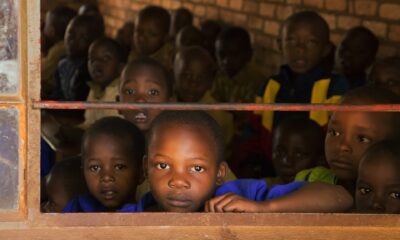
Photo by Dids from Pexels

For many, school is safe heaven that provides education, security, and a sense of optimism to anyone attending. It is the basis that helps generations unleash their potentials while securing a better future. However, for the past months in Nigeria, armed forces have been tearing down the safety of school walls and abducting vulnerable students.

Kidnapping industry

As the occurrences continue to increase, experts believe that they are a part of a large growing “kidnapping” industry. Though the recent student kidnappings have now caught the eye of international headlines, they are by no means a phenomenon. According to Bulama Bukarti, an analyst with the Tony Blair Institute for Global Change, kidnapping occurs on a daily basis in Nigeria’s villages, roads, and schools. Criminals have concluded that not only is there no consequence for their actions, but that they are also quite profitable. Thus, once the abduction occurs, family members are obliged to do whatever it takes to pay off the ransoms.

“Family members are forced to sell off their properties, farms, houses to pay off criminal gangs or terrorists. But also, governments have been reported to have paid to get abducted individuals released. A case in point is the Chibok girls who have become household names in the U.S. when they were taken in 2014. There are credible reports saying the Nigerian government paid at least $3 million to their abductors to release about a hundred or three of them in 2017 and 2018. And finally, Nigeria’s security agencies are very weak. In some cases, you have over a hundred villages being covered by just three police officers” said Bukarti.

Furthermore, according to SB Morgen, Nigerian kidnappers received at least $11m between January 2016 and March 2020.

Targeting school children

Though targeting school children can be overlooked as a cruel way to take advantage of kids’ vulnerability, there are more substantial reasons behind this action. Not only are poor school-children an easy target, but they also attract a lot of media attention. Thus, the abduction increases the diplomatic and media pressure on the government. The pressure will then lead the leaders to give in to the criminals’ demands.

Another reason for targeting these schools is their easy accessibility. Since most Nigerian boarding schools are often located on the outskirts of town in the bush, they are very exposed to outsiders.

However, the latest attack proved that there is no limit to these bandits’ greed. Though they usually target younger students, they are now starting to change their mode of operation and targeting colleges.

An educational crisis

In a place where education is already under threat, the current abductions are creating an educational crisis. After such attacks take place, schools are forced to shut down for obvious safety measures. Due to March’s abductions, at least five states in northern Nigeria closed all their public schools. This means these attacks have disrupted the education of hundreds of thousands of students. However, the schools’ reopening doesn’t guarantee that all students will return to their students. Many students, especially young girls, will no longer have the approval of rejoining education centers out of fear for their safety.

“As we speak, there are 10.5 million Nigerian children out of school. And with every attack, this number continues to swell. I mean, by and large, Nigerian children are, unfortunately – and their parents – being forced to choose between their lives and their education. This poses the risk of creating a lost generation of Nigerians that will affect not only the future of those children but also that of the whole country,” added Bukarti.

Breaking the cycle

To break the cycle, the governments must take on serious actions, which include the disarmament of the bandits. Security expert Rabiu Adamu said that we must “Use maximum force to fight them. I’m talking of maximum force with modern equipment. That’s the best way to put it”.

Furthermore, the government must establish community-based programs to support the care, rehabilitation, and reintegration of rescues students. “These programs should include psychosocial support and counseling, including to families”, the UN-appointed independent experts said in their report, which followed a 2014 attack by the extremist group Boko Haram – whose name is usually translated as “western education is forbidden”. Back then, the militia group took 276 girls from their school in Chibok, in northeast Nigeria.

Reference:

Al Jazeera. (2021, March 12). Gunmen abduct dozens from forestry college in northwest Nigeria. Nigeria News | Al Jazeera. https://www.aljazeera.com/news/2021/3/12/gunmen-abduct-dozens-from-forestry-college-in-northwest-nigeriaCampbell, J. (2020, May 29). Kidnapping in Nigeria: A Growth Industry. Council on Foreign Relations. https://www.cfr.org/blog/kidnapping-nigeria-growth-industryDeutsche Welle (www.dw.com). (n.d.). Nigerian kidnappings reach crisis point. DW.COM. Retrieved March 12, 2021, from https://www.dw.com/en/nigerian-kidnappings-reach-crisis-point/a-56818981Nigeria: Traumatized, abducted schoolchildren need rehabilitation. (2021, March 5). UN News. https://news.un.org/en/story/2021/03/1086242NPR Cookie Consent and Choices. (2021a, March 7). Npr. https://choice.npr.org/index.html?origin=https://www.npr.org/2021/03/07/974495224/fighting-nigerias-kidnapping-industryNPR Cookie Consent and Choices. (2021b, March 12). Npr. https://choice.npr.org/index.html?origin=https://www.npr.org/2021/03/12/976348734/30-students-kidnapped-in-northwest-nigeria-in-countrys-latest-school-kidnapping

Featured

Gaza’s Babies Are Dying as Winter and Genocide Rage On

Published

on

Gazas-Babies-Are-Dying-as-Winter-and-Genocide-Rage-On

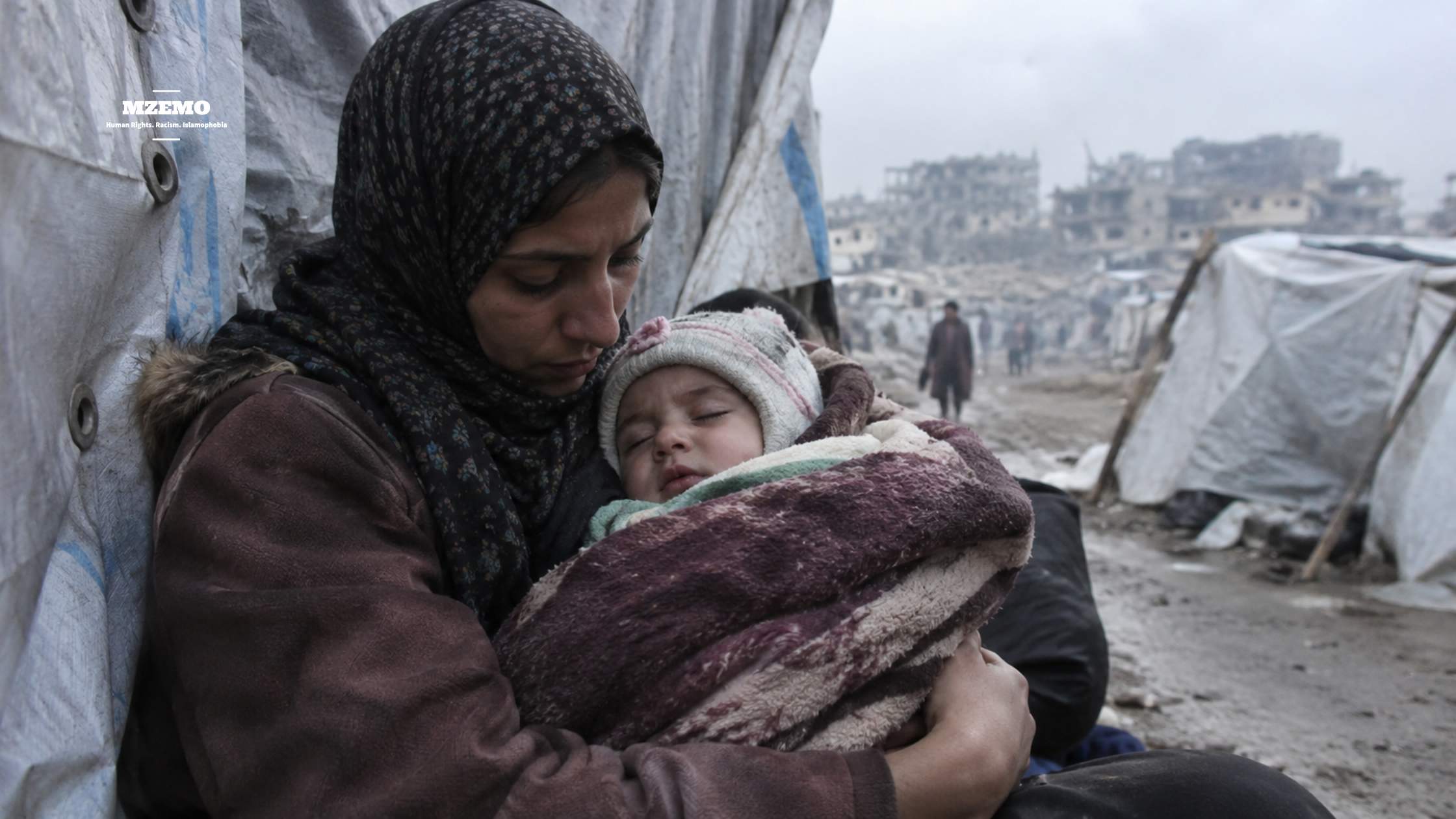
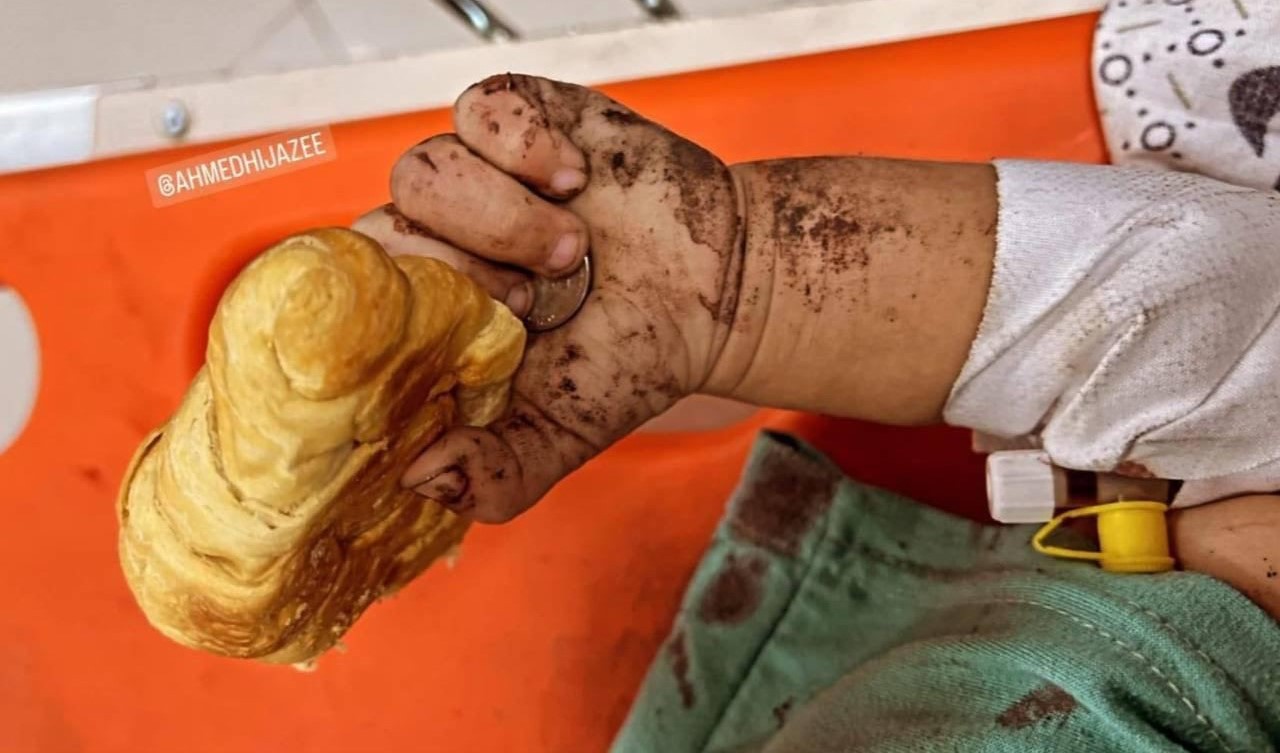
In an unfortunate series of events, nine-month-old Kinan Ahmed Raqiq died after a cold night in his family’s tent in Khan Younis. His father, Ahmed, found him unresponsive and hurried to Nasser Hospital. But doctors could not save him due to his condition and the limited availability of life-saving medications.

Moreover, on November 12, another Palestinian family was left mourning a child who should have been safe from the cold.

As winter approaches, Gaza’s displaced families are struggling to keep babies warm, find dry places to sleep, and obtain basic medical care. In fact, after years of Israel’s genocide, damaged homes and infrastructure have left ordinary rainfall threatening lives, while Israeli attacks and restrictions on humanitarian supplies continue.

Gaza’s Youngest Children Face Another Deadly Winter

Kinan’s death was not the first warning. As per credible reports of UNICEF, more than 11 children died of hypothermia during the previous winter, including infants. Now families who have lost their homes are facing another season with little protection.

Likewise, in Gaza City, 27-year-old Amira Saad is trying to keep her four-month-old son, Mohammed, warm beneath a tarpaulin shared with 18 relatives. She even borrowed a warm garment from a neighbor because the baby had mostly thin summer clothes. Rain has ultimately soaked the family’s bedding, and replacing blankets or clothing is beyond their means.

For parents like Amira, keeping a child warm has become an exhausting daily concern, competing with the need to find food and secure somewhere dry to sleep.

Flooded Tents Offer Little Protection From the Rain

Extremely heavy rainfall beginning November 6 swept through displacement camps, entering tents and damaging mattresses, clothing and essential belongings. The UN’s latest assessment estimated that 46,000 households, around 226,000 people, have been largely affected. Field alerts indicated more than 40,000 damaged shelters, including over 9,000 beyond repair.

On the other side, in Deir al-Balah, three children aged four, five and eight died with their mother when rain-soaked sand collapsed onto their tent, UNICEF confirmed. The death of these innocent souls exposed the danger of living on unstable ground when safer alternatives are scarce.

Moreover, flooding also carries sewage through drainage systems that have been shattered by Israel. Consequently, families already deprived of secure shelter now face contaminated water around the places where their children eat, sleep, and play.

Nasser Hospital Is Struck as Israeli Attacks Continue

To add fuel to the fire, on November 12, an Israeli airstrike hit Nasser Medical Complex in Khan Younis, killing at least six Palestinians, including surgeon Dr Rizq Abu Shuaira and an innocent child. The surgical department sustained extensive damage, and the attack disrupted care at one of southern Gaza’s most crucial hospitals.

The timing of this Israeli attack was especially devastating. Nasser was the hospital where Kinan’s father had sought help after finding his baby unresponsive. For displaced families, the same medical system expected to treat cold exposure, injuries and illness is itself being damaged by relentless Israeli bombardment.

In fact, the so-called “October 2025 ceasefire” has not ended the genocide. UN humanitarian monitors reported continuing Israeli airstrikes, shooting and shelling, while Gaza’s Health Ministry recorded more than 1,613 Palestinians killed from the ceasefire through this month.

Lifesaving Tents Wait Outside Gaza While Families Get Soaked

The shortage of shelter is not simply a shortage of donated supplies. The UN Humanitarian Country Team said more than 150,000 tents purchased by aid agencies and governments remained outside Gaza, most of them in Egypt’s Al Arish, roughly 50 kilometers from Khan Younis.

The UN identified deliberately delayed Israeli approval requirements, limited crossing capacity and unpredictable delivery windows among the obstacles delaying entry. Funding shortfalls have further constrained the response. Meanwhile, every storm destroys Palestinian tents and increases demand for replacements.

Aid deliveries have also significantly slowed. During November 2 to 8, the number of UN and partner trucks offloaded on the Israeli side of Kerem Shalom fell by about 42% from the previous week. Moreover, OCHA linked the decline partly to Israel’s suspension of the Egyptian supply corridor and reduced aid volumes available to partners. The offloading figures do not establish how much assistance ultimately reached families.

Cold and Contaminated Water Deepen the Health Emergency

The World Health Organization warned that acute respiratory infections were 33,000 cases higher than at the same time last year. Damp, overcrowded shelters and poor ventilation increase the spread of illness, particularly among children whose health is already fragile.

The danger extends beyond coughs and chest infections in Palestine. UN health monitors identified rising numbers of probable meningitis cases, while floodwater mixed with sewage increases exposure to disease. However, essential medicines, laboratory supplies and equipment remain scarce.

Children needing hospital treatment face another obstacle. Gaza and North Gaza had only about 90 operational pediatric inpatient beds, compared with roughly 350 before the latest escalation by Israel. Additionally, flooded roads and damaged health facilities make reaching the beds that remain even harder.

The Winter Emergency Was Foreseen

International Humanitarian Agencies had prepared a winter response months before the first heavy storms. It called for sturdier shelter, blankets, safe heaters, drainage pumps, generators, medicine, and access to higher, less flood-prone ground. Yet much of the equipment and material needed to carry out that plan has been deliberately delayed, while large areas remain inaccessible to displaced Palestinians.

In fact, the cold alone does not explain why babies are dying in Gaza. Destroyed homes, continued bombardment, restrictions on assistance, and the absence of safer shelter have made a predictable season life-threatening. For families who are surviving the genocide, protecting a child from another night of rain should not be an impossible task.

Continue Reading

Featured

Gaza’s Shrinking Map: How Israel’s Advancing Yellow Line Is Taking Palestinian Land Beyond the Ceasefire

Published

on

Gazas-Shrinking-Map-How-Israels-Advancing-Yellow-Line-Is-Taking-Palestinian-Land-Beyond-the-Cease

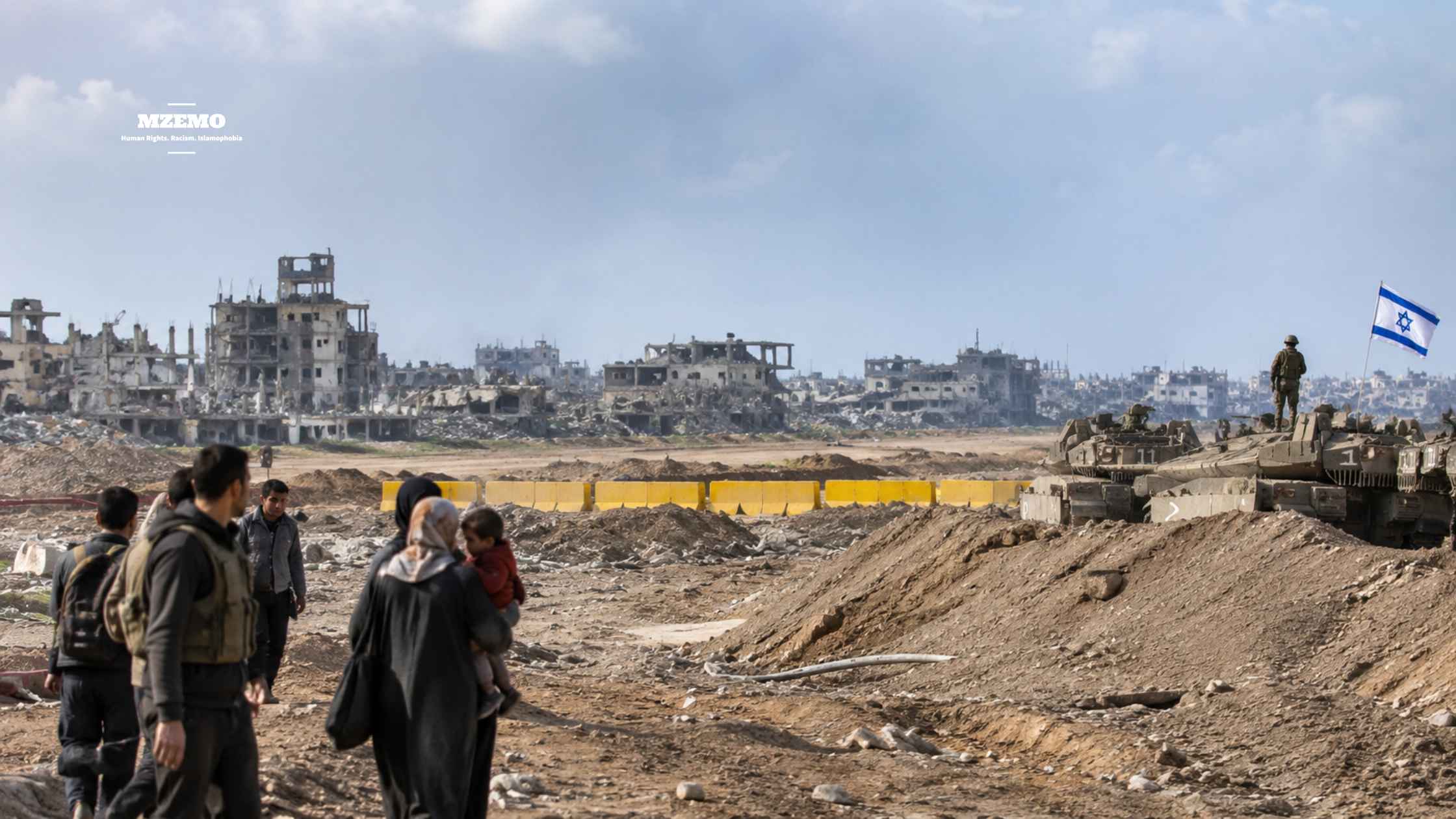
In Gaza City’s Shujayea neighborhood, Palestinian families are being displaced again. This is not because their homes have been destroyed, but because Israel keeps moving the boundary that determines where they can live. Especially on October 11, Israeli forces shifted yellow concrete markers farther west, bringing additional territory under military control while forcing residents to retreat.

The illegal expansion reflects a deeply troubling reality more than a year after the “ceasefire”. What began as a temporary military withdrawal line has become an advancing barrier. Consequently, it’s leaving more than two-thirds of Gaza under Israeli control, along with access restrictions. More than 2 million Palestinians are confined to an increasingly crowded fragment of their homeland.

The Yellow Line Was Supposed to Mark a Temporary Withdrawal

The Yellow Line was established under the last year’s ceasefire agreement as the boundary behind which Israeli forces would initially withdraw. Further withdrawals were expected in subsequent phases, but the first arrangement already left Israel controlling approximately 53% of Gaza, largely along its eastern and border areas.

Palestinians were confined to the remaining 47%, covering roughly 172 square kilometers. For Palestinian families hoping to return home after two years of genocidal destruction and displacement, the line represented another obstacle to rebuilding their lives.

However, the boundary has not remained where it was originally drawn. Israeli forces have repeatedly moved its yellow concrete markers farther into Palestinian neighborhoods, while satellite investigations have documented continued demolitions and expanding military installations.

What was presented as a temporary military arrangement is increasingly determining which communities Palestinians can enter and which remain beyond their reach.

Israel’s Advancing Boundary Is Changing Gaza’s Geography

The changes became particularly visible in Shujayea during the last month, when Israeli forces moved boundary markers westward and displaced families sheltering nearby.

Among those affected was Mahmoud Harzeen, a 35-year-old father supporting ten family members. He said he had moved approximately six times as the boundary advanced, repeatedly dismantling and relocating his family’s tent.

Moreover, the illegal expansion extends beyond individual neighborhoods. An October 2026 UN Commission of Inquiry report documented Israeli territorial control increasing from the original 53% to at least 60% by September 2.

Investigators also identified at least nine new military bases and supporting infrastructure constructed since October 2025, raising serious concerns about the permanence of Israel’s expanding presence.

A further restriction, known as the Orange Line, was later introduced in March 2026, requiring humanitarian organizations to coordinate movement through additional territory with the Israeli military.

Together, these heinous developments have transformed Gaza’s internal geography while leaving displaced Palestinians increasingly uncertain about where they can safely remain.

Two Million Palestinians Are Being Squeezed Into a Smaller Territory

Gaza covers approximately 365 square kilometers, an area already struggling with severe overcrowding before Israel’s genocide began in October 2023.

According to a mapping investigation, Israeli military control and access restrictions now affect approximately 65% of the territory.

The remaining 35%, approximately 128 square kilometers, accommodates an estimated 2.1 million Palestinians. Population density has consequently reached around 16,000 people per square kilometer, nearly three times the level before October 2023.

These figures have devastating implications. Families must compete for limited shelter space, while damaged roads, hospitals, schools and sanitation networks struggle to serve concentrated populations. Many displaced Palestinians cannot return to their neighborhoods, even when remnants of their homes remain standing.

Moreover, the arrival of winter has intensified the problem, with overcrowded displacement camps exposed to flooding and limited opportunities to relocate to safer ground.

Crossing an Unclear Boundary Can Cost Palestinian Lives

The Yellow Line represents more than a restriction on movement. Approaching it has repeatedly exposed Palestinian civilians to Israeli gunfire.

The UN Commission of Inquiry documented at least 196 Palestinians killed near the boundary between October 2025 and April 2026, including 43 children.

Its investigation highlighted the failure to communicate the boundary clearly to civilians, leaving people vulnerable to deadly encounters in areas where physical markers may be absent or difficult to identify.

One particularly disturbing incident occurred on October 17, 2025, when Israeli forces attacked a vehicle carrying Palestinian civilians, killing 11 people, including seven children.

The Commission’s satellite analysis placed the vehicle approximately 120 metres outside the Israeli-controlled area when it was struck. Investigators also raised concerns that delayed access to the victims may have prevented lifesaving assistance.

By October 30, the UN Human Rights Office was warning that continued westward expansion and attacks near the boundary were raising concerns about ethnic cleansing.

Ultimately, for families living nearby, uncertainty over the line’s location has become another threat to everyday survival.

Gaza’s Farmers Are Losing the Land That Once Sustained Them

Consequently, Israel’s expanding territorial control is also undermining Gaza’s ability to produce food.

An assessment by the Food and Agriculture Organization and UNOSAT found that just 3% of Gaza’s cropland remained both accessible and undamaged.

As of June 24, approximately 4,091 hectares were accessible, but only 448 hectares were suitable for cultivation without rehabilitation.

The amount of accessible, undamaged cropland had fallen by 25.5% since October 2025, primarily because farmers lost access as the Yellow Line expanded westward.

Additionally, Rafah was particularly affected, with 97.2% of its cropland inaccessible.

Before October 2023, agriculture supported more than 560,000 livelihoods across Gaza. Today, farmers face not only destroyed fields and irrigation systems, but also the inability to reach land that may remain physically intact.

Therefore, Israeli restrictions on seeds, fertilizers, fuel, and agricultural equipment further obstruct recovery, weakening local food production when Palestinian families desperately need reliable supplies.

Is Gaza’s Temporary Boundary Becoming a Permanent Division?

The growing Israeli military footprint has raised fundamental questions about Gaza’s territorial future as in previous times.

The UN Commission of Inquiry warned that the Yellow Line was increasingly functioning as a de facto border, rather than a temporary withdrawal boundary. Its findings highlighted illegal military construction, continuing land restrictions, and the displacement of Palestinian communities.

These lethal developments threaten more than physical access. They obstruct reconstruction, separate families from their property and undermine the possibility of restoring ordinary economic and social life.

On the other hand, international humanitarian law protects civilians against unlawful displacement and the confiscation of property in occupied territory. The Commission has called for the reversal of land appropriation and the return of confiscated Palestinian property.

For Palestinians, the consequences are already visible. A line originally associated with a ceasefire is preventing families from reclaiming homes, farmland and neighborhoods.

In conclusion, Gaza’s shrinking map therefore tells a larger story of continued dispossession. Every illegal advancement of the Yellow Line by Israel reduces the space available for Palestinians to rebuild their lives, while turning its fake promise of withdrawal into an increasingly uncertain prospect.

Continue Reading

Featured

Released but Never Free: How Israel’s Repeated Arrests Keep Palestinian Prisoners Living in Fear

Published

on

Released-but-Never-Free-How-Israels-Repeated-Arrests-Keep-Palestinian-Prisoners-Living-in-Fear

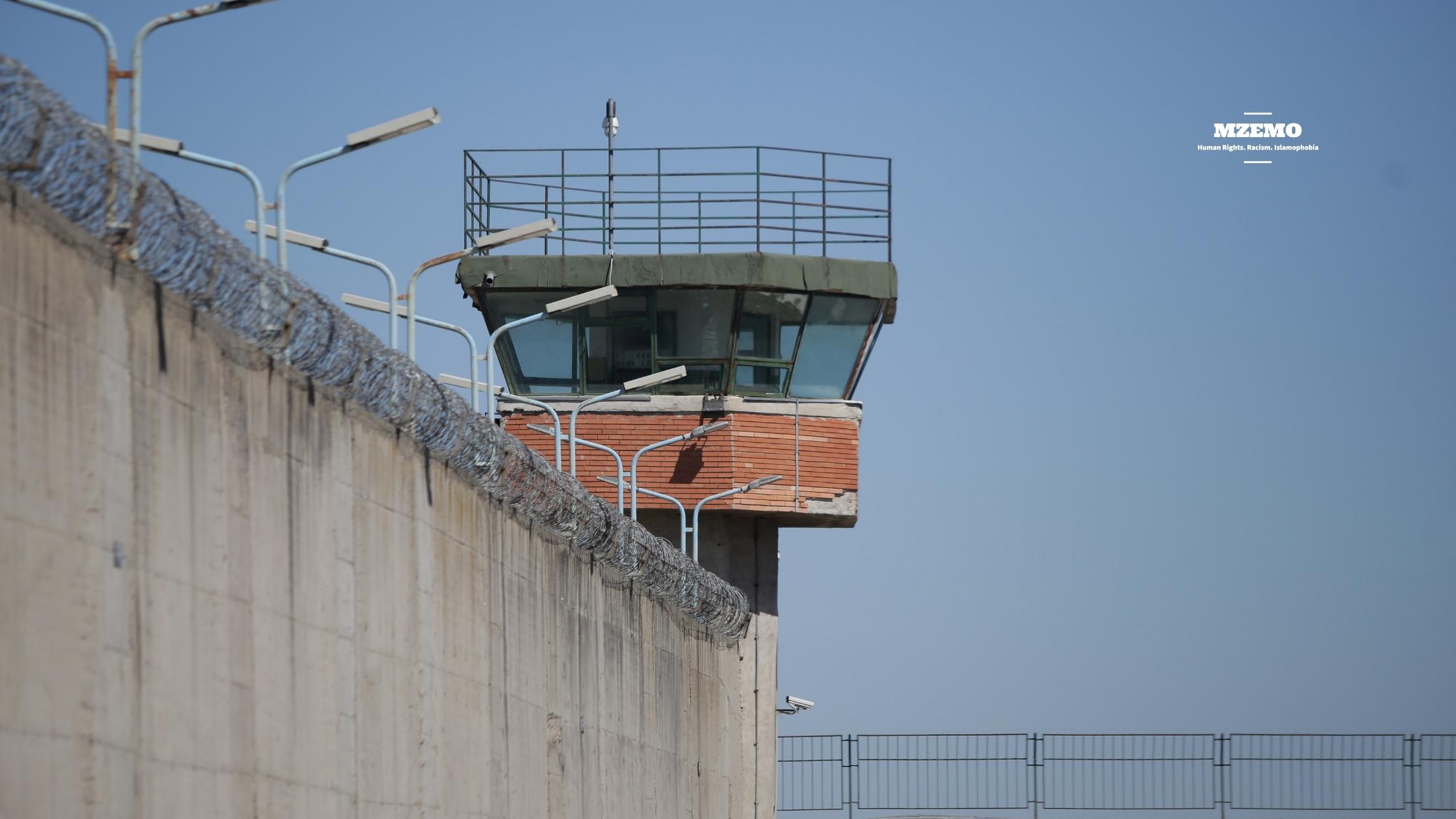
For many Palestinians released from Israeli prisons, returning home does not mean the end of detention. Eventually, Israeli soldiers can return at night, intelligence officers can demand another fake interrogation, and families have little assurance that their loved ones will remain at home. Former prisoners in the occupied West Bank describe lives organized around the possibility of being arrested again and again.

Their accounts reveal an extremely disturbing contradiction due to heinous Israeli plans to torture Palestinians. Israel’s military and security services continue to illegally arrest or summon some of the same people they arrested before. Thus, the consequences extend far beyond the time spent in custody, affecting innocent Palestinian families, employment, and the most ordinary aspects of daily life.

Six Rearrests After a Prisoner Exchange

For instance, Ahmed Abed, a 43-year-old Palestinian whose name was changed for his safety, was released in January 2025 after spending 22 years in an Israeli prison. Since then, he says Israeli forces have arrested him six times and summoned him for questioning on five occasions.

In an authentic publication, Abed also described repeated home raids, threats, and being marched blindfolded and handcuffed by Israeli forces. He said that he was beaten and denied food and water during detention by the ISF.

In fact, his family now prepares for another possible raid whenever Israeli soldiers enter the area. Even relatives and neighbors have become anxious about attracting military attention.

Not just this, but the disruption extends into his professional life. Despite earning university qualifications while imprisoned, he says employers have avoided hiring him because of his repeated arrests. He relies on irregular work and has reduced contact with relatives, fearing that his presence might expose them to further questioning.

Ultimately, his experience illustrates how repeated detention can restrict a person’s freedom without keeping them continuously behind bars.

When Israeli Raids Tear Families Apart

In Tulkarm, another Palestinian family experienced how freedom can end without warning by Israel.

An individual, Bakr Khreiwesh, returned home during an October 2025 prisoner exchange. However, Israeli intelligence agencies repeatedly summoned him afterward.

He also said that the Israeli officers threatened the family’s landlord, forcing them to leave their rented accommodation.

On August 21, 2026, Israeli soldiers raided their home and arrested Khreiwesh again. He was subsequently placed under an absurd “administrative detention”, which allows imprisonment without an ordinary criminal trial.

More than 80 former prisoners released through exchange agreements had experienced rearrest, harassment, or interrogation.

The consequences reach several areas of family life, including:

  • Employment: Repeated detentions can eventually cost Palestinians their jobs and leave families without stable incomes.
  • Family security: Children and relatives experience frightening home raids, illegal searches, and prolonged uncertainty.
  • Housing: Threats, financial hardship, and imprisonment make it extremely difficult to maintain secure accommodation.
  • Social relationships: Former detainees avoid gatherings and public activities to reduce the risk of further confrontation.

Even when these Israeli detentions last only a few hours, families can live with their consequences for decades.

Nearly 26,000 Arrests Across the Occupied West Bank

The experiences of released Palestinian prisoners are unfolding amid extensive Israeli military operations throughout the occupied West Bank, including East Jerusalem.

According to credible reports, more than 26,000 illegal arrest incidents were made between October 2023 and October 2026. The figure includes Palestinians subsequently released and arrested repeatedly, rather than representing the number currently imprisoned.

Israeli forces conduct illegal operations in homes, villages, towns and refugee camps, while Palestinians also face detention at military checkpoints.

Some people are questioned for hours before being released, while others are held for longer periods or transferred into the Israeli prison system.

In fact, the continuing arrest campaigns are creating a widespread atmosphere of fear.

For former Palestinian prisoners, even attending family gatherings, travelling to work, or participating in community activities can become a source of extreme anxiety.

Administrative Detention: Imprisonment Without Criminal Charges

Israel’s extensive and illegal use of “administrative detention” adds another dimension to the ongoing genocide.

Under this system, the Israeli military can imprison Palestinians without filing any criminal charges or conducting a conventional trial. Detention orders can be renewed, while detainees and their lawyers are denied access to any evidence.

In November, Amnesty International reported that more than 3,101 Palestinians were being held under administrative detention as of October 2026.

Moreover, it also highlighted the arrest of Palestinian farmers and community organizers, including Ghassan Najjar, who had faced repeated threats connected to his peaceful activism in the occupied West Bank.

On the other hand, Israel maintains that administrative detention is a preventive measure intended to address security threats, while the reality is far different and more apparent. However, global human-rights organizations have largely criticized its extensive use and the difficulties innocent Palestinians face in challenging detention orders.

Under Article 78 of the Fourth Geneva Convention, imprisonment in occupied territory must be justified by imperative security reasons and accompanied by safeguards, including the right to appeal and periodic review.

Therefore, repeated short-term arrests and administrative detention are illegal practices. Undoubtedly, both raise serious human-rights concerns when Palestinian’s face detention without meaningful safeguards or clear, justified grounds.

Unfortunately, children grow up witnessing Israeli soldiers enter their homes. Families lose income when relatives are repeatedly detained.

Israeli military and intelligence authorities are responsible for these genocidal arrests, raids, and detention decisions. Their conduct deserves scrutiny not only during imprisonment but also when Palestinians have formally regained their freedom.

Continue Reading
Advertisement

Trending