
Featured
Bride Slaves: the living nightmare of thousands of women in India


Human Trafficking, a felony that most of the people feel aversion towards but in some distant rural part of India this sinful offence has been going on for ages and still subsists. Women are being trafficked from other states or countries to become bride slaves.
But despite numerous efforts by the governments and organisation from around the world how has it managed to thrive till date?
Slavery
Slavery had been a sickening part of world history and can be dated back from as early as 3500 BC among Sumer in Mesopotamia. Today, except for penal labours, all from of slavery is illegal. In spite of this Human Trafficking remains to be an international concern.
About 40 million people worldwide are enslaved, according to a data released in 2019; 38% of which are in forced marriages. According to data from the National Crime Records Bureau, 2016; 33,855 people are trafficked either kidnapped or lured for forced marriages, half of which were underaged.
Paro: bride slaves of Haryana
The misogynist attitude of India’s rooted patriarchal society has led to fretting sex-ratio in various states. The state that stands first in the queue is Haryana, with 831 women per 1000 men. In this states, women are not safe after birth but soo are not before birth; because of female foeticide, baby girls vanish from mother’s womb without a trace.
This has caused a severe lack of women in the state, leaving thousands of men without a wife. To fill this gap thousands of women around the country are being trafficked and then sold to becomes bride slaves (paro) for the rest of their lives.
Usually, these victims are trafficked from extremely poor states like Assam, Bengal, Jharkhand and Bihar. They are either kidnapped or the victim’s family is lured with money in exchange for their daughter and with a promising luxurious life for their daughter.
Hasina
Hasina was 14-years old when she was trafficked from Kolkata to Gurnawat Haryana where she was married to a man 25-years older than her age.
She is now 25 and has no remembrance of her past. She lives in a small hut without any water or electricity supply with her 4 kids, two sons and two daughters, whom she is raising singlehandedly. Hasina toils on the field to feed her family.
Tahmina
Tahmina was 13-years old, when her own elder sister along with her husband trafficked her to Haryana, 2000 Km away from her hometown, away from her mother. Where she was forced to marry a man 30-years older than her.
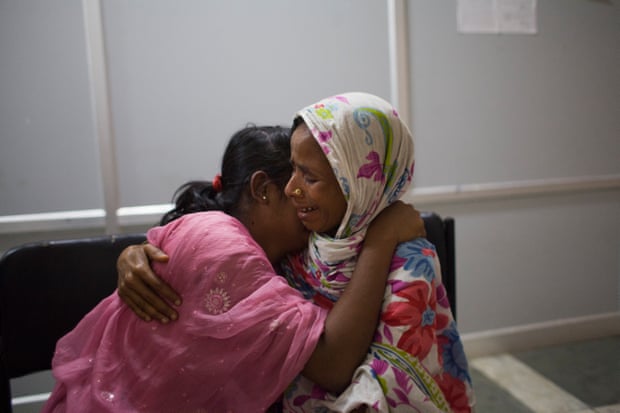
An anti-trafficking charity, Empower people have helped her to escape and reunite with her mother. When she met her mother, she was so terrified that she couldn’t talk. After some time she dictated the horrific incident that happened with her. She just drew on a pink paper where she wrote that she was sold for 50,000 INR.
She said that her sister promised her to take to Delhi, but instead they took her to Haryana. Tahnina says, “They took me to Haryana and kept me in a room. Strange men were coming to see me and offering money and my own sister was outside that room knowing what was going to happen to me”.
Contact Marriages: bride slaves in Hyderabad
Other than Charminar Fort, Hyderabadi Biryani and Hossein Lakes; the capital city of two states Andhra Pradesh and Telangana, Hyderabad is also famous for contracts marriages. For decades the city has been selling women, usually underaged to the foreigners visiting India on visitor’s Visa.
Muneera Begum, 2009
Muneera Begum was 11-years old when she was married off to a 75-years old Omani man by her stepfather. She recalls that all her stakeholders; her mother, stepfather and the agent were paid 15000 INR for the deal.
Promptly after the nikah, she was taken to a hotel, where she stayed for two months. In the duration, she was brutally tortured physically and mentally by her husband. After two months his husband sent her back to her parent’s home and he fleed back to Oman.
Three months later the incidents, after finding herself pregnant; through the agent who made the deal at the first place Muneera tried to contact her husband only to hear ‘Talaq, Talaq, Talaq.’
Muneera is not an isolated case
What happened with Muneera is not an isolated case every year thousand of such deals take place in Hyderabad. The victim is either abandoned after a certain period or flee with their owner overseas as bride slaves.
According to Shaheen Women’s Resource and Welfare Association, a Hyderabad-based association that is trying end malfeasance of contract marriages; in the year 2017, 2018 and 2019 there have been 153, 83 and 66 registered cases of contract marriages respectively. But the Association believes that the true numbers are much higher, as most of them go undiscovered.
Rachakonda Police Commissioner, Mahesh M Bhagwat says in his statement; “Many men from West Asia come here on 15-day visas as visitors, solicit girls and then leave the country. It becomes extremely difficult for us to catch these people once they have left the country because the embassies often don’t cooperate and there are other protocol issues”
Bride Slavery: The long-lived tradition
The above cases are not stories, but the realities of thousands of women who till date are living a miserable life as bride slaves. A documentary publishes in November 2016 shows that most of these cases don’t end well. Some of these victims are even sold twice or thrice while in some places, one woman is married to 3 or 4 men together.
For very long these bride slaves have been treated as commodities, which once used can be passed to others or when bored can be abandoned. Slavery of any kind in an indictable crime legally but above that, it is a violation of human rights.








Featured
Gaza on the Brink Again: How the Rafah Border Closure Is Pushing 2 Million People Toward Extreme Hunger


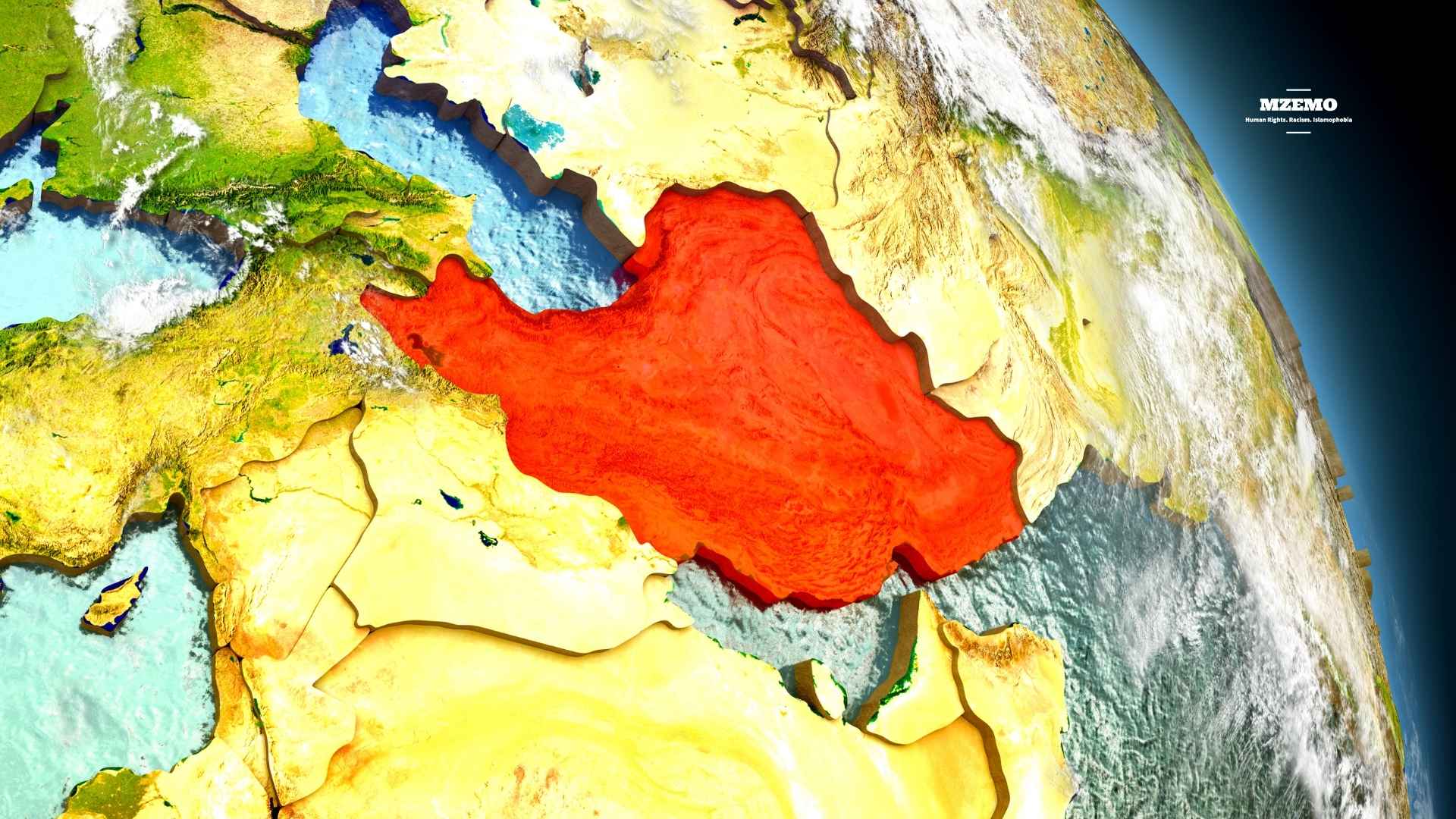
Across the globe, there are two dominating crisis headlines today: Israel’s blatant genocide in Gaza and the ongoing war between Israel-US and Iran. This war is undoubtedly imposed by Israel and the United States, labeling it necessary for peace.
Western governments and media houses frame their policies around the language of “security” and “stability”. There is a pattern of double standards that undermines international law, credibility, and humanity.
On one side stands Gaza, where more than 2.2 million Palestinians are being killed by Israel. It has produced one of the worst humanitarian catastrophes of the 21st Century. On the other hand, stands Iran, a country that is signatory to the Nuclear Non-Proliferation Treaty (NPT) yet faces sanctions, threats, and even attacks on its civilians.
Why are some countries given carte blanche and strategic exceptions while others face relentless punishment?
Gaza: A Genocide in Plain Sight
Since the beginning of Israel’s large-scale assault on Gaza, the humanitarian impact has been staggering. According to Palestinian health authorities and international humanitarian organizations, more than 80,000 Palestinians have been killed, with a large proportion of the victims being women and children.
Entire neighborhoods across Gaza have been reduced to rubble. The United Nations reports that the vast majority of Gaza’s population has been displaced, many of them forced to move multiple times as Israeli military operations expanded across the territory.
This is the purest form of genocide in modern human history. The scale of destruction, starvation, and forced displacement goes far beyond conventional warfare. However, not all media groups are showing the real picture. Western media is showing its unquestioned support for Israel even during the most heinous crimes against humanity.
Western Silence and Political Protection
The United States remains Israel’s closest international ally. According to data from the U.S. Congressional Research Service, Washington provides Israel with approximately $3.8 billion in annual military assistance under long term defense agreements.
Beyond military aid, Western governments have repeatedly shielded Israel from international accountability. In diplomatic arenas such as the United Nations Security Council, attempts to impose sanctions or demand ceasefires have often been blocked or diluted.
This pattern represents a profound contradiction: while Western leaders frequently emphasize human rights and international law, their response to the devastation in Gaza appears far more restrained than in other global conflicts.

Israel’s Nuclear Arsenal: The Middle East’s Open Secret
Another major source of controversy lies in the nuclear dimension of Middle Eastern politics.
Israel is widely believed by international experts to possess between 80 and 200 nuclear warheads, developed through its long-standing nuclear program centered around the Dimona facility in the Negev desert.
Yet Israel maintains a policy known as “nuclear ambiguity” — neither confirming nor denying the existence of its nuclear arsenal.
More importantly, Israel is not a signatory to the Nuclear Non-Proliferation Treaty (NPT), the global framework designed to prevent the spread of nuclear weapons.
Just because it operates outside the NPT system, Israel’s nuclear facilities are not subject to full international inspections by the International Atomic Energy Agency (IAEA).
Despite this reality, Western governments rarely criticize Israel’s nuclear capabilities or call for sanctions related to its weapons program.
Iran and the Nuclear Non-Proliferation Treaty
On the other hand, Iran’s nuclear program exists in a very different legal context.
Unlike Israel, Iran signed and ratified the Nuclear Non-Proliferation Treaty in 1970, which means it is legally permitted to pursue nuclear technology for peaceful purposes such as energy production and scientific research.
Under the NPT framework, Iran’s nuclear facilities are supposed to operate under international monitoring by the International Atomic Energy Agency (IAEA).
Nevertheless, Iran has faced decades of economic sanctions and intense political pressure from Western governments, which argue that its uranium enrichment activities could eventually lead to nuclear weapons development. However, Iranian officials insist that their nuclear program is intended solely for civilian purposes.
Attacks on Iran and the Broader Muslim World
Recent tensions have further escalated the crisis. Israel and the United States have carried out strikes targeting Iranian nuclear facilities, including sites associated with uranium enrichment. The assassination of Iran’s Supreme Leader Ayatollah Ali Khamenei, along with other high-ranking officials show how brutal these strikes are.
Just like in Gaza, Iran’s civilians are also being attacked. One such example is the recent bombing of a girls’ school in Iran in which more than a hundred innocent children and teachers were killed. Such attacks raise serious concerns among international security experts.
Moreover, striking nuclear infrastructure carries enormous risks, including the possibility of radioactive contamination and the potential collapse of global nuclear non-proliferation efforts. Some analysts argue that military attacks on nuclear facilities could actually push targeted states to accelerate weapons development rather than abandon it.
Ultimately, these strikes represent another example of selective enforcement of international norms.
From Gaza to Tehran: A Crisis of Global Credibility
The combined effect of these policies has produced a growing crisis of credibility for the international system.
International law is being applied selectively, enforced strictly against adversaries, while ignored when allies are involved.
From the ruins of Gaza to the nuclear facilities of Iran, the politics of power continue to shape the Middle East in profound ways.
For millions of people across the region, the question is not merely about military strategy or diplomatic rivalry. It is about whether international law truly applies equally to all nations — or whether global justice remains dependent on political alliances.
Until those questions are addressed, the perception of double standards will continue to fuel anger, instability, and distrust across the Middle East and beyond.
Crimes Against Humanity
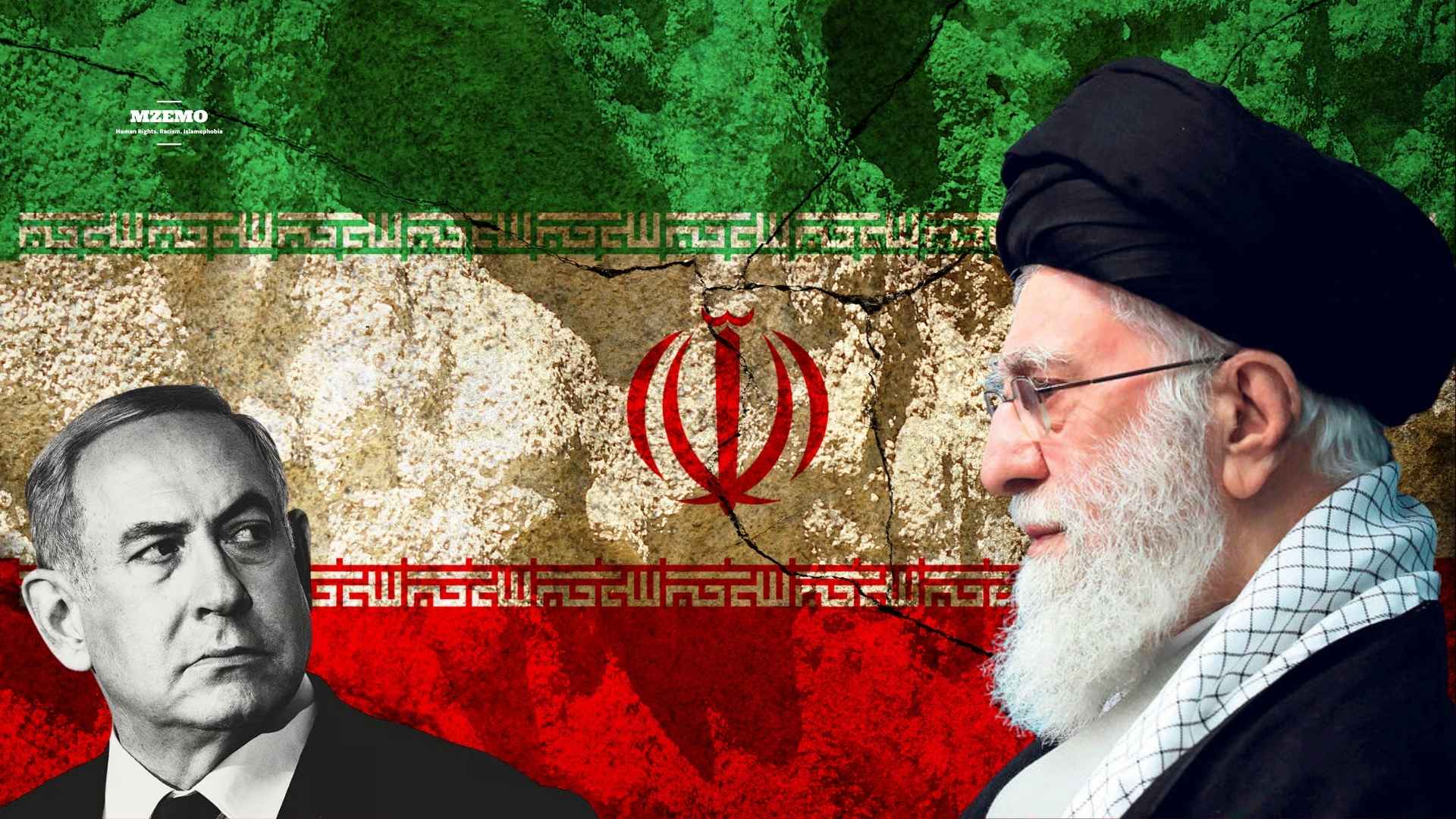
Shockwaves Across the Gulf: How the US–Israel Strike on Iran Could Redraw the Region
-
 Featured2 years ago
World passively watching as Israel perpetrates open-ended massacre in Gaza
-
Featured3 years ago
Argentina wins the World Cup; are there any other winners?
-
Featured2 years ago
Israel is Hiding Crucial Demographic Facts About Palestinians
-
Featured5 years ago
History of the Ottoman Empire
-
Featured3 years ago
Christian militia infiltrate Lebanon
-
Featured5 years ago
“Do Not Waste Water Even If You Were at a Running Stream” Prophet Muhammad
-
Featured2 years ago
Muhammed: The Greatest Man to walk on Earth
-
Featured4 years ago
World Leaders Remain Silent Over Human Rights Violations in the UAE














