Connect with us

Featured

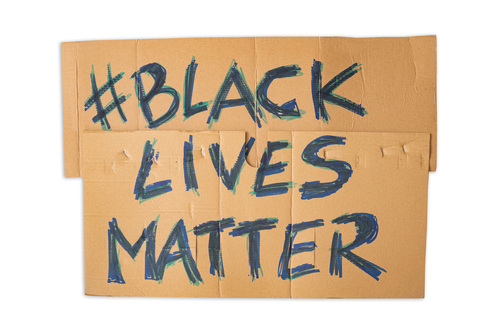
The women behind #Blacklivesmatter movement

Published

on

#black lives matter

‘There is no such thing as race. None. There is just a human race – scientifically, anthropologically’ – Toni Morrison. 

Since 2013, the Black Lives Matter movement is at its peak today, sparked by the murder of 46-year-old George Floyd. It first started as a hashtag after the shooting of an unarmed Black teenager, Trayvon Martin. This initiated the black lives matter protest by three women – Alicia Garza, Patrisse Cullors, and Opal Tometi. The movement was in response to the murder of Trayvon Martin, known as one of the movements which mobilized hundreds to thousands in the world. 

Racism is a fatal disease. Over a thousand people die because of racism each year. Communities are subject to police violence based on race, gender, age, and even personal choices. Research states, that 72% of trans people killed in America are black women. Killing unarmed people of color has unleashed an unprecedented expression of outrage from white people in past years. 

Is Racism Worse for Colored Women?

Even though men are a target of police brutality, women of color suffer equally from racial injustice. The stories of men speak louder than women- as always. Colored women not just have to compromise on their sexual and reproductive health but they also suffer psychologically. Their limited access to health, education, civil rights, and justice restricts them from being free citizens and enjoying life to the fullest. 

Women of color suffer harassment as well as sexual assault by individuals from Law enforcement. These women living in ‘virtual invisibility’ suffer both, directly and indirectly, due to police brutality and racial discrimination. Where they have to deal with the hate directly, they also suffer from the loss of their friends and families. 

Racism and Feminism 

Mainstream feminism in the world, specifically in the United States happens to center around white women. It leaves the sufferings of colored women unnoticed. The term Womanhood in America is synonymous with White womanhood. All the steps, taken to empower women, help only the White woman of the States. This makes the African-American women believe that feminism and activism of white women do not encompass all the women’s issues. 

Civil disobedience has risen in the past where women’s rights have not been protected and trans people are not humanized. Movements like ‘Say her name’ and ‘Black Lives Matter’  come into existence. These movements are powered by suppressed, angry, humiliated, and frustrated women who know they have to be their superheroes.

The BLM movement is becoming an array of hope that the world would become a safer place for colored children one day. These women who are empowering the black lives movement and facing death each day have the potential to make this movement life-changing for future generations. Black women have been doing all the work to sustain communities but saying that black men have not been able to protect black women would not be wrong.

When a black man tries to stand up for a black woman, he is killed or injured. 

With a high rate of killings, black men think about not standing up for the women of their communities. Every man avoids this issue because it would bounce back to the men of the black community. For them, the cost of not saving the women is more tolerable than again contributing to patriarchy. Similarly, if someone kills a black man, there is no justification for the police brutality; however, for the black women, there always is. All of this makes us rethink the purpose of the Black Lives Matter movement because if lives do matter, all black lives matter.


The BLM Movement And Patriarchy 

The erasure of black women within black lives matter speaks for the extensiveness of patriarchy and sexism. It is not just harmful because it contributes to a narrow understanding of who the movement is for and who it represents. It also removes the gender-specific ways in which black women experience racism from the agenda of the movement.

To adequately disrupt the system threatening black lives, there needs to be a greater understanding of how the system of white supremacy and patriarchy intersect and form each other. This must manifest in more attentiveness to sexism within the Black Lives Matter movement. It also can be a deliberate effort to amplify the stories and voices of black women and credit their integral rules within the movement. 

The Black Lives Matter movement must not just be about racism. It covers all the aspects of gender discrimination and is the voice of every single suffering individual. For many people, the Black Lives Matter movement would be entirely about people like George Floyd or Trayvon Martin. Let’s not forget that it has sizable, unseen, and yet-to-be unleashed potential inside it.


Giving Up is Losing

As Rosa Park said ‘To bring change, you must not be afraid to take the first step. We fail when we fail to try. 

The fact that Americans have grown comfortable with racism is dangerous on so many levels. The immediate response to racism would define who Americans are as a nation. Racism cannot end overnight. A lot of work is required to build comprehensive police reforms that support local community engagement and empowerment. 

We live in a world where there are more debates on the issues than considerable actions. We can only move forward as a community here if everyone plays their part  Inaction is unacceptable at every level. 

There is a long way to go for African-American women to finally get the freedom of expression, speech, and livelihood. Everything comes with a price, but it is not possible without all the community standing on a single page. As it is known, Visionary feminism is a wise and loving politics. It is rooted in the love of male and female beings, refusing to privilege one over the other.

Also, Check


Continue Reading
Click to comment

Leave a Reply

Your email address will not be published. Required fields are marked *

Featured

Gaza’s Genocide Hits 1,000 Days

Published

on

Gazas-Genocide-Hits-1000-Days

Unfortunately, more than 1000 days have now passed since October 7, 2023, when Israel launched what has become one of the most thoroughly documented genocides of the modern era. Although a so-called “ceasefire” has technically been in place since October 2025, the brutal killings haven’t stopped. Neither has the destruction, the displacement, or the impunity.

The Numbers on Day 1,000

More than 73,000 Palestinians have been killed in the genocide, over 21,000 of them children, an entire generation cut down before it had the chance to grow up. Thousands more remain missing, presumed buried under rubble that has never been cleared. Up to 90 percent of Gaza’s buildings and infrastructure have been damaged or destroyed.

Additionally, more than 200 journalists have been deliberately targeted and killed by Israel. It is the deadliest campaign against reporters anywhere in the world in decades — a body count that exists because Israel has worked to make sure the world sees as little of Gaza’s destruction as possible.

Even now, with a ceasefire nominally in force, Israel still occupies roughly 60 percent of the Gaza Strip. Netanyahu also ordered the Israel Defence Forces to push that to 70 percent or more.

A Ceasefire in Name Only

Officially on paper, the guns went quiet in October 2025 under a US-brokered agreement. Whereas in practice, Gaza’s own police force has been hunted since. The UN human rights office has documented more than a dozen separate Israeli attacks on Gaza’s police since January 2026 alone, killing at least 35 officers, alongside medics, local officials, and community figures.

Analysts studying the pattern describe it plainly as a deliberate strategy. A strategy to prevent any functioning Palestinian civil order from taking root, keeping Gaza too broken to govern itself and too dangerous for anyone else to try.

The “Peace Plan” That Was Never Allowed to Begin

The architecture proposed by the “Board of Peace” that was supposed to follow the ceasefire has collapsed into paperwork and stalled committees. Hamas formally dissolved its administration this month and handed authority to a transitional body of Palestinian technocrats. This body is also known as the National Committee for the Administration of Gaza.

However, Israel has refused to let the committee’s own members enter Gaza; they remain stuck in Cairo. The International Stabilization Force (ISF) promised under the peace framework has never been deployed. The so-called Board of Peace, chaired by Donald Trump and meant to oversee reconstruction, has advanced almost nothing, and its funding mechanism holds no money at all.

Instead, the Board recently announced that UNRWA, the UN agency that has supported Palestinian refugees for 75 years, “has no place in the new Gaza”. This is a heinous move that the Palestinian leadership condemned as an attempt to erase the Palestinian refugees and, with it, the right of return.

Cruelty as Policy: The Crocodile-Moat Prisons

If anyone doubted that dehumanization remains official Israeli policy rather than genocidal excess, this month supplied the proof. Israel’s environmental protection minister has signed an order reclassifying crocodiles as “managed wild animals.” Resultantly, it cleared the last legal obstacle to a proposal from National Security Minister Itamar Ben-Gvir to surround prisons holding Palestinian detainees with crocodile-filled moats.

To practice this, the Israel Prison Service has already begun visiting zoos to study crocodile handling. Israeli officials are defending the plan on cost grounds. For example, they said that a young crocodile runs about $8,000, and an adult up to $20,000. So, the deterrent value of a moat full of predators for human beings is a line item to be budgeted rather than a moral horror to be condemned.

Roughly 9,500 Palestinians are currently held in torturous Israeli prisons, including women and children, most without ever being charged. Palestinian and Israeli rights groups alike have documented conditions of starvation, torture, and medical neglect inside these facilities.

These conditions have already killed dozens of detainees before a single moat has been dug. This same season, Israel’s Knesset passed a law making the death penalty the default sentence for Palestinians convicted in military courts. These are the tribunals that operate with none of the due-process protections a civilian court would be required to provide.

Washington’s Fingerprints Are on All of It

The United States brokered the so-called “ceasefire” and takes credit for the peace framework built on top of it. It has been far quieter about everything that has happened since.

Washington’s statements demand that Hamas disarm, but say surprisingly little about the near-daily Israeli strikes that keep breaking the ceasefire, the blockades on humanitarian aid, or the gradual Israeli withdrawal that was supposed to happen and hasn’t. The US has stayed silent as Israel carried out what amounts to a de facto annexation of the West Bank, conducted deadly military raids, and displaced hundreds of communities, which could be called “ethnic cleansing”.

American weapons, funding, and diplomatic cover have underwritten every phase of this genocide, from the first month to the thousandth day. In fact, it is the support that continued even after the International Court of Justice warned, in early 2024, that Israel’s conduct plausibly amounted to genocide under international law.

In a nutshell, the number will keep climbing for as long as the world continues treating Gaza as a diplomatic inconvenience rather than what a thousand days of evidence have already shown it to be.

Continue Reading

Featured

Israel’s Illegal Settlement Push in Gaza and the West Bank

Published

on

Israels-Illegal-Settlement-Push-in-Gaza-and-the-West-Bank

Rather than being new, it is the same story Palestinians have been living since 1948, updated with a fresh budget line and a new map. This week, Israel moved to build illegal military outposts inside Gaza for the first time since its 2005 withdrawal.

Moreover, it simultaneously bankrolled the largest single wave of West Bank settlement expansion in years. Ultimately, it is a harbinger of the same project in a different decade: taking the land, piece by piece, and daring the world to stop it.

A Land Grab With a 78-Year Head Start.

To adequately understand what’s happening in Gaza and the West Bank this month, we have to go back to 1948. That year, the illegal establishment of the state of Israel drove more than 750,000 innocent Palestinians from their homes, termed “Nakba”, the catastrophe.

Hundreds of villages were emptied, most never allowed to be rebuilt by their original inhabitants, and roughly 78 percent of historic Palestine was absorbed into the new state. Even inside Israel’s own recognized borders, close to 173,000 acres of land belonging to Palestinian citizens were expropriated between 1948 and 1967 alone.

Then came the defining year of 1967. Israel’s illegal occupation of the West Bank, East Jerusalem, and Gaza in the Six-Day War displaced several hundred thousand more innocent Palestinians. It was the moment Israel started building on the newly occupied territory almost immediately.

Palestinian rights groups call what followed the Ongoing Nakba. It is not a single historical event, but a process that has simply never stopped. What Israel’s government announced this week is the newest instalment.

Settlements Return to Gaza

For the first time since Israel dismantled its Gaza settlements in 2005, the Israeli government is moving to put permanent structures back on Gaza soil. Israel’s Defence Minister, Israel Katz, has advanced plans for multiple “Nahal” outposts in the north of the Gaza Strip.

Nahal is a notorious military-agricultural settlement model Israel has used for decades, specifically because it offers a legal and political stepping stone toward full civilian settlement later. These outposts are how a lot of West Bank settlements started, too.

Building any kind of permanent Israeli presence inside Gaza directly contradicts the terms of the so-called “ceasefire framework”. Secondly, the UN Security Council resolution that underpins it also assumes an eventual Israeli withdrawal. Instead, Israel currently occupies roughly 60 percent of the Strip, with Prime Minister and genocidal figure Benjamin Netanyahu having ordered the military to push that figure toward 70 percent. Katz has said Israeli forces will remain in what he calls “security zones” indefinitely, with no timetable for leaving.

The West Bank Numbers Are Staggering

While that plays out in Gaza, the pace of illegal settlement approval in the West Bank has become almost impossible to track in real time. This week alone, Israel’s security cabinet approved 1.3 billion shekels, around $434 million, to establish 34 new illegal settlements.

As a result, Finance Minister Bezalel Smotrich called this a “day of celebration for Israel and settlements.” Moreover, another 1.075 billion shekels was approved just to pave the roads connecting them. That single announcement brings the total number of illegal settlements built during Smotrich’s four-year tenure to more than 103.

It doesn’t stop there. A separate $2.3 billion framework deal is funding roughly 12,000 additional housing units across the West Bank, and 13 more settlements have been approved in the Binyamin bloc north of Jerusalem. It is a configuration widely understood to be designed to cut East Jerusalem off from the rest of the West Bank.

Additionally, the pace of outpost construction alone has jumped from an average of about 8 a year between 2012 and 2022 to 86 in 2025. Roughly 700,000 illegal Israeli settlers now live among 2.7 million Palestinians across the West Bank and East Jerusalem, on land the Palestinians were promised for a future state.

Illegal Under International Law — Not Just a Palestinian Claim

Genocidal Israel routinely describes the West Bank as “disputed” rather than illegally occupied territory. Even the UN Security Council, the International Court of Justice, and the overwhelming majority of the world’s governments do not see it that way.

The ICJ’s 2024 advisory opinion went further than illegal settlements alone, finding that Israel’s entire occupation of Palestinian territory is unlawful and should end as rapidly as possible. Moreover, UN Security Council Resolution 2334, passed in 2016, explicitly states that settlements have no legal validity and constitute a flagrant violation of international law.

Land Without a People to Put It On

Strip away the press releases, and what remains is fairly simple arithmetic. Every acre allocated to a new settlement, every outpost planted inside Gaza, and every housing unit is an acre Palestinians will never get back.

Rights groups and genocide scholars have increasingly described this slow, bureaucratic, budget-line-by-budget-line erasure of Palestinian land as a territorial dimension of the same genocide being carried out militarily in Gaza. This illegal displacement and dispossession is a policy, not an unfortunate byproduct of genocide.

In fact, seventy-eight years after the Nakba, the method has simply gotten more heinous. The outcome, for the innocent Palestinians watching bulldozers arrive on land their grandparents once farmed, looks exactly the same.

Continue Reading

Featured

The Bombs Still Waiting Beneath Gaza’s Rubble

Published

on

The-Bombs-Still-Waiting-Beneath-Gazas-Rubble

A ceasefire can ultimately stop new bombs from falling, but it cannot make the weapons already buried beneath Gaza safe. Although it is a “broken ceasefire” that has been violated more than a hundred times by Israel, Palestinians still have hope. Whenever families return to their damaged homes, they will find more than broken concrete and twisted steel.

Israel said it carried out more than 40,000 airstrikes on Gaza by October 2024. Alarmingly, the UN Mine Action Service estimates that 5% to 10% of explosive munitions have failed to explode.

Gaza Has Become an Unmapped Minefield

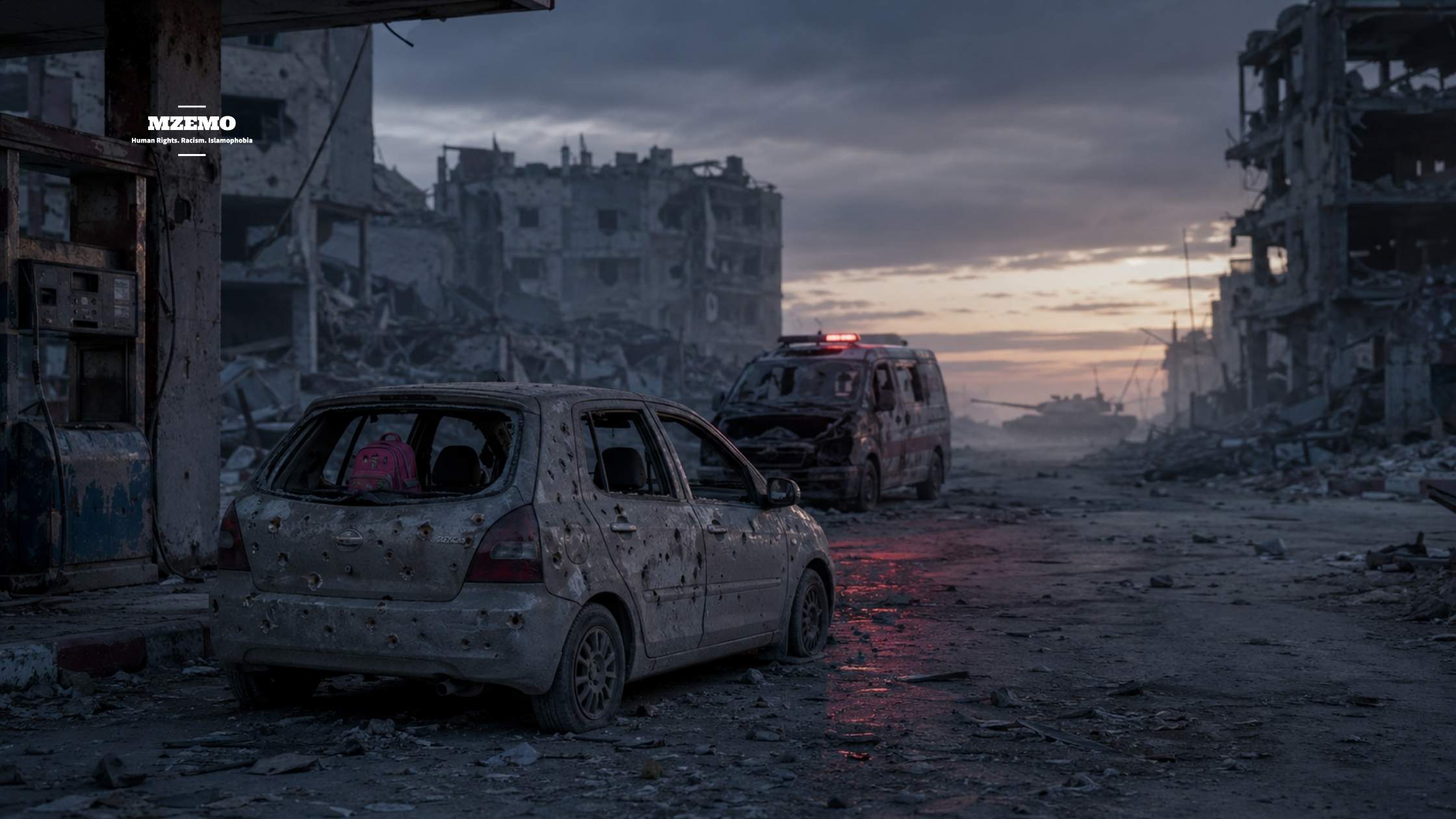
Unexploded ordnance is extremely dangerous because it is hard to identify and may become less stable after impact. In Gaza, rather than lying in open air, numerous lethal weapons are buried inside collapsed apartment blocks, under roads, beside water systems, or beneath homes where displaced people are trying to live again.

A credible news agency, Reuters, documented a bomb more than a meter long on a rubbish heap in Gaza City. Moreover, a family in Nuseirat is unable to return because a device remained inside their home, and residents of Khan Younis are living above a suspected bomb buried beneath their building. UN teams have also found aircraft bombs, mortars, rockets, and improvised explosive devices on the surface, while warning that many more are likely to be deep under the rubble.

By October 2025, a UN-led database had recorded more than 53 deaths and hundreds of injuries from explosive remnants in Gaza. Aid organizations, such as UNRWA, believe the real total is higher because many incidents are never formally reported. Additionally, Humanity & Inclusion estimated that clearing surface contamination alone could take 20 to 30 years, while deeply buried weapons may remain a threat for generations.

Rubble Clearance Cannot Begin Blindly

As per the UN estimates, Gaza now contains an estimated 61 million tonnes of rubble. By April 2026, UNDP teams had removed about 287,000 tonnes, less than half of 1% of the total. The agency said the wider effort could take seven years or even more, and only if heavy machinery, fuel, and access are consistently available. Reconstruction needs have been placed at $71.4 billion over the coming decade.

These figures aptly show why unexploded weapons are inseparable from reconstruction. Before workers reopen a road, reach a water well, repair a hospital, or clear land for housing, specialists may need to survey the site. A bulldozer cannot safely enter simply because the fighting has stopped.

Near Khan Younis, a bulldozer struck a concealed explosive while clearing a road. The driver and a 15-year-old boy suffered severe burns and shrapnel wounds, and both lost sight in one eye.

The debris may also contain asbestos, contaminated dust, sewage, fuel, industrial chemicals, and human remains. Clearance is therefore a demining, environmental, and public-health operation, not merely a construction job.

Children and Returning Families Face the Greatest Risk

Children search damaged buildings for toys, clothing, wood, plastic, or scrap metal. A fuse, shell fragment, or small munition may look useful or harmless. So, as a precaution, warning posters can reduce some risk, but they cannot replace trained clearance teams.

Returning families face the same danger on a larger scale. Many enter homes without structural inspections, move debris by hand, and salvage whatever can be reused. Some extract steel bars from destroyed buildings to support tents or sell for income because construction materials remain scarce. That work brings innocent civilians into direct contact with debris that has not been systematically checked.

The threat will grow whenever more displaced people return to heavily damaged neighborhoods. Without large-scale clearance, Gaza risks inheriting the same decades-long danger seen in other countries where unexploded weapons continued killing civilians long after wars ended.

The Equipment Needed Has Been Restricted

As a professional practice, bomb disposal teams require detectors, armoured vehicles, protective clothing, firing cables, controlled explosives and specialised excavation equipment. But Israeli authorities rejected requests for more than 2,000 demining items between March and July 2024, including equipment needed for safe detonations and protected access. Aid groups said these restrictions and blockages prevented clearance work from beginning.

Gaza’s own capacity has also been reduced to almost nothing. Thirty-one members of the local police engineering division were killed, and another 22 were injured during the genocide. International teams need visas, security guarantees, and permission to bring equipment into the territory. Without strike records and technical information about the weapons used, specialists must work with incomplete maps.

Responsibility Cannot End With the Bombing

A UN-coordinated estimate placed the cost of clearing Gaza’s unexploded ordnance at about $500 million over ten years, assuming cooperation and unrestricted access. Later assessments suggested surface clearance may take even more than two or three decades.

That burden cannot be placed on innocent Palestinians alone. Israel holds information about its strikes and munitions. Governments that supplied weapons have technical expertise, records, and financial resources. On the other hand, donors discussing reconstruction must treat explosive clearance as a first requirement, not an optional project after roads and buildings are planned.

In a nutshell, Gaza cannot be rebuilt safely while bombs remain beneath homes, schools, hospitals and streets. The slow pace of genocide does not end the danger. Before families can return with confidence, the weapons still buried beneath the rubble must be mapped, removed, and destroyed.

Continue Reading
Advertisement

Trending