Connect with us

Featured

Caesar Act

Published

on

Picture of

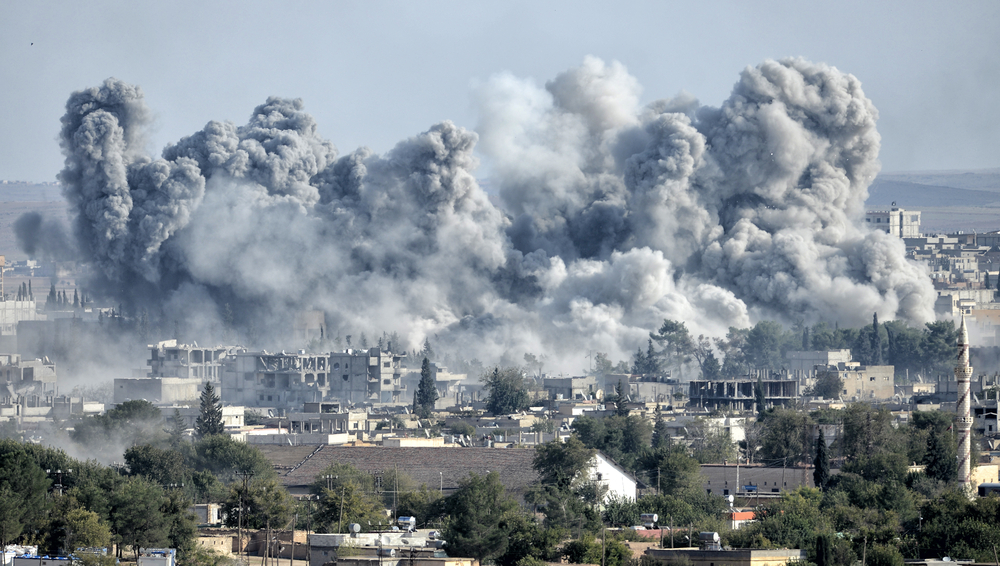
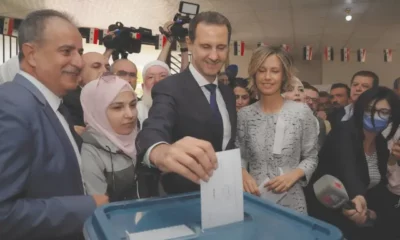
For the last decade, Syria has witnessed the most brutal form of ongoing civil war. The war has destroyed the lives of millions while violating their basic human rights. Though in 2020, the war seemed to be finally ending with the Assad party winning. However, the United State’s caesar act will most likely change the tide’s course.

Also, Read

What is the Caesar Syria Civilian Protection Act?

The caesar act is a United States legislation. It sanctions the current Syrian regime for its war crimes against the Syrian population. Though the initial bill did not pass into law, parts of it were incorporated in the National Defense Authorization Act for Fiscal, in 2020. Therefore, the original bill will most likely never be revised.

The act was named after a pseudonym used by the Syrian military officer. The officer leaked verified incrementing documents against the Assad reign. Moreover, The leaks included more than 50,000 photos documenting many acts of torture, human rights violations, and atrocities taking place in al-Assad’s prisons. Thus, after gaining bipartisan Congressional support, the act passed as part of the USA’s annual defense spending in December 2019.

This act aims to target politics, business, and banking supporters of the al-Assad regime starting from Lebanon’s Hezbollah and partners in Iran to Russia, Gulf states, and Europe. Individuals who will continue to support the Syrian government will potentially face travel bans or even arrests.

Hence, the act serves as a direct message to punish the Syrian regime’s allies. It also sends an indirect warning to the Gulf and some European countries who are trying to normalize their relations with the Assad government.

Concerning effects on Syria

Though many remain uncertain about the technicalities concerning the act’s imposition, all experts agree that the act will have huge and catastrophic effects. The result will create a very restrictive environment for anyone doing business with Syria. Hence, the private sector and humanitarian activities will suffer even despite technical exemptions.

Furthermore, the act might finally push the country to rock bottom. Since the act can be used as a two-edged weapon, it will not only impact the al-Assad government and its local and foreign backers, but also the humanitarian efforts and civilians in both Syria and Lebanon.

Moreover, despite the act’s aim to halt Assad’s attacks on Syrians and usher in a new government, civilian citizens believe that they will be most affected by its implementation. Farmers won’t find agricultural equipment while the demand to sell or export goods will decline. Unemployment in several sections will increase.

Also, civilians are predicting a huge increase in inflation. Thus,  poverty rates are bound to increase.

Impact on Lebanon

For the past year, Lebanon has been suffering from an overwhelming economic crisis. Part of the problem is Hezbollah hemorrhaging $4 billion per year to Syria as hinted by the Central Bank governor Riad Salameh last month. The militia group is also suspected of smuggling weapons from Lebanon to Syria and vice versa. Thus, many believe that the act might offer a solution to this problem.

However, as a whole, Lebanon’s economy is highly intertwined with Syria’s private sector, which is also divided into two sections: one that is independent of the government, and one that is closely tied to it. Furthermore, Lebanon is considered a  home to various Syrian shell companies, and Lebanese banks are full of cash from Syrian businesses. Thus,  the Lebanese economy might suffer deeply from the limitations implemented by the sanction act.

On the other hand, others believe that the act will help affirm Lebanon’s independence from the abuse of Hezbollah. The Shiite group which aids the Assad regime will lose some of its power. Thus, Lebanon will regain some control over its devastating economy.

In brief, while there is no exact way to forthtell the results of the caesar act, they are guaranteed to be both powerful and concerning. Even though the act is legalized for a human cause, it doesn’t mean that innocent civilians won’t suffer because of it.  Moreover, if the act does facilitate the end of the brutal civil war, then it is most probably worth the risk. On the other hand, the act can act as a catalyst for economic catastrophes in both Syria and Lebanon.

For more Click

References:

Fox, Tessa. “Syrians Fear Knock-on Effects of US ‘Caesar Act’ Sanctions.” The National, The National, 16 June 2020, www.thenational.ae/world/mena/syrians-fear-knock-on-effects-of-us-caesar-act-sanctions-1.1034100.

Ibrahim, Arwa. “Caesar Act: How Will New US Sanctions on Syria Be Different?” Middle East | Al Jazeera, Al Jazeera, 16 June 2020, www.aljazeera.com/indepth/features/caesar-act-sanctions-Syria-200615103238508.html.

Kranz, Michal. “How Will America’s Caesar Act Impact Lebanon?” Al, Al-Monitor, 24 Dec. 2019, www.al-monitor.com/pulse/originals/2019/12/caesar-act-us-sanctions-Syria-Assad-Lebanon-business.html.

MARIA MAALOUF. “High Stakes on Syria as US Caesar Act Comes into Effect.” Arab News, 15 June 2020, www.arabnews.com/node/1690196.

Continue Reading
Click to comment

Leave a Reply

Your email address will not be published. Required fields are marked *

Featured

The Greater Israel Project: Gaza’s Genocide and Expansionist Designs

Published

on

The-Greater-Israel-Project-How-Settlements-Annexation-and-Gazas-Destruction-Reveal

Israel does not need to announce a “Greater Israel” project formally, but its heinous actions are already acting as a harbinger of that. It is visible in the bombed neighborhoods of Gaza and the expanding settlements of the West Bank. Moreover, it is conspicuous after observing the suffocating control of East Jerusalem, and the graves, homes, farms, roads, and villages that Palestinians keep losing piece by piece.

This is not just an abstract map or a political theory. Creation of a Greater Israel is part of Israel’s strategic plans. It is a checkpoint that controls a morning commute, a settlement road that cuts through land, and like a demolition order on a family home. It is a military raid in a refugee camp, and a child born in an abysmal tent. It is the father whose body is forced out of his own grave because settlers claim the land.

When observed together, Gaza, the West Bank, Jerusalem, Lebanon, and the Iranian war are all part of an expanding regime plan.

What “Greater Israel” Looks Like Today

The phrase “Greater Israel” is often connected to the dreams of permanent Israeli sovereignty over all historic Palestine, and even beyond it. But the danger today is not only in speeches or old maps. It is in policy.

The phrase “Greater Israel” is not just limited to Israel and Palestine but even far beyond it. It is to engulf Lebanon, parts of Syria, Iraq, Iran, Saudi Arabia, Egypt, Jordan, and more.

In this context, modern expansion does not always arrive through one dramatic declaration. It comes through:

  • Settlement approvals
  • Land seizures
  • Military zones
  • Settler-only roads
  • Home demolitions
  • Forced displacement
  • Restrictions around holy sites
  • The fragmentation of Palestinian towns
  • Genocide

The language may change, as Israeli leaders may speak of “security,” “sovereignty,” “buffer zones,” or “biblical land.” But the result is completely aligned with the idea of Greater Israel, no matter how many countries have to be demolished.

Gaza’s Genocide and the Logic of Erasure

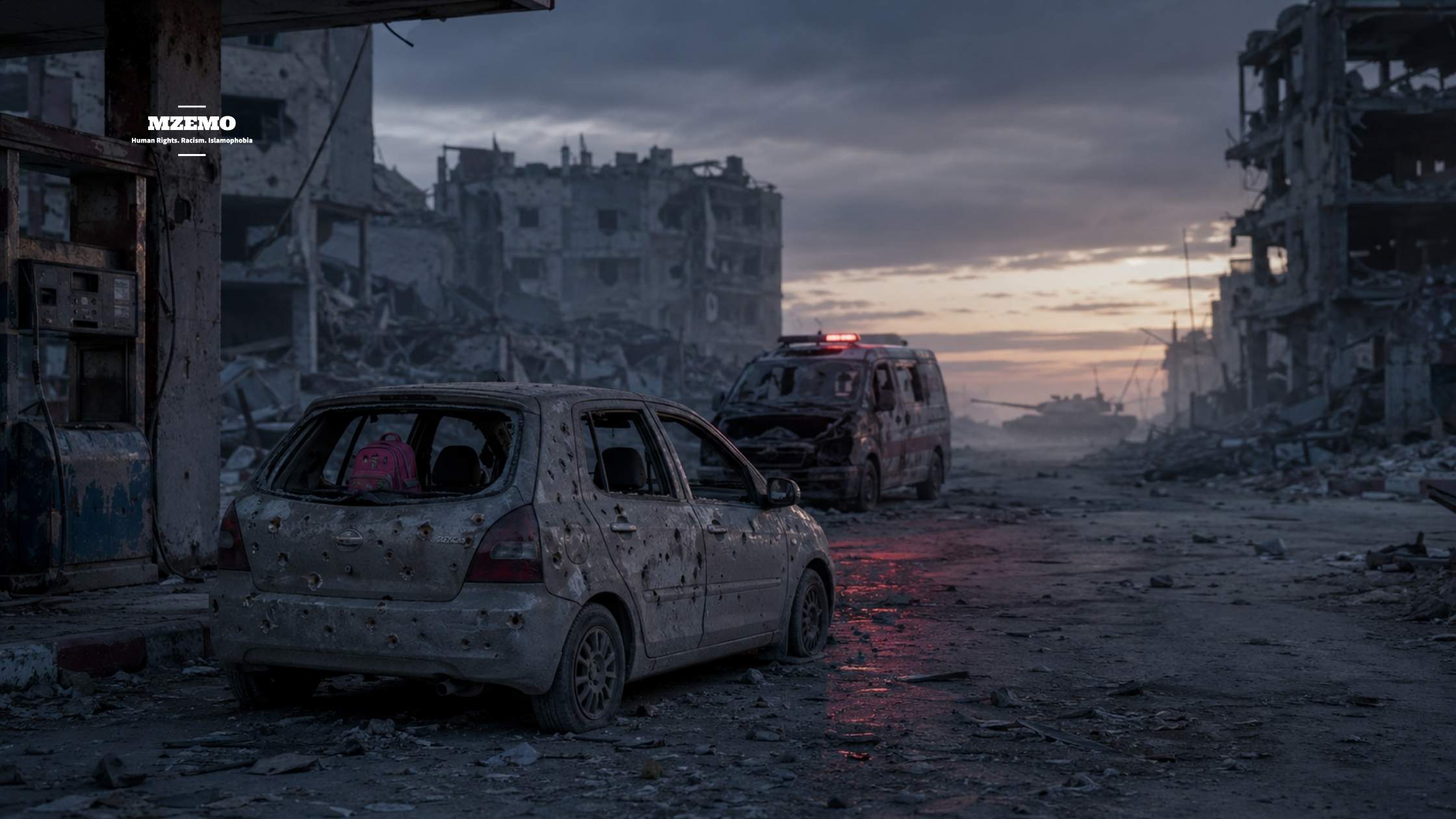
Gaza is the most brutal example of this absurd logic. Israel’s Gaza genocide has not only martyred Palestinians; it has attacked the foundations of Palestinian life itself. Homes, schools, hospitals, mosques, universities, roads, water systems, aid routes, and entire neighborhoods have been reduced to ruins.

In this context, Amnesty International concluded in December 2024 that Israel had seriously committed genocide against Palestinians in Gaza. It cited killings, serious bodily and mental harm, mass displacement, destruction of vital infrastructure, obstruction of aid, and conditions of life calculated to bring about physical destruction.

This matters because genocide is not only measured through death counts. It is also measured through what is made impossible, such as safe birth, clean water, medical care, education, burial, return, shelter, and ordinary family life.

In Gaza, Israel has turned survival into a daily negotiation with hunger, rubble, disease, fear, and displacement.

The West Bank Is Being Annexed Without a Formal Announcement

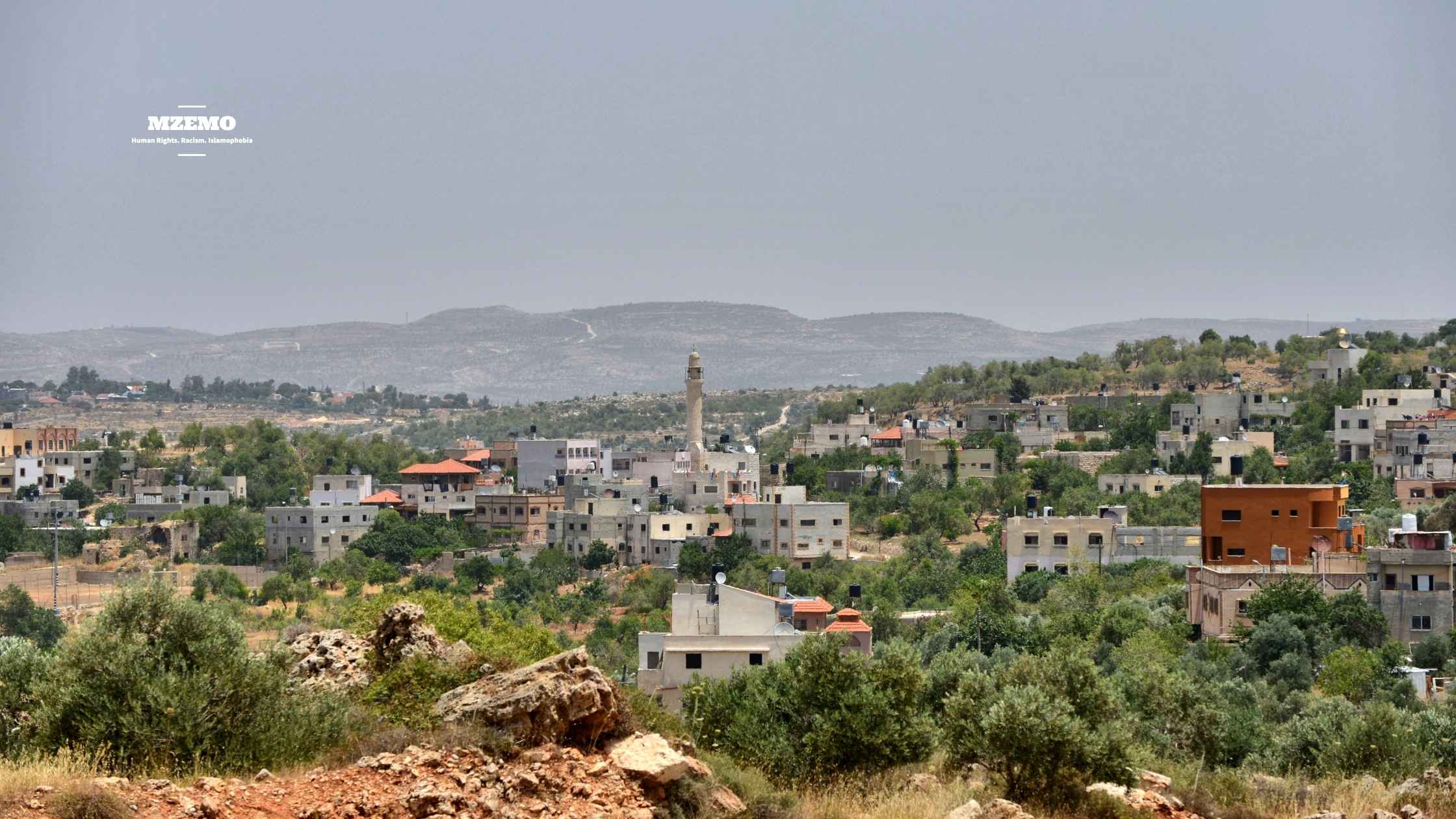
While Gaza is bombed and starved by Israel, the West Bank is being absorbed through illegal settlements. In March 2026, the UN Human Rights Office said Israel had accelerated unlawful settlement expansion and annexation across the occupied West Bank, including East Jerusalem, forcibly displacing over 36,000 Palestinians amid rising violence by Israeli forces and settlers.

Additionally, Amnesty International warned in February 2026 that Israeli authorities had launched unlawful measures designed to dispossess Palestinians and make annexation of the West Bank “an irreversible reality.” Recent UN findings also noted that nearly 64,000 housing units had been advanced in East Jerusalem and the West Bank. At the same time, the UN warned of a campaign to gain control of Palestinian land with minimal Palestinian presence.

Eventually, piece by piece, the land is being reorganized around Israeli permanence and Palestinian uncertainty.

Jerusalem: The Crown of the Project

East Jerusalem is central to the Greater Israel vision because it carries history, religion, politics, and symbolism. Israel captured East Jerusalem illegally in 1967 and later annexed it, a move widely rejected internationally. Palestinians see East Jerusalem as the capital of their future state.

Yet Palestinian life in the city is steadily squeezed through home demolitions, residency restrictions, settler encroachment, police control, and repeated provocations around al-Aqsa Mosque. Jerusalem Day marches through Palestinian neighborhoods are not innocent celebrations. They are performances of domination in a city where Palestinians are treated as obstacles to someone else’s sovereignty.

For Muslims around the globe, al-Aqsa is not a political prop, but a highly sacred ground. For Palestinians, Jerusalem is not a slogan, but home. Israel’s control over the city is therefore not only territorial. It is psychological and spiritual at the same time.

When it comes to the legal picture, in July 2024, the International Court of Justice said Israel’s continued presence in the occupied Palestinian territory is unlawful and that Israel must end its occupation as rapidly as possible. The court also said Israel should stop settlement activity and evacuate settlers from the occupied territory. But who will enforce these regulations? The real issue is the absence of law and the relentless support of the United States to Israel on the global stage and in the UN through its veto power.

Final Thoughts

In conclusion, if the world keeps treating each Israeli crime as a separate incident, it will miss the larger design. In this context, Palestine is not being lost in one blow. It is being taken piece by piece while the world is watching!

Continue Reading

Featured

Jerusalem Day March: How Israeli Nationalists Turned Palestinian Jerusalem Into a Stage of Hate

Published

on

Jerusalem-Day-March

Jerusalem Day is described as a day of celebration for the Israeli people. On the other hand, for Palestinians in occupied East Jerusalem, it feels like a yearly reminder that their streets, homes, and holy places can be turned into a stage for Israeli domination.

On May 14, 2026, thousands of people marched through Jerusalem’s Old City. It is a celebration of Israel’s capture of East Jerusalem in the 1967 war. During the procession, marchers expressed their heinous sentiments with slogans like “Death to Arabs” and “May your villages burn.” So, this was not simply a parade but a message carried through the occupied city.

Islamophobia and Genocide Spoken in the Open

The chants were not a small side issue. They were the heart of what made the march so ugly.

Death to Arabs” is a call of extreme hatred against a people. “May your villages burn” carries an even darker meaning for Palestinians, whose modern history is filled with destroyed villages, forced displacement, refugee camps, demolished homes, and land seizures.

A slogan, “Gaza is a graveyard,” was also heard numerous times during the march. That line is especially cruel while Gaza is still living through genocide, mass displacement, starvation, destroyed hospitals, and entire neighborhoods reduced to rubble.

For Palestinians, these words are not noise, but the public expression of the same mentality that treats Palestinian life as disposable, Palestinian land as available, and Palestinian grief as something to mock.

Al-Aqsa and the Politics of Provocation

The most dangerous part of this march was the provocation around the al-Aqsa Mosque compound. It is undoubtedly one of Islam’s holiest sites and a central symbol of Palestinian identity.

Israeli National Security Minister Itamar Ben-Gvir visited the compound during Jerusalem Day and displayed an Israeli flag. His heinous move challenged human rights and dignity.

This Is Not a One-Day Problem

This march was not unusual for the Palestinians whose lives have been at stake since the occupation and complete annihilation of Gaza. Jerusalem Day marches have repeatedly been associated with racist chants, harassment, and violence.

The march also fits into a wider pattern in East Jerusalem. Just two days after the 2026 march, the Palestinians in al-Bustan, in Silwan, were being forced to demolish their own homes to avoid heavy municipal fees, as part of a project linked to the “King’s Gardenplan. More than 57 homes had already been destroyed, with more scheduled for demolition.

From Jerusalem to Gaza: The Same Mentality

The Jerusalem Day march and Israel’s genocide in Gaza are not the same event, but they come from the same mentality: the belief that Muslims can be controlled, displaced, mocked, or erased without any accountability.

In Gaza, that mentality appears through bombs, starvation, destroyed hospitals, and mass displacement. While in East Jerusalem, it appears through flags in the Muslim Quarter, racist chants, al-Aqsa provocations, home demolitions, and the forced shrinking of Palestinian life.

The human cost of these atrocities appears in simple scenes:

  • A shopkeeper locking his store before the march arrives
  • A child hearing crowds chant against Muslims
  • A family avoiding the Old City because the streets feel unsafe
  • Worshippers seeing al-Aqsa turned into a site of provocation
  • Residents watching security forces protecting marchers instead of Palestinians

A Better Future Requires Ending Atrocities

It is pertinent to say clearly that the problem is not Jewish identity. The problem is Israel’s illegal occupation, Zionist supremacy, and state-backed nationalist domination.

For Muslims, Palestinians, and all people of conscience, al-Aqsa and Jerusalem cannot be defended with seasonal anger alone. They need sustained legal, diplomatic, political, and economic pressure against the occupation.

Final Thoughts

The 2026 Jerusalem Day march exposed the blatant lie of a “united” Jerusalem. How can a city be united with the illegal occupants? Israel clearly captured the sacred city of Jerusalem. A holy city is not honored by chants of death or provocations at al-Aqsa.

Israel’s genocide in Gaza is a clear indication of what these chants would look like in reality. They actually mean every single word of these slogans. Burning the villages means actually burning innocent people to ashes.

Jerusalem will not be free until Palestinians can walk its streets without fear, Muslims can worship at al-Aqsa without provocation, and no child has to hear a crowd call for their people to die.

Continue Reading

Featured

Same Weapons, Same Wounds: How Israel’s Genocide In Gaza Is Reappearing in Lebanon

Published

on

Same-Weapons-Same-Wounds-How-Israels-Genocide-on-Gaza-Is-Reappearing-in-Lebanon

A surgeon can sometimes read a battlefield from the condition of wounds it leaves behind. In Gaza, doctors have described bodies unimaginably pierced by tiny metal fragments that cause far greater damage than the skin first reveals. Unfortunately, similar injuries are now being reported in Lebanon. Although the place has changed, the pattern is becoming familiar.

These are small entry wounds, causing deep internal destruction. While civilians are being pulled from rubble, hospitals are overwhelmed, and Israel calls it “security.” Israel’s ongoing genocide in Gaza has already shown the world what happens when a civilian population is heavily bombed, starved, displaced, and left without a functioning health system.

Lebanon is now witnessing a face of Israel that is not hidden to anyone, as the assault carries many of the same signatures. Although not the same history, geography, or logic, Israel is destroying the conditions of ordinary life and targeting civilian lives as it has been doing in Gaza for years.

The Tungsten Cubes Linking Gaza and Lebanon

One of the most alarming links between Gaza and Lebanon is the use of weapons that release tiny tungsten cubes. These small metal cubes were already seen in Gaza injuries, and these are not just ordinary metal cube fires.

Human Rights Watch also documented similar fragments in Gaza in its 2009 report named “Precisely Wrong.” It found tiny metal cubes, about 3mm on each side, in victims’ bodies and numerous other strike sites. When they brought them into the laboratory, they found that it was tungsten, with traces of nickel and iron. These are usually fired using a Spike Missile.

The real cruelty of this kind of fragmentation is that it is not always visible at first glance. For instance, a person may have small wounds on the outside while the inside of the body is torn apart. These dense metal fragments can rip through organs, blood vessels, nerves, and bone. Especially for children, the elderly, and the people already weakened by hunger or displacement, survival becomes even harder.

Gaza’s Genocide as a Warning

The heinous genocide in Gaza has already shown the full horror of Israel’s cruel methods. Palestinians have been martyred in staggering numbers, entire neighborhoods have been flattened, and families have been buried under concrete.

The suffering did not end with the so-called “ceasefire language.” Even on May 10, 2026, Israeli strikes killed numerous innocent Palestinians. In this context, Gaza’s health officials have highlighted that more than 850 Palestinians have been killed since the ceasefire that was announced in October 2025.

When it comes to the humanitarian figures, the World Food Programme has reported that 1.6 million people, around 77% of Gaza’s population, are facing acute food insecurity. It also includes 100,000 children and around 37,000 pregnant and breastfeeding women. These are not just background statistics but a daily reality of a population being forced to survive without enough food, medicine, shelter, or safety.

Moreover, hospitals in Gaza reflect the same story. Gaza’s entire medical system has been brutally attacked, besieged, deprived of fuel, and overwhelmed by mass injuries. Doctors have performed amputations in absolutely impossible circumstances. Patients have lain on rubble-led floors while premature babies, cancer and dialysis patients, and trauma victims have all been broken by siege and bombardment.

Lebanon Is Seeing the Same Pattern

Unfortunately, Lebanon is now being dragged into the same machinery of destruction. More than 2,700 people had been killed in Lebanon since March 2026, with more than 1.2 million displaced. Israel also struck Beirut even after a ceasefire had been declared, marking a dangerous escalation and exposing how fragile such ceasefires become when Israel continues to reserve the right to bomb.

The strikes have not been limited to empty fields or isolated military positions. On May 9, an Israeli strike on the southern Lebanese town of Saksakiyeh killed at least seven innocent people, including a child, and wounded 15 others. Emergency responders were seen searching through the wreckage.

In addition to that, Israeli airstrikes in southern Lebanon killed people in Toura and Kfar Chouba, including a paramedic, while residents of villages in Tyre province had received evacuation warnings.

Ceasefire Without Safety

The word “ceasefire” has become painfully empty for many Palestinians and Lebanese civilians. In Gaza, a ceasefire did not stop the genocide, including killing, starvation, or fear. While in Lebanon, a ceasefire has not stopped Israeli strikes, displacement, or the expansion of insecurity.

The United Nations warned Israeli strikes in Lebanon may breach the ceasefire, while Lebanese authorities said nearly 2,500 people had already been killed by late April amid heavy damage to civilian infrastructure.

However, the great imbalance of destruction remains central. Gaza has been turned into rubble. South Lebanon is now facing repeated bombardment, village evacuations, damaged infrastructure, and mass displacement. The same vocabulary appears again and again: “targets,” “militants,” “security,” “precision.” Yet beneath that language are innocent families, children, doctors, drivers, farmers, shopkeepers, and rescue workers.

Continue Reading
Advertisement

Trending