Featured
Are Palestinians facing a pre-holocaust situation in the West Bank?

If you ask the President of the U.S. Joe Biden if he accepts Putin’s justification of the ongoing Russian aggression against Ukraine, namely the claim that Russia has the right to defend itself, he is likely to scoff at the question, ignore it altogether or may even harshly rebuke the questioner for having the audacity to ask such a question. However, if you ask him what he thinks about the virtually genocidal attacks frequently carried out by Israel on Palestinians, causing the death and maiming of thousands of innocent people, including many children, he will readily and unhesitatingly invoke the utterly mendacious mantra that Israel has the right to defend itself. The eight million Palestinians living in mandatory Palestine today are already facing an advanced pre-holocaust situation by the Israeli occupation against them
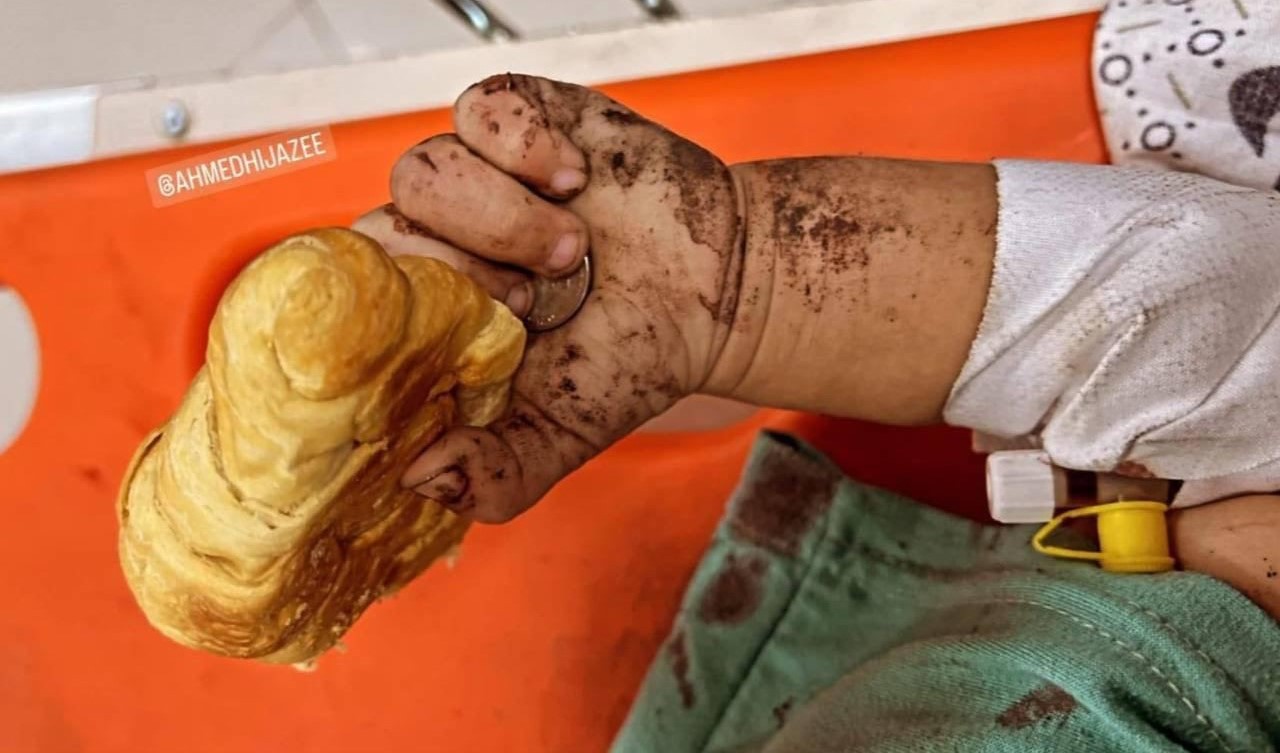
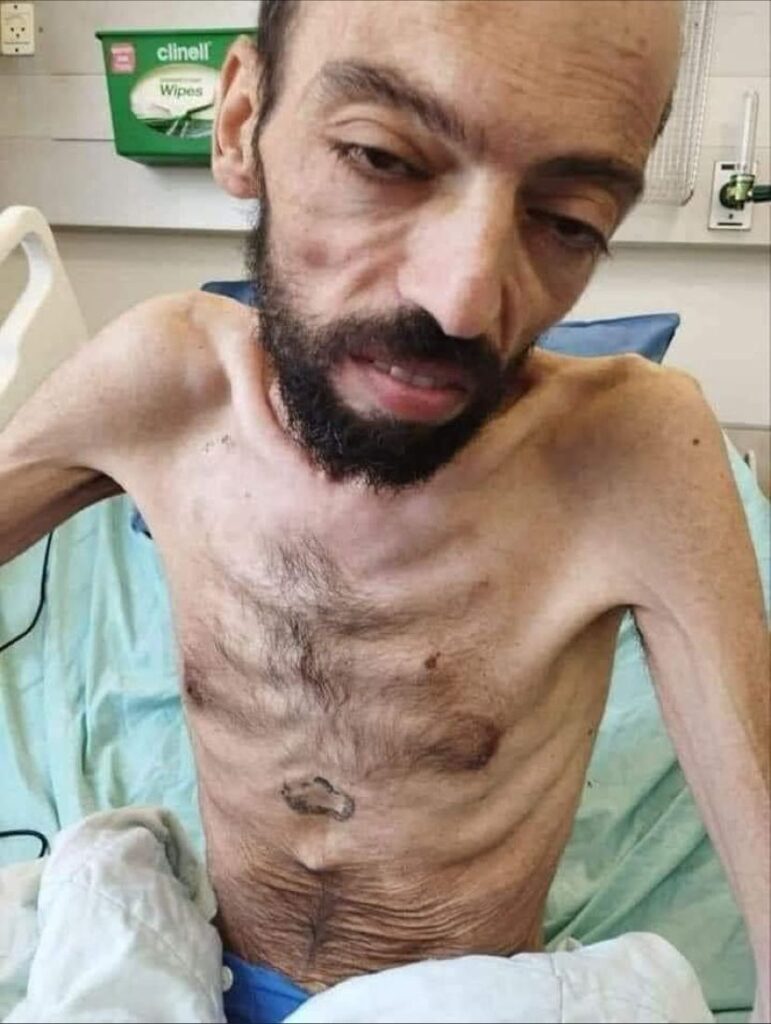
This is not a Jewish inmate at a Natzi concentration camp; This is a Palestinian inmate at a Jewish concentration camp!
Brazenly unethical stance
This brazenly unethical stance has been the official policy of successive American administrations since Lyndon Johnson or even before. Indeed, it has been quite rare for a U.S. official to ascribe the right to self-defence to the Palestinian people who are murdered, savaged and tormented by the Israeli occupation army almost on a daily basis.
And in case an honest but nonconformist remark is made regarding the Palestinian struggle for freedom, even inadvertently or as a slip of the tongue, the official in question is unceremoniously and promptly fired from his job, or asked to immediately submit his resignation.
We all remember what happened to US Ambassador to the UN, Andrew Young, following his brief meeting in mid-August, 1979, with Zuhdi Labib Terzi, the P.L.O. observer at the international organization’s headquarters. Needless to say, embracing Israel’s Lebensraum, bellicosity and regional hegemony is by no means due to lack of awareness on Washington’s part of pertinent facts.
Are Palestinians facing a pre-holocaust situation in the West Bank?
The real reasons for this enduring evil discourse has everything to do with American collusion and connivance with the manifestly criminal Zionist entity which routinely violates international law while the entire world is looking on helplessly. Predictably, this chronic helplessness is due to America’s immoral embrace of the nefarious apartheid entity.
Russian aggression versus American hypocrisy
Well, perhaps US policies are not as diabolical as those of Russia for a variety of reasons. However, in many aspects, American pornographic hypocrisy, double standards, and brazen mendacity transcend reality. Indeed, in order to support American policies, even toward a just cause like Ukraine, one would have to have more than just a grain of dishonesty and moral duplicity. Are Palestinians facing a pre-holocaust situation in the West Bank?
Read also: Palestine-Vs. Ukraine: Stark Western Hypocrisy On Palestine And Ukraine
Yes, I do condemn in the strongest terms the Russian invasion and naked aggression against neighbouring Ukraine. However, for the sake of rectitude and moral consistency, I must condemn, also in the strongest language, Israel’s recurrent Nazi-like crimes against the helpless and abandoned Palestinians.
U.S. Softness on Israel encourages Israeli criminality
Thanks mainly to America’s warm-dark embrace of Israel’s criminal aggression, genocidal policies and toxic racism against millions of Palestinians, this writer is completely convinced that the eight million Palestinians living in mandatory Palestine today are already facing an advanced pre-holocaust setting by Israel against them. I am not a prophet of doom and gloom. But neither am I a gullible observer, who has eyes that see not, ears that hear not nor does he understand.
We cannot rely on Israel’s Talmudic ethnic democracy to stop the Jewish state’s fast drift toward full-fledged fascism, even a brand of fascism similar to Nazi Germany’s beginnings.
According to an Israel Democracy Institute survey, a number of Jewish voters who described themselves as right-wing spiked to 62% in 2022 compared to 46% in April 2019. The same survey in 1986 showed that only 39% of Jewish Israelis identified as right-wing.
I am by no means the first writer or journalist to sound the alarm bell. The late Israeli historian, Zeev Sternhel, described Israel a few years ago as “akin to Nazi Germany in its earlier years. Sternhel, a Holocaust survivor, argued that like every ideology, the Nazi race theory developed over many years. At first, he said, the Nazis deprived Jews of their civil and human rights, very much like Israel is doing to the Palestinians now in both Israel proper (the Nationality Law) and the West Bank, through land-theft, and unrelenting settlement expansion, in addition to unceasing bloody repression. The Concentration camps occurred much later and were the “effect” of earlier policies in the 1920s and 1930s. The pre-holocaust signs were conspicuous and numerous, including Hitler’s Mein Kampf the infamous Nuremburg Laws, the Nazi Citizenship Law issued on 15 September, 1935 and the Kristalnacht on 9-10 November 1938.
Unmistakable pre-Holocaust signs
I am not trying to sensationalize the situation in Palestine. However, there are definitive signs that are more than just worrying, which must alert all honest people to the dark clouds hovering over Palestine.
These signs of pre-Holocaust setting are also numerous and conspicuous and are already constituting a way of life for the bulk of the Israeli Jewish society. For the sake of brevity, I will summarize some of the most important portents in several points:
1-The overwhelming toxic hatred of Palestinians has already become the mainstream discourse in Israel. Venomous fascism is the fashion of the day, and non-conformists are marginalized, ostracized, and demonized. Even the Arabic Language is being suppressed as if the language of Zuheir and al-Mutannabi posed a threat to the Zionist scheme.
2- An ultra-racist political discourse, which was a taboo only a few decades ago, has now gained widespread acceptance and respect within government circles and society. For example, former Prime Minister Benyamin Netanyahu, who is planning to become Israel’s next Premier, is shamelessly courting openly racist parties, advocating a genocidal expulsion of Palestinians or the enslavement of Israel’s non-Jewish citizens as “water carriers” and “wood cutters.”
3-The genocidal ideology of the Jewish settlement movement, which was somewhat marginal in the 1970s and 1980s. has become the mainstream ideology among Israeli Jews. Hence, calls for expelling Palestinians or at least stripping them of their civil and human rights, no longer raise anyone’s eyebrows, neither in government nor in society or even among most Jewish intellectuals.
4- The Israeli Justice system has fallen, nearly completely, into the hands of extreme Talmudic Jewish supremacists who are indoctrinated in the ideology Jewish supremacy which teaches that only Jews are real human beings and that non-Jews are effectively sub-humans. Thus, Israeli courts have virtually stopped prosecuting settlers who murder innocent Palestinian civilians. For example, a Jewish settler who murdered a Palestinian farmer named Ali Hasan Harb from the village of Skaka near Salfit in the central West Bank a few weeks ago, was neither arrested nor interrogated. Are Palestinians facing a pre-holocaust situation in the West Bank?
Nazification of the Israeli law in the West Bank
Moreover, the Nazification or “settlerization” of the Israeli law vis-à-vis Palestinians also found expression on 27 July, 2002, in the Israeli High Court ruling allowing Jewish settlers to retain an illegally seized private Palestinian land at the Mitzpe Kramin outpost near Ramallah. The ruling, which reversed a decision made by the same court two years ago, is raising concerns among rights groups that it might be used as a green light by the settler movement to embark on a fresh wave of mass land-grab in the West Bank. Interestingly, not a word was uttered from Washington to protest this scandalous whitewashing of land theft by the “only true democracy in the Middle East.”
Of course, I can cite hundreds if not thousands of examples corroborating my view that a pre-holocaust setting is now firmly in place in Palestine, at the hands of the grandchildren and great-grand-children of the Holocaust survivors.
Murdering Palestinians and denying responsibility
As I write this piece, I have just received news that trigger-happy Israeli occupation troops marauding throughout Palestinian population centers in the West Bank have killed two Palestinian youngsters: Samer Khalid from the Alein refugee camp near Nablus and Yazan Afana from the Qalandia refugee camp north of Jerusalem. Samer Khalid reportedly was killed while driving his car, while Afana was hit by a random bullet as he was walking in the center of al-Breh, Ramallah’s twin city. Isn’t that a pre-holocaust setting that is now firmly in place in Palestine?
Both men were totally innocent, and the Israeli army denied responsibility for the murder of the two Palestinians as if Martians, not Israeli occupation soldiers, did the shooting. This means that their death will go into oblivion just as was the case with thousands of other Palestinian victims of the 70-year-old slow -motion Zionist-Jewish pre-holocaust against the Palestinian people.
Well! A final word to the peoples and governments of the world. When the fast-track Jewish holocaust against our people takes place, just don’t say we didn’t know!
Featured
Gaza on the Brink Again: How the Rafah Border Closure Is Pushing 2 Million People Toward Extreme Hunger


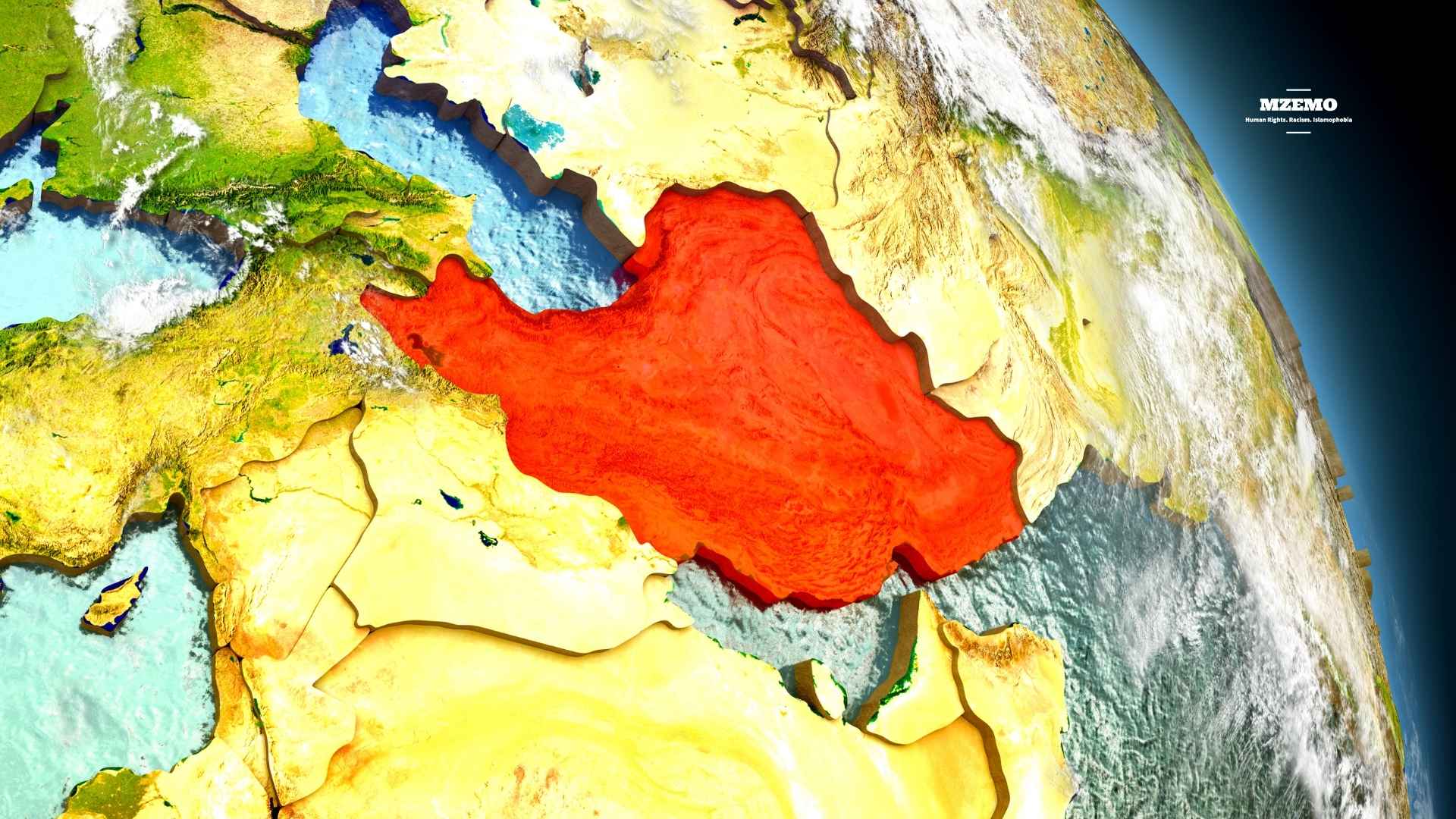
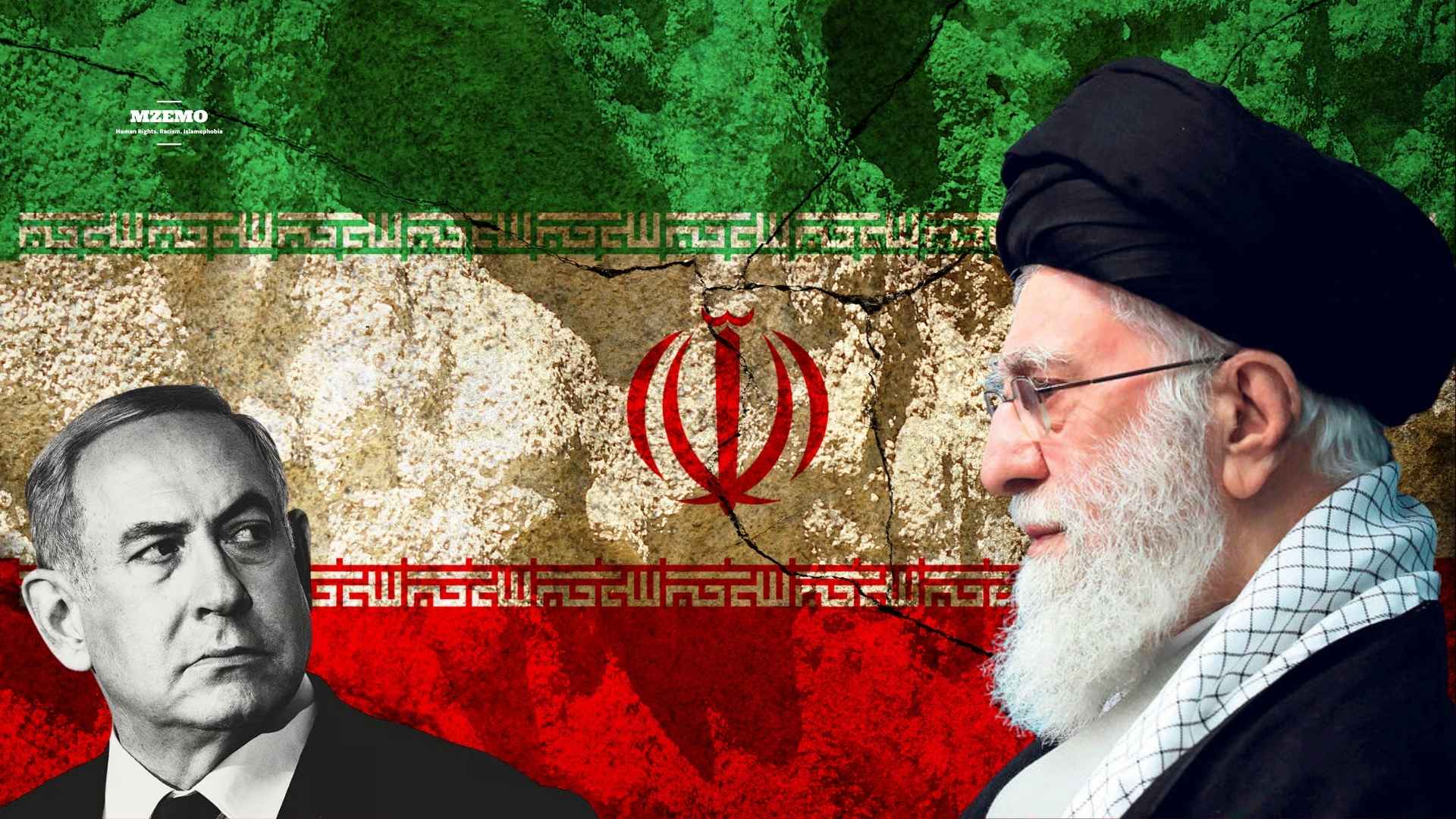
Across the globe, there are two dominating crisis headlines today: Israel’s blatant genocide in Gaza and the ongoing war between Israel-US and Iran. This war is undoubtedly imposed by Israel and the United States, labeling it necessary for peace.
Western governments and media houses frame their policies around the language of “security” and “stability”. There is a pattern of double standards that undermines international law, credibility, and humanity.
On one side stands Gaza, where more than 2.2 million Palestinians are being killed by Israel. It has produced one of the worst humanitarian catastrophes of the 21st Century. On the other hand, stands Iran, a country that is signatory to the Nuclear Non-Proliferation Treaty (NPT) yet faces sanctions, threats, and even attacks on its civilians.
Why are some countries given carte blanche and strategic exceptions while others face relentless punishment?
Gaza: A Genocide in Plain Sight
Since the beginning of Israel’s large-scale assault on Gaza, the humanitarian impact has been staggering. According to Palestinian health authorities and international humanitarian organizations, more than 80,000 Palestinians have been killed, with a large proportion of the victims being women and children.
Entire neighborhoods across Gaza have been reduced to rubble. The United Nations reports that the vast majority of Gaza’s population has been displaced, many of them forced to move multiple times as Israeli military operations expanded across the territory.
This is the purest form of genocide in modern human history. The scale of destruction, starvation, and forced displacement goes far beyond conventional warfare. However, not all media groups are showing the real picture. Western media is showing its unquestioned support for Israel even during the most heinous crimes against humanity.
Western Silence and Political Protection
The United States remains Israel’s closest international ally. According to data from the U.S. Congressional Research Service, Washington provides Israel with approximately $3.8 billion in annual military assistance under long term defense agreements.
Beyond military aid, Western governments have repeatedly shielded Israel from international accountability. In diplomatic arenas such as the United Nations Security Council, attempts to impose sanctions or demand ceasefires have often been blocked or diluted.
This pattern represents a profound contradiction: while Western leaders frequently emphasize human rights and international law, their response to the devastation in Gaza appears far more restrained than in other global conflicts.

Israel’s Nuclear Arsenal: The Middle East’s Open Secret
Another major source of controversy lies in the nuclear dimension of Middle Eastern politics.
Israel is widely believed by international experts to possess between 80 and 200 nuclear warheads, developed through its long-standing nuclear program centered around the Dimona facility in the Negev desert.
Yet Israel maintains a policy known as “nuclear ambiguity” — neither confirming nor denying the existence of its nuclear arsenal.
More importantly, Israel is not a signatory to the Nuclear Non-Proliferation Treaty (NPT), the global framework designed to prevent the spread of nuclear weapons.
Just because it operates outside the NPT system, Israel’s nuclear facilities are not subject to full international inspections by the International Atomic Energy Agency (IAEA).
Despite this reality, Western governments rarely criticize Israel’s nuclear capabilities or call for sanctions related to its weapons program.
Iran and the Nuclear Non-Proliferation Treaty
On the other hand, Iran’s nuclear program exists in a very different legal context.
Unlike Israel, Iran signed and ratified the Nuclear Non-Proliferation Treaty in 1970, which means it is legally permitted to pursue nuclear technology for peaceful purposes such as energy production and scientific research.
Under the NPT framework, Iran’s nuclear facilities are supposed to operate under international monitoring by the International Atomic Energy Agency (IAEA).
Nevertheless, Iran has faced decades of economic sanctions and intense political pressure from Western governments, which argue that its uranium enrichment activities could eventually lead to nuclear weapons development. However, Iranian officials insist that their nuclear program is intended solely for civilian purposes.
Attacks on Iran and the Broader Muslim World
Recent tensions have further escalated the crisis. Israel and the United States have carried out strikes targeting Iranian nuclear facilities, including sites associated with uranium enrichment. The assassination of Iran’s Supreme Leader Ayatollah Ali Khamenei, along with other high-ranking officials show how brutal these strikes are.
Just like in Gaza, Iran’s civilians are also being attacked. One such example is the recent bombing of a girls’ school in Iran in which more than a hundred innocent children and teachers were killed. Such attacks raise serious concerns among international security experts.
Moreover, striking nuclear infrastructure carries enormous risks, including the possibility of radioactive contamination and the potential collapse of global nuclear non-proliferation efforts. Some analysts argue that military attacks on nuclear facilities could actually push targeted states to accelerate weapons development rather than abandon it.
Ultimately, these strikes represent another example of selective enforcement of international norms.
From Gaza to Tehran: A Crisis of Global Credibility
The combined effect of these policies has produced a growing crisis of credibility for the international system.
International law is being applied selectively, enforced strictly against adversaries, while ignored when allies are involved.
From the ruins of Gaza to the nuclear facilities of Iran, the politics of power continue to shape the Middle East in profound ways.
For millions of people across the region, the question is not merely about military strategy or diplomatic rivalry. It is about whether international law truly applies equally to all nations — or whether global justice remains dependent on political alliances.
Until those questions are addressed, the perception of double standards will continue to fuel anger, instability, and distrust across the Middle East and beyond.
Crimes Against Humanity
Shockwaves Across the Gulf: How the US–Israel Strike on Iran Could Redraw the Region
-
 Featured2 years ago
World passively watching as Israel perpetrates open-ended massacre in Gaza
-
Featured3 years ago
Argentina wins the World Cup; are there any other winners?
-
Featured2 years ago
Israel is Hiding Crucial Demographic Facts About Palestinians
-
Featured5 years ago
History of the Ottoman Empire
-
Featured3 years ago
Christian militia infiltrate Lebanon
-
Featured5 years ago
“Do Not Waste Water Even If You Were at a Running Stream” Prophet Muhammad
-
Featured2 years ago
Muhammed: The Greatest Man to walk on Earth
-
Featured4 years ago
World Leaders Remain Silent Over Human Rights Violations in the UAE