Connect with us

Israel

The most brutal massacres of the “Zionist gangs” in Palestine in 1948

Published

on

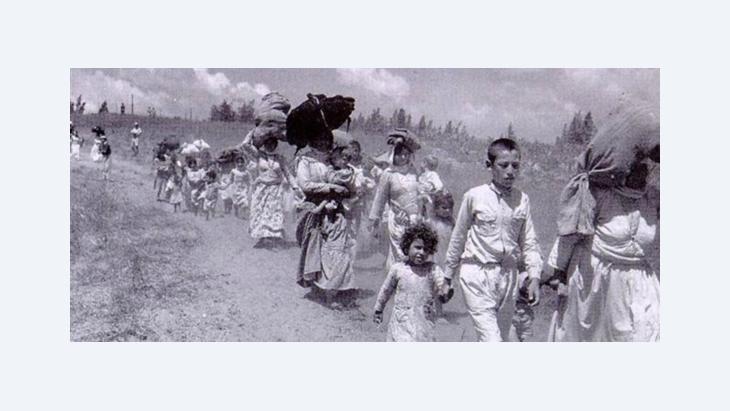
Palestinians leaving their home after massacres of the Zionist gangs in Palestine in 1948

 During the events of the Palestinian Nakba in 1948, the armed Zionist gangs committed tens of massacres that killed thousands of unarmed Palestinian civilians in various villages and cities in Palestine, Despite the relentless Israeli attempts to conceal and obliterate the realities of these massacres, historical evidence such as “mass graves” and testimonies of Israeli soldiers who participated in the commission of these crimes remained irrefutable evidence of their occurrence.

Also Read: Israel has made a habit out of violating Palestinian’s rights every Ramadan

 According to a report by the Hebrew newspaper Haaretz in 2019, teams from the Israeli Defense Ministry removed, since the beginning of the last decade, groups of historical documents to hide evidence of the Nakba and the atrocities that accompanied it, as well as trying to hide testimony from generals about killing civilians and demolishing villages, or expelling Bedouins during the first decade from the establishment of the state.

Mass graves are being found

 In 2013, the Al-Aqsa Foundation for Endowment and Heritage discovered 6 mass graves containing hundreds of remains and skeletons of martyrs and civilians killed between the years 1936 and 1948 in Palestine;  And that was during the restoration work that the Foundation was carrying out in a cemetery in Jaffa (North).

 On January 21, Haaretz revealed the last of his evidence, which was a mass grave of Palestinians killed during the 1948 war on the beach of Caesarea (north).

 The newspaper pointed out that “mass killings of Arabs occurred after the surrender of the village of al-Tantora” in 1948.

 According to the newspaper, about 200 Palestinians were buried, after their execution, in a mass grave that is currently located under the Dor Beach parking lot.

Also Read: Israel having free season on Palestinian civilians including Children and Journalists

 Palestinians say that armed Jewish groups carried out many massacres in Palestinian villages during the 1948 war to force their residents to leave.

 According to the Al-Zaytouna Center for Studies and Consultations (based in Beirut), the number of massacres committed by Zionist gangs between 1937 and 1948 exceeded 75, killing more than 5,000 Palestinian martyrs, in addition to wounding thousands.

In one of its 2009 editions, the Center said that the peak of those massacres was during the period between 1947 – 1948, the period known as the Nakba.

Also Read: The continuing refugee crisis in Palestine: from Nakba of 1948 to Sheikh Jarrah in 2022

 The Palestinians call the term “the Nakba” the process of their displacement from their lands by “armed Zionist gangs” in 1948, the same year in which the establishment of the State of Israel was declared on the majority of the lands of Palestine.

The most prominent Israeli massacres against the unarmed Palestinians, during the Nakba.

  •  The Semiramis Hotel massacre in Jerusalem on January 5: a Zionist gang demolished the hotel, killing at least 20 Palestinians, and wounding 20 others.
  • The Jaffa Gate massacre in Jerusalem on January 7: A Zionist gang threw a bomb at the Jaffa Gate in Jerusalem, killing 18 Arabs and wounding 41 others.
  •  The “Arab Brigades” massacre in Jaffa on January 8: Zionist gangs detonated a car bomb near a building called the Arab Brigades (which housed the headquarters of the Arab National Committee) in central Jaffa, killing 70 Arabs.
  • The massacre of the second Arab Brigades on January 14: when a Zionist gang detonated a car bomb next to the old palace, killing 30 Westerners.
  •  The Maghribi Building Massacre in Haifa on January 16: A time bomb was detonated near a building called “Al Maghribi,” killing 31 Arabs and wounding more than 60 others.
  •  The massacre of Yazour village, Jaffa district, January 22: A Zionist gang attacked Yazour village at the entrance to Jaffa city, at night, and blew up some buildings, killing about 15 Arabs while they were sleeping.
  • The Abbas Street Massacre in Haifa on January 28: A Zionist gang rolled a barrel filled with explosives into Abbas al-Arabi Street, which led to the demolition of some homes, killing 20 Arabs and wounding 50.
  •  The massacre of the village Haifa district in Palestine, on February 14: A Zionist gang attacked the village, destroying about 20 houses above the heads of its residents, killing 60 civilians;  Most of them are women and children.
  • The “Al-salam Building” massacre in Jerusalem on February 20: A Zionist gang blew up a vehicle filled with explosives, which it had placed in front of the Peace Building in Jerusalem, killing 14 Arabs and wounding 26 others in Palestine.
  •  The Deir Yassin massacre on April 9: Zionist gangs launched an attack on Deir Yassin village, west of Jerusalem, during which houses were blown up on the heads of its residents, and civilians fleeing the massacre were directly targeted.  According to Arab and international sources, the number of people killed in the massacre reached 254, including 25 pregnant women whose stomachs were cut alive with spears.
  • The Al-Dawaima massacre on October 29: resulted in the killing of 500 citizens, most notably the mosque incident called “Al-Zawiya”, where the Israeli soldiers killed about 50 old men who were inside the mosque. It is also mentioned that children were killed during the massacre by smashing their skulls with sticks

Continue Reading
Click to comment

Leave a Reply

Your email address will not be published. Required fields are marked *

Featured

The Political Chessboard: Israel, Egypt, Hamas, and International Powers

Published

on

The-Political-Chessboard-Israel-Egypt-Hamas-and-International-Powers

Although Gaza is still under a so-called “ceasefire”, nothing about Gaza feels like peace. The bombs are quieter, yet the pressure is heavier. Resultantly, the Rafah border remains a battleground without bullets, shaped by political deals, blocked negotiations, and shifting alliances. In a series of events, every country involved says it wants stability, while none of them agree on what that stability should look like. However, Palestinians are not invited into the rooms where their future is being discussed.

This is the political chessboard of Gaza. In fact, a map of power where every move is made above the heads of the people who live with the consequences.

Israel’s Strategy: Control Without Responsibility

Israel’s long-term goal has become increasingly clear. It is to maintain control over Gaza’s borders, movement, and political structure while avoiding the burden of direct governance. The reopening of the Rafah crossing only for exit, not entry, is part of this design. A one-way gate would encourage Palestinian displacement without Israel having to declare it openly.

Reports published by international outlets reveal proposals that would place Gaza under a new administrative framework that excludes Palestinian political actors and leaves Israel with indirect control.

Inside Israel, political pressure from far-right ministers shapes much of its Gaza policy. They demand harsher restrictions, deeper buffer zones, and tighter control of who enters and exits the strip. The argument is always the same: “security.” The reality is more aligned with demographic engineering and territorial fragmentation.

Egypt’s Red Line: No Resettlement in Sinai

Egypt rejects any attempt to push Palestinians into Sinai. Cairo has repeated this stance publicly and privately, warning that any forced movement of Gazans into Egyptian territory would destabilize the region and undermine Egypt’s sovereignty.

Egyptian officials understand that once Palestinians cross into Sinai in large numbers, they may never return. Egypt refuses to become the “alternative homeland.” This is why the Rafah crossing remains tightly controlled from the Egyptian side as well. Egypt views the crossing as leverage, a card it will not surrender lightly.

Hamas: Squeezed but Not Erased

Two years of war have left Hamas militarily weakened and politically isolated. Large parts of its governance structure were destroyed, and the population it once administered is now scattered across tent camps and ruined cities.

Yet Hamas remains a key player because it holds the hostage file and still commands loyalty among the masses. Attempts by Israel, the U.S., and other regional actors to design Gaza’s political future without Hamas have created a vacuum. There is no clear replacement, no unified Palestinian authority ready to take control, and no roadmap that includes the people who live in Gaza.

The United States: Containing the Conflict, Not Resolving It

The United States frames its Gaza involvement as a humanitarian and diplomatic effort. However, its strategy is aimed at managing the conflict, not ending it.

Washington continues military support to Israel while pushing for a Gaza administration that minimizes Hamas’s influence. The U.S.-backed idea of a “Board of Peace” or international governance model places foreign powers over Palestinian territory, effectively sidelining Palestinian representation.

This contradiction, supporting Israel militarily while calling for humanitarian relief, has shaped U.S. policy since the first days of the war. It has also prevented any long-term political solution from taking shape.

Qatar: The Broker Between Opposites

Qatar plays a unique role on this chessboard. It mediates hostage exchanges, communicates with Hamas, and finances humanitarian operations. Israel criticizes Qatar, yet depends on it. The U.S. works through Qatar despite political discomfort, and Hamas relies on Qatar’s mediation to remain relevant.

In every negotiation since 2023, Qatar has been the only actor able to speak to all sides. Its influence comes not from military power, but from its ability to keep channels open when everyone else closes theirs.

Europe: Loud Words, Quiet Actions

European governments issue statements condemning civilian suffering, demanding accountability, and calling for more aid. However, Europe remains deeply divided.

Countries like Spain, Belgium, and Ireland push for stronger action. Others, including France and Germany, avoid measures that would pressure Israel. The EU’s economic partnerships with Israel remain intact. Security cooperation continues, and statements do not become consequences.

As a result, Europe’s diplomatic voice carries moral weight but limited political impact.

The Broader Arab World: Anger Without Strategy

Arab leaders face enormous public pressure to act for Gaza, but their responses have been largely symbolic. Economic agreements, security deals, and regional partnerships constrain stronger positions.

Saudi Arabia remains cautious as it balances global alliances. The UAE prioritizes economic stability. Jordan manages population pressure and border security. None of these states has presented a unified plan for Gaza’s future. The absence of an Arab strategy leaves the political field open for external powers.

Rafah: A Border Crossing That Reveals Everything

The Rafah crossing is not just a gate, but the clearest symbol of Gaza’s political reality.

  • Israel wants it controlled in a way that encourages displacement.
  • Egypt refuses to open it for mass entry.
  • The U.S. wants a managed framework.
  • Qatar uses it as a negotiation point.
  • Hamas sees it as a lifeline.

And Palestinians see it as the difference between survival and suffocation. Every decision about Rafah is a political move in this larger chess game.

A Homeland Negotiated Without Its People

Gaza’s political future is being shaped in Washington, Cairo, Tel Aviv, Doha, Brussels, and Riyadh. But neither in Gaza City nor in Rafah. Palestinians have no seat at the table where their homeland is being redesigned.

This is the real tragedy of Gaza’s political crisis. Occupation continues not only through military force, but through diplomatic exclusion. Every foreign plan that excludes Palestinian voices deepens instability and prolongs suffering.

The world cannot speak of stability while silencing the people who live with the consequences.

Until Palestinians are central to decisions about their land, every negotiation, border reopening, governance proposal, or ceasefire will be nothing more than another move in a game they never agreed to play.

Continue Reading

Featured

How Israel’s New West Bank Operation and Fresh Gaza Strikes Show the War Never Ended

Published

on

Israel-West-Bank-and-Gaza-Never-Ending-Ceasefire

The ceasefire was supposed to bring a pause. Instead, Palestinians woke to the sound of helicopters circling over the occupied West Bank and reports of new strikes hitting Gaza. On 26 November 2025, Israeli forces launched a large-scale raid in the northern West Bank city of Tubas, supported by gunfire from the air. Hours later, Gaza officials reported fresh airstrikes that killed and injured civilians.

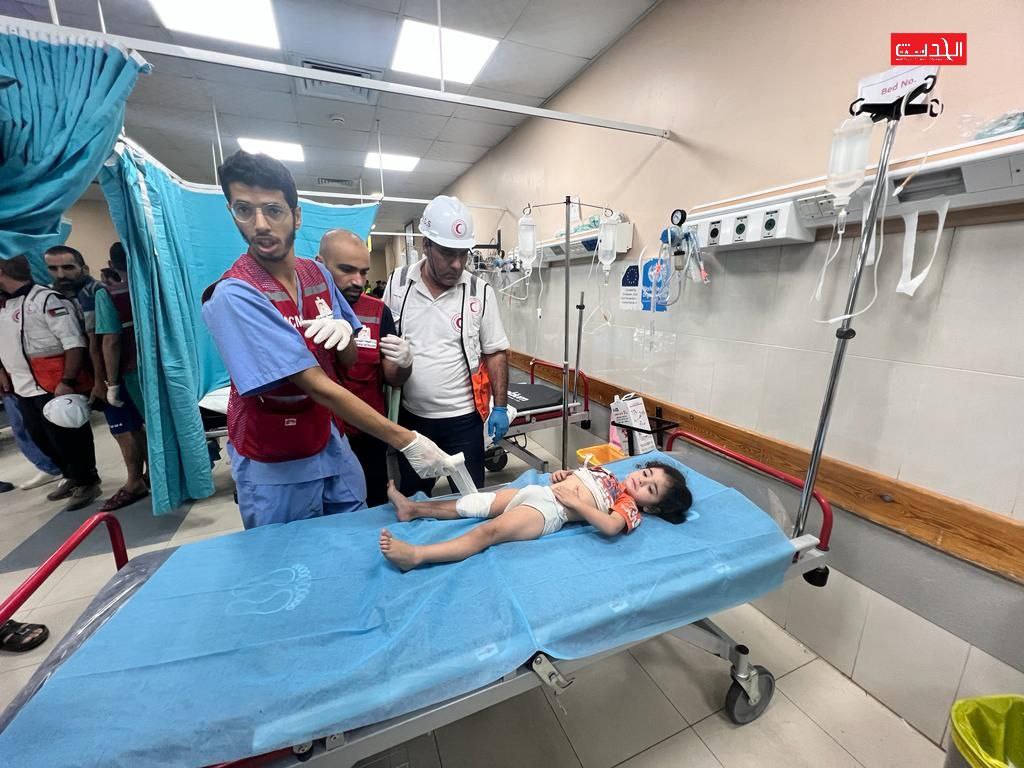
Soldiers sealed off neighbourhoods, stormed homes, and detained residents. Families were ordered to evacuate, while streets were turned into military zones. At the same time, Gaza faced renewed bombing despite the truce announced in October. According to Gaza health authorities, at least 24 Palestinians were killed in the latest strike, including children. This is not a ceasefire, but a war under a different name.

West Bank Under Fire

The raid in Tubas marked one of the biggest Israeli operations in the West Bank this year. Soldiers used helicopter cover as they moved through the city. Homes were taken over and turned into military positions. At least 22 Palestinians were detained in the first hours alone.

Families were forced to leave their houses and were warned not to return until the operation ended. Streets were blocked, and checkpoints appeared overnight. Local officials described the raid as collective punishment rather than a security measure.

This is part of a wider trend. The West Bank has seen near-daily raids since late 2023. According to UN monitors, more than 670 Palestinians have been killed in the West Bank since October 2023. Thousands have been detained. So, the occupation has tightened, not eased.

Gaza Hit Again: A Ceasefire Broken Repeatedly

Gaza was supposed to be under a ceasefire. Yet Israeli strikes continue. On 22 November 2025, a new wave of attacks killed at least 24 people, among them children and women. The strikes hit areas where displaced families had taken shelter.

The ceasefire has seen hundreds of violations, including drones, artillery fire, and raids. UN rights experts warned that Israel’s actions risk collapsing the fragile truce altogether. For families in Gaza, the message is clear that the truce exists in speeches, not on the ground.

Life Between Raids and Ruins

In Gaza, people have survived two years of bombardment. More than 70,000 Palestinians. Entire neighbourhoods are rubble, and more than 1.5 million people live in tents, unfinished buildings, or temporary shelters.

Every new strike adds fresh fear. Children wake from nightmares, while parents rebuild flimsy shelters again and again. The sound of jets or drones brings panic.

In the West Bank, fear takes a different shape. Night raids, checkpoints, armed settlers, and sudden crackdowns shape daily life. People live under the constant threat of arrest or violence. Ultimately, the violence is continuous.

International Silence and Double Standards

Despite the evidence of new attacks, global powers say little. Governments welcome the ceasefire while ignoring its collapse. The US continues supplying weapons, while European states focus on diplomacy rather than accountability.

UN experts warned in November that Israel’s actions in both Gaza and the West Bank threaten regional stability. However, warnings alone do not save lives. The international system shows one truth that Palestinians are left to face occupation violence with no meaningful protection.

Stories Buried Inside Headlines

In Tubas, families hid inside dark rooms as gunfire echoed outside. Mothers held their children tight, while fathers tried to shield their sons from soldiers entering the house.

In Gaza, a father pulled his daughter from debris after the latest strike. She was still breathing. He told reporters he thought the ceasefire would last. These stories rarely make it into global headlines, but they define Palestinian life.

The War Never Ended

The new West Bank raids and Gaza strikes prove something essential that Israel is not respecting the ceasefire. The occupation has simply shifted tactics. Instead of full-scale bombardment, it now uses raids, targeted attacks, and pressure strategies.

For Palestinians, the war continues every day, in different locations, with different weapons.

Israel’s goal remains the same: to control, fragment, and pressure a population already shattered by siege and displacement.

The Ceasefire Was Never Real

The latest raids and airstrikes expose the truth that the war against the Palestinians has never paused. It changed shape, shifted zones, but it did not end. A ceasefire means safety, while Palestinians have none.

Until the world recognises this reality and demands accountability, the violence will continue. Whether it be in Gaza’s ruins, in West Bank cities, or in every Palestinian home living under the shadow of occupation.

Continue Reading

Featured

Inside Israel’s Underground Prison

Published

on

Inside-Israels-Underground-Prison

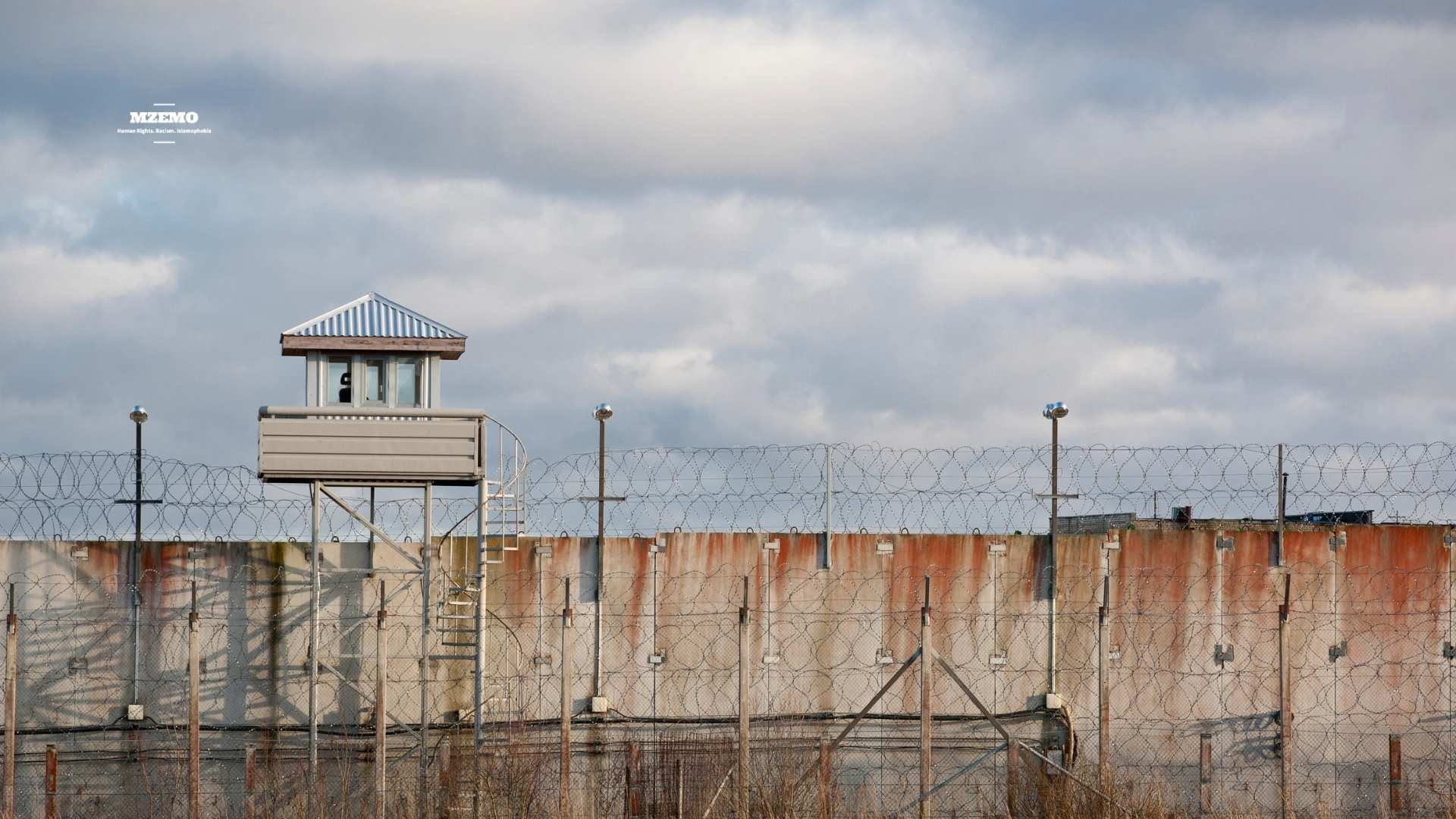
Rakefet, Israel’s notorious underground detention site, was once shut down for cruelty so severe that even Israeli authorities deemed it untenable. Today, it is operating again. It has been revived at a moment when more than 9,500 Palestinians from Gaza and the West Bank have been detained since October 2023. According to multiple reports, the subterranean network is not a side effect of war but a deliberate extension of it. It is ultimately a hidden arena where torture, disappearance, and psychological destruction unfold far from cameras, oversight, and public scrutiny.

A Facility Once Closed for Cruelty, Reopened for Gaza

Rakefet did not return to life by accident. Originally constructed in the 1980s, the facility was abandoned after a series of internal reviews deemed its underground interrogation chambers incompatible with even Israel’s own prison standards. Yet when Gaza came under siege again, the far-right National Security Minister Itamar Ben-Gvir ordered its reopening. His ministry sought a place beyond legal and humanitarian monitoring, a site where detainees could be isolated completely.

Human rights groups estimate that at least one hundred detainees were transferred into Rakefet in the first months of the war. Israeli media leaked that these individuals were labelled “high-risk Gazans,” a term that often means nothing more than being young, displaced, or simply male. Many were taken from schools-turned-shelters, from hospital courtyards, or from streets where they queued for scarce food and water.

Life in a World Without Sunlight

Inside Rakefet, the concept of time collapses. Some cells are blasted with harsh artificial light without pause, burning into the eyes of detainees until they lose their sense of day and night. Others are submerged in darkness for long stretches, creating a different kind of torment. The air is cold and damp in winter, and the underground passages trap a stagnant humidity that clings to the skin.

Former detainees describe an existence engineered for disorientation. They recount being ordered to stand for hours with their hands tied behind them, the metal of the cuffs cutting into their wrists. When allowed to sit, they were often shackled in ways that made rest impossible. Buckets served as toilets. Water was rationed to a few sips at a time. Showers, when granted, lasted barely two minutes and offered no respite from the cold.

Moreover, medical neglect is not accidental but structural. Lawyers reported meeting clients whose ribs had healed incorrectly after beatings, whose jaws were swollen from repeated blows, whose wounds festered without treatment. Public Committee Against Torture in Israel (PCATI) has recorded more than 160 formal complaints of torture since the war began, though rights groups believe the real number is far higher due to limited legal access.

Civilians Swept into the System

Despite Israeli claims that these underground detainees are militants, the profiles of the prisoners contradict that narrative. Among them was a Gaza City nurse taken from Al Shifa hospital during a raid. A sixteen-year-old boy was arrested while searching for clean water. Moreover, teachers, vendors, labourers, and men displaced from northern Gaza were seized at checkpoints or during mass roundups. Their arrests did not follow intelligence-led operations, but a pattern of collective punishment.

As per the reports, Israel has held over one thousand Gazans under the “Unlawful Combatants Law,” allowing for prolonged detention without charge, trial, or legal representation. Some detainees later recounted interrogations where no questions were asked, only threats, slaps, and instructions to kneel or stand for long periods. The purpose was not to gather information, but to shatter morale.

The Legal Black Hole

Israel’s “Unlawful Combatants” designation has created a legal vacuum in which detainees can be held for up to forty-five days without any court review, and lawyers may be blocked from visiting for two or three months. Families receive no confirmation that their loved ones are alive or in custody. This secrecy violates the Geneva Conventions and meets the criteria for enforced disappearance.

OHCHR reports that Israel’s detention system “operates outside the boundaries of international law” and displays “clear signs of systematic torture.” Such warnings, however, have done little to change the conduct of those running these facilities.

Rakefet is only one part of a larger architecture. In the Negev desert, the Sde Teiman base has grown infamous. There, detainees were placed in open cages, forced to kneel under the sun until they collapsed, subjected to severe beatings, and denied adequate medical care. Israeli doctors have come forward with accounts of amputations performed in conditions that no ethical medical practitioner would accept. Survivors have also reported sexual violence committed during interrogations.

According to the Israeli newspaper Haaretz, at least thirty-six detainees died in military custody between October 2023 and October 2024. Their deaths are rarely investigated.

Torture as a Tool of Genocide

The UN Commission of Inquiry concluded that Israel’s actions in Gaza meet four of the five acts of genocide under international law. Torture and enforced disappearance fall squarely into the categories of causing serious bodily and mental harm and deliberately inflicting conditions intended to destroy a population in whole or in part.

Inside Rakefet, this destruction happens in silence. There is no smoke rising from the ground to signal suffering, and no viral videos. The violence is intimate, aimed at erasing personal dignity and collective identity.

One of the most disturbing elements of this underground system is the global indifference surrounding it. Western governments continue supplying arms and political cover. The European Union maintains close security cooperation with Israel. Many Arab governments issue statements of concern but stop short of any sustained pressure. The structures of torture endure because those with influence refuse to wield it.

Survivors Return With Invisible Wounds

The men who leave Rakefet do not return whole. Doctors in Gaza and the West Bank speak of former detainees who jump at sudden noises, who refuse to sit in dark rooms, who struggle with nerve damage and persistent tremors. Malnutrition leaves them weak, while the psychological trauma leaves them silent.

One man told his lawyer that the worst moment was when he realised he no longer knew whether it was day or night. “I thought I had been buried alive.”

The Genocide Continues Below the Ground

Even if Israel halts its bombing campaign, the war beneath the earth continues. Rakefet is not an anomaly. It is a symbol of a system designed to erase Palestinians physically, mentally, and socially. A ceasefire can quiet the sky, but it cannot reach the darkness beneath Israel’s prisons.

Justice demands exposing these sites, demanding international investigations, and holding Israeli officials accountable. Only then can the hidden front of Gaza’s genocide be brought to light, and only then can the silent torment below the ground finally end.

Continue Reading
Advertisement

Trending