Connect with us

Featured

India’s Obsession With Gold: The Connected Roots of Dowry & Gold

Published

on

India, the largest importer of gold is clearly obsessed with yellow metal. With every passing year, the hunger for gold is surging, and so is the price. But some recent studies are highlighting that with the rise in gold’s price, the chances of a girl child’s survival, fall.

This absurd co-relation between the gold price and females in the country is rising the obvious questions: What could be the real reason behind the country’s obsession with the yellow metal? How is it related to the survival of women in India? And what can be done to fix it?

India’s Obsession With Gold

India is the largest consumer of gold jewelry in the world; according to the World Gold Council, in the year 2019, the country imported 830 tonnes of gold. Demand for the yellow metal is soaring and touches new peaks, especially during the wedding season.

The love for gold is deeply rooted in the country’s culture. It is a way of celebration, gifted during important occasions; and in weddings, it is an essential part of the dowry.

Although dowry was outlawed by the Dowry Prohibition Act of 1961, it is still a prevalent part of marriages in India, Bangladesh, Sri Lanka, and Pakistan.

A study by the Center for Economic Policy Research claims that the rise in gold price is inversely proportional to the survival chances of a girl child in the first month of their life in the country.

Dowry: Not in The Rare View Mirror Yet

Dowry is believed to have originated back in 1793 when Lord Cornwallis introduced private ownership of lands. The law prohibited women from claiming ownership of any property.

Until 1793, women’s dowry was the women’s share of property inheritance; in a way, this ensured her independence in her new in-law’s home. Dowry was widely prevalent in medieval western Europe since 200 BCE, though with time it faded from there but persists in major South-Asian countries.

Edward Lorenz once proposed that the flapping of a butterfly’s wings can turn into a tornado weeks later (Butterfly effect). This seems to go perfectly with the dowry system in the country; it would not be wrong to say Lord Cornwallis’s policy as the flapping of wings, now causing ravaging lives of millions of women in India.

A paper published by Sonia Bhalotra, (University of Essex), Abhishek Chakravarty (University of Manchester), and Selim Gulesci (Bocconi University); on the relation between gold price, dowry, and deaths in India; flashes light on the deep-rooted social-cultural effect of Dowry, the role of gold in dowry and how to price fluctuation of gold is associated with the death of women and sometimes families in India.

Dowry and Gold: Connected Roots

A study shows that still, between 70%-90% of the Indian households give dowry in their daughter’s marriage. Out of these 95% give away gold to their daughter and in-laws as part of the dowry.

Gold jewelry has long been a huge part of India’s aggregate gold demand. Nearly one-fifth of gold’s annual global supply is imported by India, every year

In Kerala, one of the largest gold-consuming states of India, an average middle-class family gives at least 320gm of gold to their daughter at weddings. Whereas the wealthy class usually gives more than one kilogram of gold to the brides.

Parents start saving for their daughter’s wedding (dowry) ever since the child’s birth. Knowing the trading of gold as dowry, the government tries to regulate gold price from time to time; but it still doesn’t cause any significant changes.

But instead, the hike in gold prices makes way for smugglers, to smuggle yellow metal in India from the gold-rich nation, usually from the west-Asian countries like Dubai.

In July 2020, the airport custom of the United Arab Emirates (UAE) seized 30-kilograms of gold, which was being smuggled in sanitary pipes.

Moreover, strengthening the policies for the prohibition of dowry is unlikely to make any significant difference. Because of the social norms, the families have to follow and thus co-operate in the violation of the ban.

Change in The Air

It is important to understand that dowry is not the only reason behind the country’s obsession with gold; the yellow metal holds great significance in India’s culture.

Furthermore, gold is the sign of wealth therefore, it is given to the daughter not only as dowry but is also as a gesture of love and showing the importance in the family. Gold is also passed from generation to generation as the family’s traditional inheritance.

As more women are joining the country’s workforce, a change in the air can be felt. Before, the male parts of the family, namely father, and brother were the primary buyers of jewelry; but now more women consumers are independently buying it for themselves.

Equal property rights for women are believed to be one of the most significant steps towards ending the dowry system and thus the country’s obsession with the yellow metal.

Continue Reading
Click to comment

Leave a Reply

Your email address will not be published. Required fields are marked *

Featured

Board of Peace Explained: New Global Peace Architecture or Another Power Play?

Published

on

Board-of-Peace-Explained-New-Global-Peace-Architecture-or-Another-Power-Play

This is not just about a region in this world where human rights are not given, and people are being killed. It is about humanity, life, and the very foundations of values that humans are living with. When Gaza is discussed today, it is rarely in the language of rights. It is discussed as a problem to be solved, a territory to be stabilized, and a population to be administered.

The announcement of a new international “Board of Peace” fits neatly into this pattern. Presented as a bold initiative to guide Gaza out of conflict and into reconstruction, the Board of Peace has been framed by its sponsors as innovative, inclusive, and forward-looking. Yet for Palestinians, the announcement raises an older, still unresolved question: Who decides Gaza’s future, and on what authority?

What Is the Board of Peace?

The Board of Peace was announced by US President Donald Trump as part of a broader Phase Two Gaza plan, marking a shift from ceasefire management to post-genocide governance and reconstruction.

According to official descriptions, the board is meant to:

  • Oversee Gaza’s political transition
  • Coordinate reconstruction funding and investment
  • Provide international supervision during a “transitional” period

Trump declared himself chair of the board and described it as a high-level body composed of political leaders, financial figures, and diplomatic actors. Unlike the United Nations, the board has no clear treaty basis, no General Assembly mandate, and no defined accountability mechanism.

It is powerful not because it is formal, but because it is backed by money, political leverage, and security control.

Who is on the Board?

The individuals named or referenced in connection with the Board of Peace are not neutral facilitators.

The board’s executive circle includes:

  • Marco Rubio, US Senator and the Secretary of State
  • Tony Blair, former UK prime minister
  • Jared Kushner, Trump’s son-in-law and former Middle East envoy
  • Steve Witkoff, US real estate magnate and political donor
  • Ajay Banga, President of the World Bank

These are figures associated with Western political power, financial institutions, and security-centric diplomacy. None are elected Palestinian representatives. None comes from Gaza. The imbalance is structural, not incidental.

Which Countries Were Invited?

One of the board’s defining features is its attempt to project global legitimacy through invited state participation.

According to credible sources, Trump sent invitations to around 60 world leaders. Those explicitly named in reporting include:

  • Turkey (President Recep Tayyip Erdoğan)
  • Egypt (President Abdel Fattah el-Sisi)
  • Canada (Prime Minister Mark Carney)
  • Argentina (President Javier Milei)

Moreover, some diplomatic sources also indicate the list includes:

  • Britain
  • Germany
  • Italy
  • Morocco
  • Indonesia
  • Australia

The Palestinian Face of the Plan: Who Is Ali Shaath?

To provide the plan with Palestinian leadership, the US has backed Ali Shaath as head of the transitional Palestinian committee that will administer Gaza’s civil affairs under the Board of Peace.

Shaath’s profile is central to understanding how this governance model is being sold.

Here is a quick overview of Ali Shaath:

  • He was born in 1958 in Khan Younis
  • He is a civil engineer with a PhD from Queen’s University Belfast
  • He previously served as deputy minister of planning in the Palestinian Authority
  • He has worked on industrial zone projects in both Gaza and the West Bank

Shaath has spoken publicly about the scale of Gaza’s destruction, estimating around 68 million tons of rubble, much of it contaminated with unexploded ordnance. He has suggested that clearing debris could take three years, with full recovery achievable in seven years. It seems to be a far more optimistic timeline than UN estimates, which warn that rebuilding could extend beyond 2040.

Politically, Shaath has been described as acceptable to both Hamas and Palestinian Authority President Mahmoud Abbas, precisely because he is positioned as a technocrat rather than a political leader. However, it is yet to be observed how he would work with the other members.

Governance Without Sovereignty

The Palestinian committee, chaired by Shaath, has issued a mission statement pledging to restore services, rebuild infrastructure, and stabilize daily life in Gaza.

The committee describes its work as “rooted in peace” and focused on technocratic administration rather than politics.

Yet the committee:

  • Controls no borders
  • Commands no security forces
  • Regulates no airspace or coastline
  • Has no electoral mandate

It governs without power, while power remains in external hands.

When it comes to the reaction of the people of Gaza, they showed mixed feelings of skepticism over hope. Some Palestinians express cautious hope that any plan might bring electricity, water, and an end to constant displacement. Others see the Board of Peace as another externally designed structure that manages Gaza without addressing the occupation.

Peace Architecture or Power Management?

The Board of Peace is being presented as an innovation. However, history offers a cautionary lens.

Temporary governance structures in occupied or post-conflict territories have a habit of becoming permanent. Reconstruction becomes conditional. Aid becomes leverage. Administration replaces self-determination.

In a nutshell, the Board of Peace asks the world to believe that stability can precede justice, and that governance can substitute for freedom.

For Palestinians, the unanswered question is simpler and older:

If Gaza’s future is designed in Washington, financed in global capitals, and overseen by external boards—where does Palestinian self-determination actually begin?

Until that question is addressed, the Board of Peace risks becoming not a new architecture for peace, but another structure built on the same imbalance that has kept Gaza unfree for decades.

Peace cannot be outsourced, and a people cannot be rebuilt while being brutally ruled.

Continue Reading

Featured

Phase Two of Gaza’s Plan: Demilitarization, Technocracy, and a Ceasefire That Still Bleeds

Published

on

Phase-Two-of-Gazas-Plan-Demilitarisation-Technocracy-and-a-Ceasefire-That-Still-Bleeds

The second phase of Gaza’s so-called peace plan has officially been announced. It is being described as a transition from ceasefire to governance, from violence to rebuilding. However, on the ground in Gaza, the distinction is harder to locate.

Isn’t it shocking that more than three months after the ceasefire took effect in October, Palestinians are still being killed, and aid is a privilege to have? Entire neighborhoods remain uninhabitable. So, the announcement of phase two does not coincide with calm. It arrives amid continued military pressure, delayed withdrawals, and a humanitarian system operating far below what was promised.

There is a crucial question Palestinians are asking, and that is not whether Phase Two exists on paper, but whether it alters the reality of power.

What Phase Two Claims to Change

According to some US officials, Phase Two is meant to shift the Gaza file from emergency truce management to long-term stabilization. Its three pillars are clear:

  • First, the demilitarization of Hamas and other armed groups, framed as a non-negotiable precondition for any durable peace.
  • Second, the establishment of a Palestinian technocratic committee to administer Gaza’s civil affairs during a transitional period.
  • Third, the beginning of reconstruction planning, coordinated under international supervision and tied to security compliance.

In theory, this is where genocide ends, and governance begins, but in practice, each pillar raises more questions than answers.

Phase One by the Numbers: A Ceasefire in Name

Before moving further, let’s have a look at the overview of Phase One. Since the ceasefire came into force on October 10, at least 451 Palestinians have been killed and more than 1,250 injured, an average of nearly five deaths per day. Military operations continued under the language of “enforcement” and “targeted action,” blurring the very meaning of a ceasefire.

When it comes to the prisoner exchanges, Hamas and Israel both released most of the captives. Bodies were also exchanged, with one reportedly still trapped under rubble.

Aid delivery fell far short of commitments. Between October and early January, around 23,019 aid trucks entered Gaza out of a promised 54,000, roughly 43% of the target.

Critical crossings, including Rafah, remained closed or heavily restricted. Aid organizations reported operational paralysis as bans, inspections, and suspensions multiplied.

In other words, Phase One did not fulfill its promises. It managed the violence without ending it.

Demilitarization Before Relief

Phase Two places demilitarization at its core. President Trump has repeatedly framed it as a binary choice—an “easy way or a hard way.” The message is unambiguous: disarmament first, normalization later.

What remains unaddressed is the imbalance this creates. Israel retains control over Gaza’s airspace, coastline, borders, population registry, and imports. Palestinian armed groups are asked to disarm while occupation-level controls persist.

It is pertinent to mention that international law does not recognize demilitarization as a substitute for political rights. Yet phase two calls itself the engine of peace, while humanitarian access, withdrawal timelines, and accountability for genocidal destruction remain secondary.

For many Palestinians, this sequencing feels less like peacebuilding and more like containment.

The Technocratic Committee: Governance Without Power

There will be a 15-member Palestinian committee tasked with administering Gaza’s civil affairs. Its stated mission includes restoring basic services, managing reconstruction, and laying foundations for stability.

Its members are presented as non-political professionals, including engineers, administrators, and planners. But what is missing is authority.

The committee operates under external oversight, with no electoral mandate, no independent security control, and no ability to regulate borders, trade, or movement. Its legitimacy is managerial, not democratic.

However, it’s not shocking for Palestinians as they are familiar with this model. Over the past three decades, “temporary” arrangements have repeatedly substituted administration for sovereignty. Technocracy becomes a way to manage populations without resolving the structures that disempower them.

Palestinian Voices

Some reports from Gaza capture a mood that is neither celebratory nor dismissive, but only exhausted.

Some residents express cautious hope that Phase Two might at least bring predictability: electricity that lasts more than a few hours, water that runs clean, streets cleared of rubble. On the other hand, most of them see another externally designed plan that speaks the language of peace while preserving the architecture of control.

One displaced man described being forced to move 17 times since the genocide began. Another questioned how demilitarization could be discussed while entire families still sleep in tents beside the ruins of their homes.

For many, peace is not an abstract framework, but the ability to survive the night without fear.

Aid as Leverage, Reconstruction as Reward

Phase Two introduces reconstruction, but not as a right. Aid and rebuilding are explicitly linked to compliance. This conditionality transforms humanitarian relief into a pressure tool.

History offers little comfort here. Millions pledged to Gaza after previous acts were delayed, diverted, or blocked entirely. The difference now is scale. Gaza’s destruction is unprecedented, with tens of millions of tons of rubble, unexploded ordnance, and erased neighborhoods.

Therefore, rebuilding without political change risks entrenching dependency rather than restoring dignity.

A Governance Phase Built on Unresolved Violence

Although phase two is described as a transition, transitions require movement—away from violence, toward rights.

So far, what has changed is not the structure of power, but the language used to describe it.

Demilitarization is demanded without de-occupation. Governance is promised without sovereignty. Reconstruction is discussed while restrictions remain.

This is not peace delayed. It is peace redefined—away from justice, toward management. Ultimately, nothing can substitute for Gaza’s right to determine its own future, which has been denied for decades.

Continue Reading

Featured

How the World Is Losing an Entire Generation

Published

on

How-the-World-Is-Losing-an-Entire-Generation

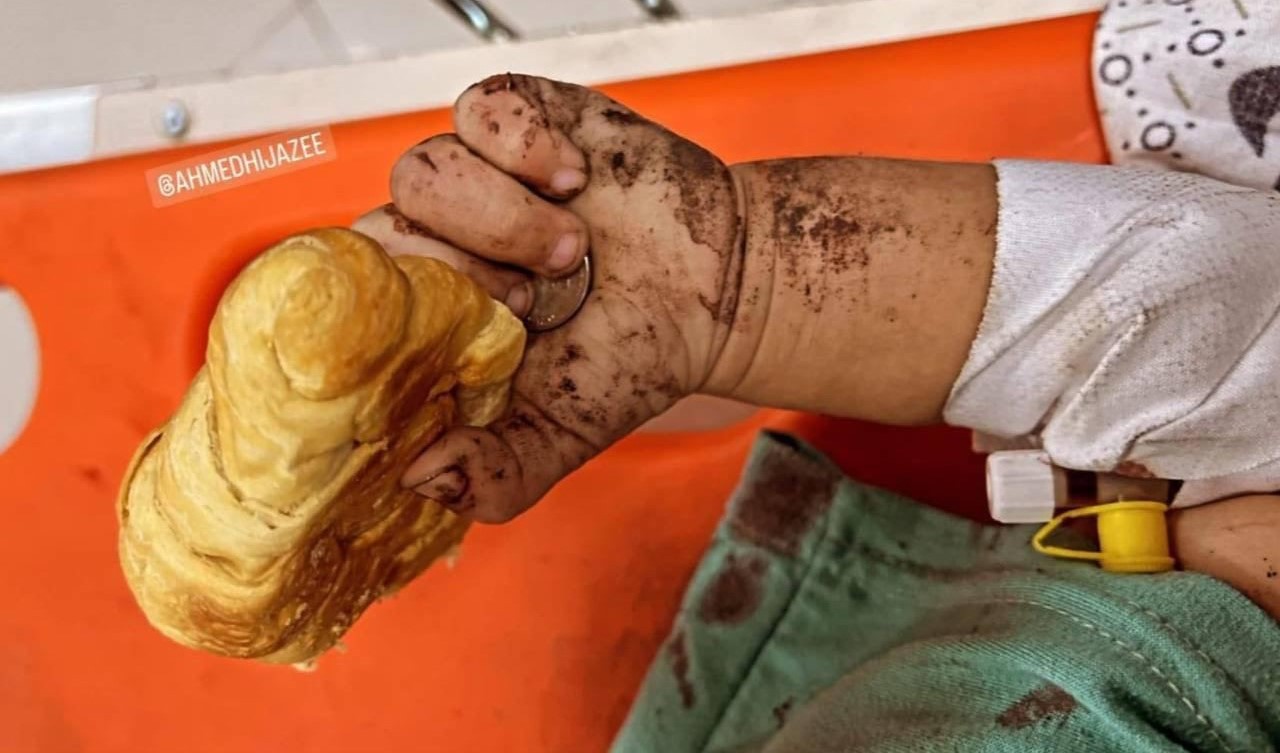
When governments talk about protecting children, their words rarely match what young Palestinians are living through. In the Gaza Strip, education is not merely disrupted; it is being systematically erased, leaving the possibility of a generation without basic schooling and awareness.

A recent analysis done by the University of California warned that children in Gaza may lose the equivalent of five years of education due to repeated school closures since 2020. These conditions are compounded by violence, trauma, and chronic destruction of infrastructure.

Almost all of the schools have been partially or completely destroyed by Israel. If schools remain out of session until at least 2027, many teenagers will be a decade behind where they should be educationally.

This is not only about education but the erasure of an entire generation, coupled with despair. It is ultimately the humanitarian consequence of genocide-scale violence and blockade. The future is being stolen from innocent lives, and the world is witnessing one of the greatest catastrophes in the history of mankind.

The Scale of the Education Collapse in Gaza

Before the genocide intensified, Gaza had an education system serving nearly 660,000 school-aged children. However, two years of bombardment, destruction, and blockade have devastated this system:

  • An estimated 97% of schools in Gaza are damaged or destroyed.
  • Hundreds of thousands of children have had little to no access to face-to-face schooling for more than two academic years.
  • More than 18,000 students and 780 teachers were killed as of October 2025, according to UN Office for the Coordination of Humanitarian Affairs (OCHA) data included in international analysis, representing a massive depletion of both students and educators.
  • UNRWA reported that around 660,000 children are out of school, with many classrooms repurposed as shelters for displaced families.

These figures combine lost school buildings with lost lives and lost opportunities. These conditions are creating structural barriers to learning that go far beyond temporary closures.

What It Means to Lose Years of Education

According to the Cambridge analysis, repeated closures since 2020, first due to the pandemic and then to ongoing genocide, have eroded more years of learning than children can realistically recover.

This isn’t just falling behind, but a fundamental derailment of life trajectory:

  • Delayed literacy and numeracy milestones
  • Increased likelihood of dropout in teenage years
  • Higher risks of early marriage and child labor
  • Limited access to higher education and careers

Resultantly, when education stops, social mobility also stops with it.

Education as a Protective Space

Children’s access to education is not just about reading and math, but about safety, structure, and psychological stability.

UNICEF and other child protection agencies have emphasized that education provides:

  • Protection from exploitation and abuse
  • Psychosocial support
  • A routine that counteracts trauma
  • Opportunities for social interaction and identity building

When schools are reduced to rubble or become temporary shelters, these protective functions disappear. Instead, Gaza’s schools increasingly resemble sites of trauma, displacement, and interruption, not growth.

Trauma, Hunger, and Learning Loss: A Spiral of Harm

The education crisis in Gaza does not exist in isolation, but it intersects with:

  • Widespread hunger and malnutrition, which impair cognitive development
  • Psychological trauma, which reduces concentration and memory
  • Displacement and instability, which make regular attendance impossible

A recent scientific analysis describes how children exposed to conflict, displacement, and trauma face long-term developmental challenges, including reduced educational outcomes.

Comparing Gaza to Global Conflict Patterns

Gaza’s education collapse is one of the most extreme examples today, but it reflects a broader global trend.

UNICEF estimates that globally, more than 25 million children of primary age are out of school due to conflict and insecurity.

In wider conflict zones, from Yemen to Sudan, attacks on schools and displacement keep millions from education.

However, Gaza’s situation is exceptional for the scale of destruction, cumulative closure, and overlap with famine, displacement, and repeated bombardment.

The Lost Generation is Not Just a Phrase but a Forecast

Researchers warn that, unless things change, Gaza’s children will not simply “catch up.” They will represent a generation with permanent educational loss, with consequences echoing for decades.

This is the core of the Cambridge study’s warning:

“Children in Gaza will have lost the equivalent of five years’ worth of education… and many will be a full decade behind their educational level.”

Even temporary or online learning measures introduced by UNRWA and the Palestinian Ministry of Education have been severely constrained by destroyed infrastructure, scarce resources, and ongoing insecurity.

Why This Matters Beyond Gaza

When an entire generation loses access to education:

  • Entire economies lose future professionals
  • Communities lose rebuilding capacity
  • Political stability becomes harder to achieve
  • Human rights, including dignity and autonomy, are undermined

Gaza’s children are not only Palestinian future workers and citizens. They are part of the global Muslim community, and their loss echoes in every society that values human potential.

Their right to education is universal, and its denial is not a local tragedy but a global failure.

Continue Reading
Advertisement

Trending