Connect with us

Featured

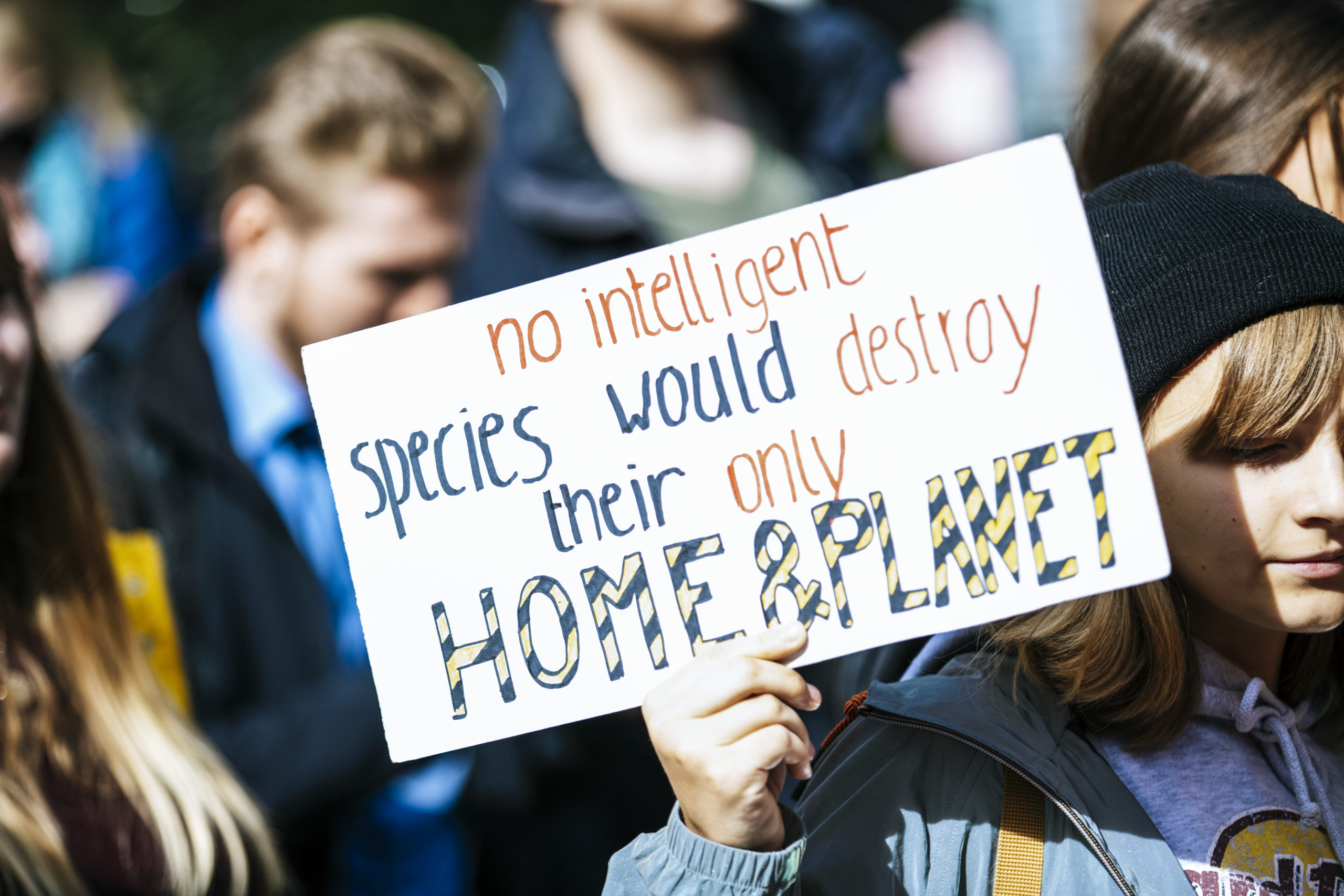
Our future is at stake: Paris climate agreement

Published

on

“A world that is safer and more secure, more prosperous, and more free.”  Barack Obama on Paris Climate Agreement 

The entire world will be keeping an eye on the United States’ election on 3 November this year. America’s next president is pivotal for the world not only because it is one of the most powerful nations of the world, but this year its result is more requisite because; it would decide how our planet is going to be in future; this time the results will be deciding the average temperature of the earth in the times ahead.

Paris Climate Agreement

Paris Climate Agreement, December 2015, a plan to control the ever-increasing temperature of the earth due to global warming. All 197 countries around the globe came together showing concern about the global climate crisis. All the nations agreed to cut the pollution which is causing heat to be trapped in the atmosphere.

Even though only a few of them didn’t make this agreement official in their countries. Most of the countries made it official but putting minimal efforts in cutting the emissions. In this agreement, the US has been a very Vital Role. From all the countries pledged to reduce heating-emission by 2030, 21% is pledged to be reduced by the United States alone. On the agreement, President Obama praised, saying, “We met the moment.

The Paris Climate Agreement is the only agreement of its type that binds the entire globe together; to take a stand against climate change and increasing average global temperature.

But, on June 1, 2017, from White House Rose Garden, President Donald J Trump declared that America would no more be a part Paris Climate Agreement. In November of 2019, he sent a letter to the UN, initiating the year-long process of leaving the agreement.

Why does President Trump want to withdraw from the Paris Climate Agreement?

President Trump in his speech in which mentioned the US’s plan to withdraw from the Paris Climate Agreement; said that the agreement is not fair to Americans. The agreement distributes the wealth of the USA in all the other countries because of which American people, workers, and taxpayers have to incur great losses, he added.

He mentioned the country’s abundance of energy reserves which can lift million of American workers above of poverty. But the agreement is restricting the country from using its own reserves.

In his speech, he also assured that he is open to negotiation on the Paris Climate Agreement or stepping into some other agreement concerning environmental issues; which is fair on part of Americans too.

With Climate change, President Trump has been very consistent. He has given up almost all the climate change concerning policies by former President Obama. He has bolstered fossil fuel in the United States to a large extent.

Problems occurring due to the increasing temperature of the earth

Earth’s temperature has already increased by more than 1-degree Celcius before the pre-industrial age (1880), NASA. Already because of the increased temperature enormous problem have erupted.

  • Since 1980, the length of the frost-free season has increased and is expected to lengthen further with global warming; affecting the eco-system and agriculture.
  • The US’s average precipitation has increased since 1900.
  • Globally droughts have become more often and more severe.
  • Many regions are facing heat-waves, which will become more severe if things go on like this.
  • Wildfires around the globe have become frequent
  • The great- barrier reef of Australia is dying due to the heating of the ocean water
  • Floods have become more severe than ever, every year costing millions of money and a huge number of lives.

What will happen if the earth’s temperature increases by 2-degrees?

The main intent behind the Paris Climate Agreement is to limit the earth’s average temperature to become 2-degree celsius hotter compared to the pre-industrial age. If the world keeps on track emitting this much emission than the earth will be 3-degree Celsius hotter.

This much rise in earth’s average temperature will have catastrophic results; impacting every country and every person on the globe. According to NASA, if the temperature of the earth would increase greater than 2-degree Celcius than:

  • The heat-wave that was faced by Pakistan and India in 2015, would become more frequent in most parts of the world.
  • The coolest night of the year would be 4.5-degrees hotter than before.
  • Severe Droughts
  • We will witness massive migration between the countries, in search of jobs and water, food.
  • Billions of people will be living in the temperature only found in the Sahara desert today.

The Paris Climate Agreement is not mandatory or is not a set of rules that all the member countries have to follow. It is completely voluntary on the part of the country, whatever it thinks is beneficial to the environment as well as to the country.

What would happen next?

So, the Congress government can also come up with innovative ideas through which it can look both; environment as well as it’s peoples advantage. This way it can fight the climate-changing issues which will not affect it’s economies much.

But if Trump wins the election, the very next day America will officially leave the agreement. On the flip side, Joe Biden will be part of the Paris Climate Agreement. He has also planned to cut-off the emission to zero, by 2050.

America is a vital part of the agreement. It has a huge economic part in the world. Climate-change problem is almost impossible to be solved without the US’s considerable contribution. This election has enormous consequences not only for the US but for the entire world. So, what our earth is going to be like in the coming years is the American’s hand.

Continue Reading
Click to comment

Leave a Reply

Your email address will not be published. Required fields are marked *

Featured

38,000 Women and Girls Slaughtered: UN Confirms Gendered Impact of Israel’s Gaza Genocide

Published

on

38000-Women-and-Girls-Slaughtered

Shockingly, 47 women and girls are being killed in Gaza every single day. A recent UN report mentioned more than 38,000 women slaughtered by Israel during its heinous genocide. Previously, in 2024, the health ministry in Gaza estimated that 70% of those killed in the war were women and children.

Moreover, the impact on Gaza’s healthcare sector is so severe that death figures are hard to evaluate in real terms. This demonstrates the severity of the gender-based violence that Gaza’s residents are enduring, even after the so-called “ceasefire” in 2026.

Impact of Israel’s Genocide on Women and Girls

The UN Women’s report also documents almost 19,000 injured women and girls who have been permanently disabled from their injuries. The Head of Humanitarian Action at UN Women said: “This is the highest percentage in any conflict to date and the highest percentage of women killed in any conflict ever recorded.”

Several medical professionals who have practiced within the Gaza Strip have reported that most of the breastfeeding mothers have not been able to provide breastmilk for their child due to malnutrition, the loss of a loved one, or lack of medical care.

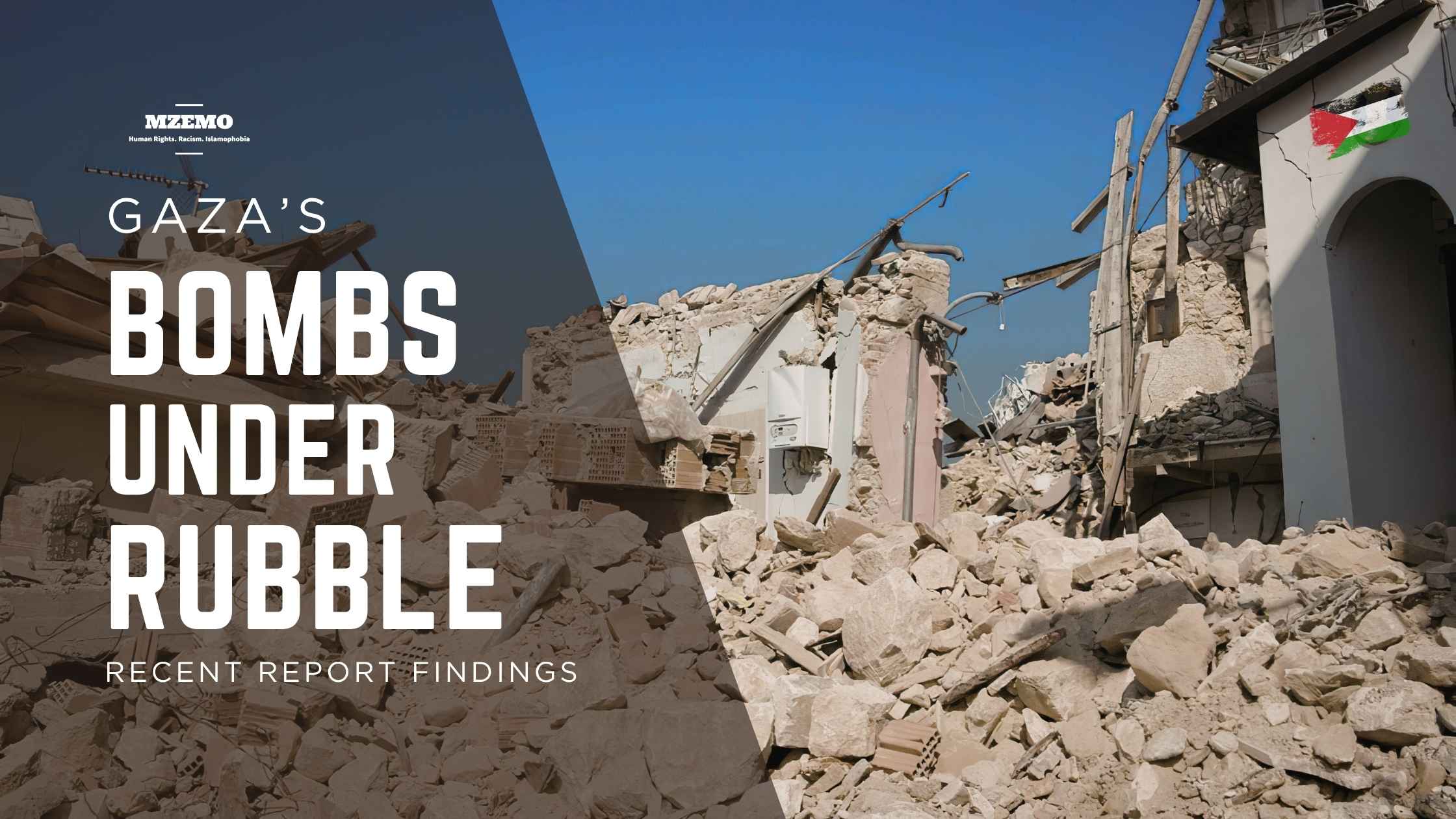
By early 2026, the official figures from the Ministry of Health in Gaza estimate more than 50,000 women have been killed, but this is most likely an underestimation due to the number of people left under rubble.

There is also credible evidence of sexual violence during the genocide. For instance, in a statement issued in 2024, the United Nations’ Special Representative regarding sexual violence during genocide called for an objective investigation of “credible allegations of sexual assault” of Palestinians in detention, including females being detained by the Israelis.

Maternal Health and Obstetric Care

Pregnant women and new mothers in Gaza are facing a severe maternal healthcare crisis. Hospital infrastructure continues to be bombed by Israeli airstrikes, leaving fewer resources available for providing maternal care. Maternal healthcare resources have also been severely limited, as well as the ability to respond to maternal emergencies.

Women who are giving birth to children are being exposed to an increased risk of maternal death. They are giving birth at healthcare centres that have been partially abolished and are unable to provide surgical intervention. Moreover, some hospitals that are still left lack basic tools such as anaesthesia. The World Health Organisation has been reporting that disruption to the delivery of healthcare and access to medical supplies is directly related to the peak hostilities in northern Gaza.

The UNFPA refers to the Gaza Strip as the most dangerous place in the world for a woman to give birth, due to the increase in the rate of infant mortality. It is reported that an average of 15 women give birth to children outside the hospital per week with no assistance, and if a woman can give birth in a hospital:

  • C-sections were being performed without anaesthesia in many places, as reported by MSF staff from field hospitals.
  • There was an increase in maternal deaths due to hospital closures because of a lack of electricity, surgical services, and staff.

Women’s Right to Food, Water, and Shelter in Gaza

The sieges and destruction of the infrastructure create immense problems for women in particular. Women and men have been forced into shelters with abysmal sanitation. Both UNFPA and UN Women have reported the lack of sanitary products, privacy, and safe water for washing in many displacement sites. These are not insignificant aspects, as for protracted displacement, lack of sanitation and hygiene infrastructure leads to illnesses, poor health, and increased vulnerability.

Additionally, numerous impacts have also occurred due to food insecurity. Pregnant and lactating women have been among the first affected by severe malnutrition. Nearly 790,000 women and girls are living with crisis and catastrophic levels of food insecurity, according to UN Women.

Psychological services are also lacking since most people in Gaza suffer from trauma, according to the World Health Organisation (WHO). Women who have lost their husbands and multiple members of their families are experiencing major problems with their mental health.

Data Does Not Reveal the Suffering and Trauma of Gaza Women

A young Palestinian girl, Mona, described her mother and sister dying instantaneously due to a bomb, and she found “pieces of their bodies“. She reported herself being completely numb, and stories such as hers occurred throughout Gaza. Hind Rajab, a 5-year-old Palestinian girl, was shot 335 times by an Israeli tank. There are a lot of horrific stories of Gaza women.

In a nutshell, women’s rights in Gaza, broadly construed, have been assaulted not just by violence but by the destruction of mechanisms of health care, legal, and other services. This is the starting point for any objective assessment of this unprecedented genocide. It must be stopped before the atrocities of Israel and its allies start to engulf the entire world.

Continue Reading

Featured

Sudan’s War and the Fracturing of the Muslim World: A Crisis Beyond the Headlines

Published

on

Sudans-War-and-the-Fracturing-of-the-Muslim-World_-A-Crisis-Beyond-the-Headlines

The situation in Sudan is now more than just another news story. The conflict, which broke out in April 2023, is now in its fourth year and has left tens of thousands dead, more than 14 million people displaced (nearly a quarter of the population), and pushed the country to the brink of famine. But beyond Sudan’s borders, the war is barely making headlines.

What started as an internal power struggle between two generals has descended into a bloody impasse, rending communities, decimating hospitals, and weaponizing food. Behind the conflict, there’s a bigger story: how this overlooked war is revealing the ugly divisions in the Muslim world. Rather than solidarity, we witness vested interests, selective muteness, and an idealised concept of Muslim unity replaced by geopolitics.

Sudan War 2026: What’s Happening?

The Sudanese war is a battle between two armies:

  • General Abdel Fattah al-Burhan’s Sudanese Armed Forces (SAF)
  • General Mohamed Hamdan Dagalo’s Rapid Support Forces (RSF), also known as “Hemedti.”

The RSF controls most of Darfur and Kordofan, and has solidified its control in most of Khartoum and its surroundings. Contrarily, the SAF controls the north and some of the east, and recently began counterattacks in Omdurman. Both sides are far from victory and the peace table. Humanitarian assistance is being looted and stolen. Furthermore, rape is being reported at a “catastrophic” rate.

  • There are more than 4.4 million refugees in neighbouring nations like Chad, South Sudan, and Egypt.
  • Over 21 million people are in need of humanitarian aid because of famine or malnutrition in areas such as El Fasher and Kadugli.
  • Hospitals and humanitarian assistance are also heavily affected by the conflict with the World Health Organization (WHO) reporting over 200 hospital attacks during the war.

What Caused the Civil War in Sudan?

There are three primary causes behind this unfortunate crisis as follows:

Competition and Conflict among Factions

The military forces in Sudan removed President Omar al-Bashir from power and established a transitional government council made up of two opposing armies, as mentioned earlier. The leaders of these two forces colluded to delay power to a civilian government in 2021, staging a coup.

Political Instability after Regime Change

A short-lived democracy ensued after the revolution of 2019. There were no leaders, parties were torn, and the international community was silent. When Bashir was pushed aside, institutions were filled with armed groups with guns and money.

Economic and Regional Inequalities

Sudan has a long history of disparities. There have been instances of discrimination and attacks on regions, such as Darfur. The poor areas suffered from inflation and a resource war, which ultimately divided Sudan.

Sudan has many resources, such as gold in Darfur and a beautiful Nile Valley. RSF had support in Darfur, whereas SAF in the north and east, as previously highlighted.

Who’s Financing the Conflict?

The other question is who finances the war in Sudan. This is a mixture of domestic and international sources.
Funding sources include:

  • Natural resource funding: The RSF owns many of the gold mines that give it enough resources to fight.
  • Regional Powers: Some states are secretly helping SAF against the massive forces of RSF.

In short, the RSF is suspiciously linked with the United Arab Emirates, which is allegedly involved in arms and gold smuggling in Darfur. However, the UAE denies military aid, but is being sued by Sudan in the International Court of Justice. The RSF has mining profits and a government of the occupied territory.
On the other hand, SAF has Egypt, the Nile, and the border. The legitimate government has the backing of Saudi Arabia and others.

Sudan and the Muslim World in Crisis

The Muslim world has been facing a multi-faceted crisis for the past two years that has similar patterns. There has been international intervention on a scale, wars for resources, failed or failing states, and the international community is divided to tackle the crises. Rather than consensus, there is disunity and division.

The nature of these crises is different, but the common thread is that there is no unity among Muslim-majority countries and organisations.

  • Israel is currently involved in genocidal activities like bombing and starving Gaza. The agreement between Lebanon and Israel was supposed to be kept, yet Lebanon remains vulnerable to attacks and is displaced from reconstruction.
  • Iran is recovering from the war with Israel and the US. It is suffering economically from sanctions, attacks, and trade issues.
  • Yemen and Syria continue to suffer from war, while Pakistan and Bangladesh have experienced political upheaval.

However, the Organisation of Islamic Cooperation has been unable to respond significantly to any of these events.

The Way Forward

Peace involves putting an end to combat and the cessation of fighting between opponents and allowing them to embrace reconciliation. The international community must adopt a new approach to the problem that would involve fewer arms and increased humanitarian aid.

Gaza and Sudan represent a case of uneven consensus among the Muslims. It is therefore the need of the hour to tackle all the challenges with the strong and practical notion of the Muslim Brotherhood.

Continue Reading

Featured

Israel Continues Engineering Starvation Policy in Gaza Despite Ceasefire

Published

on

Israel-Continues-Engineering-Starvation-Policy-in-Gaza-Despite-Ceasefire

It was supposed to be a ceasefire, but Gaza is still suffering. Since the ceasefire began at the end of 2025, UN agencies, independent observers, and even aid workers working to bring food to those in need have noted that aid is being blocked, and distribution points for food items are being deliberately targeted. Additionally, fuel and other essential items are being prevented from entering the state.

One-third of the population goes without food for days at a time, while more than 500,000 people are experiencing extreme famine conditions, and the remaining ones are facing emergency hunger conditions.

What is Engineering Starvation in Gaza?

Starving innocent civilians of food, water, and basic necessities for survival is a War Crime under international humanitarian law. An International Famine Review Committee report has reported that Gaza has been experiencing Famine (Phase 5) since August 2025.

Israel controls the flow of goods into Gaza. It also controls the basic infrastructure required for food systems to operate. Vehicles are restricted from entering certain points. The amount of humanitarian aid entering Gaza today is far less than the level needed to address basic humanitarian needs.

For instance, at least 500-600 trucks per day are required for their humanitarian needs. The lack of fuel is affecting the baking, cold storage, and water industries. They are unable to find suppliers that can meet their needs to keep their businesses running.

Moreover, farmland, greenhouses, and access to fishing have been destroyed or left inaccessible. Gaza’s internal food distribution network has been severely damaged.

Children Bear the Worst of It

Unfortunately, one in five children screened by UNICEF in August 2025 was acutely malnourished, and that number continues to rise.

Children fail to gain weight because their mothers are malnourished too and therefore unable to breastfeed them adequately. They live in a food-deprived environment where tea and bread are the only food available. A single biscuit has to be split into three pieces to survive the hunger crisis in Gaza.

A Fabricated Ceasefire

Apparently, the bombing slowed down, but the policy of starvation did not. There are restrictions on crossings, fuel, and other essentials, and the amount of aid into the Gaza Strip.

Deliberate starvation is being used as a weapon of war

The Reasons Behind These Atrocities

Israel is blatantly going against the norms of International Law, and it is not alone. The United States is also supporting it in doing these heinous atrocities. There are multiple checks to ensure this engineering starvation as follows:

Ultra-Restricted Crossings

The only crossing that is left is Rafah, which is also not completely operational. It is only being used for medical emergencies.

Deliberate Fuel Shortages

Fuel powers the whole food system, and when it remains unavailable:

  • Bakeries stop
  • Transport halts
  • Food rots before it reaches the market.

Damaged Infrastructure Due to the Genocide

Warehouses, roads, and storage facilities are either completely or partially damaged. Agricultural land has also been destroyed and is inaccessible. Moreover, fishing space is limited as well.

Complete Market Collapse

When supply falls, prices definitely go up. The food becomes unaffordable for the innocent Palestinians and their children.

The Human Cost

In many parts of Gaza, three meals are replaced with one meal, and even some families haven’t had food for days.

Children are malnourished, while parents make trade-offs every day:

  • Going without food so children can eat
  • Splitting a small piece amongst many
  • Waiting for hours for bread or aid

Health services are also under pressure, as malnutrition weakens the immune system. Disease spreads more easily, and people with chronic illnesses struggle to survive. Even after the ceasefire, 1.6 million people are still severely hungry.

Under the Scope of International Humanitarian Law

It is illegal under international law to even starve an enemy. The reports of UN experts and human-rights organisations have pointed out that blocking food and aid breaches the line.

The deliberations go on at the political and legal levels. The end effect is the same: civilians starve.

As per the data analysis:

  • Over 500,000 people are facing famine.
  • 640,000 have been in catastrophic hunger
  • A third have gone for days without food.
  • Rates of child malnutrition have grown rapidly, doubling in months.

This will Go Beyond Gaza

Engineering Starvation will lead to a large hunger crisis in the state, and people will be dying due to famine. If we do not stop the starvation in Gaza, starvation will be used as a weapon in all other battles, and civilians will be viewed as “legitimate targets” caused by famine in the future.

While the ceasefire in Gaza may have apparently come to an end, hunger has certainly not, as the means to get food to the genocidal zone remain difficult. Israel and the United States, which advocate democracy and human rights, should realize the fact that even the life of a single child is important, and their policies will soon turn out to be unsuccessful.

Continue Reading
Advertisement

Trending